BRITISH AIRWAYS ENDS ALL FLIGHTS TO CHINA AS VIRUS SPREADS TO MIDDLE EAST

British Airways Ends All Flights To China As Virus Spreads To Middle East

The decision comes after United Airlines said it would temporarily reduce the number of flights between the US and China

Zero Hedge – JANUARY 29, 2020

As the Trump Administration denies plans to shut down all passenger air traffic to China, more airlines around the world are suspending routes, a sign that the coronavirus outbreak could do permanent damage to the industry.

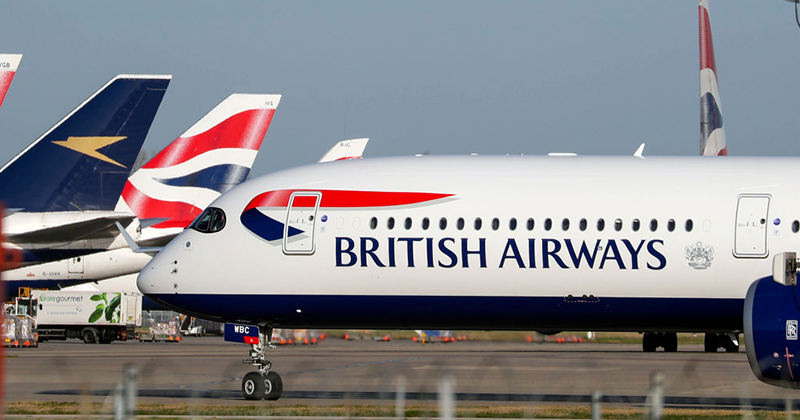
Just hours after the UK Foreign Office warned Britons against traveling to China, British Airways, Britain’s flag carrier, and its second-largest airline in the UK, suspended all flights to China.

British Airways operates direct flights from Heathrow to Beijing and Shanghai, but right now, passengers can’t book flights on those lines until Feb. 29. CNN called it “the most drastic action yet by a major airline” in response to the crisis.

The decision comes after United Airlines said it would temporarily reduce the number of flights between the US and China.

“We have suspended all flights to and from mainland China with immediate effect following advice from the Foreign Office against all but essential travel,” the company said in a statement Wednesday.

This comes after United said Tuesday that it had seen a “significant decline in demand” and been forced it to suspend flights from Feb. 1 through Feb. 8 between its US hubs and Beijing, Hong Kong and Shanghai. In total, 24 round trips have been impacted between Hong Kong to San Francisco and Newark; Beijing to Dulles, O’Hare and Newark; and Shanghai to San Francisco, Newark and O’Hare.

American Airlines, Delta and United all extended change fee waivers through the end of February, while Hong Kong flagship carrier Cathay Pacific said it will reduce the capacity of flights to and from mainland China by half or more until the end of March.

Finland’s Finnair is canceling three weekly flights between Helsinki and Beijing between Feb. 5 and March 29, and two weekly flights between Helsinki and Nanjing between Feb. 8 and March 29, because of the suspension of group travel by Chinese authorities. It will continue to operate flights to Beijing, Shanghai, Hong Kong and Guangzhou.

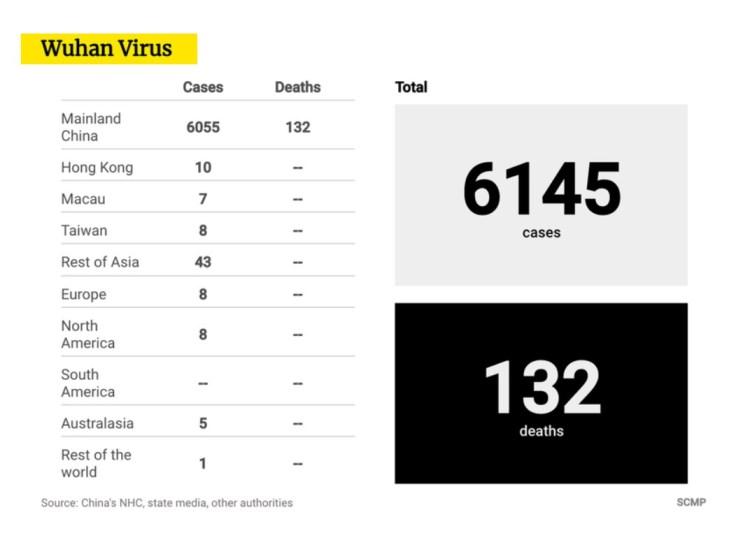
There are now 5,974 cases in China, with 1,239 of whom are severely ill, according to state media on Wednesday. Initial theories, put forward by some infectious disease experts, that the mortality rate of the virus is much lower than reflected in press reports because thousands with mild cases are likely toughing it out in their homes. If anything, it looks like the virus is more lethal than we previously believed.

And it’s certainly more infectious.

Per the SCMP, a 48-hour span of no new nCoV infections came to an end Wednesday when Hong Kong authorities announced two more patients tested positive for the potentially deadly illness, bringing the local total to 10, as the HK government suspends high-speed rail travel between the Special Administrative Region and the mainland. The HK Department of Health said the two new patients, an elderly couple, aged 72 and 73, tested positive at Queen Mary Hospital in Pok Fu Lam, and, because of their age, fall into the high-risk category of infections. More than 100 people are still in isolation in HK.
CAP

The situation is growing increasingly worrisome in Guangdong province, which is centered around the city of Guangzhou, the fifth-largest in China.
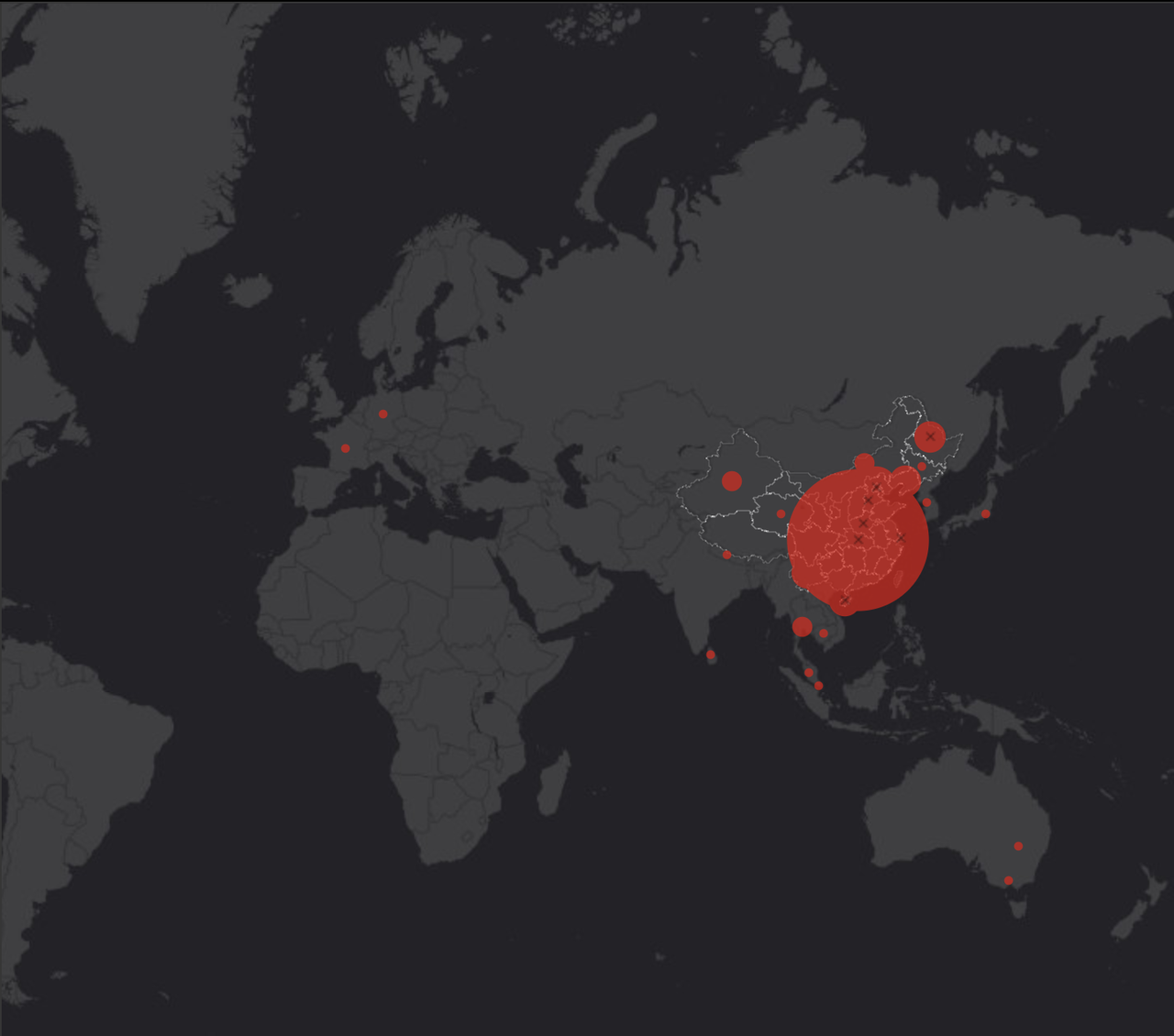
Guangzhou is at the center of a massive conurbation stretching out all the way to Shenzen, and to the other neighboring cities of Foshan, Dongguan, Zhongshan and several other neighboring provinces. This agglomeration is one of the largest of its kind on Earth, home to more than 100 million. City officials announced five new infections, two locals and three foreigners. With more than 270 confirmed cases, this well-connected and economically important province is behind only Hubei and Zhejiang in terms of number of cases.

Now that several countries have copies of the coronavirus genome, the race for a workable vaccine is intensifying. Russia joined that race on Wednesday after receiving a copy of the virus genome from China, Russian state media reported on Wednesday. The US said on Tuesday that it would take three months to start initial trials for a vaccine that it’s developing, and three further months to gather data.

In Hong Kong, infectious diseases expert Professor Yuen Kwok-yung said on Tuesday that the city’s researchers had stumbled on a vaccine, but that it would take months to test on animals and at least another year to conduct trials on humans before it could be confirmed ready for human use. Scientists in Melbourne said they grew the virus from a patient sample, which could prove a “game-changer” in combating the outbreak. It was the first time the virus had been grown in a cell culture outside China (here’s hoping it isn’t misused as a potential bioweapon).

After confirming the first case of human-to-human transmission in Japan, health officials in Tokyo have shared more information about the case with the press: The man did not travel to Wuhan but drove buses with tour groups from the city twice this month. The man is in his 60s and lives in Nara Prefecture, according to the Japan Times.

Overnight, the first case of the virus in the Middle East have been confirmed in the United Arab Emirates, according to the country’s Ministry of Health and Community Protection. The 4 infected patients are members of a family that had traveled from Wuhan. In its statement, the health ministry reported the family as being in a stable condition under medical observation, according to CNBC.

As hysteria surrounding the outbreak grows, SCMP reports that resentment toward people from Wuhan is growing across China, as provincial authorities ramp up screenings of those from Wuhan, and citizens build unauthorized roadblocks to keep strangers out of their towns.

Meanwhile, President Xi said Wednesday that “preventing and containing the virus remains a severe and complex task,” a follow up to his claims that China would do whatever is necessary to contain the “demon” virus.

Could coronavirus be the recessionary catalyst that triggers a global economic downturn? RT’s Boom Bust investigates

CAP

While the markets have slightly rebounded after the shock of the coronavirus outbreak, the effects of the crisis could ripple across industries, ex-Fed insider Danielle DiMartino Booth believes.

After sliding to the lowest close in over a week on Friday over the spread of the deadly virus, US stocks rebounded slightly as the new trading week began, with the key Dow Jones Industrial Average index climbing over 200 points on Tuesday. However, the markets could still grossly underestimate the consequences of the outbreak and are just hinging on the Fed’s injections, says former Fed insider Danielle DiMartino Booth.

“The markets are woefully underestimating the important economic impact globally of what this [outbreak] means given that we started the year leaning on multinationals to charge out of the US earnings recession and leaning on Germany to come out of its own industrial recession. That’s not going to happen either,” she told RT’s Boom Bust.

Booth explained that the companies which were set to lead the US out of the earnings recession are highly dependent on revenues and profits from overseas. The coronavirus could easily impede this, but the markets may still “press towards all-time highs, because they’re saying this bad news is good enough that it’s going to actually cause [the] Fed’s liquidity injections to grow.”

CHINA CURBS TRAVEL TO HONG KONG AS PROJECTIONS SHOW 300,000 MIGHT ALREADY BE INFECTED

China Curbs Travel To Hong Kong As Projections Show 300,000 Might Already Be Infected

Top health officials share grim statistics

Zero Hedge – JANUARY 28, 2020

On Tuesday morning, China’s top health officials shared some grim statistics essentially confirming that the novel coronavirus believed to have emerged from a shady food market in Wuhan is on track to confirm some of the more dire projections shared by epidemiologists.

As we reported late yesterday, the death toll in China has soared past 100 while the number of confirmed cases doubled overnight. Health officials around the world have confirmed more than 4,500 cases, more than triple the number from Friday. All but a few of the deaths recorded so far have been in Wuhan or the surrounding Hubei province, per the SCMP.

Panic has swept across the region as border closures appear to be the overarching theme of Tuesday’s sessions. Even North Korea, which relies on China for 90% of its foreign trade, has closed the border with its patron. More than 50 million remain on lockdown in Hubei, and transit restrictions have been imposed by cities and regions around the country.

CORONA

An ‘extension’ of the Lunar New Year holiday is threatening GDP growth, as economists try to size up the knock-on potential impact on the global economy. The virus has now spread across China and another 17 countries/autonomous territories globally, according to BBG.

But the most important announcement made overnight – at least as far as global markets are concerned – was Hong Kong Chief Executive Carrie Lam’s decision to suspend high-speed rail and ferry service, while halving the number of flights between HK and the mainland.

This news helped send US stock futures higher in early trade, after health experts yesterday urged Lam to use ‘draconian’ measures to curb the spread, for fear of a repeat of the SARS epidemic, which killed some 300 people, according to the BBC.

“The flow of people between the two places needs to be drastically reduced” amid the outbreak, Ms Lam told the South China Morning Post.

China, meanwhile, said it would stop individuals from traveling to Hong Kong to try and curb the virus.

Jiao Yahui, deputy head of the NHC’s medical administration bureau, said during a press conference Tuesday that shortages of medical supplies in Wuhan were still a serious problem.

CDC has issued new travel recommendations urging people to avoid all non-essential trips. But officials remained reluctant to declare a global emergency, instead insisting that this is merely an emergency “in China”. Of course, after yesterday’s brutal pullback, that’s to be expected.

The big piece of evidence that the WHO is purportedly looking for is human-to-human transmission outside China. Zhong Nanshan, a leading expert on SARS and other communicable diseases in China, confirmed human-to-human transmission in at least one case in Wuhan and two cases in Guangdong Province.

CAP

Meanwhile, as we noted yesterday, one case of possible human-to-human transmission is being investigated in Canada, while Vietnam and Japan have now each confirmed one cases.

Japan revealed on Tuesday that a bus driver in his 60s, who recently carried passengers from Wuhan, has been found to have the virus.

During a meeting in Beijing, President Xi told World Health Organization Director-General Tedros Adhanom Ghebreyesus that the safety of the people is his government’s first priority, and that he recognizes the situation is “very serious.”

“This was supposed to be a time for rest, but because of the pneumonia outbreak caused by the novel coronavirus, the Chinese people right now are faced with a very serious battle,” Xi said. “This is something we take very seriously because in our view nothing matters more than people’s safety and health. That is why I myself have been personally deploying, planning, and guiding all the efforts related to containment and mitigation of the outbreak.”

That’s ironic, considering Beijing’s sluggish response after the first cases were discovered in December. After all, Wuhan Mayor Zhou Xianwang on Tuesday spoke out against the deluge of criticism he has faced to accuse Beijing of tying his hands. This comes after President Xi and the party tried to scapegoat him and other local party officials for the crisis.

This was supposed to be a time for rest, but because of the pneumonia outbreak caused by the novel coronavirus, the Chinese people right now are faced with a very serious battle,” Chinese President Xi Jinping tells in Beijing.

Speaking at a press briefing in Beijing on Tuesday, Jiao Yahui, deputy head of the NHC’s medical administration bureau, said shortage of medical supplies was a major constraint in China’s efforts to contain the outbreak and treat infected people.

Tens of thousands of patients are under observation in China after displaying one or more symptoms of the virus. In the US, roughly 100 people are in isolation. But former FDA Commissioner Scott Gottlieb told CNBC that China is obscuring the true number of cases – a suspicion that’s widely held among American infectous-disease experts.

CAP

According to some projections, there might be up to 300,000 cases in China, and there are likely dozens of people who have died of pneumonia who in reality died from nCoV – but those deaths will never be recorded. Although China is “behaving better” than it did during the SARS outbreak, they’re still concealing information from the international community.

“They’re still not behaving well. They’re concealing information, including the spread to health care workers, which we didn’t know until last week” Gottlieb said.

China is already in a “full-blown epidemic.” The US will likely face some limited outbreaks, but Gottlieb said we have the tools to suppress the virus and prevent the same thing from happening in the US.

Jiao said China was sending about 6,000 medical personnel to Hubei from around the country – with more than 4,000 already there and 1,800 more due to arrive by Tuesday evening – to work in Wuhan and seven other cities in the province.

In Wuhan, more than 10,000 hospital beds have been made available for patients, he said, while another 100,000 are being prepared.

In Beijing, CNBC’s Eunice Yoon reported that the local government is strongly encouraging the wearing of facemasks in public.

Police guarding Beijing’s public transit are wearing full hazmat suits, and anybody hoping to board a train must be wearing a mask, and must submit to a temperature check via infrared thermometer. If an individual is found to have a fever, they’re sent to a hospital to be quarantined.

As Beijing tries to telegraph to the world that it has the situation under control, health experts have raised new questions about the government’s response. One infectious disease specialist told the NYT that they were skeptical about the Wuhan quarantine’s ability contain the virus (unsurprising considering that 5 million left the city before the lockdown began).

Beijing and Guangzhou, a port city northwest of Hong Kong, have broken ground on new hospitals, mimicking the speedy construction of not one but two new hospitals in Wuhan to treat patients infected with the virus.

Beijing is also reopening a hospital used to fight the SARS outbreak in 2003, while 6,000 medical staff have been sent to Hubei.

“At this stage of the outbreak, the things that make the most difference are finding people, diagnosing people, and getting them isolated,” said Dr. Tom Inglesby, an infectious diseases specialist and director of the Johns Hopkins Center for Health Security.

“If you isolate the city, then my question and my concern is that you’re making it harder in a number of ways to do those things you need to do,” including ferrying critical supplies and ensuring that infected victims receive adequate treatment.


WATCH: MSNBC Panel Featuring John Brennan Calls for State of the Union to Be Cancelled


An MSNBC panel discussion led by anchor Chuck Todd and featuring disgraced CIA Director turned NBC News analyst John Brennan called for the annual State of the Union address to be cancelled over the impeachment.

Brennan claimed that President Donald Trump speaking would be “embarrassing” and “very destructive to the image of the United States worldwide.”

President Bill Clinton also gave a State of the Union address during his impeachment, but that doesn’t seem to matter to these partisan hacks.

“And you know, one of the things that I really worry about is that we’re going to have a State of the Union very shortly, while all of this is going on,” Brennan said during the panel.

Todd quickly jumped in, mockingly saying “State of our union is strong,’ who the hell is going to say that?”

“I just cannot imagine. It’s not just embarrassing, but also I think it’s very destructive to the image of the United States worldwide to have this going on and have Mr. Trump up there,” Brennan stated.

“And you can imagine he’s going to use that State of the Union address not to address the state of the union, but to address the state of Donald Trump. And he is going to, I think, be on the offensive there. So I question whether or not it makes sense to hold that at this point,” Brennan continued.

MSNBC is akin to allowing Pravda to operate on our shores at the height of the cold war.


Blog at WordPress.com.

Up ↑