YouTube to ban ‘hateful’ videos with ‘supremacist’ content

CAP

YouTube has updated its hate speech policies and will now ban videos “with supremacist content,” as well clips promoting certain conspiracy theories.

The company, a subsidiary of Google, announced the clampdown on “hateful content” in a blog post on Wednesday. The company had already restricted commenting and sharing features on similar videos in 2017, but the new ban goes one step further.

“Today, we’re taking another step in our hate speech policy by specifically prohibiting videos alleging that a group is superior in order to justify discrimination, segregation or exclusion,” read the blog post.

YouTube says NO to gay journalist’s request to silence conservative blogger’s ‘homophobic abuse’

CAP

YouTube’s insistence that it will ban all forms of “supremacist” videos stands in contrast to a similar policy change at Facebook, which decided to exclusively ban “white nationalist” and “white supremacist” content, seemingly ignoring similar content from, for example, Black separatist or radical Zionism movements.

Nevertheless, YouTube presented “videos that promote or glorify Nazi ideology” as an example that would break its new rules.

In addition to these changes, YouTube said it will reduce the spread of content that does not outright violate its policies, but “comes right up to the line.”

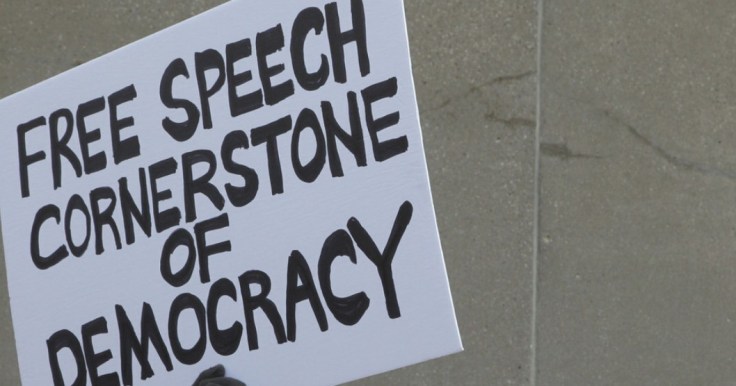
The company said that this “borderline” content, including flat-earth conspiracy videos and phony science videos, will be dropped from viewers’ recommendations and replaced with videos “from authoritative sources,” a move that will surely rankle free-speech advocates and those who already accuse the site of bias.

‘Death by algorithm’: Maddow inconsolable after YouTube recommends RT interview on Mueller report

CAP

“Finally, we will remove content denying that well-documented violent events, like the Holocaust or the shooting at Sandy Hook Elementary, took place,” the post continued. YouTube was one of several tech giants that booted Infowars’ Alex Jones from their sites last August, much to the dismay of conservatives and free-speech activists.

Jones had previously suggested that the schoolchildren shot dead in the 2012 Sandy Hook tragedy were “crisis actors”hired to further the gun-control agenda.

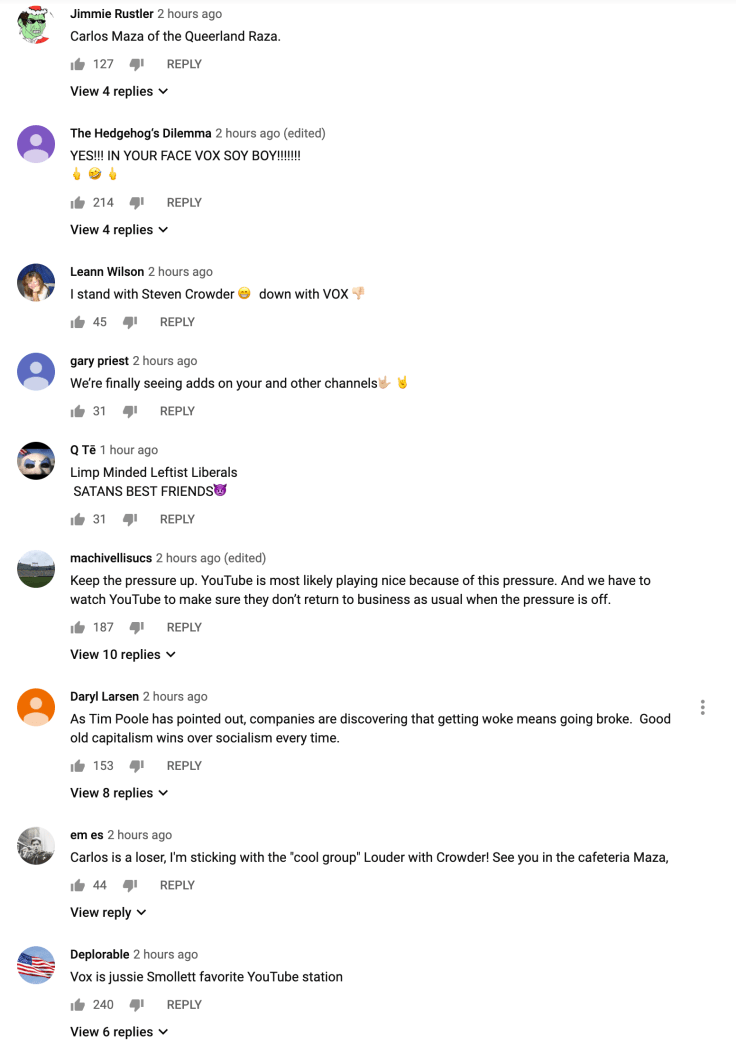
Within minutes of the new rules being announced, conservative commentators, journalists, and even black metal musicians reported their videos banned or demonetized by YouTube.
Big Tech caught in antitrust crosshairs of both Trump & Congress

CAP

Silicon Valley tech giants Amazon, Apple, Facebook and Google are finding themselves targets of antitrust probes by both the Trump administration and Democrats, in what appears to be a power struggle ahead of the 2020 election.

Although the committee did not name any companies, chairman Jerrold Nadler (D-New York) spoke of “a handful of gatekeepers” who gained control “over key arteries of online commerce, content, and communications.”

Apple shares down after report reveals planned DOJ antitrust probe

House Republicans, usually at odds with Nadler over his investigations into President Donald Trump, seem to have embraced the probe with enthusiasm.

Mere rumors of a Justice Department probe of Google’s parent company Alphabet Inc. and the Federal Trade Commission (FTC) investigation of Amazon and Facebook, caused a massive drop of major technology stocks on Monday, with billions of dollars in market valuation wiped out in minutes.

Alphabet stock was down by more than 6 percent, Facebook went down 7.5 percent, and Amazon dropped 4.6 percent by market closing time. Apple stocks were also down one percent amid rumors of an antitrust probe, even as the company got a bump due to new product announcements.

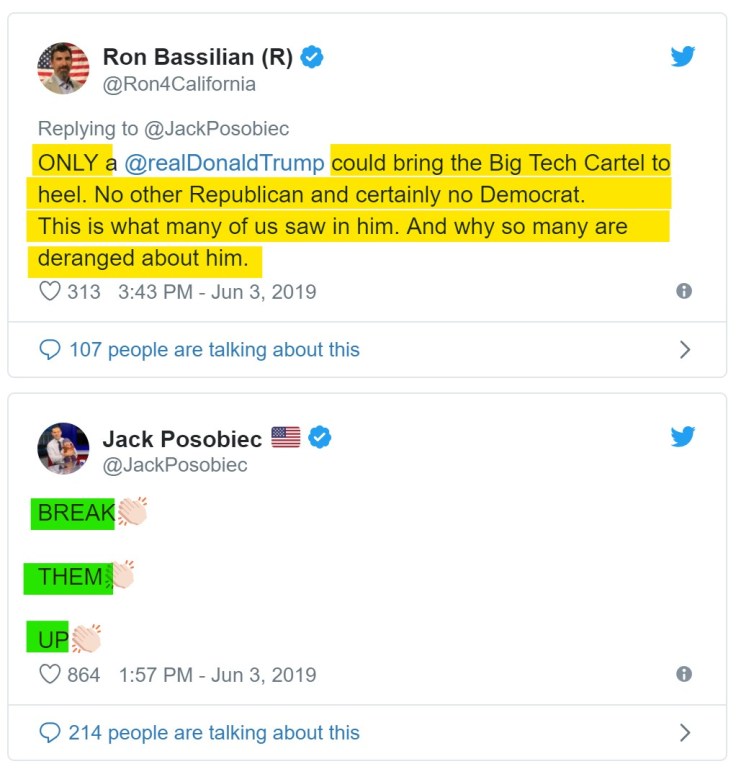
Conservative journalists and commentators were quick to point out that the antitrust investigations were likely related to the persistent censorship on social media platforms, though there is no direct evidence to that effect.

CAP

Silicon Valley tech giants have maintained that they have every right to police their platforms for “hate speech” and other “unacceptable” content, the definition of which keeps expanding by the day.

Democrats have put pressure on Big Tech to be more censorious – under the guise of rooting out “Russian bots and trolls” – after the 2016 election, when Trump used Twitter and Facebook to bypass the overwhelmingly negative mainstream media coverage and win the presidency. However, it then drew the anger of Republicans, who argued that the suspensions and bans have disproportionately targeted conservative voices.

As voice after voice gets purged from social media, still think there’s no censorship?

CAP

Most recently, Facebook banned any mention of Alex Jones or Infowars from its platforms, including Instagram, unless the posts were critical or hostile. The company also threatened to ban anyone who shared any Infowars content. Several other conservatives were removed in the same purge, and there were reports even photos and mentions of them would get deleted in the aftermath.

Facebook maintained that the ban was part of an ongoing campaign against “individuals or organizations that promote or engage in violence and hate, regardless of ideology.”

For some Democrats running for the 2020 presidential nomination, breaking up big tech has become a trendy rallying cry as they attempt to recruit those unhappy with the online expression monopoly. Elizabeth Warren (D-Mass.) has so far been the most aggressive in her offensive on tech giants, launching a social media campaign to break Facebook, Google, Amazon and Apple up. Other Democratic hopefuls jumped in, with the latest being Sen. Bernie Sanders (I-VT), who last month said that he would “of course” back the proposal to disband Facebook. Rep. Tulsi Gabbard (D-HI) has sided with Warren, while a number of other Democrats, including presidential race frontrunner Joe Biden and Sen. Kamala Harris (D-Calif.) said that the idea is worth a serious look at least.

Blog at WordPress.com.

Up ↑