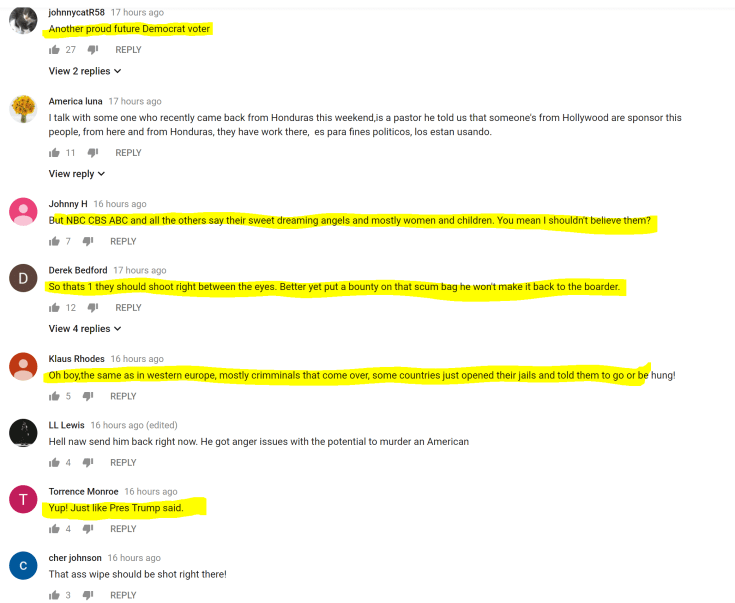
One migrant caravan member admits he’s been deported and convicted of attempted murder in the U.S. – he’s planning to reenter and request a pardon for his felony

OCTOBER 29, 2018
Earlier this month, the body of Desirée Mariottini was found in a derelict building in Rome notorious for drug trafficking. The girl was fed a cocktail of drugs and sexually abused before she died. Three migrants from Senegal and Nigeria were subsequently arrested by police.
Similar to how feminists reacted after the mass sexual assault of women by Muslim migrants on New Year’s Eve 2015 in Cologne, Germany, feminists responded to the murder by demonstrating against “the patriarchy,” while saying nothing about the threat to women’s safety posed by mass immigration.
Feminist group NonUnaDiMeno (Not One Less) claimed that the murder highlighted the problem of “patriarchal violence” while blasting Interior Minister Matteo Salvini as ‘racist’ for making the issue about immigration.
“ENOUGH of erasing for propaganda purposes the lives of women killed by patriarchal violence,” tweeted the group.

Another Facebook post made clear that violence against women “has no borders,” a clear attempt to absolve migrants of blame, despite the fact that they are routinely overrepresented in crime stats relating to the sexual abuse of women.

“Through the streets of San Lorenzo to shout once again together that masculine violence against woman has no borders, has no passport. Violence against women is done by men. Today we are here, we are many, we are all Desirée,” the group posted.
The entire farce again serves as a reminder that third wave feminism has nothing to do with protecting women and everything to do with pushing left-wing narratives about mass immigration that are actually harmful to women.
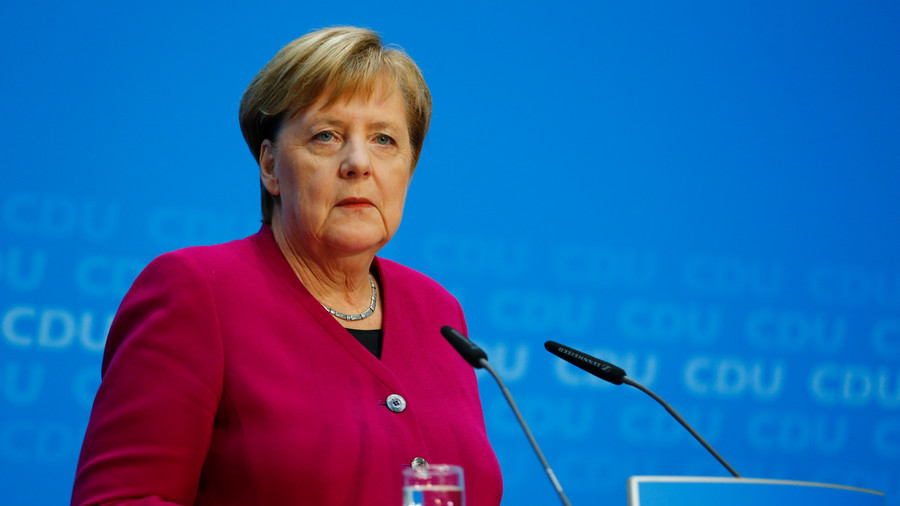
On Sunday, Merkel’s Christian Democratic Union (CDU) received 28 percent of the votes. Although that was more support than other competitors received, it was a significant drop from the 38.3 percent won by the party in the state’s last election in 2013.
READ MORE: Merkel’s sister party CSU suffers worst election result since 1950 in Bavaria
However, Merkel claimed that her decision not to run for party chair again was made before the plebiscite and even before German parliament’s summer recess. Party chair aside, the top politician also would not be available for another term as a chancellor.
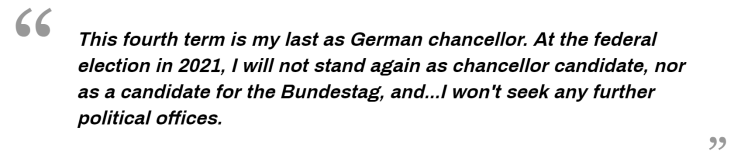
What’s more, if snap elections need to take place before 2021, Merkel would not run for the top post either.
A decision not to head for re-election as chief of the CDU and to not ditch the chancellorship “looks like a plan” that has been carefully devised, German lawyer Maximilian Krah told RT.
Merkel’s favored person to take over as party boss is Annegret Kramp-Karrenbauer. If she gets in, Merkel will “have a clone of herself as a party leader so she can remain in the chancellor’s office… she could stay in power for the next five or six years!”
However, if a Merkel critic takes center stage as party leader, there will be a different outcome. But even if that were the case, the CDU is unlikely to publicly turn on its current leader, as it is “very submissive” towards the chancellor.
“It would give a development against Merkel, but not a revolution. The CDU is not a party that makes revolutions. In no way.”
As the CDU experiences losses in support, the right-wing Alternative for Germany (AfD) party is seeing a rise in popularity. It received 12 percent of the votes in Hesse on Sunday, and now holds parliamentary seats in every single German state.
Speaking to RT following the Hesse elections, independent political observer Steven Meissner said that Merkel “is getting weaker and weaker and more unpopular.” That brings her team more problems than benefits, he alleged.
Merkel’s popularity has indeed been slipping for a long time, with her handling of the 2015 migrant crisis being a major contributing factor. A July poll found that only one in five Germans were happy with her performance as leader.
Dr. Werner Patzelt, a political science professor at the Technical University of Dresden, thinks that the chancellor’s handling of migration issue is mostly to blame for her party’s reduced support.
“The core problem of the CDU is the migration politics conducted by Chancellor Merkel. For many years now, German voters have revolted against these politics and they voted for the AfD and defected from the CDU…” In fact, AfD has filled a representation gap that was left when the CDU began shifting towards the center-left.
Merkel, 64, chaired the CDU party since 2000 and has served as Germany’s chancellor since 2005.
Think your friends would be interested? Share this story!
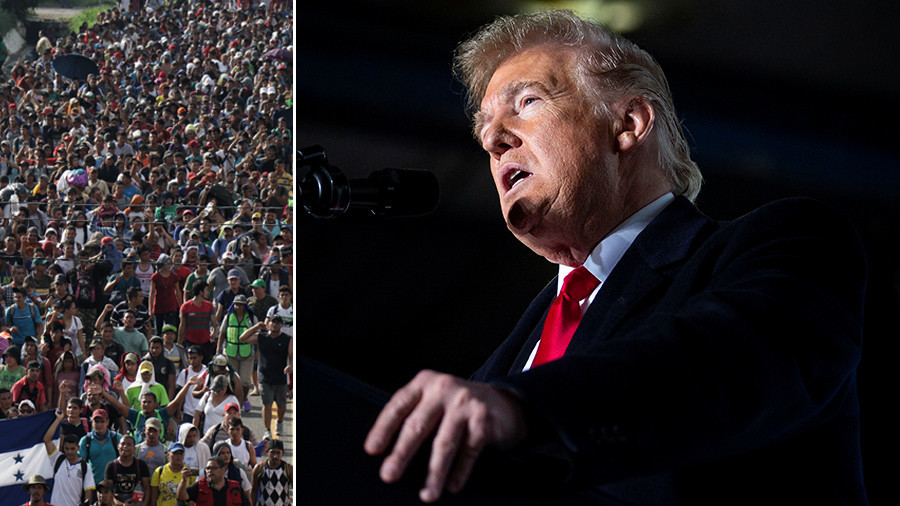
“Many Gang Members and some very bad people are mixed into the Caravan heading to our Southern Border,” Trump tweeted on Monday, before addressing the migrants directly: “Please go back, you will not be admitted into the United States unless you go through the legal process. This is an invasion of our Country and our Military is waiting for you!”
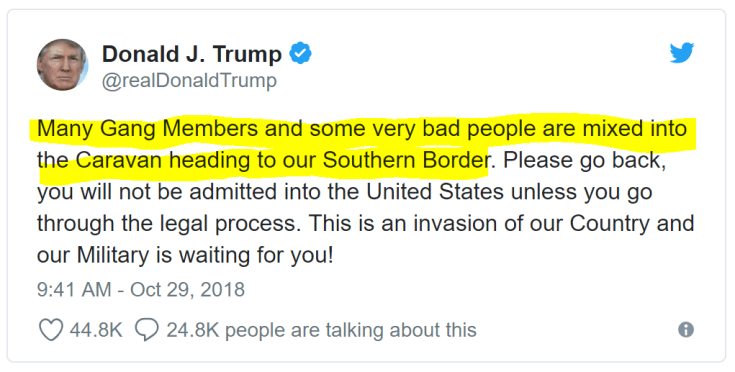
Trump’s tweet comes as the Pentagon reportedly prepares to deploy some 5,000 troops to the border, where they will bolster the existing National Guard and Customs and Border Patrol presence there.
It also comes one day after Defense Secretary James Mattis announced that the military has already begun moving equipment, including concrete barriers, to positions along the US’ 2,000 mile border with Mexico.
Mattis approved a request from Trump last week to send troops to the border, but was expected at the time to deploy only around 800 troops.
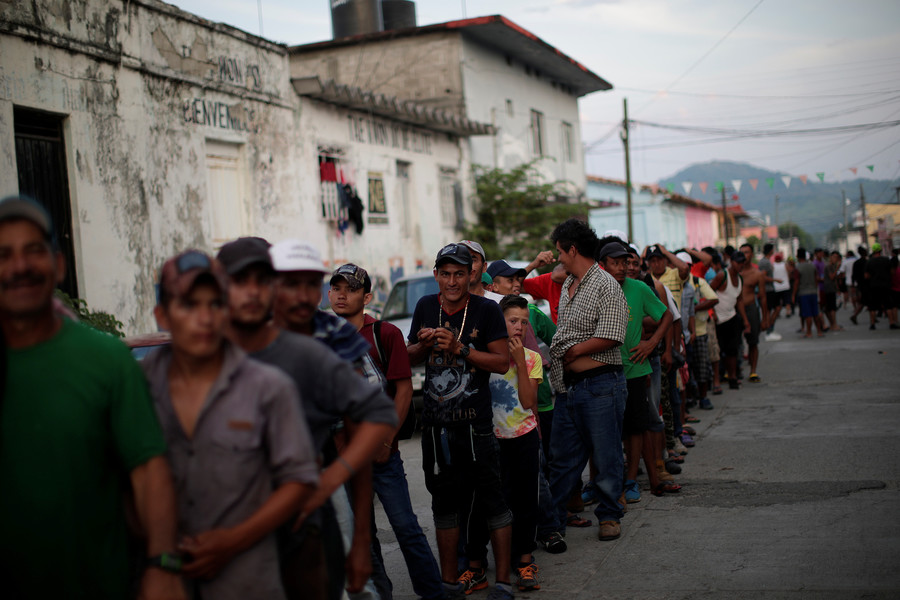
MIgrants wait in line for food donations in San Pedro Tapanatepec, Mexico © Reuters / Ueslei Marcelino
Trump has promised to take harsh action against the approaching caravan several times over the last few weeks. The President first threatened to cut off foreign aid to Guatemala, Honduras and El Salvador if they failed to stop migrants leaving for the US. Trump then warned the migrants to turn around in a similar tweet last Thursday, again asking them to apply for citizenship legally “like millions of others are doing.”
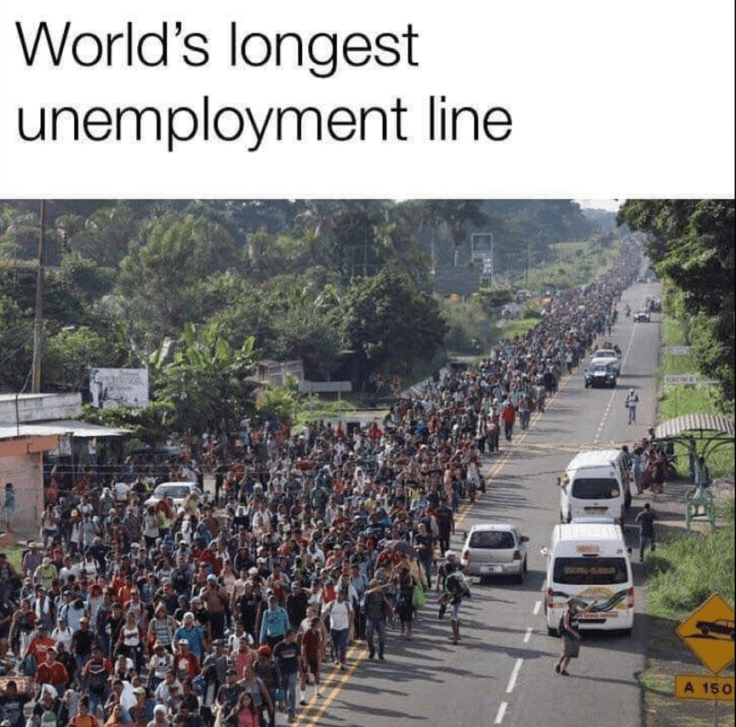
The caravan’s journey began in poverty-stricken Honduras almost three weeks ago. On its journey north, the caravan swelled in numbers to around 7,000. Many of the migrants have split off from the main group, and some have turned back, leaving around 4,000 still trudging towards the US.
Mexican President Enrique Peña Nieto offered some of these migrants a chance at immigrating to Mexico on Friday, an offer that was rejected by the bulk of the group. “Our goal is not to remain in Mexico,” one Honduran migrant told AP. “Our goal is to make it to the US. We want passage, that’s all.”
Upon reaching the border, the migrants will most likely not be met with heavily armed US troops. The Posse Comitatus Act, a federal law dating back to the 1870s, forbids the military from engaging in law enforcement on US soil, unless authorized by Congress. The troops will therefore likely provide reconnaissance, logistics, and assistance to Customs and Border Patrol agents.
In the runup to next week’s midterm elections, Trump has fought to keep the caravan’s progress in the spotlight. The president has used that spotlight to bash Democrats for failing to support his tough immigration proposals, and has called the caravan a “great midterm issue for Republicans.”
Like this story? Share it with a friend!

By Emma H.
“Those stone Age ideas they can keep for themselves,” he said. In the podcast, guests get to respond to prejudice about themselves.
In the latest episode, Tommy was confronted with the claim that he “purely aesthetically” thinks the Ku Klux Klan “has something”.
He disagreed. Anyone who covers their face shouldn’t be here. One should show one’s face, he said. The host asked if this also applied to religious purposes.
“Yes, above all. We shouldn’t have it here anyway,” the singer responded.
“We should show who we are. This applies to anyone who comes here,” he continued.
“So people can’t bring their religion to Sweden, in your opinion?” the host asked.
“They can bring their religion, but one should follow local customs too. To sit in school and cover your face, no no,” replied Tommy.
When Aftonbladet got hold of the singer, he elaborated his thoughts.
“Religion has nothing to do with it. It is a purely patriarchal act – how men have treated women. Those Stone Age ideas they can keep for themselves, and not bring here.”
“Are you thinking about the burka and niqab, that have been discussed in for example Denmark?”
“You should not cover your face. What is this stupidity? Just remove it,” he concluded.
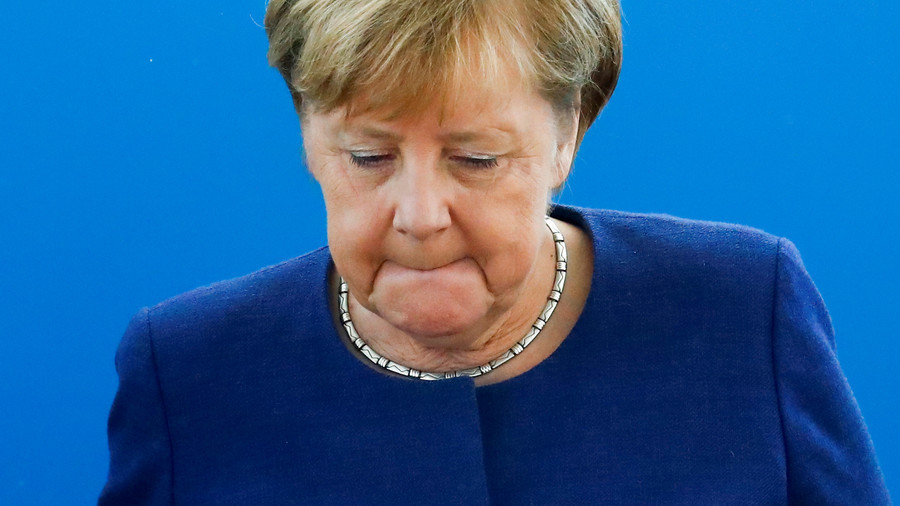
German Chancellor Angela Merkel‘s Christian Democratic Union (CDU) suffered an electoral shock, winning only 28 percent. The results were quite a disappointment for the CDU candidate and Ministers-President of Hesse, Volker Bouffier, a Merkel man who has stuck with her through thick and thin.
The CDU result marks a huge drop from the 38.3 percent won by the party during Hesse’s last election in 2013.
“We are in pain because of the losses but we also learnt that it is worth it to fight,” Volker Bouffier, the incumbent CDU state premier in Hesse and a Merkel ally, told supporters.
The AfD, meanwhile, gained 12 percent of the votes in Hesse, a state that is home to six million people and the German capital of finance, Frankfurt am Main.
The party’s parliamentary leader, Alice Weidel, took to Twitter to celebrate its success.
“We are the People’s Party!” she wrote, noting that the AfD is now “firmly anchored” in the German parliament and is “here to stay.”

The nosedive in support for Merkel’s party in Hesse, known as Hessen in Germany, was predicted by polls ahead of the crucial election. Back in 2013, the CDU had to make a coalition with the Alliance 90/The Greens after the election resulted in no clear winner. It’s not clear if the CDU will now again unite with the Greens to form a government.
The Social Democratic Party (SPD), which went toe-to-toe with the CDU for decades, secured 20 percent.
“This is a bad result for us, I can’t put it any differently,” SPD Secretary General Lars Klingbeil told broadcaster ZDF.
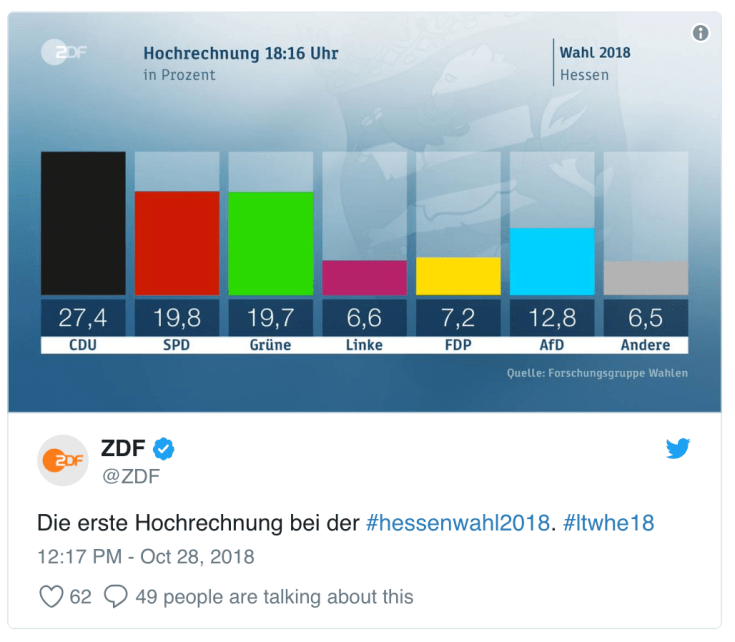
The Greens placed third, just barely trailing behind the Social Democrats with 19.5 percent of the votes.
Germany’s political landscape has been visibly crumbling in recent weeks. Earlier in October, Merkel’s ruling coalition was shaken after the Christian Social Union (CSU) – the sister party of the CDU – gained 37.3 percent in Germany’s largest and second-most populous state of Bavaria. It represented the worst election result since 1950, and a loss of its absolute majority for only the second time since 1962. CSU General Secretary Markus Blume called it a “bitter day” for the party.
With the emergence of a fresh crisis, Merkel may face difficulties when she stands for re-election as the CDU chair at the party’s conference in December this year.
Like this story? Share it with a friend!

Reuters – OCTOBER 28, 2018
The group of more than 300 Salvadorans that left San Salvador on Sunday came together after thousands of Hondurans in mid-October left their country in a large group, becoming an international news story and a key issue in the U.S. congressional elections.
A second group of Hondurans was moving through Guatemala last week, and at one point numbered more than 1,000 people before beginning to fragment.
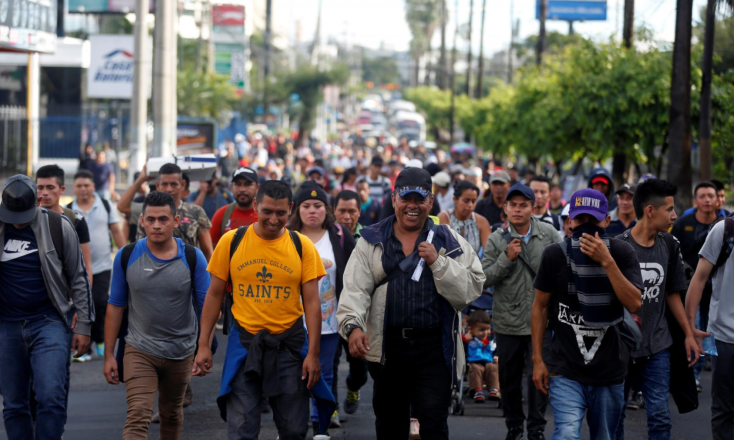
People walk in a caravan of migrants departing from El Salvador en route to the United States, in San Salvador, El Salvador, October 28, 2018. REUTERS/Jose Cabezas
Trump and his fellow Republicans have sought to make immigration a major issue before the Nov. 6 elections, in which the party is battling to keep control of Congress.
The Salvadoran migrants organized using social networks like Facebook and WhatsApp over the last couple of weeks, inspired by the group of mostly Hondurans currently crossing Mexico.
Salvadoran police traveled with the group on Sunday as they left San Salvador, the migrants carrying backpacks and water bottles and protecting themselves from the hot sun with hats. Some mothers pushed their children in strollers.
Several migrants, gathered by the capital’s ‘Savior of the World’ statue before leaving, said they were headed to the United States.
“We’re asking the all-powerful to look after us, to guide us, to free us from all that is bad,” shouted Hernan Quinteros, 49, a driver who urged his fellow travelers to tie up their shoes ahead of the long trip.
El Salvador’s left-wing government said it had solidarity with the migrants and respected their right to mobilize, but urged them not to risk their lives on the way.

Migrants disembark from a truck in which they had gotten a ride, as a thousands-strong caravan of Central American migrants slowly makes its way toward the U.S. border, between Pijijiapan and Tonala, Mexico.
By Natalie Musumeci
Migrants in the town of Tecun Uman, Guatemala, said Thursday they were waiting for between 1,500 and 4,000 people to mass for another caravan like the first that came through the town and is now in Mexico about 1,000 miles from the nearest US border crossing at McAllen, Texas.
The bridge connecting Tecun Uman to Ciudad Hidalgo in Mexico is closed – and migrants said they planned to cross the Suchiate River dividing the countries via rafts or by wading through the waist-deep water, USA Today reported.
Mexico shut that bridge under pressure from President Trump.
“We are in a horrible crisis in our country,” said Gabriela Patricia Aguilar Lainez, 37, one of those gathering in the town plaza with her 3-year-old daughter, according to USA Today. “We are in a political crisis, an economic crisis, and a crime crisis.”
According to the news outlet, there was no evidence that the new group of migrants from Honduras was funded by a particular organization.
The migrants said they simply banded together to flee violence that has torn apart their home countries and because there is strength in numbers.
“Our country is failed,” said Honduras native Kevin Escobar, 26, who had traveled six days walking and hitching rides to get to the Guatemala-Mexico border.
“I have to find a way to help my family and that means going to another country.”
UNICEF reported Friday that some of the estimated 2,300 children traveling with the first caravan are ill or suffering from dehydration.
The migrants were planning what would be their most ambitious single-day trek since they crossed into Mexico, setting their sights for Friday on reaching Arriaga, a march of about 62 miles.
Trump sent a message to the marchers in a tweet Thursday.
“To those in the Caravan, turnaround, we are not letting people into the United States illegally,” the commander-in-chief tweeted. “Go back to your Country and if you want, apply for citizenship like millions of others are doing!”
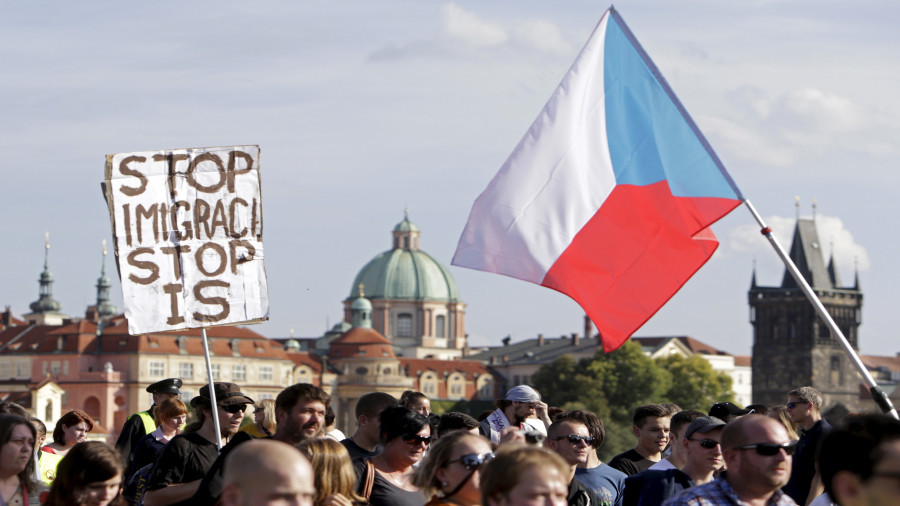
File Photo: Czechs march during an anti-immigration rally, 2015 © Reuters / David W Cerny
“There are 700,000 illegal migrants,” Andrej Babis said in an interview with The Guardian newspaper. “They need to go home.”
Babis has long railed against the implementation of EU-imposed migrant quotas, along with the leaders of neighboring Slovakia, Hungary and Poland – collectively known as the Visegrad Group. He has previously labeled the quotas “absurd” and “not effective.”
At the height of the migrant crisis in 2015, approximately two million non-EU citizens were believed to be present in member states. While many of these were refugees fleeing Syria’s devastating civil war, thousands also made the journey as economic migrants from Africa.
While the number of these illegals has now fallen to 618,780, according to 2017 statistics from Eurostat, Babis believes both economic migrants and refugees should return home.
These people should stay home and we should help them in Africa. The people around Syria… they would like to return home.
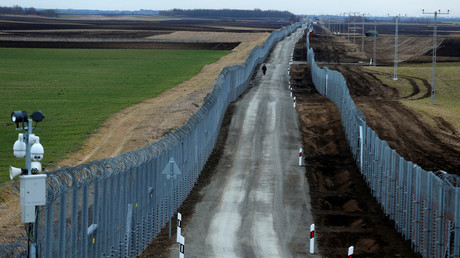
Rather than an expanded budget for the EU’s border agency Frontex, Babis thinks national governments should instead protect their own borders and coastlines.
“Smugglers made €5.7 billion in 2016 and we have to stop it,” he said.
READ MORE: We are anti-migration government, whether Brussels likes it or not – Hungary’s FM
Babis, along with Hungary’s Victor Orban, has been skeptical of an expanded Frontex, believing it to be a power grab by Brussels to take border control away from states on the bloc’s frontier.
Instead, Babis suggests that the EU should make funds available to help develop African countries like the Marshall Plan, the US aid initiative that helped rebuild Western Europe after World War Two.
This, Babis believes, would help convince potential migrants to stay in their own countries.
“They have their culture, we have our culture,” he said. “They have their values, but we want to keep [our] values.”


 Tom's Blog