
Published on Jun 18, 2019


Having been set to attend Harvard in 2020 after taking a year off school, Kashuv announced in a series of tweets on Monday that the Ivy League institute had decided to rescind his acceptance “over texts and comments made nearly two years ago, months prior to the shooting.”
Kashuv was one of the students at Marjorie Stoneman Douglas High in Parkland, Florida, during the February 2018 attack that left 17 students and staff killed and another 17 injured. While Hogg and several other seniors became celebrity gun control activists, Kashuv made public his pro-gun views, including the right to arm school staff.
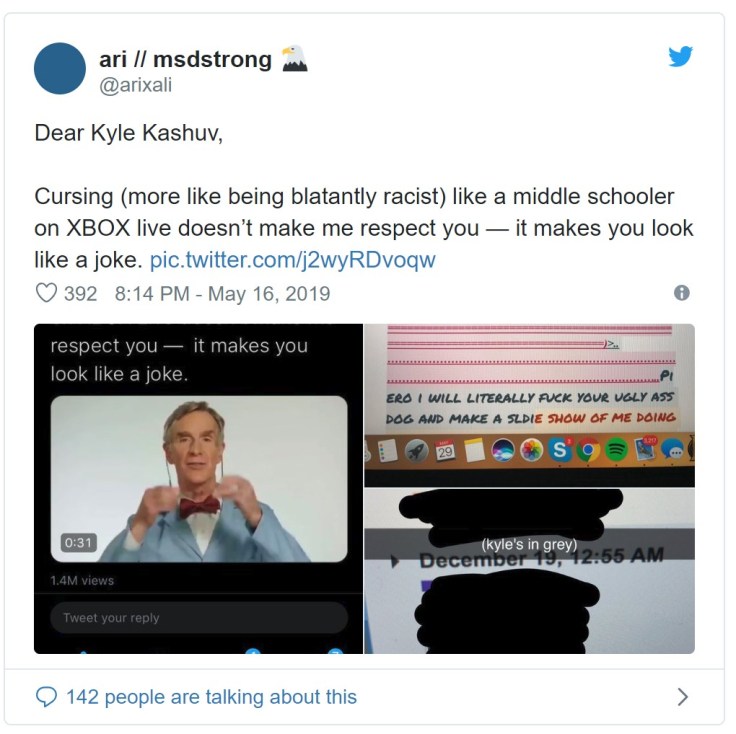
He worked for the high-school outreach wing of the pro-Trump organization Turning Point USA, and even met with the president himself. In May, however, someone dug up a private chat from 2016 in which Kashuv repeatedly used a racial slur referring to African-American.
Although he was 16 at the time and the comments were made in private, Kashuv took responsibility in a public apology on Twitter, saying his remarks had been “idiotic,” “callous and inflammatory.”
Harvard seemingly agreed with his assessment, but didn’t feel like his apology was quite enough. After reviewing the apology letter, the school replied saying he would no longer be welcome to attend, citing concerns over his “maturity and moral character.”
7/ Harvard decided to rescind my admission with the following letter. https://t.co/P3bLkF3hHn—
Kyle Kashuv (@KyleKashuv) June 17, 2019
Despite seeking guidance from the Office of Diversity and Inclusion, and requesting a face to face meeting regarding the incident, Harvard had already made its decision. In his tweets, Kashuv pointed out the irony of university’s apparent message that in contemporary society, certain “mistakes brand you as irredeemable,” especially considering the school’s own “checkered past.”

“If Harvard is suggesting that growth isn’t possible and that our past defines our future, then Harvard is an inherently racist institution. But I don’t believe that,” Kashuv added.
Harvard has yet to issue any public response to his comments.
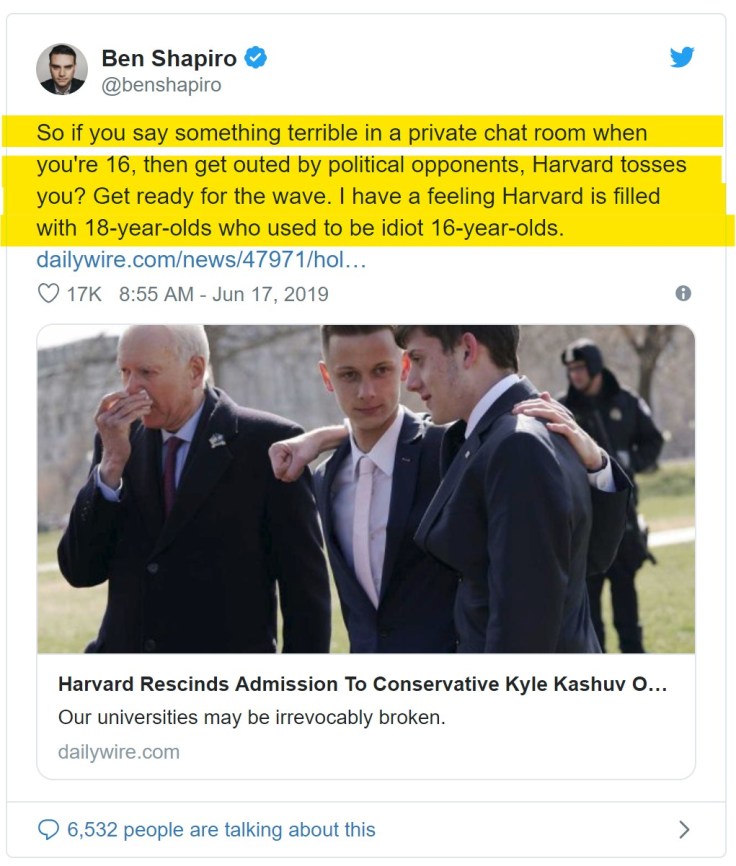
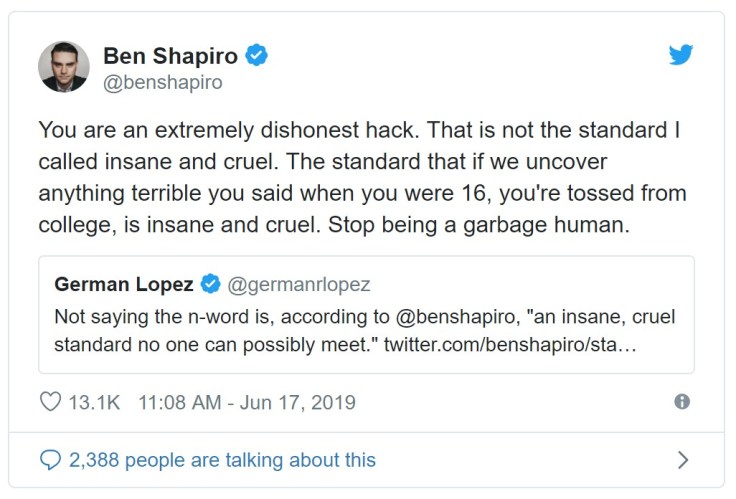
Despite the blow, Kashuv has gotten some support from conservative media personality Ben Shapiro, who argued that uncovering things people said when they were teenagers and holding it against them creates an “insane and cruel”standard, and sets a dangerous precedent.
One has to wonder what implications the decision will have for future applicants– or even those already attending the prestigious institution. Around the same time Kashuv’s comments were unearthed in May, the Harvard Lampoon ran an image of Holocaust victim Anne Frank in a bikini which was widely panned as anti-Semitic and even condemned by the New England regional director of the Anti-Defamation League.
It seems that, at least for the time being, their apology was enough.
‘Hateful, ignorant, pedophilic’: Harvard magazine slammed for FAKE IMAGE of Anne Frank in bikini

Think your friends would be interested? Share this story!

By Tony Lee
“The Case for Reparations” author Ta-Nehisi Coates and actor Danny Glover are reportedly set to testify before the House Judiciary Subcommittee on the Constitution, Civil Rights and Civil Liberties, and the hearing’s stated purpose will be “to examine, through open and constructive discourse, the legacy of the Trans-Atlantic Slave Trade, its continuing impact on the community and the path to restorative justice,” according to a Thursday Associated Press report.
The June 19 hearing also “coincides with Juneteenth, a cultural holiday commemorating the emancipation of enslaved blacks in America.”
Rep. Sheila Jackson Lee (D-TX), who sits on the subcommittee, again introduced H.R. 40 earlier this year to create a reparations commission. Jackson Lee said her bill would create a commission “to study the impact of slavery and continuing discrimination against African-Americans, resulting directly and indirectly from slavery to segregation to the desegregation process and the present day.” She added in January that the “commission would also make recommendations concerning any form of apology and compensation to begin the long delayed process of atonement for slavery.”
“The impact of slavery and its vestiges continues to effect African Americans and indeed all Americans in communities throughout our nation,” Jackson Lee said. “This legislation is intended to examine the institution of slavery in the colonies and the United States from 1619 to the present, and further recommend appropriate remedies. Since the initial introduction of this legislation, its proponents have made substantial progress in elevating the discussion of reparations and reparatory justice at the national level and joining the mainstream international debate on the issues. Though some have tried to deflect the importance of these conversations by focusing on individual monetary compensation, the real issue is whether and how this nation can come to grips with the legacy of slavery that still infects current society. Through legislation, resolutions, news, and litigation, we are moving closer to making more strides in the movement toward reparations.”
Jackson Lee argued that despite the progress of African-Americans in the private sector, education, and the government in addition to “the election of the first American President of African descent, the legacy of slavery lingers heavily in this nation.”
“While we have focused on the social effects of slavery and segregation, its continuing economic implications remain largely ignored by mainstream analysis,” she continued. “These economic issues are the root cause of many critical issues in the African-American community today, such as education, healthcare and criminal justice policy, including policing practices. The call for reparations represents a commitment to entering a constructive dialogue on the role of slavery and racism in shaping present-day conditions in our community and American society.”
In the Senate, Sen. Cory Booker (D-NJ), a 2020 presidential candidate, introduced the companion legislation, saying creating a reparations committee “is a way of addressing head-on the persistence of racism, white supremacy, and implicit racial bias in our country.”
“It will bring together the best minds to study the issue and propose solutions that will finally begin to right the economic scales of past harms and make sure we are a country where all dignity and humanity is affirmed,” Booker said in April.
House Speaker Nancy Pelosi (D-CA), in addition to nearly every Democrat running for president, has endorsed Jackson Lee’s bill.
And though Coates praised Sen. Elizabeth Warren (D-CA) this week on the reparations issue, Warren, like nearly every other 2020 Democrat with the exception of former San Antonio Mayor Julian Castro, has squirrelly dodged questions about whether the United States government should make cash payments to the descendants of slaves.

“It is glaringly apparent that many who support the president’s administration are either racists, steeped in religious beliefs, ignorant, or as my mother used to say, just plain dumb,” Fudge said as she read the letter on the House floor. “I believe the crooked ascension of Trump to the Oval Office is a gauge that measures the declining patriotic and moral values of the many citizens of America as well as being the revelation of the hidden bigotry, judgmental attitudes that yet exist in many of those who call themselves evangelicals.”
“I believe that I can safely assume that the United States is no longer a democracy,” Fudge continued reading.
Rep. Marc Veasey (D-TX) told Fudge after she read the letter: “Remarks and debate may not engage in personalities towards the president, including by repeating remarks made elsewhere that would be improper if spoken in the member’s own words.”
The Trump campaign responded to Fudge’s reading of the letter in a tweet, reading: “Democrats didn’t learn their lesson from Hillary’s huge loss. They are still insulting millions of Americans, this time from the floor of the House of Representatives. It seems all Democrats are offering the country is more hate and hoaxes!”


Subjected to a diversity-focused witch hunt featuring persistent race-based shaming and verbal abuse, as well as groundless demotions and professional harassment despite decades of excellent work, Lois Herrera, Jaye Murray, and Laura Feijoo are seeking a total of $90 million from Schools Chancellor Richard Carranza and the city for compensatory damages, loss of earning capacity, and emotional pain and suffering.
“Under Carranza’s leadership, [the Department of Education] has swiftly and irrevocably silenced, sidelined and punished plaintiffs and other Caucasian female DOE employees on the basis of their race, gender and unwillingness to accept their other colleagues’ hateful stereotypes about them,” the suit, filed on Tuesday in New York state Supreme Court, reads.
Herstory, heterosexism and homonationalism: University ‘language guide’ ignites free speech battle

Carranza wasted no time launching his reign of terror after he was hired in April 2018, according to the suit. “If you draw a paycheck from DOE … get on board with my equity platform or leave,” he reportedly told his employees.
Told to “take a step back and yield to colleagues of color” and “recognize that values of white culture are supremacist,” Herrera, a 33-year veteran of city schools, claims she was stripped of her title and demoted – despite being publicly praised for her performance the previous year – after she was held responsible for the racial inequities in the school system. Humiliated by her unqualified replacement, a black man promoted over her without so much as an interview, Herrera was subjected to a string of racist indignities that included a professional workshop where a black presenter decried the “‘white middle class values’ that were plaguing society,” framing the struggle as “us vs. them” – with Herrera the unfortunate “them” in the equation.
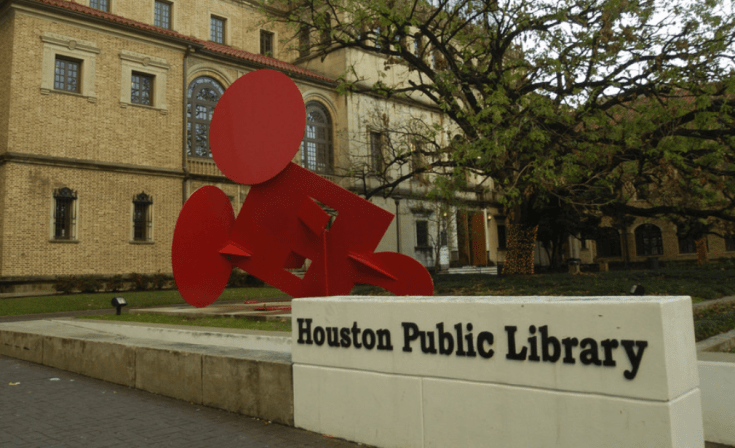
Oops! Texas library apologizes for hiring sex offender to dress in drag & read to kids
Despite Murray’s role in leading anti-bias programs during her 13 years in the system, she, too, was demoted – partially for the unpardonable sin of being from Westchester, a wealthy white suburb she realized the management expressly reviled after being forced to watch a professional development video that blamed black poverty on the proliferation of white suburbs. Her newly-appointed black supervisors forced her to report her work every 30 minutes to harass and degrade her, she claims, and even used her disability to humiliate her.
Feljoo, who had risen to supervising superintendent over 30 years with the schools, was snubbed for a promotion, which instead went to a black woman so unqualified for the role that a “training period” had to be instituted in order to hurriedly license her. Once licensed, she proceeded to remove all white women from her subordinate ranks, further pushing Feljoo down the ladder.
Carranza has denied the women were demoted because they are white, calling the lawsuit’s allegations “absolutely not true.”
“The children in New York City – 70 percent of whom are black and brown children – get to see senior level administrators that look like them. What’s wrong with that?” he said, pointing out his diversity hires are “extremely-well qualified individuals who at any moment could get tapped to lead their own school system anywhere across this country.”
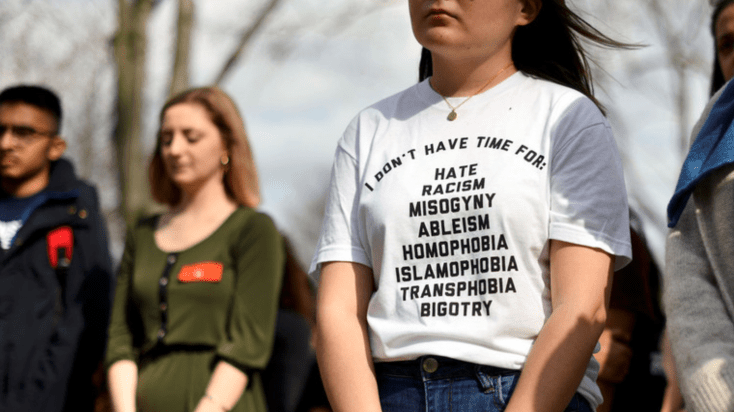
Virginia Tech may be the most extreme example, but it’s hardly alone. The school exemplifies a relatively recent trend in US higher education in which student identity groups demand and are given their own facilities, programs and (safe) spaces. While legally-mandated racial segregation under the ‘separate but equal’ doctrine was struck down in the 1954 Supreme Court decision Brown v. Board of Education, a National Association of Scholars surveyof 173 colleges published last month revealed that fully 72 percent now offer segregated graduation ceremonies, with 43 percent boasting segregated student residences.
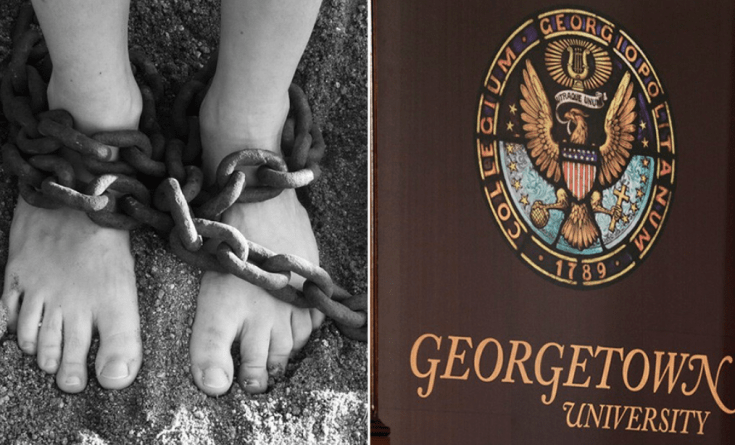
Georgetown University students vote reparations for slavery into future tuition
Unlike the enforced segregation of old, this kinder, gentler discrimination is couched in the language of empowerment, strength in diversity, and tolerance. Only there is no diversity within a single-race dorm, and no tolerance learned by mingling solely with one’s own kind. Certainly, there is nothing empowering about claiming a bottom-of-the-barrel identity like “recovering addict” because as a straight white student, you have no advocates planning a special graduation ceremony for you at Virginia Tech.
While the ‘Cultural and Community Centers’ program that runs Virginia Tech’s identity group ceremonies encourages students to attend as many as their multiplicity of identities allows, it’s physically impossible to attend the “Gesta Latina” Hispanic-Latino achievement ceremony and the Lavender Commencement Ceremony (for LGBT students), and the Recovery Community and Veterans ceremonies overlap as well in a particularly unfortunate coincidence, given that 1 in 15 vets were diagnosed as substance abusers in 2013.
The ceremonies are technically open to everyone – to watch. However, the American Indian/Indigenous ceremony invites only “indigenous students, faculty and staff” to participate, just as Aliyah is a “celebration of achievement” only for Jewish students and the Muslim event celebrates only Muslim students. Certainly, only black students can “Don the Kente,” a brightly-colored Ghanaian cloth that black VTech students have been wearing to separate themselves since 1995. Those without a designated ethnic or religious group can probably try to join the catch-all International Student Achievement Ceremony – bonus points if you can fake an accent – but for white kids, it’s the all-school impersonal graduation ceremony only – unless you’re a vet or an addict.
A 2013 Economic Policy Institute report on segregation in public schools post-Brown claims black students are “more isolated than they were 40 years ago” thanks to racial economic disparities and discriminatory policing that disproportionately locks up black men. Why, then, would universities consciously choose to perpetuate such segregation, adding the sick joke of framing it as empowering?
Reflexively mocking those who object to institutionalized identity politics as victims of “white fragility” misses the point. A university education was once about exposing young adults to new and challenging ideas, often communicated by people unlike themselves, in an effort to prepare them to make their way in the world and develop their own values. The current university model instead resembles an exorbitantly-priced adult daycare in which all rough edges have been sanded down to avoid uncomfortable learning experiences which might force the student to change, question, or develop as a person. Students emerge from safe-space chrysalises less prepared for “real life” than when they went in – and are usually saddled with hundreds of thousands of dollars in debt besides, ensuring they are both psychologically and economically crippled – pardon me, handicapable – before they even begin their journey in life.
Helen Buyniski




 Tom's Blog