By Reid Wilson
Ocasio-Cortez accused of campaign finance violations
Published on Mar 5, 2019

WATCH: Bernie Can’t Think Of Any Legislation He’s Passed That Helps People

Socialist Vermont Sen. Bernie Sanders was unable to name a single piece of legislation that he has passed from his decades of experience being in Congress during an interview on Monday.
Sanders, 77, appeared on the “The Breakfast Club,” where he fielded questions related to his 2020 presidential candidacy as a Democrat.
“So I think I have a long history in civil rights activism,” Sanders said. “In 1988 I was one of the few white public officials who supported Jesse Jackson for President the United States and he ended up winning Vermont. I think if you look at my record in terms of civil rights and other areas you will find that it is consistently a very very strong record.”
Charlamagne tha God, one of the show’s hosts, asked Sanders: “Any legislation you can point to well?”
“Legislation that, uh, benefits African-Americans yeah we passed but not specifically you know we passed legislation that benefits working people sure,” Sanders responded.
WATCH:
Sanders held his first rallies over the weekend in Brooklyn, New York, and Chicago, Illinois where spoke about the need to “transform America.”
Partial transcript of Sanders’ prepared speech in Brooklyn:
Thank you all very much for being here today and thank you for being part of a political revolution which will transform America.
Thank you for being part of a campaign which is not only going to win the Democratic nomination, which is not only going to defeat Donald Trump, the most dangerous president in modern American history, but with your help is going to transform this country and, finally, create an economy and government which works for all Americans, and not just the one percent. Today, I want to welcome you to a campaign which says, loudly and clearly, that the underlying principles of our government will not be greed, hatred and lies. It will not be racism, sexism, xenophobia, homophobia and religious bigotry. That is going to end. The principles of our government will be based on justice: economic justice, social justice, racial justice and environmental justice. Today, I want to welcome you to a campaign which tells the powerful special interests who control so much of our economic and political life that we will no longer tolerate the greed of corporate America and the billionaire class – greed which has resulted in this country having more income and wealth inequality than any other major country on earth.
No. We will no longer stand idly by and allow 3 people in this country to own more wealth than the bottom half of America while, at the same time, over 20 percent of our children live in poverty, veterans sleep out on the streets and seniors cannot afford their prescription drugs. We will no longer accept 46 percent of all new income going to the top 1 percent, while millions of Americans are forced to work 2 or 3 jobs just to survive and over half of our people live paycheck to paycheck, frightened to death about what happens to them financially if their car breaks down or their child becomes sick. Today, we fight for a political revolution.
Read his full speech here.
BILDERBERG ATTENDEE HICKENLOOPER JOINS 2020 RACE

Former Colo. governor could be globalist dark horse
By Paul Steinhauser
Touting that he’s proven he can bring people together “to produce the progressive change Washington has failed to deliver,” former two-term Colorado Gov. John Hickenlooper on Monday morning launched his bid for the Democratic presidential nomination.
“I’m running for president because we need dreamers in Washington but we also need to get things done,” Hickenlooper said in a video announcing his White House campaign
Taking aim at Republican President Trump, Hickenlooper said a major reason he’s running is because “we’re facing a crisis that threatens everything we stand for.”
And repeating a line he’s used on the campaign trail, he explained that “as a skinny kid with coke bottle glasses and funny last name, I stood up to my fair share of bullies.”
The 67-year-old geologist turned successful startup brewpub owner, who later served two terms as Denver mayor before being elected Colorado governor, joins a crowded field of contenders vying for the nomination.
Hickenlooper, who in January finished up his second term steering Colorado, becomes the second sitting or former governor to enter the race. Washington State Gov. Jay Insleeannounced his candidacy on Friday.
Like Inslee, Hickenlooper faces a long-shot bid against a number of higher-profile contenders such as Sens. Bernie Sanders of Vermont, Kamala Harris of California, Elizabeth Warren of Massachusetts, Cory Booker of New Jersey, Amy Klobuchar of Minnesota, and Kirsten Gillibrand of New York.
Former San Antonio Mayor Julian Castro, who served as Housing and Urban Development secretary under President Barack Obama, is also running, as are Rep. Tulsi Gabbard of Hawaii, former Rep. John Delaney of Maryland, and South Bend, Indiana Mayor Pete Buttigieg.
A number other Democrats are moving toward White House bids, including former Vice President Joe Biden, former Rep. Beto O’Rourke of Texas, Sens. Sherrod Brown of Ohio and Jeff Merkley of Oregon, and Rep. Eric Swalwell of California.
HILLARY CLINTON SAYS COUNTRY IN ‘FULL FLEDGED CRISIS’
In his video, Hickenlooper spotlighted the challenges he faced during his first term as governor, from the historic recession to devastating droughts and forest fires and floods to the 2012 mass shooting at a movie theater in Aurora.
“We beat the NRA by enacting universal background checks and banning high capacity magazines,” he touted.
Hickenlooper also highlighted passing through a divided legislature health care legislation that now covers “nearly 95 percent of all Coloradans.” And he spotlighted bringing environmentalists and fossil fuel companies together to create “the toughest methane emission laws in the country” and moving the state from “40th in job growth to the number one economy in America.”
The listing of his progressive achievements is aimed at blunting perceptions of Hickenlooper as a moderate Democrat not in lockstep with the base.
HICKENLOOPER’S RESERVATIONS WITH MEDICARE-FOR-ALL, GREEN NEW DEAL
While many of his rivals for the 2020 Democratic nomination have wholeheartedly supported both the Green New Deal and “Medicare-for-all,” two top wish-list items for the progressive base of the party, Hickenlooper expressed some reservations during a stop last month in New Hampshire, the state that holds the first primary in the race for the White House.
“We will get to some version of single payer, but single payer doesn’t include getting rid of insurance companies,” he told reporters when asked about Medicare-for-all.
Asked about the Green New Deal, the sweeping proposal that aims to transform the country’s economy to fight climate change while enacting a host of new health care and welfare programs, Hickenlooper told Fox News that he hadn’t seen all of the details of the plan, but “I’m going to guess that 99 percent of what’s in the Green New Deal I will be happy to embrace.”
But he said support for the Green New Deal shouldn’t be “a litmus test that you’re either with us or wrong.”
The Republican National Committee, though, tagged the former governor as yet another “liberal” joining the 2020 field, in response to his announcement Monday.
“John Hickenlooper is the latest tax-and-spend liberal to join the race. But according to Hickenlooper, he’s actually ‘a lot more progressive’ than his far-left opponents. In a primary dominated by socialist policies like the $93 trillion ‘Green New Deal,’ that puts him way outside the mainstream,” RNC Communications Director Michael Ahrens said in a statement.
Hickenlooper is expected to formally kick off his campaign on Thursday, with what’s being billed as a “hometown send-off” event in Denver. The next day the former governor heads to Iowa – the state that kicks off the presidential caucus and primary calendar – for two days of campaigning.
CNN, Democratic Party accused of conspiring against Sanders with ‘stacked’ audience at Q&A event

CNN and the Democratic Party have been accused of trying to sabotage Bernie Sanders after the network masked the political affiliations of audience members who pelted the senator with questions during a town hall event.
The Vermont senator found himself bogged down in complicated policy issues – and apologies – after fielding questions from audience members whose political loyalties and possible ulterior motives were obscured by CNN. The eyebrow-raising oversight was first spotted by Paste Magazine, which accused CNN, in concert with the Democratic Party, of “stacking” the audience against Sanders by not being upfront about who was tasked with asking the senator questions.
For example, a young woman identified by CNN as a student at American University suggested that Sanders had turned a blind eye to his campaign’s alleged sexist behavior during the 2016 primaries, and asked what the democratic socialist would do to make women feel more included in his 2020 presidential bid. Curiously, the network failed to disclose that the student also happens to be an intern at a major DC lobbying firm – an odd coincidence considering her question was adapted from a Sanders-bashing talking point popular among corporate-friendly Democrats.
CNN was similarly tight-lipped about the backgrounds of other audience members selected to interrogate Sanders.
One audience member labeled as a “George Washington student” was later revealed to be an intern for a Democratic fundraising organization, the Katz Watson Group, and was previously a campaign fellow for ‘Hillary Clinton for America’.
Town hall moderator Wolf Blitzer introduced another audience member as a mother of two who is “active in the Maryland Democrat Party.” It turns out the innocuous mom was actually the chair of her county’s Democratic Central Committee.
CNN conceded that it should have been more transparent about its question-askers.
“Though we said at the beginning of the Town Hall that the audience was made up of Democrats and Independents, we should have more fully identified any political affiliations,” the network said in a statement.
Edward Hall, an economist and co-founder of the Occupy Wall Street movement, told RT that CNN’s deceptive identification practices were “par for the course” and part of a “long-running disease” in US politics, which uses in-fighting to protect corporate interests.
This isn’t the first time that CNN has given Sanders a raw deal. In one notable example, the network was taken to task for declaring Clinton the Democratic candidate even though, at the time, she lacked the required number of pledged delegates to clinch the nomination. Emails published by WikiLeaks famously revealed that CNN contributor Donna Brazile passed town hall debate questions to Hillary Clinton during her 2016 primary against the Vermont lawmaker.
Like this story? Share it with a friend!
In America, talk turns to something unspoken for 150 years: Civil war…
By Greg Jaffe and Jenna Johnson
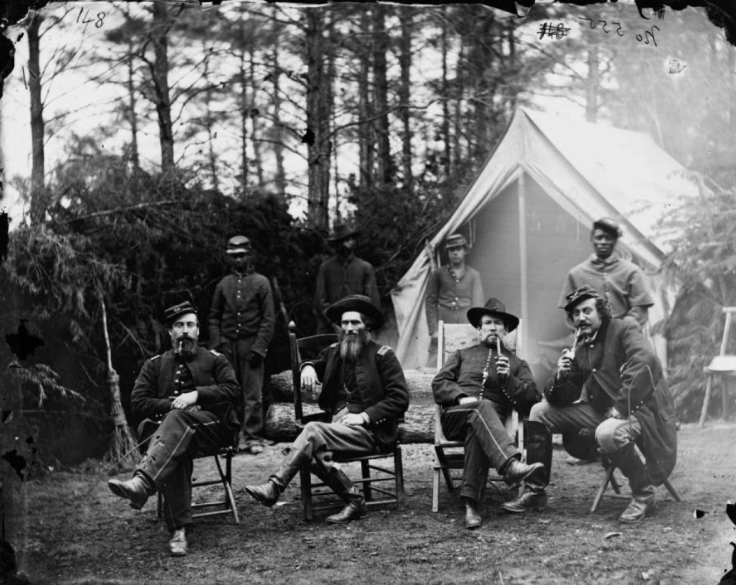
At a moment when the country has never seemed angrier, two political commentators from opposite sides of the divide concurred last week on one point, nearly unthinkable until recently: The country is on the verge of “civil war.”
First came former U.S. attorney Joseph diGenova, a Fox News regular and ally of President Trump. “We are in a civil war,” he said. “The suggestion that there’s ever going to be civil discourse in this country for the foreseeable future is over. . . . It’s going to be total war.”
The next day, Nicolle Wallace, a former Republican operative turned MSNBC commentator and Trump critic, played a clip of diGenova’s commentary on her show and agreed with him – although she placed the blame squarely on the president.
Trump, she said, “greenlit a war in this country around race. And if you think about the most dangerous thing he’s done, that might be it.”
With the report by special counsel Robert Mueller reportedly nearly complete, impeachment talk in the air and the 2020 presidential election ramping up, fears that once existed only in fiction or the fevered dreams of conspiracy theorists have become a regular part of the political debate. These days, there’s talk of violence, mayhem and, increasingly, civil war.
A tumultuous couple of weeks in American politics seem to have raised the rhetorical flourishes to a new level and also brought a troubling question to the surface: At what point does all the alarmist talk of civil war actually increase the prospect of violence, riots or domestic terrorism?

Speaking to conservative pundit Laura Ingraham, diGenova summed up his best advice to friends: “I vote, and I buy guns. And that’s what you should do.”
He was a bit more measured a few days later in an interview with The Washington Post, saying that the United States is in a “civil war of discourse . . . a civil war of conduct,” triggered mostly by liberals and the media’s coverage of the Trump presidency. The former U.S. attorney said he owns guns mostly to make a statement, and not because he fears political insurrection at the hands of his fellow Americans.
The rampant talk of civil war may be hyperbolic, but it does have origins in a real crumbling confidence in the country’s democratic institutions and its paralyzed federal government. With Congress largely deadlocked, governance on the most controversial issues has been left to the Supreme Court or has come through executive or emergency actions, such as Trump’s border wall effort.
Then there’s the persistent worry about the 202o elections. “Given my experience working for Mr. Trump, I fear that if he loses the election in 2020 that there will never be a peaceful transition of power,” Michael Cohen, Trump’s former fixer and personal lawyer, told a congressional committee Wednesday.
On that score, Cohen’s not the only one who is concerned. As far back as 2016, Trump declined to say whether he would concede if he lost to Hillary Clinton, prompting former president Barack Obama to warn that Trump was undermining American democracy. “That is dangerous,” Obama said.
The moment was top of mind for Joshua Geltzer, a former senior Obama administration Justice Department official, when he wrote a recent editorial for CNN urging the country to prepare for the possibility that Trump might not “leave the Oval Office peacefully” if he loses in 2020.
“If he even hints at contesting the election result in 2020 . . . he’d be doing so not as an outsider but as a leader with the vast resources of the U.S. government potentially at his disposal,” Geltzer, now a professor at Georgetown Law School, wrote in his piece in late February.
Geltzer urged both major parties to require their electoral college voters to pledge to respect the outcome of the election, and suggested that it might be necessary to ask the secretary of defense and the chairman of the Joint Chiefs of Staff to reaffirm their loyalty to the Constitution over Trump.
“These are dire thoughts,” Geltzer wrote, “but we live in uncertain and worrying times.”
His speculation drew immediate reaction from the right. Former Alaska governor and Republican vice presidential nominee Sarah Palin tweeted a link to an article that called Geltzer’s warnings “rampant crazy.” News Punch, a far-right site that traffics in conspiracy theories, blared: “Obama Official Urges Civil War Against Trump Administration.”
Said Geltzer: “I don’t think I was being paranoid, but, boy, did I inspire paranoia on the other side.”
The concerns about a civil war, though, extend beyond the pundit class to a sizable segment of the population. An October 2017 poll from the company that makes the game Cards Against Humanity found that 31 percent of Americans believed a civil war was “likely” in the next decade.
More than 40 percent of Democrats described such a conflict as “likely,” compared with about 25 percent of Republicans. The company partnered with Survey Sampling International to conduct the nationally representative poll.
Some historians have sounded a similar alarm. “How, when, and why has the United States now arrived at the brink of a veritable civil war?” Victor Davis Hanson, a historian with Stanford University’s Hoover Institution, asked last summer in an essay in National Review. Hanson prophesied that the United States “was nearing a point comparable to 1860,” about a year before the first shots were fired on Fort Sumter, South Carolina.
Around the same time Hanson was writing, Robert Reich, a former secretary of labor who is now a professor at the University of California at Berkeley, imagined his own new American civil war, in which demands for Trump’s impeachment lead to calls from Fox News commentators for “every honest patriot to take to the streets.”
“The way Mr. Trump and his defenders are behaving, it’s not absurd to imagine serious social unrest,” Reich wrote in the Baltimore Sun. “That’s how low he’s taken us.”
Reich got some unlikely support last week from Stephen K. Bannon, Trump’s former chief strategist. “I think that 2019 is going to be the most vitriolic year in American politics since the Civil War, and I include Vietnam in that,” Bannon said in an interview with CBS’s “Face the Nation.”
All the doom, gloom and divisiveness have caught the attention of experts who evaluate the strength of governments around the world. The Economist Intelligence Unit’s Democracy Index, a measure widely cited by political scientists, demoted the United States from “full democracy” to “flawed democracy” in January 2017, citing a big drop in Americans’ trust for their political institutions.
Similarly, Freedom House, which monitors freedom and democracy around the world, warned in 2018 that the past year has “brought further, faster erosion of American’s own democratic standards than at any other time in memory.”
Those warnings about the state of America’s democratic institutions concern political scientists who study civil wars, which usually take root in countries with high levels of corruption, low trust in institutions and poor governance.
Barbara Walter, a professor of political science at the University of California at San Diego, said her first instinct was to dismiss any talk of civil war in the United States. “But the U.S. is starting to show that it is moving in that direction,” she said. “Countries with bad governance are the ones that experience these wars.”
James Fearon, who researches political violence at Stanford University, called the pundits’ warnings “basically absurd.” But he noted that political polarization and the possibility of a potentially serious constitutional crisis in the near future does “marginally increase the still very low odds” of a stalemate that might require “some kind of action by the military leadership.”
“I can’t believe I’m saying this,” he added, “but I guess it’s not entirely out of the question.”
Less clear in the near term is what kind of effect the inflammatory civil war rhetoric has on a democracy that’s already on edge. There’s some evidence that such heated words could cause people to become more moderate. A 2014 study found that when hard-line Israeli Jews were shown extreme videos promoting the Israeli-Palestinian conflict as essential to Israeli pride, a strong army or national unity, they took a more dovish position.
“Extreme rhetoric can lead some people to pull back from the brink,” said Boaz Hameiri, a professor at the University of Pennsylvania and co-author on the study. But that only happens when people already believe a “more moderate version of the extreme views” and find the more extreme message shocking, he said.
In such cases, people recognize the absurdity of their position, worry it reflects badly on them and reconsider it, he said.
If the extreme messages become a normal part of the political debate, the moderating effect goes away, the study found.
Violence is most likely to occur, Hameiri added, when political leaders use “dehumanizing language” to describe their opponents.
Most experts worried that the talk of conflict here, armed or otherwise, was serving to raise the prospects of unrest and diminish trust in America’s already beleaguered institutions.
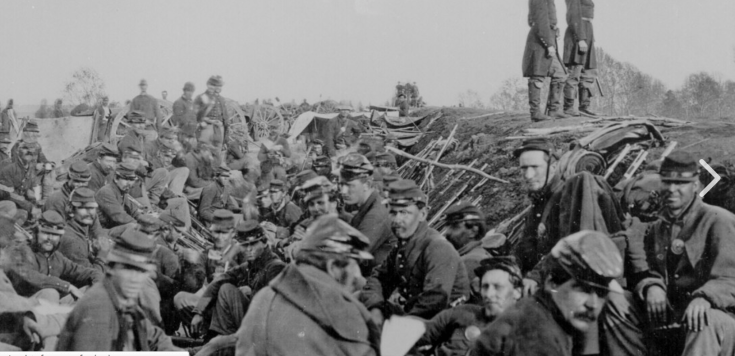
The latest warnings of civil war from diGenova drew an exasperated response from VoteVets, a liberal veterans advocacy group whose members have fought in actual civil wars in Iraq and Afghanistan.
“Amazing we have to say this but: 1. We are NOT in civil war. 2. Do NOT buy guns (or any weapons) to use against your fellow Americans,” Jon Soltz, the group’s chairman, tweeted in response to diGenova. “Trust us, we have seen war.”
Sanders on Green New Deal: Doesn’t Go Too Far — ‘The Future of the Planet Is at Stake!’
By Pam Key
Friday on ABC’s “The View,” Sen. Bernie Sanders (I-VT) said Rep. Alexandria Ocasio-Cortez (D-NY) Green New Deal does not go too far.
Co-host Sunny Hostin asked, “Does the Green New Deal go too far?”
Sanders said, “No. You cannot go too far on the issue of climate change. The future of the planet is at stake, OK?”
He added, “We have, according to the best scientists in the world, we have 12 years to begin substantially cutting carbon emissions before there will be irreparable damage to the planet. I talked to some folks who were in Paradise, CA, remember the terrible, terrible fire that wiped out the whole community?”
Sound Familiar? Dem Governor Running For President Vowing To Switch To 100% Clean Energy, Provide Millions Of Green Jobs

By James Barrett
Second-term Washington Gov. Jay Inslee officially announced his presidential candidacy Friday, and he’s running on a platform that sounds like it was ripped from the since-deleted, much-maligned FAQ for Alexandria Ocasio-Cortez‘s “Green New Deal.”
In a presidential announcement video released Friday, Inslee issues some rather familiar doom-and-gloom warnings as well as some pie-in-the-sky promises.
“We’re the first generation to feel the sting of climate change, and we’re the last that can do something about it,” the governor says ominously as apocalyptic images play in the background, which the viewer is clearly supposed to believe are the grim results of global warming.
“We went to the moon and created technologies that have changed the world,” he continues. “Our country’s next mission must be to rise up to the most urgent challenge of our time: defeating climate change. This crisis isn’t just a chart or graph anymore. The impacts are being felt everywhere.”
“We have an opportunity to transform our economy, run on 100 percent clean energy, that will bring millions of good paying jobs to every community across America, and create a more just future for everyone,” Insleee proclaims.
Inslee is a former congressman who was elected governor in 2012 and has another two years in office after winning his second election in 2016. Calling his bid a “longshot campaign,” The Seattle Times provides some highlights of Inslee’s progressive and largely “climate-focused” political career:
As governor, Inslee generally has pursued a liberal agenda, backing minimum-wage increases, higher taxes on the wealthy and businesses, raises for teachers and state government employees and declaring a moratorium on the death penalty. He also backed a record-setting, $8.7 billion tax-break deal to lure Boeing’s 777 plant and angered labor leaders by pressuring the Machinists union to approve a contract that ended workers’ defined-benefit pension plan.
He also has pushed an ambitious climate agenda, with mixed results, failing to persuade lawmakers and voters to adopt pollution fees on carbon emissions, but boosting electric-car infrastructure and creating a clean-energy fund that has poured millions into green projects. Despite Inslee’s agenda, greenhouse emissions in Washington have continued to rise, missing near-term reduction goals set in state law.
The Times reports that Democratic lawmakers in Washington are currently “making a big push” to try to ram through Inslee’s climate change agenda, many of the proposals of which have been stalled for “years.” Just a day before his announcement, the State Senate was debating his radical request to phase out the use of fossil fuels at Washington utlities, the paper notes.
Inslee, 68, has also proven that he’s willing to take on Trump on the national stage, opposing the president on rolling back business-stifling environmental regulations, arming teachers to better protect students, and the administration’s so-called “Muslim ban.”
The Democratic governor’s “green” candidacy shares much in common with AOC’s “Green New Deal,” which sets as its goals a massive overhaul of the economy, which will include 100% use of renewable energy in ten years, net-zero emissions, massive infrastructure projects — including high-speed rails all over the country and the “greening” of all buildings — Medicare-for-All, and living wage jobs for every American.
Everyone Who’s Never Read A History Book Shocked As Socialist Turns Into Authoritarian At First Whiff Of Power
By The Babylon Bee

U.S.—After a recently elected democratic socialist politician suddenly began using authoritarian, elitist-sounding language mere weeks after getting her first whiff of power, every single person in the country who’s never read a history book expressed their shock and surprise at the sudden transformation.
The woman, Alexandria Ocasio-Cortez, tweeted “We’re in charge” in the context of a proposed sweeping government takeover of the economy, saying her critics who haven’t proposed an alternative were “shouting from the cheap seats.” She also declared “I’m the boss, how about that?” in a recent video interview. The statements shocked certain groups of people across the country, namely, those who haven’t been in the same room as a history book anytime in the past few decades.
“Wow, a socialist who was elected on her promises to work ‘for the people’ is suddenly telling everyone she’s in charge and they have to listen to her? That’s really weird,” said one man in Portland who dropped his world history class in high school. “I would have thought socialists never suddenly transform into power-hungry maniacs as soon as they get their first high from telling people what to do.”
“It’s just, I’ve never heard of that happening in the past, say, 100 years or so,” he added before he had to return to his Starbucks shift, wrapping his work apron around his hammer and sickle T-shirt.
Another thing shared in common by those who were surprised by this development is never having read Animal Farm by George Orwell, sources confirmed at publishing time.