Obama Declared 13 National Emergencies — 11 Are Still Active

By Patrick Howley

There are a lot of national emergencies going on. In fact, there are 31 active national emergencies declared under the National Emergencies Act.

Bill Clinton used this authority 17 times. President Trump has only used it three times so far.

Sorry Democrats, this “national emergency” business is not quite the work of “dictators.”

Conservative Tribune reports: “Of Obama’s 11 continuing national emergencies, nine of them were focused exclusively on foreign nations, while only one seemed focused on protecting America — a declaration aimed at punishing individuals “engaging in significant malicious cyber-enabled activities.”

Trending: Change.Org Petition To Impeach Rashida Tlaib Is Gaining Momentum

All of the rest of Obama’s national emergencies were focused on blocking property or prohibiting transactions/travel for individuals engaged in various activities in — by order of the date of enactment — Somalia, Libya, transnational criminal organizations, Yemen, Ukraine, South Sudan, Central African Republic, Venezuela and Burundi.

Conservative Tribune passage ends

The American people stand with President Trump following his amazing Oval Office address explaining the human cost of illegal immigration.

Here’s why President Trump should not have to fear legal fights over his expected upcoming national emergency declaration. Jonathon Moseley reports:

If President Donald Trump uses the U.S. military to build the border wall along the United States’ international with Mexico by declaring a national emergency, won’t liberals simply run to a Federal judge whom they believe to be left-wing within the Ninth Circuit and block Trump? Can Congress vote to overturn Trump’s declaration of an emergency?

No. If the federal courts actually follow the law, President Trump cannot be prevented from “reprogramming” funds appropriated for the U.S. Department of Defense and actually using the military (such as the U.S. Army Corps of Engineers) to build the border wall.
See the source image

As noted in the first installment on this topic, Congress has given a president the power to declare a national emergency by 50 U.S.C. 1621 and  50 U.S.C. 1622.  A declaration of an emergency allows the President to reprogram funds in the military budget.  See 33 U.S. Code § 2293 “Reprogramming during national emergencies.”

Trump could reprogram funds from other parts of the Department of Defense budget — including from other DoD construction projects such as on bases, military housing, etc. — and engage in construction in areas of need for the national defense.  The statute says that explicitly (although statutes are never easy reading).

But Democrats are threatening and commentators are warning that such an action would be challenged in court and in Congress immediately.  Can such a plan be blocked?

First, 50 U.S.C. §1622 allows the Congress to over-turn a president’s declaration of an emergency.  If both the Senate and the House each pass s resolution terminating the President’s declaration of an emergency, than the emergency status terminates under 50 U.S.C. §1622.  But clearly the Republican-controlled U.S. Senate would not join the Democrat-controlled U.S. House of Representatives.  Unless a significant number of Republican Senators vote against a border wall built by the U.S. Army Corps of Engineers or contractors with military funds, Congress could not block Trump’s efforts.

(Note, although I argue in the next section that this power has been invalidated by the U.S. Supreme Court, if a court disagrees on that, a legislative veto power should block a lawsuit.  Where Congress has provided a specific method for challenging a declaration of an emergency, the federal courts would normally hold that that method becomes the exclusive remedy.  A lawsuit would be blocked by the fact that Congress provided a non-litigation remedy.)

Second, however, the Congressional veto process described above has been ruled unconstitutional by the U.S. Supreme Court, in INS v. Chadha, 462 U.S. 919 (1983), finding a legislative veto of Executive Branch action unconstitutional.  Congress passed many laws which specifically enabled Congress to veto regulations or actions under that law.  The U.S. Supreme Court found a legislative veto violates the structure or architecture of the Constitutional system.

Laws go to the President for signature or veto.  Congress cannot reach over and pull a law back.  Congress must pass a new law and present it to the President for signature if dissatisfied with how the law is working out.  The U.S. Supreme Court had no hesitation finding that the Congress had over-reached, based only on the implied architecture of the Constitution.

In Chadha50 U.S.C. 1622 was one of the laws explicitly discussed.  The dissenting opinion specifically warned that the Chadha decision invalidated Congress’s ability to overturn a presidential declaration of a national emergency.

Therefore, Congress cannot overturn a declaration by President Trump that the open border is a national emergency.  Even if the U.S. Senate were to side with the Democrats, Chadha explicitly ruled the Congressional veto (termination) of a presidential declaration to be an unconstitutional distortion of the familiar “Schoolhouse Rock” means by which laws are passed and signed by presidents.  Once a law is signed, there is no “claw back” right by Congress.

Third, of course, critics are discussing whether Trump’s actions would be constitutional.  Here, however, Congress passed a specific statute, in fact a series of statutes.  So there is no question about the President’s power to do what the Congressional statute has explicitly empowered him to do.
Some even point to a rather famous Constitutional landmark case — Youngstown Sheet & Tube Co. v. Sawyer, 343 U.S. 579 (1952) — in which the U.S. Supreme Court explicitly ruled that President Dwight D. Eisenhower did not have the power to temporarily nationalize the U.S. steel industry to avert a strike for national defense.  However, Youngstown was not that simple.  Youngstown analyzed the inherent powers of Commander in Chief as modified by Congressional agreement by statute.

The U.S. Supreme Court explicitly analyzed that the President’s powers are at their greatest (zenith) when he acts not only by his inherent powers as President but also by the agreement of a statute passed by Congress.  In Youngstown, Eisenhower did not have any statute supporting his action and the Court reasoned that he was actually acting in conflict with relevant statutes.

Here, the Congress has already enacted and President George W. Bush signed into law, the Secure Fence Act of 2006.  It is already the law of the land that a border wall shall be built along the United States’ Southern border.  Neither Congress nor any private plaintiff can challenge the official determination that a border wall or barrier shall built.  That is the law.  That is the official determination of both the U.S. Congress and the Commander in Chief.

The Secure Fence Act of 2006 was never implemented (other than a few miles) because Congress did not appropriate the funds to pay for it.  There are two steps:  Authorization and Appropriation of funds.  The decision to build a border wall is final.  The only question is applying funds to make it happen.

Building of a border wall under the 2006 Act was also not completed because the Swamp and Deep State sabotaged it.  Using classic bureaucratic games, the bureaucracy and open borders legislators followed “designed to fail” steps that ground the construction to a halt.

Note that in spite of the word “fence” in the title, the law does not actually mandate a “fence” in particular.  The wording of the Act is not about a “fence” but about any kind of barrier customized to the particular terrain in each location to the extent necessary to “the prevention of all unlawful entries into the United States, including entries by terrorists, other unlawful aliens, instruments of terrorism, narcotics, and other contraband.”   That is “all.”  As in “all.”

So the Secure Fence Act of 2006 requires building “whatever it takes” — not a “fence” per se.  The Act does require specific enhanced barriers and lights, cameras, and sensors, in some named locations.

Fourth, could liberals run to the courts to block Trump from using the military to build a border wall?  No.  Only those with “standing” can bring a lawsuit.  How is anyone harmed?

The federal courts have been waging Jihad against citizens bringing lawsuits for decades.  The federal courts have been raising the bar higher and higher to make it nearly impossible for anyone to challenge the actions of government agencies or public officials.  Specifically a complaint that is shared generally by much of the population cannot establish standing.

Contrary to strongly-held popular belief, the U.S. Supreme Court has clearly ruled that taxpayers do not have standing to challenge government spending, revenue, or action merely because they are taxpayers.  See, Daimlerchrysler Corp. v. Cuno, 126 S.Ct. 1854, 164 L.Ed.2d 589, 547 U.S. 332 (2006).  So the Left cannot block Trump’s plans by suing as taxpayers.  (The only exceptions involve use of funds to establish a religion or local government taxpayers.)

Similarly, Members of Congress do not have standing either.  Certainly individual Members of Congress do not.  See Raines v. Byrd, 521 U.S. 811 (1997).

To bring a lawsuit, one must show that they are tangibly harmed, personally, not just in disagreement with a policy.  If Trump uses some of the $700 billion in the omnibus bill to build a border wall, everyone will be more safe.  How is anyone harmed?

Fifth, can private landowners, some of whom will be liberals, go to court and stop the use of private land as an easement taken by eminent domain?  No.

There is absolutely no defense available to taking land by eminent domain.  How much compensation is owed for taking an easement as a strip of land could take years to fight out in court.  But the actual right to use the land cannot be contested.  The government can take an easement immediately and then fight later over how much money should be paid to the landowner.  Remember that this was the legal holding of the over-the-top, controversial U.S. Supreme Court precedent Kelo v. City of New London, Connecticut, 545 U.S. 469, 125 S. Ct. 2655; 162 L. Ed. 2d 439 (2005).  (Kelo ruled that it is not even necessary to show a “public purpose” for eminent domain, which goes too far.)

Legal challenges will not stop construction, even it takes years to reach agreement on the compensation payable to landowners.   To finance payment of compensation, Trump should consider offering a land swap of federally-owned tracts of land or selling such public lands.

Sixth, opponents of Trump’s agenda will try to find individual landowners along the border, who might be liberal, to object in general to the reprogramming of military funds to build the border wall.  But those landowners should not be considered to have standing, for several reasons:

(A)  It would be speculation as to whether the government will take any action at their particular section of the border.  How would a landowner know that his or her part of the border is a stretch where the planners believe an actual wall is truly needed, as opposed to other natural or physical barriers?  It would be — under standard doctrines of standing — insufficient to speculate that that particular landowner’s land is going to be affected at all.

(B)  There is a concept called “exhaustion of administrative remedies.”  If an individual landowner doesn’t want a border fence along their particular stretch of the border, they would first have to tell the government that they object.  The courts would traditionally wait until the government can try to find agreement with the landowner before allowing a lawsuit.  A lawsuit would be invalid as not yet being “ripe.”  Traditionally the courts would require a plaintiff to actually talk to the government agency first to see if their stretch of land is actually going to be affected or not, whether a compromise can be worked out, etc.  Those are the currently-existing standard rules that always govern. (In fact, on policy, one could argue if a landowner doesn’t want a wall along their property, fine. Let all the trespassers funnel through that person’s land, trampling the ground, leaving trash everywhere, and frightening their family in their home at all hours.  If they don’t want a border wall on their property, fine.  Check back with us later and tell us how that worked out for you.)

Seventh, open border advocates of course will also find some would-be gate-crashers from another country to say that they want to break the law and cross the border in the unmanned frontier and the border wall will stop them from breaking the law.  That should be laughed out of court, because one does not have a “right” to break the law.  Similarly, they will try to find immigrants in the U.S. who want to bring family members into the U.S.A.  But they have legal avenues for doing that, by sponsoring their family members to come in legally.  Those ideas may impress an individual federal trial judge for a short time, but it should not survive on appeal.

(Note:  Trump does need to get changes in the law through Congress or perhaps just issue clarifying regulations from DHS that a foreigner can apply for asylum at a U.S. consulate without entering the United States.)

As an attorney in Virginia for 21 years, who has worked for both Judicial Watch and more recently Freedom Watch created by Larry Klayman, I often have to explain the concept of “standing” to clients who want to bring “good government” lawsuits or hold the government accountable to its rules.

When Sheriff Joe Arpaio sued to challenge Barack Obama’s amnesty by executive order, the U.S. Court of Appeals for the District of Columbia ruled that Arpaio did not have standing, even though illegal immigration cost him actual money in (then) running the jails of Maricopa County.  I worked on that legal case, from helping write the original complaint (with an eye toward establishing standing from word one) to legal memoranda in the U.S. District Court for the District of Columbia, filed by Larry Klayman, to the appeal by Larry Klayman to the U.S. Court of Appeals for the District of Columbia.  Arpaio’s legal pleadings established standing as strong as one could imagine, an iron lock on showing standing.

Didn’t matter.  The courts completely contradicted other precedents, as powerfully demonstrated by the dissenting opinion of the Honorable Janice Rogers Brown, an African-American appeals judge with more intellect and intellectual integrity in her little finger than the U.S. Congress combined.

In deadly seriousness and a straight face, I honestly have to explain the law of standing in federal courts as follows:  If you want to encourage the expansion of government and government intervention in the economy or society or prevent the streamlining of government, you have standing.  If you want to hold government accountable to staying within its rules or you want to block left-wing policies, you don’t have standing.  it’s pretty much that simple.  Are you a liberal?  You have standing.  Are you a conservative?  You don’t have standing.  Having studied hundreds of precedents on standing, I must say that with absolutely no humor, exaggeration or hyperbole.  I could not truthfully say anything different.

However, the federal courts have established some very strong precedents ruling that almost no one has standing to challenge anything that the government wants to do — unless the government action directly  harms the plaintiff personally and individually.

Therefore, it will be extremely awkward for the federal courts to ignore and contradict their past precedents and claim that anyone has standing to object to the building of a border wall by the U.S military.

Finally, President Trump’s Administration under incoming Attorney General William Barr has got to stop this foolishness with lawsuits brought before a cherry-picked judge in the Ninth Circuit whom the plaintiffs believe will be unusually sympathetic to them and hostile to Trump’s policies.

The Department of Justice under Bill Barr must always   file a motion for a change of venue to the U.S. District Court for the District of Columbia.  Readers will be familiar with changes of venue requests in famous criminal cases.  But this is different.   This is not about whether a criminal defendant can get a fair trial due to pre-trial publicity.

A change of venue in a civil dispute is based upon other considerations:  Where are all the witnesses?  Where are the records and evidence kept?  Where was the decision made?  Where are the decision-makers to be affected by the lawsuit located?  Those venue rules strongly if not conclusively favor moving any such lawsuit to the District of Columbia, where the decisions were made, where the officials and witnesses reside, and where all the evidence is located.

Again, those are the standard, currently-existing, non-controversial rules.  None of these lawsuits should be tolerated out in the Ninth Circuit on the Left Coast.  There is no valid reason to have such lawsuits spread around the country instead of being held in Washington, D.C., where the action is — and where the action took place.

Jorge Ramos: Border Wall ‘Symbol of Hate and Racism’ for ‘Those Who Want to Make America White Again’

jorge-ramos-fox-news

By Tony Lee

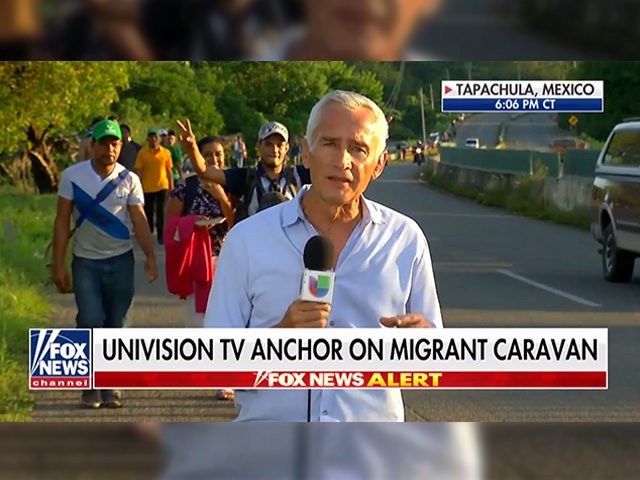
Univision anchor Jorge Ramos thinks President Donald Trump’s border wall would be nothing more than a “symbol of hate and racism” for “those who want make America white again.”

In a Wednesday New York Times op-ed, Ramos notes that Trump “is not the first president to ask for money for a wall.” He points out that former Presidents George H.W. Bush, Bill Clinton, and George W. Bush “built fences and walls along the southern border” while former President Barack Obama “maintained the resulting system of roughly 700 miles of physical barriers.”

“So why don’t we want Mr. Trump to build his wall? What is different?” Ramos asks. “The difference is that Mr. Trump’s wall is a symbol of hate and racism, it would be completely useless, and it does not address any national emergency.”

Ramos, who said the United States has a responsibility to “absorb” caravan migrants, says the fight against the border wall “is about more than just a wall.”

“The wall has become a metaphor to Mr. Trump and his millions of supporters,” he writes. “It represents a divide between ‘us’ and ‘them,’ a physical demarcation for those who refuse to accept that in just a few decades, a majority of the country will be people of color.”

Ramos accuses Trump of trying to “exploit the anxiety and resentment of voters in an increasingly multicultural, multiethnic society” with his promise of a border wall, which Ramos says is nothing more than “a symbol for those who want to make America white again.”

The chant ‘Build that wall, build that wall’ became his hymn — and an insult not just to Latinos but also to all people who do not share his xenophobic ideals,” Ramos continues. “The wall went from a campaign promise to a monument built on bigoted ideas. That is why most Americans cannot say yes to it. Every country has a right to protect its borders. But not to a wall that represents hate, discrimination and fear.”

He concludes by arguing that Trump “is the wall” because “the concept of America as an unwelcoming country to immigrants and uncomfortable for minorities is already here.”

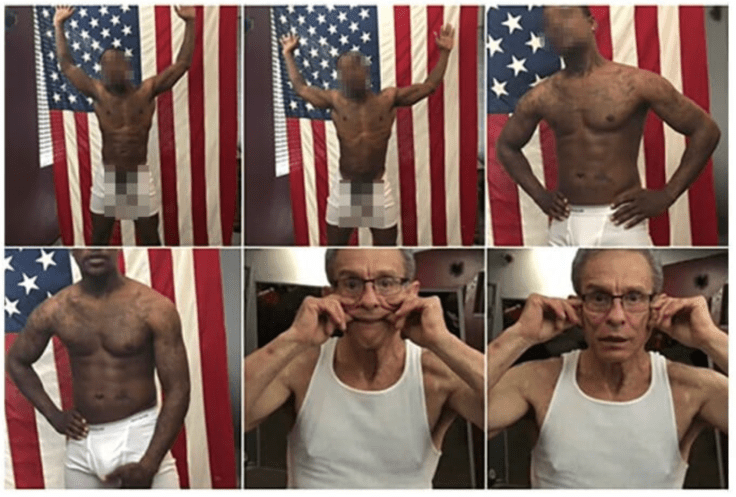
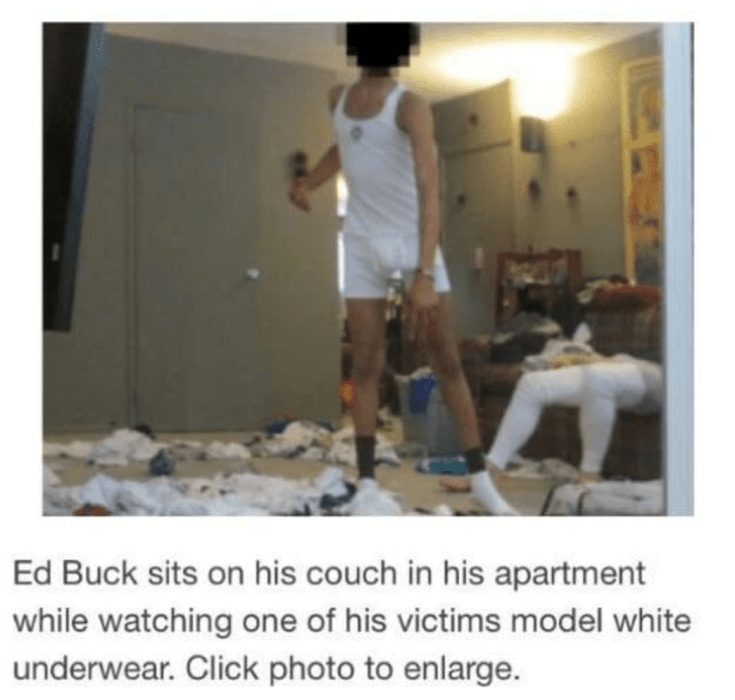
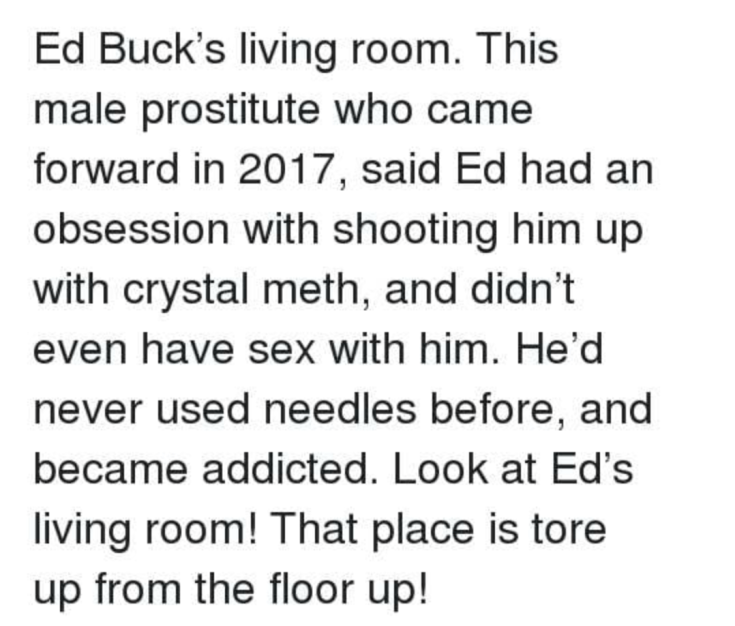
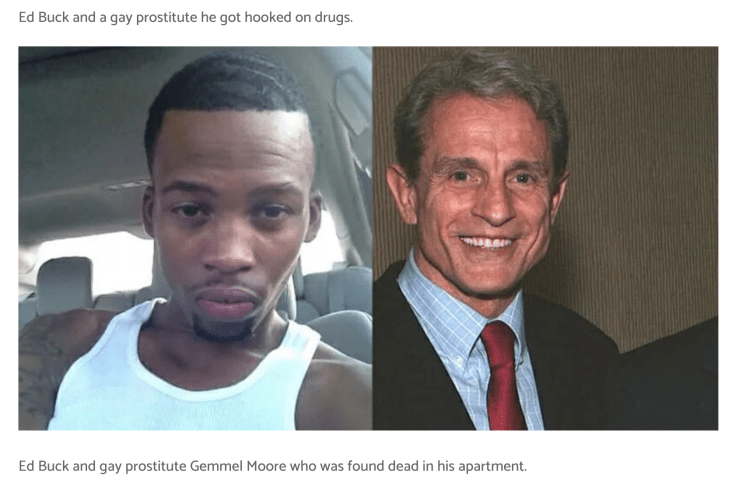
PHOTOS: Top Democrat Donor Ed Buck With His Democrat Pals and His Black Male Prostitutes — 2 Dead Now

by Jim Hoft

screen shot 2019-01-08 at 10.10.38 am

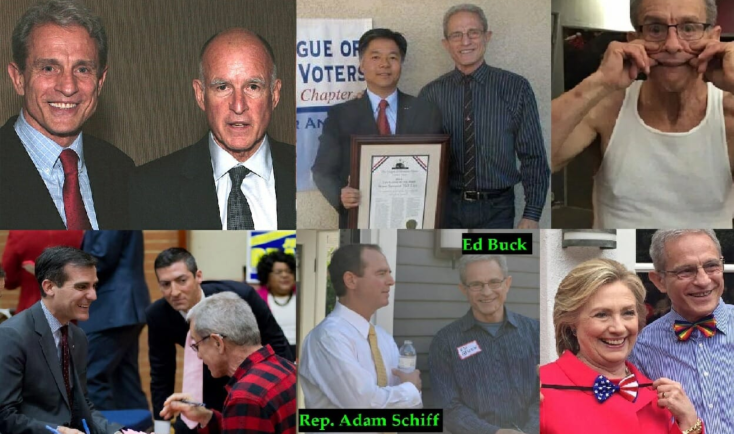
Top Democrat donor Ed Buck with: Governor Jerry Brown, Rep. Ted Lieu, In a T-shirt, Los Angeles Mayor Eric Garcetti, Rep. Adam Schiff, and Hillary Clinton.

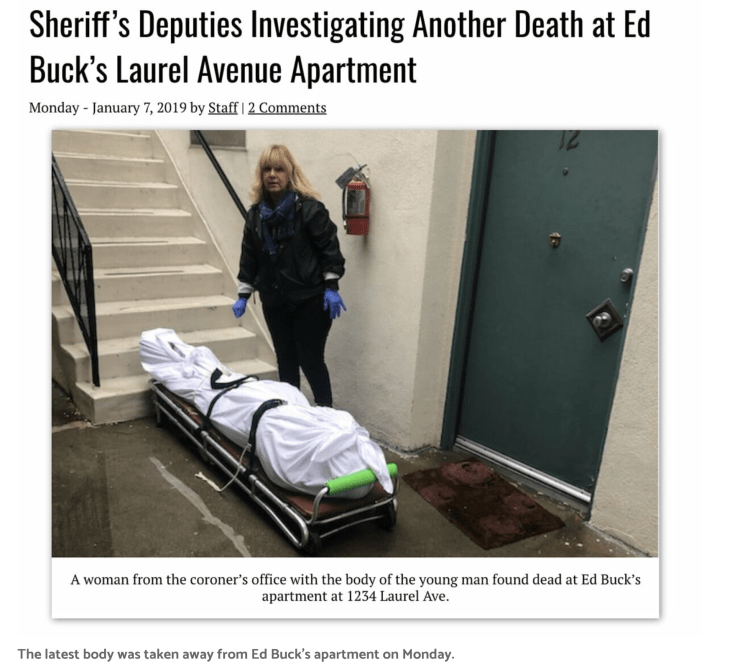
The body of another young black gay escort was found at the West Hollywood home of Ed Buck, a top Democrat donor and and political activist.

Sheriff’s deputies are investigating after an African-American male was found dead early Monday morning at the Laurel Avenue apartment belonging to one of Hillary Clinton’s donors, Ed Buck.

There will be a rally tonight at the home of Ed Buck to call on LAPD to arrest Buck, according to WEHOVille,

Jasmyne Cannick, a communications and public affairs strategist who has worked  with Gemmel Moore’s family, has announced that there will be a rally at 7 p.m. tonight at 1234 Laurel Ave., the home of Ed Buck, to call on the Los Angeles Sheriff’s Department to arrest Buck and for District Attorney Jackie Lacey to “prosecute him for murder after another young Black gay man was found dead in his West Hollywood apartment of an apparent overdose.”

As previously reported, a black gay escort named Gemmel Moore died of a meth overdose at Ed Buck’s West Hollywood home in July of 2017.

screen shot 2019-01-08 at 10.13.01 am

The LA County District Attorney’s Office previously declined to prosecute Ed Buck saying the evidence is “insufficient to prove beyond a reasonable doubt that (Buck) is responsible for the death of Gemmel Moore,” which sparked an outrage from family members and others in the community.

Ed Buck is a gay white man in his 60’s and according Gemmel Moore’s mother, Buck has a fetish for getting young black men high.

When not donating to Democrats Ed Buck liked to get black gay prostitutes high on drugs.

screen shot 2019-01-08 at 10.14.14 am

Damar Love and Ed Buck (Weho Times)

screen shot 2019-01-08 at 10.15.53 am

screen shot 2019-01-08 at 10.16.45 am

screen shot 2019-01-08 at 10.17.35 am

screen shot 2019-01-08 at 10.18.36 am

Journalist Who Exposed Mueller Wiping Peter Strzok’s Texts Found Dead

The journalist who exposed how Special Counsel Robert Mueller deleted anti-Trump text messages at the FBI has been found dead under suspicious circumstances. Bre Payton was a writer for independent news outlet The Federalist. She died just days after breaking the story about Mueller wiping messages between disgraced former FBI agent Peter Strzok and his lover Lisa Page.

capture

The Nancy Show! Celebrities Flock to Pelosi’s House Speaker Coronation

By Sean Moran

capture

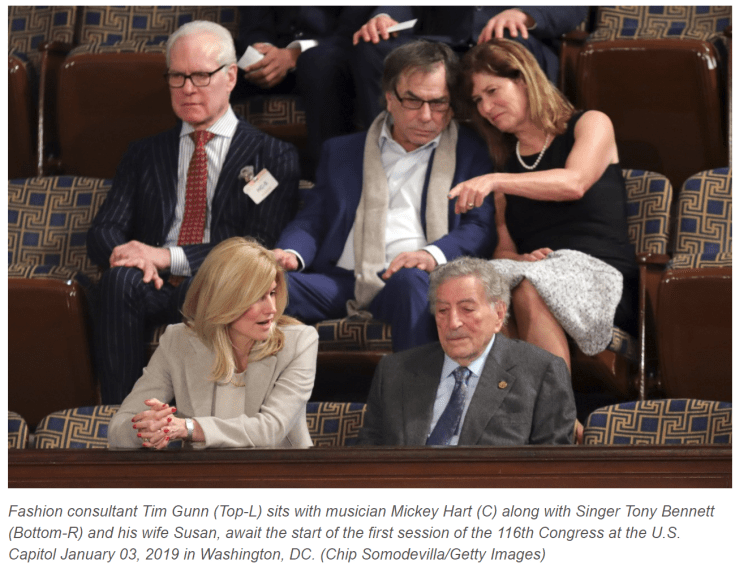
House Democrat Leader Nancy Pelosi (D-CA) invited numerous celebrities to the House gallery on Thursday to witness her become speaker of the House.

Along with nine of her grandchildren, Pelosi invited legendary crooner Tony Bennet, Grateful Dead drummer Mickey Hart, and television personality and fashion guru Tim Gunn to sit in the House gallery during the House’s for Speaker.

Washington, D.C. mayor Muriel Bowser, Stephanie Shirock and Ellen Malcolm of Emily’s List, as well as the presidents of Georgetown and Trinity Washington University, came to the Capitol building on Thursday.

Randi Weingarten, the president of the American Federation of Teachers, also came to witness Pelosi assume the Speaker’s gavel.

capture

Bennett also attended Pelosi’s first swearing-in in 2007 as Speaker, along with actor Richard Grere. Bennet reportedly performed at a dinner on Wednesday night, according to Politicowhich also featured former President Bill Clinton and failed presidential candidate Hillary Clinton.

Italian Ambassador Armando Varicchio hosted the dinner at the Italian embassy in Washington, D.C. Former Secretary of State John Kerry, California Lt. Gov.-elect Eleni Kounalakis, and other luminaries attended the exclusive Wednesday dinner for Pelosi.

Democrats retook control of the House of Representatives after the 2018 midterm elections. Nancy Pelosi and House Democrats pledged to protect Obamacare and its protections for pre-existing conditions. Progressive Democrats have pushed for climate change legislation and a single-payer “Medicare for All” government-run healthcare program.

Pelosi, along with Senate Minority Leader Chuck Schumer (D-NY), continue to fight with President Trump and congressional Republicans over the president’s requested $5 billion in border wall funding.

In an interview, Pelosi told a reporter that she will not provide any money for Trump’s border wall.

“No, no. Nothing for the wall,” Pelosi said.

Pelosi has continued to state that she can strike a deal with Trump to end the partial government shutdown; although, she will not give Trump any increased border wall funding.

Donald Trump: Mitt Romney Fights Me More than He Did Barack Obama

Capture

President Donald Trump further ridiculed failed presidential candidate Mitt Romney for continuing to criticize him and his presidency.

By Charlie Spiering

President Donald Trump further ridiculed failed presidential candidate Mitt Romney for continuing to criticize him and his presidency.

“If he fought really hard against President Obama like he does against me, he would have won the election,” Trump said.

Romney criticized Trump in a Washington Post op-ed for failing to “seize the mantle” of the presidency by leading with dignity to inspire the world, criticizing his bad approval numbers around the globe.

“I was expecting something, but I’m surprised he did it this quickly,” Trump said, noting that he expected criticism from Romney, despite his endorsement. Romney ran and won his race for Senator of Utah with Trump’s endorsement in 2018.

“I wish Mitt could be more of a team player,” Trump said. “I endorsed him and he thanked me profusely.”

Trump defended his low approval ratings in foreign countries, noting that he was elected as president of the United States.

“I shouldn’t be popular in Europe. If I were popular in Europe I wouldn’t be doing my job,” he said.

DEMOCRATS’ SECRET WEAPON TO WIN IN 2020…

Capture

How many millions of dollars did it cost their campaigns to come up with this brilliance?!

Chris Menahan | Information Liberation – JANUARY 2, 2019

The Democrats’ top paid strategists have finally figured out how to make their candidates appear relatable…

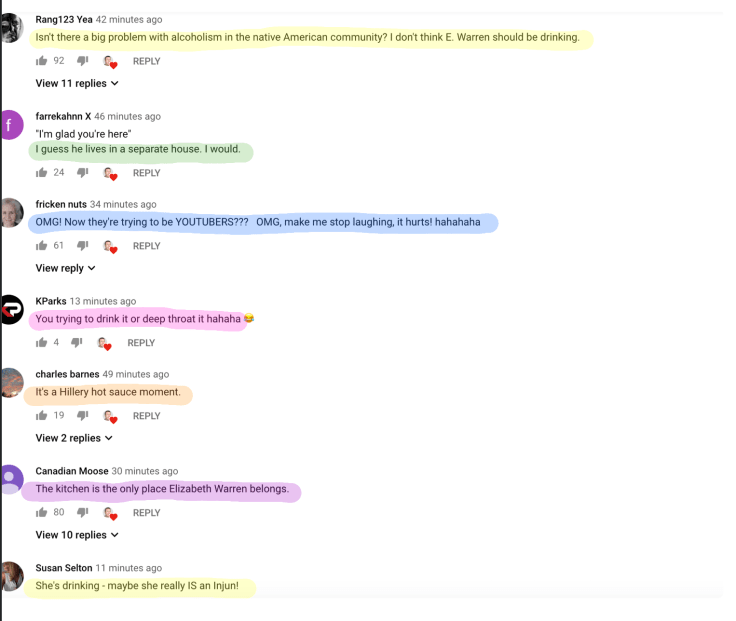
Live-streamed cooking videos.

Capture

Capture

After Cortez’s live stream got good press, every Democrat appears to have followed.

Capture

This is the greatest outreach strategy since Hillary Clinton said she carries “hot sauce” in her bag!

How many millions of dollars did it cost their campaigns to come up with this brilliance?!

Irony alert: Firm that warned Americans of Russian bots…was running an army of fake Russian bots

See the source image

By Danielle Ryan

The co-founders of cybersecurity firm New Knowledge warned Americans in November to “remain vigilant” in the face of “Russian efforts” to meddle in US elections. This month, they have been exposed for doing just that themselves.

Ryan Fox and Jonathan Morgan, who run the New Knowledge cybersecurity company which claims to “monitor disinformation” online, penned a foreboding op-ed in the New York Times on November 6, about “the Russians” and their nefarious efforts to influence American elections.

At the time, it struck me that Fox and Morgan’s reasoning seemed a little far-fetched. For example, one of the pieces of evidence presented to prove that Russia had targeted American elections was that lots of people had posted links to RT’s content online. Hardly a smoking gun worthy of a Times oped.

ALSO ON RT.COMThe only ‘Russian bots’ to meddle in US elections belonged to Democrat-linked ‘experts’Morgan and Fox, intrepid cyber sleuths that they are, claimed in the article they had detected more “overall activity” from ongoing Russian influence campaigns than social media companies like Facebook and Twitter had yet revealed — or that other researchers had been able to identify.

See the source image

The New Knowledge guys even authored a Senate Intelligence Committee report on Russia’s alleged efforts to mess with American democracy. They called it a “propaganda war against American citizens.” Impressive stuff. They must be really good at their job, right?

This week, however, we learned that New Knowledge was running its own disinformation campaign (or “propaganda war against Americans,”you could say), complete with fake Russian bots designed to discredit Republican candidate Roy Moore as a Russia-preferred candidate when he was running for the US senate in Alabama in 2017.

The scheme was exposed by the New York Times — the paper that just over a month earlier published that aforementioned oped, in which Fox and Morgan pontificated about Russian interference online.

New Knowledge created a mini-army of fake Russian bots and fake Facebook groups. The accounts, which had Russian names, were made to follow Moore. An internal company memo boasted that New Knowledge had “orchestrated an elaborate ‘false flag’ operation that planted the idea that the Moore campaign was amplified on social media by a Russian botnet.”

Moore lost the race by 1.5 percent. To be fair, accusations published by the Washington Post that he pursued underage girls back in the 1980s may have had something to do with it as well, but that’s a different story.

Of course, New Knowledge and even the New York Times, which blew the lid of the operation, are trying to spin this as some kind of “small experiment” during which they “imitated Russian tactics” online to see how they worked. Just for research, of course. They have also both claimed that the scheme, dubbed ‘Project Birmingham’ had almost no effect on the outcome of the race.

The money for the so-called research project came from Reid Hoffman, the billionaire co-founder of LinkedIn, who contributed $750,000 to American Engagement Technologies (AET), which then spent $100,000 on the New Knowledge experiment. After the scheme was exposed, Hoffman offered a public apology, saying he didn’t know exactly how the money had been used and admitting that the tactics were “highly disturbing.”

ALSO ON RT.COMLinkedIn billionaire ‘sorry’ for funding ‘Russian bot’ disinformation campaign against Roy MooreIf people like Fox and Morgan actually cared about so-called Russian meddling or the integrity of American elections, they would not have run the deceptive campaign against Moore, no matter how undesirable he was as a candidate. Their sneaky and deceitful methods are in total contrast to the public profile they have cultivated for themselves as a firm fighting the good fight for the public good. But is it really that much of a surprise?

You would think that a newspaper like the New York Times would have cottoned on to the fact that guys like Fox and Morgan, with their histories in the US military and intelligence agencies, have clear agendas and are not exactly squeaky clean or the most credible sources of information when it comes to anything to do with Russia. But that kind of insight or circumspection might be too much to ask for in the age of Russiagate.

Facebook removed Morgan’s account on Saturday for “engaging in coordinated inauthentic behavior” around the Alabama election. Three days after publishing its initial article on the scandal (the one in which it played down the effects of New Knowledge’s disinfo campaign), the New York Times published a follow-up piece about the Facebook removal, in which it admitted that the controversy would be a “stinging embarrassment” for the social media researcher, noting that he had been a “leading voice” against supposed Russian disinformation campaigns.

In Fox and Morgan’s original NYT oped, they warned of the ubiquitous “Russia-linked social media accounts” and estimated that “at least hundreds of thousands, and perhaps even millions” of US citizens had engaged with them online. One must now wonder, were they including their own fake Russian bots in that count, or were they leaving those ones out?

It’s nearly two years into the Trump presidency and still we have no solid evidence that the Russian “collusion” theory is anything more than a fantasy concocted by Democrats desperate to provide a more palatable reason for Hillary Clinton’s loss than the fact that she simply ran a bad campaign.

In fact, at this point, we actually have more solid and irrefutable evidence of election meddling from the likes of dodgy American and British companies like Cambridge Analytica and New Knowledge than we do of any meddling orchestrated by Russia.

Like this story? Share it with a friend!

Blog at WordPress.com.

Up ↑