(FAKE NEWS) – CNN’s 2014 ‘Journalist of the Year’ Made Up at Least 14 Stories

By

In a truly fitting turn of events, news broke Thursday that Claas Relotius, a German journalist named CNN’s 2014 “Journalist of the Year” made up at least 14 stories contributed to German publication Der Spiegal

“The reporter contributed around 60 articles to Der Spiegel, one of the leading German magazines for investigative reporting,” according to Fox News. “He previously worked for other publications in Europe and won awards such as CNN Journalist of the Year in 2014.”

CNN, which has been branded a fake news by President Donald J. Trump and millions of ordinary Americans – and curiously wonders why on a daily basis – awarded a bona fide fake news writer an award for the quality of his journalism. Sometimes the jokes write themselves.

“The fabricated articles include a phone interview with the parents of free agent NFL player Colin Kaepernick and a story about an American woman who claims to have volunteered to witness the executions of death row inmates,” according to the report.

Trending: Freedom Caucus Seizes House Floor To Fight For The Wall

Relotius’ web of lies began to unravel in November when a reporter with whom he worked on a story about an Arizona border militia realized that Relotius had fabricated interviews.

According to the report, residents of Fergus Falls, Minn. were enraged to find that Relotius wrote an entirely fabricated story about their town after spending nearly three weeks investigating there. The story, which fabricated people, quotes, and nearly everything about the town cast President Donald J. Trump in a negative light. It was titled “Where They Pray for Trump on Sundays.”

The report said that Relotius admitted that he is unwell.

“I am sick and I need to get help,” he reportedly told Der Spiegel.

‘Peaceful’ Syrian refugee tests bomb in his back garden in Belgium

By   

A 20-year-old Syrian refugee has been charged for terrorist activities and by the correctional court in Charleroi, Belgium.

Newspaper HLN reports that the man, named Ahmed A., tested a bomb in his back garden in Mouscron.

The Syrian national was already monitored after an FBI warning, Belgian officials said. The charges against the man are: Preparing a terrorist attack and participating in terrorist activities.

After his arrest the man told via a translator that the explosives were to be used for fishing, but these remarks were rejected by the magistrate.

She said the man was tracked down after his online search for terrorist activities and his research into making explosives.

The Syrian refugee’s lawyer called the man ‘a peaceful refugee’ instead of a terrorist and said the test in his back garden wasn’t serious.

But according to the magistrate the man liked the activities of ISIS on Facebook and Telegram. The prosecutor demanded five years in jail. The verdict is on 16 January next year.

See the source image

(GLOBALISTS) -George Soros crowned ‘person of the year’ by Financial Times, but not everyone is cheering

George Soros crowned ‘person of the year’ by Financial Times, but not everyone is cheering

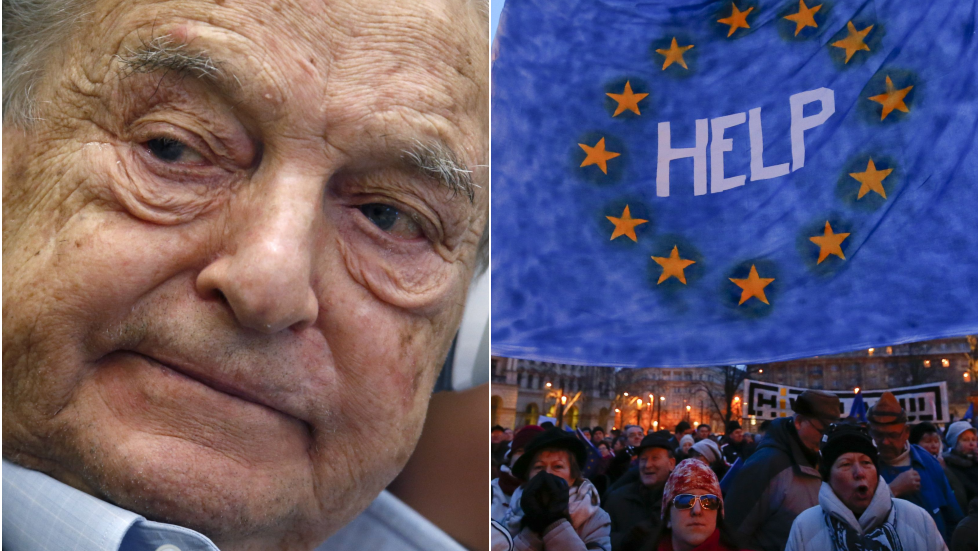
Georges Soros (L) ; Anti-Orban demonstrators in Hungary © Reuters / Charles Platiau / Laszlo Balogh

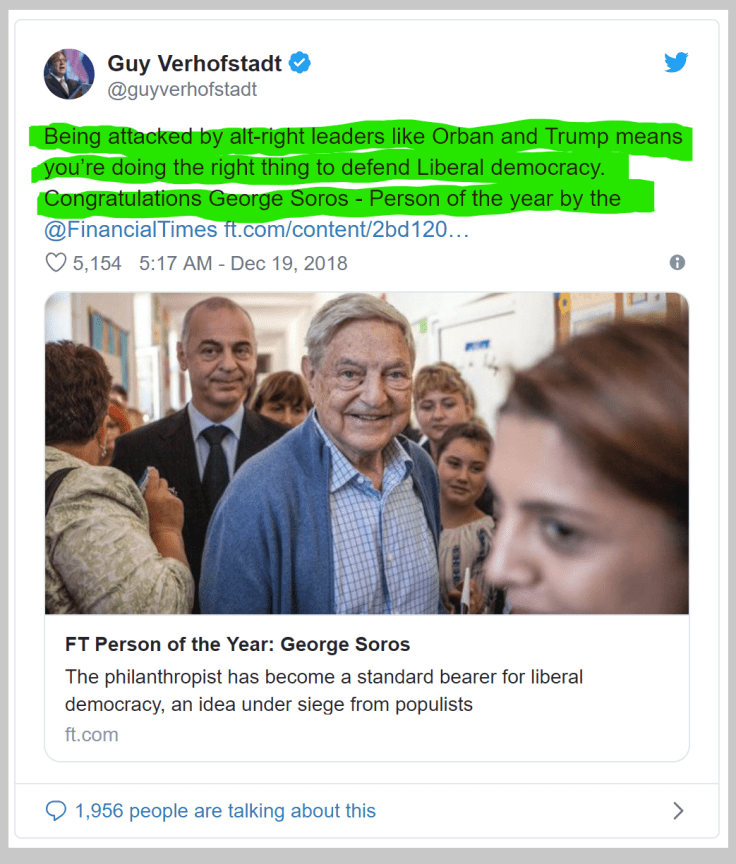
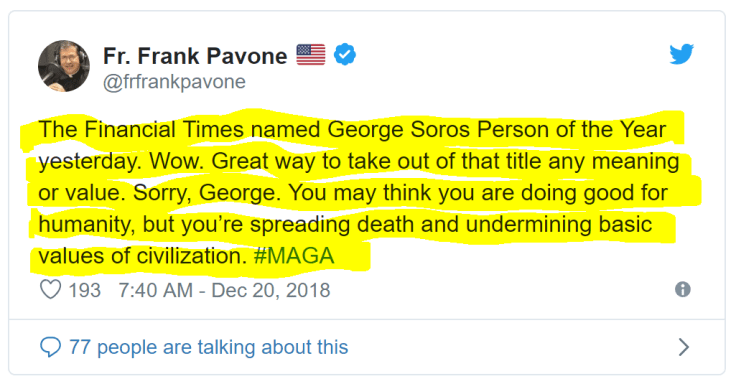
Being “under siege” from Donald Trump and Vladimir Putin has earned George Soros the FT’s ‘person of the year’ title. Eyebrows were raised over the not-at-all biased description of the billionaire as a champion of democracy.

For thirty years, liberal businessman and philanthropist Soros has used his vast wealth to crusade against“authoritarianism, racism and intolerance,” the FT profile reads.

Capture

Armed with his expansive grant-giving network, Open Societies Foundations (OSF), the Hungarian-American spread his influence to some 100 countries across the globe. The NGO currently has annual expenditures of over $940 million, with 26 national and regional foundations and offices.

There’s hardly a question over whether the Soros-funded apparatus is doing the right thing. The first paragraph of the story says it just “helped thwart an allegedly corrupt nuclear power plant contract with Russia” – a feat to be admired in the liberal world.

“We haven’t stopped having a beneficial influence,” Soros is then quoted as saying.

ALSO ON RT.COMGeorge Soros’ Open Society foundation ends operations in Hungary

But there’s a worrying trend for the Democrat mega-donor, passionate advocate for open borders and outspoken critic of Brexit. More and more detractors see his work as an existential threat to conservative values and even state sovereignty.

The “standard bearer of liberal democracy and open society” has found his ideals “under siege” as he “has attracted the wrath of authoritarian regimes and, increasingly, the national populists who continue to gain ground,” writes FT.

Capture

At one point Soros sounds a bit more critical of himself than the paper, as he acknowledges he’s a divisive figure, something he still believes indicates his effectiveness as an activist.

“I’m blamed for everything, including being the anti-Christ,” Soros says. “I wish I didn’t have so many enemies, but I take it as an indication that I must be doing something right.”

Soros wasn’t joking. Hungarian lawmaker Andras Aradszki of the Christian Democratic People’s Party (KDNP) once declared that it is a Christian’s duty to oppose Soros’ calls for Europe to take in asylum seekers from Africa and the Middle East – what Aradszki called Satan’s Soros plan.” The lawmaker added that “Soros and his comrades want to destroy the independence and values of nation states.”

Capture

In May, the OSF ended its operations in Hungary, citing an “increasingly repressive political and legal environment.” A month later, Hungary’s parliament passed the ‘Stop Soros’ law which threatens jail time for anyone helping illegal immigrants claim asylum.

Hungarian PM Viktor Orban accused Soros of attempting to use mass migration to undermine Europe’s stability.

“Soros has antagonized not only us but also England, President Trump and Israel too,” Orban said in February.“Everywhere he wants to get migration accepted. It won’t work. We are not alone and we will fight together… and we will succeed.”

ALSO ON RT.COMHungary approves ‘Stop Soros’ law criminalizing aid to illegal migrants

In the UK, the billionaire has been sharply criticized for his donations of over £800,000 ($1,062,000) to pro-EU campaigns. The pledges included £400,000 to Best for Britain, a campaign group that has been at the forefront of anti-Brexit activism.

Capture

The businessman’s activities have received similar hostility in the United States, where some have accused him of providing assistance to the so-called “migrant caravan” which made its way from Central America to the US’ southern border. “The venom, long concealed among extreme right networks, has leaked into the mainstream,” laments the FT.

Capture

Soros, along with other notable critics of Donald Trump, such as former President Barack Obama, the Clintons and CNN, was recently targeted by an alleged pipe bomb mailed to his home in New York.

A prominent backer of the Democratic Party, Soros has called Trump a “danger to the world,” and once (wrongly) bet that stocks would collapse if Donald won presidency. The bet reportedly cost him $1 billion – quite affordable for the investor who is currently worth $8.3 billion after his 2017 transfer of $18 billion to the OSF.

ALSO ON RT.COM‘Lock him up!’ Smiling Trump joins chant against Soros (VIDEO)

For a man who made billions short-selling the UK pound sterling and has been accused of several more currency crises in Asia, FT’s Soros comes across as a wise old benefactor “looking beyond his formidable legacy” in his “twilight years.”

READ MORE: Soros sold off Facebook stocks before they tanked, documents show

But for all the accolades, the paper may have forgotten that the businessman has long had his sights set on a title more ambitious than merely the ‘person’ of the year. In a 1993 interview with the UK Independent, Soros actually confessed that he suffers from a god complex.

Capture

“It is a sort of disease when you consider yourself some kind of god, the creator of everything, but I feel comfortable about it now since I began to live it out,” he said.

Think your friends would be interested? Share this story!

IS THE FEDERAL RESERVE ACTUALLY TRYING TO CAUSE A STOCK MARKET CRASH?

Is The Federal Reserve Actually TRYING To Cause A Stock Market Crash?

It is insanity to raise interest rates when stocks are already crashing, but the Federal Reserve did it anyway

Michael Snyder | Economic Collapse – DECEMBER 20, 2018

The Federal Reserve has decided not to come to the rescue this time. 

All of the economic numbers tell us that the economy is slowing down, and on Wednesday Fed Chair Jerome Powell even admitted that economic conditions are “softening”, but the Federal Reserve raised interest rates anyway.  As one top economist put it, raising rates as we head into an economic downturn is “economic malpractice”.  They know that higher rates will slow down the economy even more, but it isn’t as if the Fed was divided on this move.  In fact, it was a unanimous vote to raise rates.  They clearly have an agenda, and that agenda is definitely not about helping the American people.

Early on Wednesday, Wall Street seemed to believe that the Federal Reserve would do the right thing, and the Dow was up nearly 400 points.  But then the announcement came, and the market began sinking dramatically.

The Dow Jones Industrial Average lost 720 points in just two hours, and the Dow ended the day down a total of 351 points.  This is the lowest that the Dow has been all year, 60 percent of the stocks listed on the S&P 500 are in bear market territory, and at this point approximately four trillion dollars of stock market wealth has been wiped out.

We haven’t seen anything like this since the last financial crisis.  This is officially the worst quarter for the stock market since the fourth quarter of 2008, and it is the worst December that Wall Street has experienced since 1931.

It is insanity to raise interest rates when stocks are already crashing, but the Federal Reserve did it anyway.

They knew what kind of reaction this would cause on Wall Street and in other global markets, but that didn’t stop them.  The financial world is in utter turmoil, and this move by the Fed has definitely added fuel to the fire.

Could it be possible that they actually want a stock market crash?

Some are suggesting that the reason why the vote was unanimous was because they wanted to send a “strong signal” to President Trump.  He has been extremely critical of the Federal Reserve in recent weeks, and this could be a way for the Fed to show Trump who is really in charge.

They are calling this “the Trump economy”, but that is simply not true.  And when Barack Obama was in the White House, it wasn’t “the Obama economy” either.  Ultimately, it is the Federal Reserve that is running the economy, and they fiercely guard their independence and their authority.

President Trump knows that the only way that he is going to win in 2020 is if the economy is doing well, and he also understands that higher interest rates will slow the economy down.

So essentially the Federal Reserve has a tremendous amount of political power in their hands.

During the Obama era, the Fed pushed interest rates all the way to the floor and kept them there for many years.

But now the Federal Reserve has raised interest rates seven times since Donald Trump took office, and four of those rate hikes have been under current Fed Chair Jerome Powell.

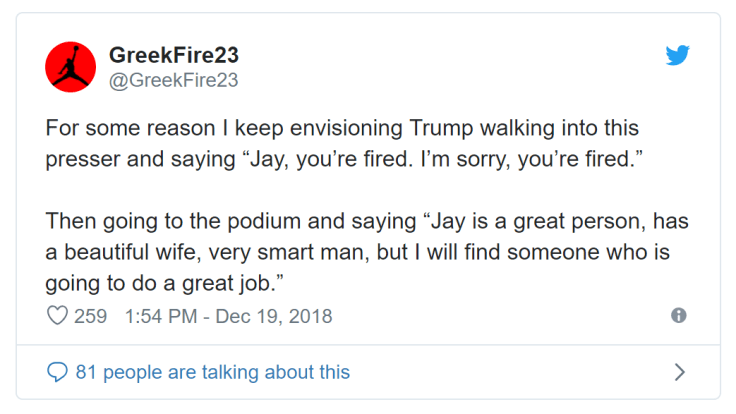
Needless to say, it certainly doesn’t take a lot of imagination to figure out how Donald Trump is feeling about Powell at this moment.
Capture

Meanwhile, we continue to get more indications that the U.S. economy is heading for difficult times.  Just consider the following news about FedEx

FedEx shares are plunging after what Morgan Stanley called a “jarring” cut to its annual forecasts, suggesting global growth is slowing far more than most expect – in fact, the bank hinted at the possibility of a “severe recession” unfolding – and prompting expectations of an “uber-dovish hike” by the Fed.

The global logistics bellwether slashed its outlook just three months after raising the view, reflecting an unexpected and abrupt change in the company’s view of the global economy amid rising trade tensions between the U.S. and China. Not only were the cuts were deeper than the Street expected according to Morgan Stanley analyst Ravi Shanker, but everyone is pointing to the following comment from the press release: “Global trade has slowed in recent months and leading indicators point to ongoing deceleration in global trade near-term.”

To see the term “severe recession” used in such a context is more than just a little bit alarming.

The last time the U.S. economy went through a recession, millions of Americans lost their jobs and we saw a wave of mortgage defaults unlike anything we had ever seen before in modern American history.

Are we about to go through something similar?

Earlier today, a CNN article also used the term “recession”, and it discussed the fact that investors now want big corporations to focus on paying down their debts instead of buying back shares of stock…

Fears of an economic slowdown — or even recession — have turned a spotlight on the debt that businesses piled up during the past decade, when borrowing costs were historically low.

For the first time since the Great Recession, investors want companies to prioritize paying down debt rather than investing in the future or share buybacks and dividends, according to a Bank of America Merrill Lynch survey of global fund managers.

But stock buybacks are one of the only things that has been propping up the stock market.  The only way for the bubble to continue is for corporations to go into dizzying amounts of debt in order to fund massive stock buybacks, because the Federal Reserve clearly does not intend to support the markets right now.

At least for the short-term, the Federal Reserve could have calmed the markets and encouraged economic activity by leaving interest rates alone.

In the end, they decided not to do that, and that makes one wonder what they are really trying to achieve.

FACEBOOK ADMITS GIVING OUT ACCESS TO YOUR PRIVATE MESSAGES

Facebook Admits Giving Out Access to Your Private Messages

Another privacy scandal erupts

Infowars.com – DECEMBER 19, 2018

Facebook says it gave other companies, such as Spotify and Netflix, access to millions of people’s private messages.

The social media giant admitted to the practice in response to a report that Facebook shares private data to partner companies as part of its third-party integration, which allowed users to use their Facebook credentials to login to other web sites and apps.

Facebook CEO, Mark Zuckerberg (R), and Joel Kaplan (L), Vice President, Global Public Policy at Facebook, leave the Elysee Palace after a meeting with the French President on May 23, 2018 in Paris, France. On the eve of VivaTech, French President Emmanuel Macron brought together some of the world’s leading technology names for the Tech for Good event. (Photo by Aurelien Morissard/IP3/Getty Images)

Facebook wrote in a blog post:

Did partners get access to messages? Yes. But people had to explicitly sign in to Facebook first to use a partner’s messaging feature. Take Spotify for example. After signing in to your Facebook account in Spotify’s desktop app, you could then send and receive messages without ever leaving the app. Our API provided partners with access to the person’s messages in order to power this type of feature.

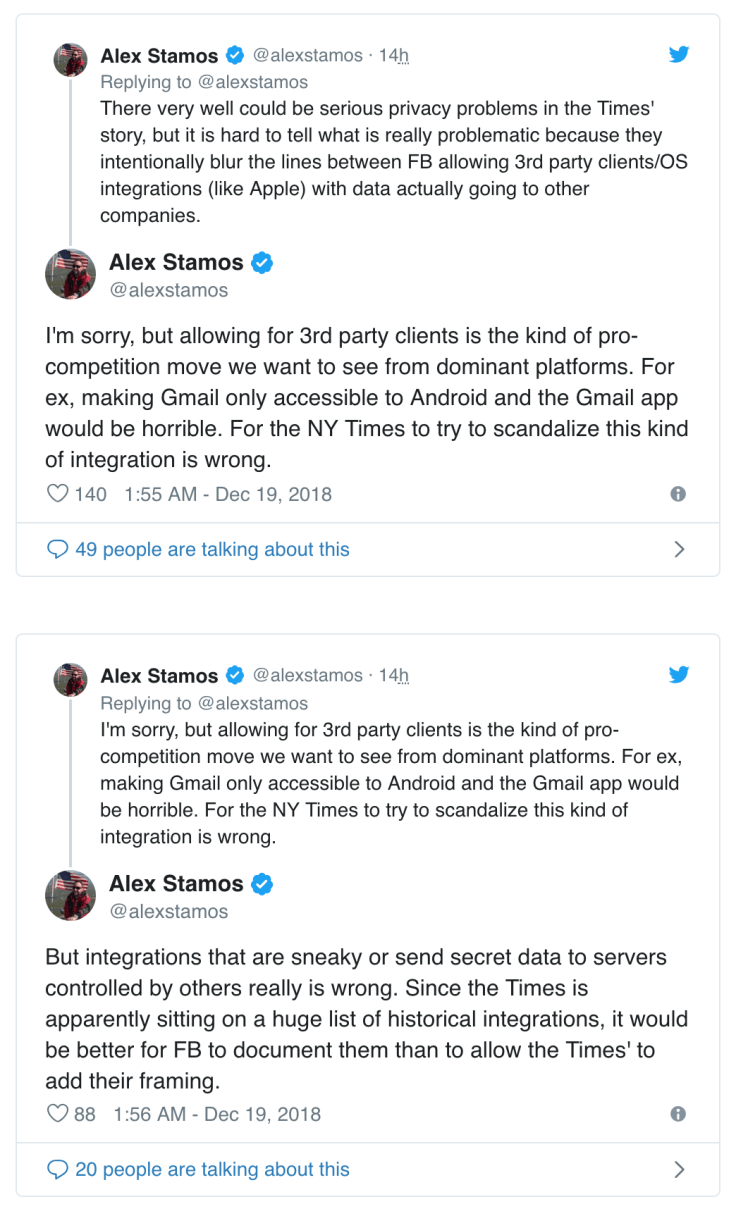
This practice, however, triggered a firestorm over the definition of consent, especially after Facebook’s former privacy chief Alex Stamos said that integration wasn’t to blame:

Screen Shot 2018-12-19 at 4.33.43 PM

Screen Shot 2018-12-19 at 4.34.33 PM

Interestingly, according to Business Insider:

According to internal Facebook documents seen by the Times, Spotify could see the messages of more than 70 million Facebook users a month. The Times reported that Spotify, Netflix, and the Royal Bank of Canada could read, write, and even delete people’s messages.

Importantly, both Spotify and Netflix told the Times they were unaware they had this kind of broad access. Facebook told the New York Times it found no evidence of abuse.

Zero Hedge also reported:

Amazon was granted access to users’ names and contact information through their friends, while Yahoo! was able to view streams of friends’ posts as recently as this summer despite Facebook promising that it had stopped this type of sharing years earlier.

What’s more? China’s Huawei and Russian search giant Yandex – accused last year by Ukraine of funneling user data to the Kremlin – had access to Facebook’s unique user IDs.

[…]

Facebook was able to circumvent a 2011 consent agreement with the Federal Trade Commission (FTC) which barred the company from sharing user data without explicit permission, because Facebook considered the partners extensions of itself – “service providers that allowed users to interact with their Facebook friends.” This allowed the company to grant such unprecedented access to everyone’s information. The partners were reportedly prohibited from using the personal information from purposes outside the scope of their agreement, however there has been little to no oversight.

Yesterday, Infowars reported that the NAACP was joining a long list of ideologically-diverse groups that were boycotting or otherwise moving away from Facebook.

“Over the last year, NAACP has expressed concerns about the numerous data breaches and privacy mishaps in which Facebook has been implicated,” wrote NAACP President Derrick Johnson. “And since the onset of the Silicon Valley boom, we have been openly critical about the lack of employee diversity among the top technology firms in the country.”

“Now, the time has come for our collective actions to emulate the severity of mistrust we have in Facebook.”

Politician reprimanded for using the word “illegal migration” in the European Parliament

By EMMA R. 19 December 2018

An EU Commission official was put in place when he spoke in Parliament’s LIBE committee last week.

He used the term “illegal migration” repeatedly regarding people who come to Europe without legal basis.

Claude Moraes, a British member and chairman of the group, gave him a reprimand.

“The correct terminology is irregular, not illegal. You are not illegal until you are convicted,” he said.

The Danish People’s Party member of the committee, Anders Vistisen, asked Claude Moraes to explain where it says that one must not say illegal.

“The word illegal immigrant is used in the Lisbon Treaty, so why can’t we say it in Parliament?”, Vistisen wanted to know.

Morales replied that it has been Parliament’s “position” for the last 10 years.

Anders Vistisen finds it appalling that the EU Parliament bans certain words:

“It clearly shows that the EU is unable to solve its migration problems. The first prerequisite for dealing with a problem is to talk about it. If we can’t even talk freely and call things by their proper name, we have an extremely long way to go.”

Anders Vistisen calls the debate in Parliament “out of touch with reality” and “severely contact phobic”:

“It is a parallel universe where certain attitudes are frowned upon and words are banned because they don’t fit the agenda.”

“And Danish politicians who are talking about EU solutions in the field of migration therefore feel that there is censorship of the debate and denial of the problems”, he says.

More countries will not sign UN Migration Pact – Hungarian FM

IRENA IRIS SZEWCZYK

By LAURA CAT 19 December 2018

At a hearing of the Foreign Affairs Committee on Monday, foreign minister Péter Szijjártó tells Parliament that there are at least 13 countries set to vote against the UN Migration compact on 19 December.

The countries who will vote against the plan include the Visegrád Four group of Czech Republic, Hungary, Poland and Slovakia, as well, Bulgaria, Latvia, Austria, the United States, Israel, Australia, Dominica and Brazil, Péter told at the hearing.

Minister Szijjártó also has asserted that Hungary will also reject the “sister document”, which has been hailed as even worse than the Migration pact, The Global Compact on Refugees.

This is is said to allow migrants to enter Europe “through a backdoor” and as the minister said, “Hungarian communities across the border will not be sacrificed for geopolitical interests or under international pressure”.

Referring to the “unbelievable pressure” western allies have deployed on Hungary in the effort to have Hungary relinquish its position vetoing Ukraine’s NATO integration, the foreign minister insists that Hungary would stand firm until “Ukraine drops its anti-Hungarian policies”.

The Fed Is Expected To Raise Interest Rates In Spite Of Stock Market Stumbling

Mac Slavo
December 19th, 2018

Screen Shot 2018-12-19 at 3.46.03 PM

By Mac Slavo
December 19th, 2018

The United States’ central bank, the Federal Reserve, is expected to raise interest rates again, in spite of a stock market that’s been stumbling and on track for the worst December since the Great Depression.

According to NPR, the Fed last raised rates in September. Since then, the U.S. economy has given off mixed signals. The job market remains strong, with unemployment at the lowest level in nearly 50 years and economic growth clocked in at a solid 3.5 percent in the third quarter. But the stock market is stumbling and home sales and car sales have slumped because of the higher interest rates. Not to mention the ongoing trade tensions between the United States and China which have led to growing fears about the outlook for the global economy.

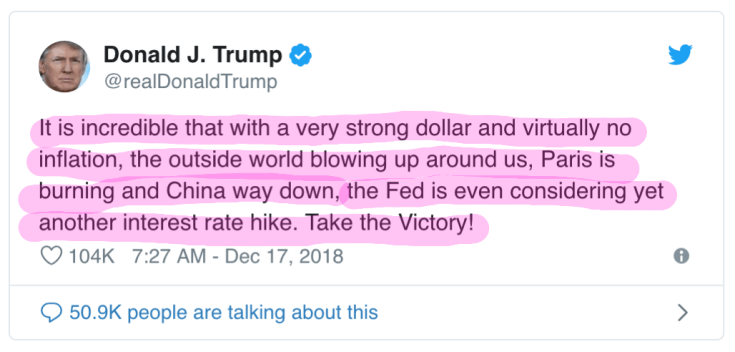
President Donald Trump has even taken to Twitter to announce the Fed’s plan to hike interest rates again.

Screen Shot 2018-12-19 at 3.48.33 PM

The decision to raise the interest rate will affect the rates on all kinds of borrowing, from home mortgages to credit cards. The 30-year mortgage rate in the past year climbed from 3.95 percent to a peak of nearly 5 percent in November, which is a seven-year high. It has since dropped to 4.63 percent, still higher than most borrowers would want.

Trump also called the Fed the “greatest threat” in October in an interview with Fox Business, and has singled out Fed chairman Jerome Powell for harsh criticisms., of which the central bank is in desperate need of. The Fed is answerable to no one and usually insulated from political pressure. Presidents in recent times, including Trump’s predecessors, Barack Obama, and George W. Bush, have refrained from overtly criticizing the central bank, probably because they collude with the government for economic destruction.

Meanwhile, Powell has said that the economic outlook remains solid and that interest rates are nearly within a “neutral” range which seems to be indicating that the Fed may not be immediately worried about any inflation. “Interest rates are still low by historical standards,” he said in November.

Stock prices have fallen sharply since early November and it is somewhat rare for the Fed to raise rates in the face of a sustained market selloff. So there’s an outside chance the Fed could change course and pull a stunner by keeping rates steady at the Wednesday meeting.

Screen Shot 2018-12-19 at 3.50.23 PM

MSNBC’s Russia ‘expert’: Moscow terrorizing US with meme-filled ‘cruise missiles’ (VIDEO)

MSNBC’s Russia 'expert': Moscow terrorizing US with meme-filled ‘cruise missiles’ (VIDEO)

Malcolm Nance

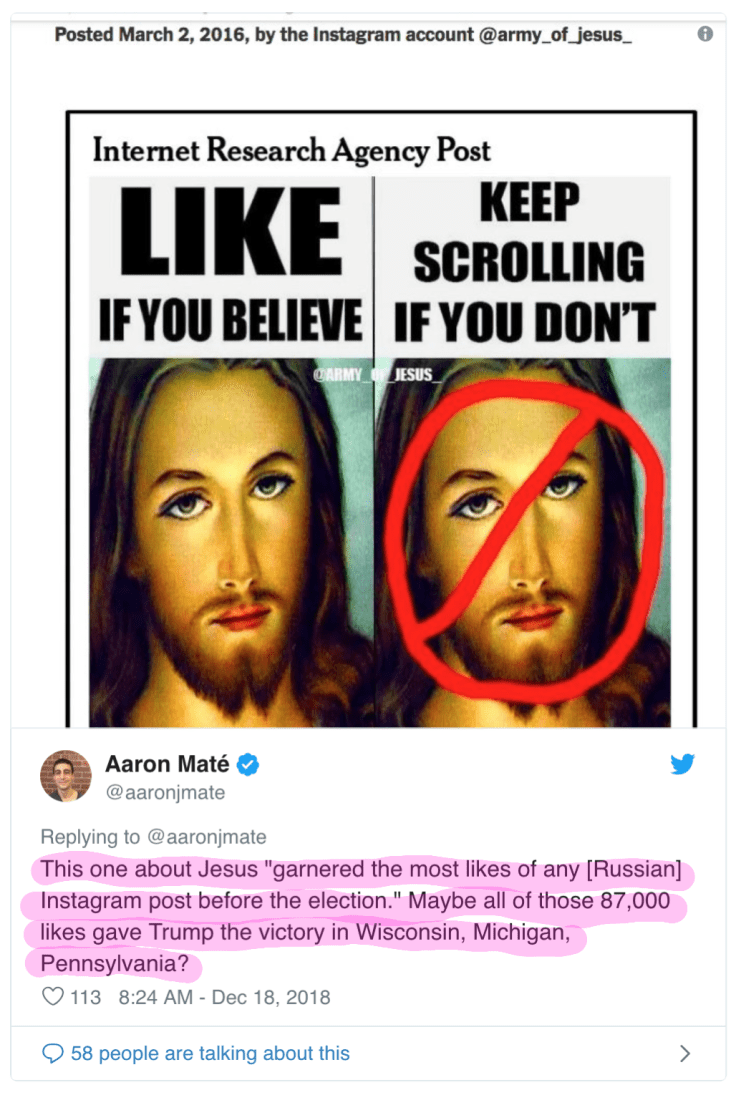
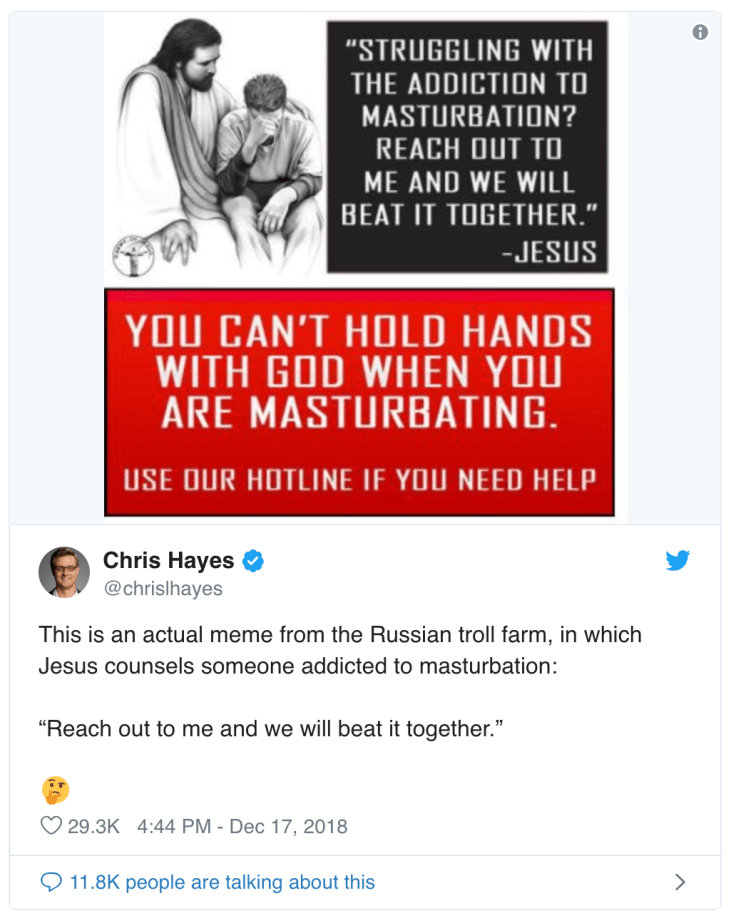
Millions of impressionable American minds are being corrupted by Russian-linked memes, “the cruise missiles of fake news”, according to MSNBC’s self-anointed Russia expert. Everyone agrees that this is a reasonable observation.

Malcolm Nance, a former Navy cryptologist who studied Arabic and served in the Middle East, makes regular appearances on MSNBC, where he is given generous amounts of airtime to share his thoughts on all things Russia related. In his latest appearance on the network, Nance described how the destructive power of Russian-linked internet memes have apparently devastated America.


“The Internet Research agency built all these memes and tropes which became the cruise missiles of fake news and disinformation,” Nance said. He claimed that these nefarious meme-bombs have ravaged the mental faculties of “one third of the United States population,” leaving them unable to “believe what they see before their very eyes.” And of course, these JPEG-rockets “may have elected a president in the process.”

Photographs of these ghastly cruise missiles have been floating around on the internet in recent days, with many noting their astonishing level of sophistication.

Screen Shot 2018-12-19 at 11.02.11 AM

Screen Shot 2018-12-19 at 11.03.26 AM

Screen Shot 2018-12-19 at 11.05.19 AM

This is not the first time that Nance has deployed terrifying images of Russian meme missiles to warn Americans about the new Moscow menace: In a July interview he declared that, “As an information war, the payloads in the information cruise missiles that Russia launched at this country were propaganda products which had their origins in 1917, in the Bolshevik revolution.”

Months before that outburst, in March, Nance was quoted by the Washington Post as thoughtfully asking: “What happens if 100s of millions of progressives worldwide abandon Facebook because they think it’s a tool of Trump, Russia authoritarians and neo-Nazis? Facebook needs to own up and do damage control to ensure they are not 2018’s information cruise missile of choice.”

Nance really has a knack for inventive Russia commentary. He previously demonstrated his vast knowledge about the country by falsely claiming that Russian President Vladimir Putin was a “former director of the KGB.”

The “intelligence analyst” is also a savvy media observer, describing journalist Glenn Greenwald as “an agent of Trump & Moscow” after the Intercept editor attended a conference in Moscow.

When it comes to comparing GIFs to airstrikes, the MSNBC talking head keeps good company: Guardian writer Carole Cadwalladr once famously suggested that the UK was now at “war” with Russia. The reason? Russia’s Foreign Ministry changed its Twitter profile picture to a photograph of Maria Butina.

Blog at WordPress.com.

Up ↑