
Health Officials: 59 Confirmed Flu Cases Among the Hundreds of Border Illegals Relocated to San Diego
By Penny Starr
U.S. Customs and Border Protection reports that an average of 4,500 people are detained at the United States border with Mexico each day, and according to a Wednesday report from county health officials, many of them are bringing diseases with them.
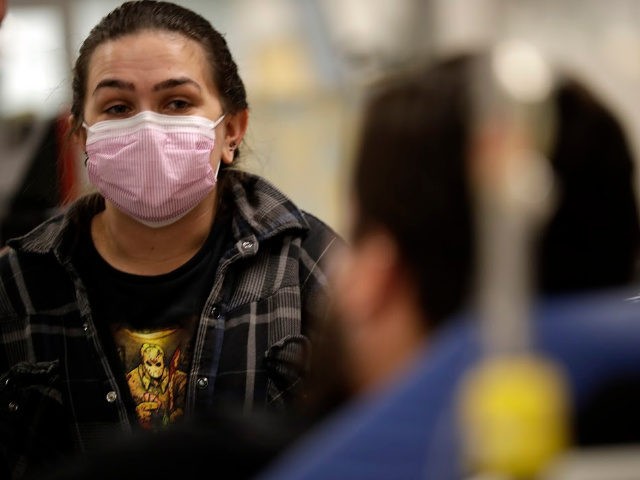
Hundreds of the detained migrants are being relocated to San Diego, California, and the County of San Diego Communications Office has confirmed that, as of Wednesday, there have been 59 cases of flu among these migrants since May 19, 2019; and 82 people (33 families) have been quarantined at local hotels.
The sick migrants came from a federal facility in McAllen, Texas, where some 8,000 are being held — “two times the agency’s maximum capacity in the area,” according to Fox 5.
Fox 5 reported:
Federal officials shut down the Texas facility for cleaning after the outbreak and began moving the detainees to San Diego.
The first of those transfers arrived in San Diego on May 19. To date, nearly 300 people at a migrant shelter in Bankers Hill operated by Jewish Family Service of San Diego have received a health screening.
DHS [Department of Homeland Security] officials and U.S. Customs and Border Protection announced the plan to begin flying detained asylum seekers from Texas to San Diego on May 17. Federal immigration authorities are operating 10 jets between San Diego and Texas, with roughly 130 people aboard each flight. DHS officials said they aim to charter three flights a week to San Diego International Airport, from which the asylum seekers will be moved to local CBP processing stations like Brown Field.
San Diego is not the only American city that is receiving migrants.
An Associated Press (AP) report revealed that, aside from DHS releasing nearly 200,000 border crossers and illegal aliens into American communities since December 2018, the agency is flying border crossers and illegal aliens into U.S. cities and then releasing them:
U.S. Immigration and Customs Enforcement (ICE) has historically ensured that families had travel plans before releasing them, but last year it shortened custody stays in response to the growing numbers of arrivals from Mexico. They began dropping migrants off in cities along the border at burgeoning shelters and bus stations.
At the same time, U.S. Customs and Border Protection, which turns over border crossers to ICE after arresting them, has begun flying migrants to other cities for processing and is releasing them directly into communities without going through ICE, saying their own facilities are at capacity. As numbers have swelled in border cities, authorities have begun looking farther inland.
The Centers for Disease Control and Prevention (CDC) estimates that from October 1, 2018, to May 4, 2019, there were between 36,400 and 61,200 flu-related deaths.
BORDER PATROL REP: RECORD NUMBER OF AGENTS CONTRACTING ILLNESS FROM ILLEGALS

‘I believe this is probably the record, you know, Border Patrol-wide, since ever, of agents calling in sick’
By Adan Zalazar
More agents than ever before are calling in sick to work or showing up sick, says a Border Patrol union representative who worries too many agents are succumbing to illnesses brought by illegal aliens.
Carlos Favela, president of the National Border Patrol Council Local 1929, says the number of agents affected by illnesses has reached alarming levels in recent years, with an estimated 20 to 25 agents from the El Paso sector calling in sick each day, while others come in to work sick because they’ve used up their sick days.
“I believe this is probably the record, you know, Border Patrol-wide, since ever, of agents calling in sick,” Favela told ABC-7.
According to Favela, numerous agents are filing union reports claiming they’ve contracted everything from the H1N1 virus to chicken pox to Legionnaires’ disease after coming in contact with sick illegals encountered at the border.
Favela says agents are concerned they could infect their family members with infectious diseases such as tuberculosis.
“The nightmare for the agent out in the field,” said Favela, “is that they contract tuberculosis or some kind of bacterial disease and they unknowingly take that home to their families and then their whole family is sick.”
To the border union president, the increase in sick agents coincides with the number of illegals arriving at the border.
KVIA reports, “Newly-released figures from the Department of Homeland Security reveal Border Patrol agents encountered 109,144 migrants in April 2019, the highest since 2007.”
Favela argues it’s hard to get the evidence needed to quantify the issue and prove a correlation, but he pushes back against Border Patrol officials who say they haven’t noticed the trend.
“That’s false,” he said. “Ever since the big surge of the immigrants started coming in, even as far back as September, we started seeing those numbers slightly increase – of agents calling in sick.”
The border rep is urging the CDC to implement changes to better protect agents’ health, including providing more screenings from doctors instead of nurses and new quarantine facilities for sick illegals.


Record number of migrant families crossing border… Tuberculosis, flu, infections rampant…

Photo by: Daniel Ochoa de Olza
A Border Patrol officer holds a baby as he helps a migrant to go down after they jump the border fence to get into the U.S. side to San Diego, Calif., from Tijuana, Mexico, Saturday, Dec. 29, 2018. Discouraged by the long wait to apply for asylum through official ports of entry, many migrants from recent caravans are choosing to cross the U.S. border wall and hand themselves in to border patrol agents. (AP Photo/Daniel Ochoa de Olza)
By Stephen Dinan
Border authorities are referring 50 people a day for urgent medical care, including tuberculosis, flu and even pregnant women about to give birth, a top official said Monday, saying it’s unlike anything they’ve ever seen before.
Most of those in need of care are children, and a staggering 28 percent are under age 5, having been dragged along for the trip by parents who in many cases are hoping to use the children as a shield against speedy deportation from the U.S.
The numbers were released after a full review was done of all children in the custody of Customs and Border Protection in the wake of two illegal-immigrant children who died in U.S. hospitals in December.
CBP Commissioner Kevin McAleenan said most of those needing help were ill when they arrived at the border, and some appear to have made the initial decision to leave even while ailing.
“Many were ill before they departed their homes,” the commissioner said. “We’re talking about cases of pneumonia, tuberculosis, parasites. These are not things that developed urgently in a matter of days.”
BREAKING: Case of suspected Ebola in Swedish Hospital – Emergency Dept. closed
By LAURA CAT

The patient has been isolated at Uppsala hospital being suspected of carrying the Ebola virus, Swedish media outlet SVT Nyheter reports. The Enkoping hospital has been promptly closed for fear of staff potentially being exposed.
As Voice of Europe reported last week, there is concern about inadequate preparedness for when a new epidemic erupts.
The national health authorities in Sweden have chosen to keep a low profile on discussions on the virus to avoid causing concern among citizens, having not coordinated government initiatives leaving it to county councils whether they increase their preparedness.

The deadly Ebola virus is transmitted to humans from wild animals and according to the World Health Organisation it has a 50 per cent rate of fatality.
More than 11,000 people in Guinea, Liberia and Sierra Leone died of the virus between December 2013 and April 2016.
The migrant caravan trying to invade the USA is actually a DISEASE caravan
by Natural News – December 3, 2018
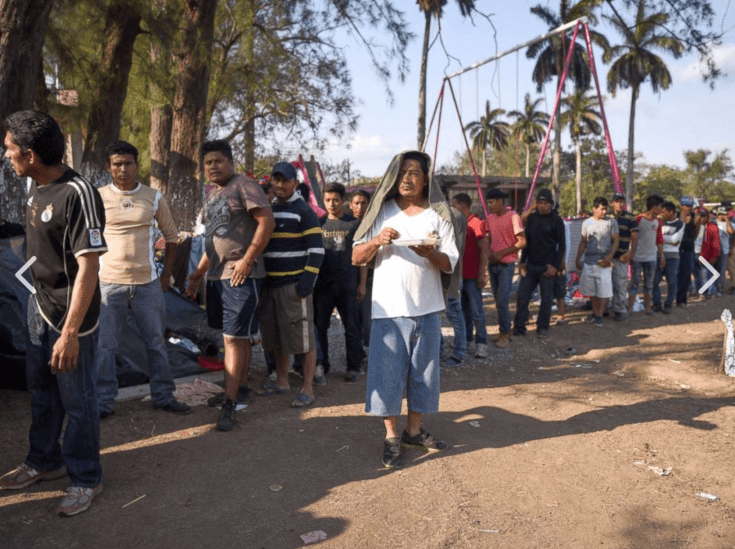
Thousands of migrant invaders trying to rush the United States border via Mexico are reportedly now having to undergo medical treatment because they’re infected with life-threatening diseases, reveal figures just released from Tijuana’s Health Department.
Officials in Mexico say that at least one third of the illegal caravan’s 6,000 members are suffering from HIV, tuberculosis, or one or more of a number of other serious illnesses that are putting local populations at risk of infection.
“There are three confirmed cases of tuberculosis, four cases of HIV / AIDS and four separate cases of chickenpox,” explains a Tijuana Health Department spokesman to reporters.” At least 101 migrants have lice and multiple instances of skin infections, the department’s data shows. There’s also a threat of Hepatitis outbreak due to unsanitary conditions.”

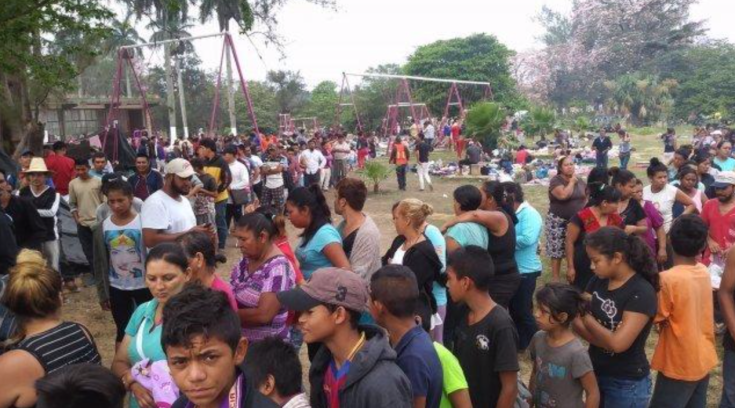
Since there’s nowhere else to house these infected people, hordes of them are currently occupying the Benito Juarez Sports Complex near the San Ysidro U.S.-Mexico Port of Entry, even though the facility is only capable of handling a maximum of 1,000 people.
Illegal migrants are being told “No Spitting” following spate of bodily fluid biohazards
Many of these “poor women and children,” as America’s fake news media is calling them, have extremely poor hygiene standards. Thousands of mostly younger men are reportedly coughing and spitting so much around Tijuana that officials there have had to put up “No Spitting” signs as a deterrent.
Meanwhile, local governments in Tijuana are at their wits end and running out of money as they attempt to deal with this illegal invasion.
“We won’t compromise the resources of the residents of Tijuana,” stated Juan Manuel Gastelum, Tijuana’s mayor, adding that the city is having to spend roughly $30,000 per day keeping the place livable in spite of the invasion.
“We won’t raise taxes tomorrow to pay for today’s problem,” he added.
Treasonous CDC bringing diseased migrants into U.S. for “treatment” – on the taxpayer’s dime
Since repeated attempts by “bleeding heart” leftists to let these hordes of illegals into the U.S. has thus far failed, the corrupt U.S. Centers for Disease Control and Prevention (CDC) is doing its part to destroy the country by actually flying these diseased criminalsinto the country and shipping them to CDC medical facilities for treatment.
Reports indicate that the CDC is taking the diseased migrants to Georgia, where they’re now receiving medical care paid for by U.S. taxpayers.
“I think we will see many more flights bringing communicably sick illegals from the border to various military bases and then on to hospitals in the area,” one report explains.
“As you know, our government has been flying in dangerously ill illegals into the U.S. for a long time … most especially from Africa. It is a classified program.”
President Donald Trump has repeatedly stated that he will not allow this illegal caravan to enter the U.S., warning that its members include dangerous and violent criminals of the likes of MS-13 – not to mention other violent criminals from overseas.
“You’re going to find MS-13, you’re going to find Middle Eastern, you’re going to find everything,” the President stated.
“U.S. Border Patrol agents have arrested a member of the infamous Salvadoran MS-13 gang who admitted to authorities that he traveled with a caravan of Central American migrants who were hoping to qualify for asylum in America.”
To keep up with the latest news about President Trump and how he’s handling the illegal migrant crisis, be sure to visit Trump.news.
You can also follow the actions of leftists, the CDC, and other traitorous entities in the U.S. that are trying everything to destroy our Republic at Treason.news.
Medical Experts Fear Congo Ebola Outbreak May Become Worst Ever
By John Hayward
Harried doctors fighting the Ebola outbreak in the Democratic Republic of the Congo (DRC) fear it may become the worst outbreak of the deadly disease in the region to date, as an ongoing insurgency slows treatment and accelerates contamination.
“We are absolutely concerned about the ongoing outbreak in the Democratic Republic of Congo,” a senior official with USAID said on Thursday. “It is occurring in an area of active conflict, so physical insecurity is a persistent challenge and complication to the ongoing response efforts.”
On the positive side, the official said the outbreak is “not comparable at this point to the outbreak that occurred in West Africa in 2014,” meaning it does not threaten to spread across an “incredibly large geographic area.”
Ebola cases have been mostly limited to two towns in the North Kivu province of the DRC, but the rate of new cases has accelerated during the past few weeks. USAID and the U.S. Center for Disease Control (CDC) have deployed dozens of experts to work with the DRC Health Ministry since the outbreak began in August.
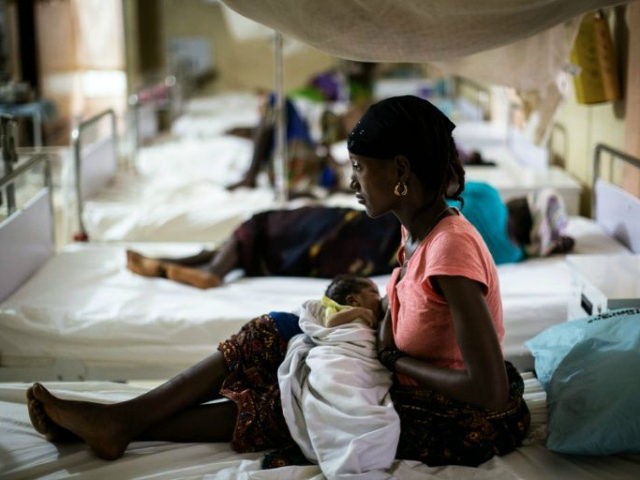
On Friday, Sky News watched doctors don biohazard suits and struggle to handle the influx of patients to a “ramshackle hospital” made from “wooden huts and temporary tents” in the city of Beni. The hospital only has 60 beds, but Sky News correspondents counted 92 new patients admitted on the day of their visit, among them a pregnant woman and a three-year-old girl.
Doctors reported 308 “confirmed” or “probable” cases of Ebola in the outbreak, approaching the highest total ever seen in the Congo. Thirty of them are children under ten years of age, suggesting the latest strain of Ebola is spreading faster among children than previous strains. So far, 191 patients have died.
International aid workers said local residents are working more smoothly with doctors than some previous populations affected by Ebola, a disease that tends to spread panic and mistrust among its victims. Officials were especially optimistic about the success of “community surveillance” programs designed to track the movements of infected people and quickly identify others who may have been exposed to Ebola. More effective vaccinations were also credited with keeping the death toll down.
The bad news is that CDC Director Robert Redfield warned on Monday the current outbreak may not be containable because it is spreading through an active war zone, making it harder to implement the procedures that have been helpful so far.
The Washington Post augmented Redfield’s warning with some discouraging notes about the difficult situation faced by aid workers:
Dozens of armed militias operate in the area, attacking government outposts and civilians, complicating the work of Ebola response teams and putting their security at risk. Violence has escalated in recent weeks, severely hampering the response. The daily rate of new Ebola cases more than doubled in early October. In addition, there is community resistance and deep mistrust of the government.
Some sick people have refused to go to treatment centers, health-care workers are still being infected, and some people are dying of Ebola or spreading the virus to new areas. An estimated 60 to 80 percent of new confirmed cases have no known epidemiological link to prior cases, making it very difficult for responders to track cases and stop transmission. In late August, the United States withdrew some of the CDC’s most seasoned Ebola experts who had been stationed in Beni, the province’s urban epicenter, because of security risks.
The outbreak is threatening to spread into much less isolated towns, such as the trading port of Butembo, introducing the risk of wider transmission chains that become even more difficult to trace.
Angry rock-throwing mobs have confronted some medical teams when they attempt to secure the bodies of fatal Ebola victims. Experts on the local population explained they are sometimes terrified at the sight of medical teams in hazmat suits, driven by deep distrust of the DRC government, which they blame for keeping them in poverty and allowing armed rebel groups to prey upon them. Some locals apparently believe their government is fabricating Ebola warnings in a bid to frighten them away from their homes.
The U.N. Security Council passed a resolution on Tuesday demanding safer working conditions for medical teams in the outbreak zone, but concerned analysts said the international community has a poor track record of controlling insurgents in the Congo, even lacking reliable information about how many rebel groups are active in the area. Meanwhile, the DRC government has been criticized for abandoning rural areas and shifting its troops into the cities, where the government fears mass demonstrations could break out.
GA toddler paralyzed overnight… Polio-like disease fears grow nationwide…

By Audrey Washington
ATLANTA – A Georgia mother said her toddler went to bed sick and woke up paralyzed from the neck down.
It’s the latest in a series of mysterious illnesses that are baffling doctors. Two young patients were recently treated at Scottish Rite after they fell ill and then woke up partially paralyzed.
Doctors are still working to figure out what causes acute flaccid myelitis, or AFM, but they tell Channel 2 Action News the rare condition is similar to polio, in that it can cause muscle weakness or partial paralysis.
And like polio, doctors believe AFM is caused by a virus, but they don’t know which virus.
That was the case for a 2-year-old Abigail. Her mother said one moment she was a healthy child who came down with a double ear infection and fever. Then a few days later, she woke up paralyzed from the neck down.
Doctors diagnosed Abigail with AFM. She’s now in rehab making great progress.
“It’s a rare occurrence its one in a million, in a million,” said Dr. Anthony Fauci, National Institute of Allergy and Infectious Diseases Director.
Across the country, the Atlanta-based Centers for Disease Control and Prevention reports 62 confirmed cases of AFM in 22 states, and 93 possible cases.
“It’s really heartbreaking. No parent should ever have to experience that and what makes it worse, it’s not the tubes, it’s not the treatments, what makes is worse is not knowing what caused it,” said Abigail’s mother, Erica Palacios.
There were 5 cases reported in Georgia in 2016.
Doctors said the West Nile Virus may be the cause in some of the cases.
“It’s a very frustrating situation we do not know definitively what it is, although there is a suspicion, a strong suspicion that it is associated with a particular type of virus that we recognize,” Fauci said.
What CDC Doesn’t Know
- Among the people who were diagnosed with AFM since August 2014:
- The cause of most of the AFM cases remains unknown.
- We don’t know what caused the increase in AFM cases starting in 2014.
- We have not yet determined who is at higher risk for developing AFM, or the reasons why they may be at higher risk.
- We do not yet know the long-term effects of AFM. We know that some patients diagnosed with AFM have recovered quickly, and some continue to have paralysis and require ongoing care.
What CDC Is Doing
CDC is actively investigating AFM cases and monitoring disease activity. We are working closely with healthcare providers and state and local health departments to increase awareness for AFM. We are encouraging healthcare providers to recognize and report suspected cases of AFM to their health departments, and for health departments to send this information to CDC to help us understand the nationwide burden of AFM. CDC is also actively looking for risk factors and possible causes of this condition.
CDC activities include:
- Urging healthcare providers to be vigilant for AFM among their patients, and to send information about suspected cases to their health departments
- Verifying clinical information of suspected AFM cases submitted by health departments, and working with health departments and neurologists to classify cases using a case definition adopted by the Council of State and Territorial Epidemiologists (CSTE)
- Testing specimens, including stool, blood, and cerebrospinal fluid, from suspected AFM cases
- Working with healthcare providers, experts, and state and local health departments to investigate and better understand the AFM cases, including potential causes and how often the condition occurs
- Providing new and updated information to healthcare providers, health departments, policymakers, the public, and partners in various formats, such as scientific journals and meetings, and CDC’s AFM website and social media
- Using multiple research methods to further explore the potential association of AFM with possible causes as well as risk factors for AFM. This includes collaborating with experts to review MRI scans of people from the past 10 years to determine how many AFM cases occurred before 2014, updating treatment and management protocols, and engaging with several academic centers to conduct active surveillance simultaneously for both AFM and respiratory viruses.
 Tom's Blog