
Published on May 26, 2019


Published on May 28, 2019

By Paul Joseph Watson
Yes, seriously.
Finnish Twitter user Iisak Selin responded to a tweet by journalist David MacDougall with a photo of himself using the hand gesture.
MacDougall responded by tweeting, “Hi Iisak – Do you have a job? I wonder what your employers think of you making a sign that has been co-opted by white supremacists and racists? Would be interesting to find out. Or maybe a future employer is interested…”

But MacDougall wasn’t finished.
He then responded to another individual who posted a photo of himself doing the OK hand sign with the same threat.
“I don’t know if these people have jobs, but I wonder what their employers would think about them making signs that are closely associated with & used by white supremacists and racists?” asked MacDougall.
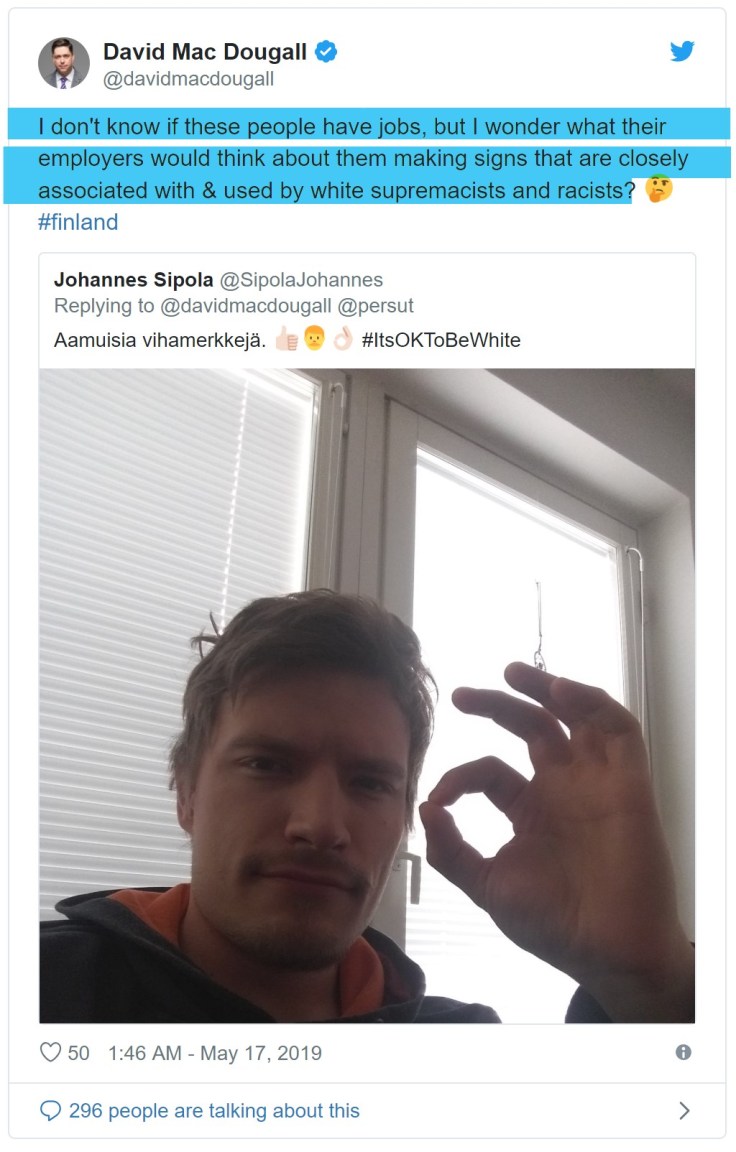
That’s funny, because I wonder when MacDougall and his ilk will stop abusing their platforms to threaten to doxx people simply because they don’t like their politics and do some actual journalism.
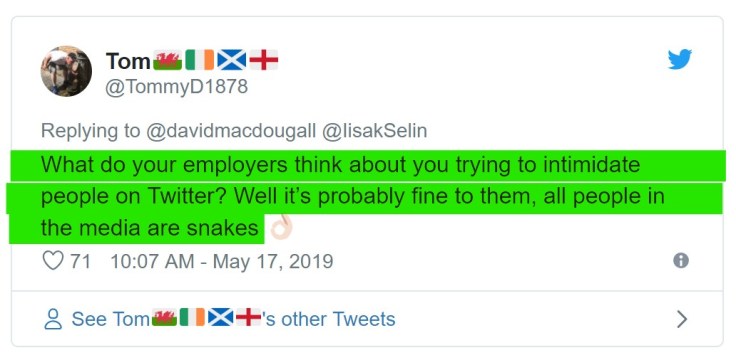
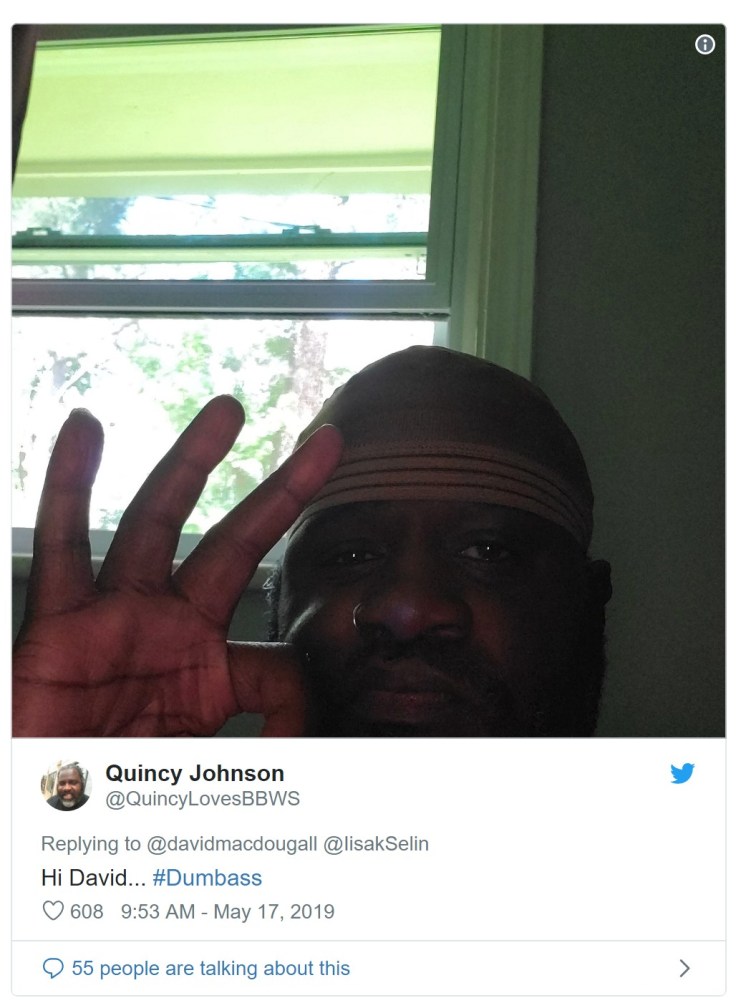
Respondents on Twitter soon put MacDougall in his place.
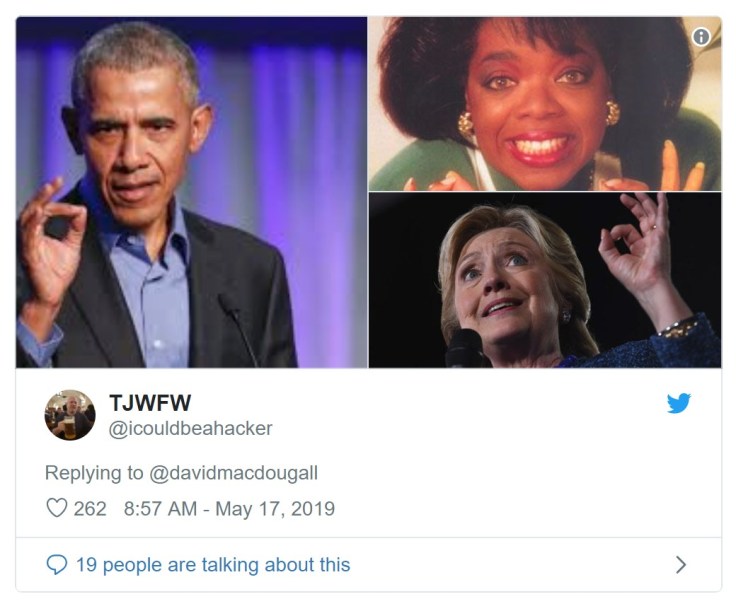
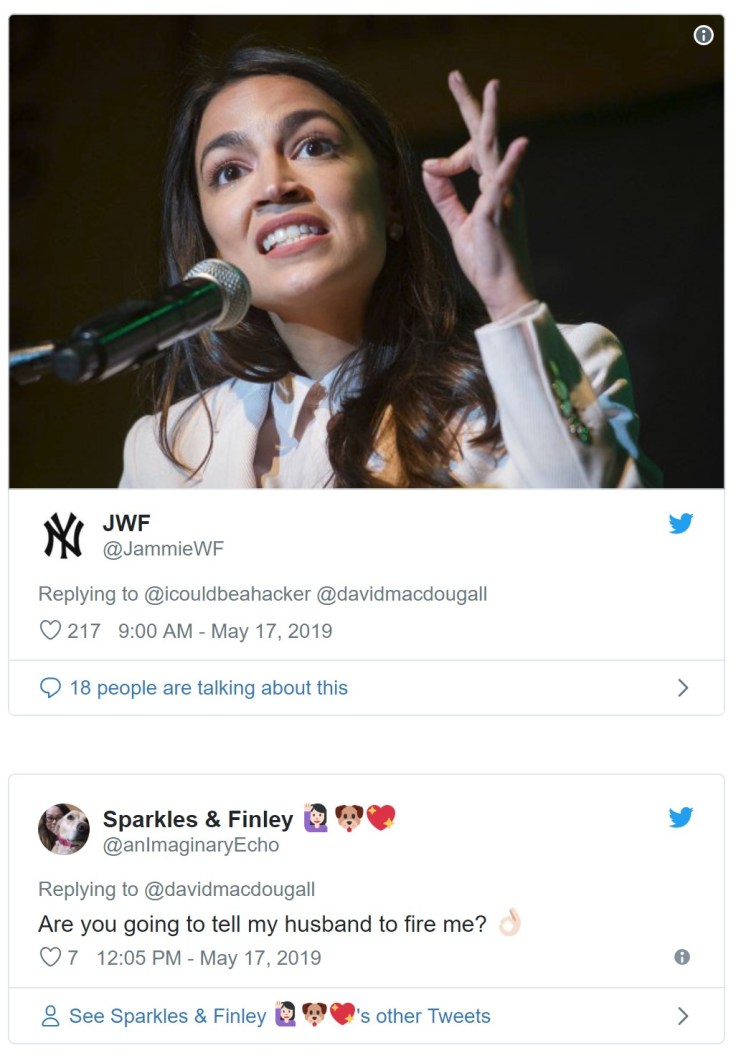

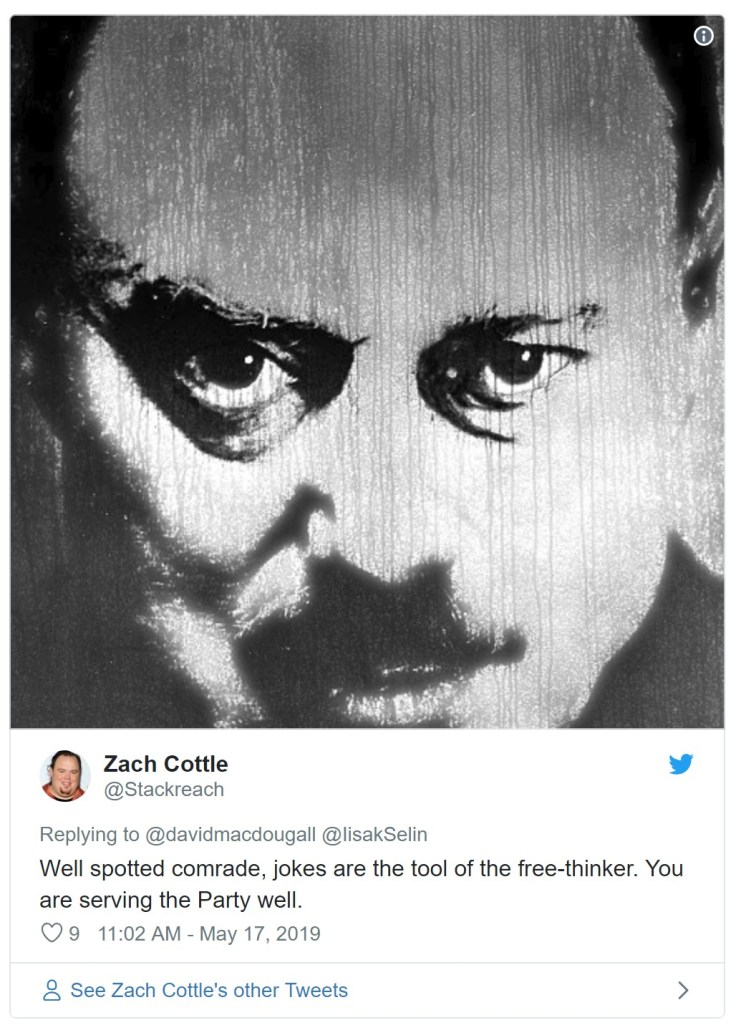

As we document in the video below, the media was tricked into believing the OK hand sign was secret code for white supremacy as a result of a 4chan troll and has been whipping up hysteria about it ever since.
By Aaron Klein
Clapper refused Trump’s request, the emails reveal.
Trump’s requests to Comey and Clapper were in response to media leaks about the dossier. The first leak was a CNN January 10, 2017 report exposing classified briefings to Trump and Barack Obama about the dossier. Those briefings were presented by Comey, Clapper, CIA Director John Brennan and NSA Director Admiral Mike Rogers.
Following the CNN report, the full dossier document was published hours later by BuzzFeed.
“He [Trump] asked if I could put out a statement. He would prefer of course that I say the documents are bogus, which, of course, I can’t do,” Clapper wrote to Comey in a January 11, 2017 email.
“He called me at 5 yesterday and we had a very similar conversation,” Comey wrote back to Clapper one day later.
It was not clear why Clapper would not at least put out a public statement calling into question the Steele charges related to alleged collusion or discredited claims about a “pee” tape involving Trump, none of which had been verified by the FBI. Indeed, the FBI at that time possessed information calling Steele’s claims and the origins of the dossier into question.
Comey himself previously admitted in testimony that he pushed back against a request from Trump, made during an Oval Office meeting, to possibly investigate the origins of the unsubstantiated claims made in the infamous anti-Trump dossier. Comey recounted: “I replied that he should give that careful thought because it might create a narrative that we were investigating him personally, which we weren’t, and because it was very difficult to prove a negative.”
Yet Comey did not inform Trump at the time that the FBI chief personally cited the dossier as evidence in three successful FISA applications signed by Comey himself to obtain warrants to spy on Trump campaign adviser Carter Page. The first was signed in October 2016; the second and third were renewal applications since a FISA warrant must be renewed every 90 days.
In his classified briefing to Trump on the dossier charges, there is no record indicating that Comey informed the politician that the document, authored by former British spy Christopher Steele, was produced by the controversial Fusion GPS firm.
There is also no evidence that Comey told Trump at any time that Fusion was paid for the dossier work by Trump’s main political opponents, namely Hillary Clinton’s 2016 presidential campaign and the Democratic National Committee (DNC) via the Perkins Coie law firm.
Bruce Ohr, a career Justice Department official, admitted in testimony released in March that he informed the FBI that the anti-Trump dossier was tied to Hillary Clinton’s presidential campaign. Ohr testified that he further warned his FBI superiors that the dossier information was likely “biased” against Trump and that he thought Steele was “desperate that Trump not be elected.”
Ohr revealed that he spoke to the FBI about the role of Fusion GPS in producing the dossier, and informed the agency that his wife, Nellie Ohr, worked at the time for Fusion GPS.
Critically, Ohr said that he transmitted all of that information in the time period before the FBI under Comey certified the FISA application to obtain a warrant to conduct surveillance on Carter Page, a former adviser to President Trump’s 2016 campaign. Comey signed the first FISA application in late October 2016.
The emails between Comey and Clapper, meanwhile, came on the heels of the January 10, 2017 news media leaks about the dossier.
On January 10, CNN was first to report the leaked information that the controversial contents of the dossier were presented during classified briefings inside classified documents presented one week earlier to then President Obama and President-elect Trump by Comey, Clapper, Brennan and Rogers. Comey reportedly briefed Trump alone on the most salacious charges in the dossier.
Prior to CNN’s report leaking the Comey briefing to Trump, which was picked up by news agencies worldwide, the contents of the dossier had been circulating among news media outlets, but the sensational claims were largely considered too risky to publish.
All that changed when the dossier contents were presented to Obama and Trump during the classified briefings. In other words, Comey’s briefings themselves and the subsequent leak to CNN about those briefings by “multiple US officials with direct knowledge,” seem to have given the news media the opening to report on the dossier’s existence as well as allude to the document’s unproven claims.
ollowing the CNN report, BuzzFeed published the full Steele dossier.
Deep State Blame Game: Comey, Clapper, Brennan Spar over Who Pushed ‘Pee’ Dossier as Credible Intel
The Comey-Clapper email exchange cited in the Mueller report may take on more relevance now that Comey, Brennan and Clapper are the subjects of a dispute over which top Obama administration officials advocated for the infamous Steele dossier to be utilized as evidence in the Russia collusion investigation.
The argument erupted into the open with a Brennan surrogate being quoted in the news media this week opposing Comey not long after Attorney General William Barr appointed a U.S. attorney to investigate the origins of the Russia collusion claims.
The fiasco was kicked into high gear after Fox News cited “sources familiar with the records” pointing to an email chain from late-2016 showing Comey allegedly telling FBI employees that it was Brennan who insisted that the anti-Trump dossier be included in a January 6, 2017 U.S. Intelligence Community report, known as the ICA, assessing Russian interference efforts.
A former CIA official, clearly defending Brennan, shot back at the assertion, instead claiming that it was Brennan and Clapper who opposed a purported push by Comey to include the dossier charges in the ICA.
“Former Director Brennan, along with former [Director of National Intelligence] James Clapper, are the ones who opposed James Comey’s recommendation that the Steele Dossier be included in the intelligence report,” the official told Fox News.
“They opposed this because the dossier was in no way used to develop the ICA,” the official added. “The intelligence analysts didn’t include it when they were doing their work because it wasn’t corroborated intelligence, therefore it wasn’t used and it wasn’t included. Brennan and Clapper prevented it from being added into the official assessment. James Comey then decided on his own to brief Trump about the document.”
The official was addressing the reported email from Comey fingering Brennan as insisting that the dossier be utilized in the ICA report on Russian interference.
Discussing the issue during a segment on Fox News, former GOP Rep. Trey Gowdy said on “The Story with Martha MacCallum” that “Comey has a better argument than Brennan, based on what I’ve seen.”
One day earlier, Gowdey stated on Fox News, “Whoever is looking into this, tell them to look into emails” from December 2016 concerning both Brennan and Comey.
Gowdy told Fox News, where he is now a contributor, that his comments on the matter were based on sensitive documents that he reviewed while he served as chairman of the Republican-led House Oversight Committee.
Contrary to the ex-CIA official’s assertion that the dossier was not included in the intel community’s ICA Russia report, there have been testimony and media statements involving key players saying that it was part of the overall assessment.
Last December, Comey outright contradicted Brennan’s own testimony that the anti-Trump dossier was, as Brennan put it, “not in any way used as the basis for the intelligence community’s assessment” that Russia interfered in the 2016 presidential election.
In testimony before the House Judiciary and Oversight and Government Reform committees, Comey stated that material from the Steele dossier was indeed utilized in the IC report. Internally, the FBI referred to the dossier as “crown material.”
“So do you recall whether any quote, crown material or dossier material was included in the IC assessment?” Gowdy asked Comey at the time.
“Yes,” Comey replied. “I’m going to be careful here because I’m talking about a document that’s still classified. The unclassified thing we talked about earlier today, the first paragraph you can see of exhibit A, is reflective of the fact that at least some of the material that Steele had collected was in the big thing called the intelligence community assessment in an annex called annex A.”
Annex A in the report was titled, “Russia—Kremlin’s TV Seeks To Influence Politics, Fuel Discontent in US.”
The annex, like the rest of the report, contains the following disclaimer:
This report is a declassified version of a highly classified assessment; its conclusions are identical to those in the highly classified assessment but this version does not include the full supporting information on key elements of the influence campaign.
Comey went on to describe a conversation that he said he had with Brennan about how to include the dossier material in the IC assessment:
Gowdy: Do you recall the specific conversation or back and forth with then-Director Brennan on whether or not the material should be included in the IC assessment?
Comey. Yes. I remember conversation — let me think about it for a second. I remember there was conversation about what form its presentation should take in the overarching document; that is, should it be in an annex; should it be in the body; that the intelligence community broadly found its source credible and that it was corroborative of the central thesis of the intelligence community assessment, and the discussion was should we put it in the body or put it in an attachment.
I’m hesitating because I don’t remember whether I had that conversation — I had that conversation with John Brennan, but I remember that there was conversation about how it should be treated.
Comey’s descriptions are at direct odds with a statement Brennan made during May 2017 testimony before the House Intelligence Committee in which Brennan claimed the dossier was “not in any way used as the basis for the intelligence community’s assessment” on alleged Russian interference. Brennan repeated that claim during numerous news media interviews.
Comey is not the only former top official involved in the IC report to say that the dossier played a role in the report’s conclusions.
As RealClearPolitics.com documents, former NSA Director Rogers wrote in a classified letter that the dossier played a role in the IC’s assessment and a dossier summary was included in an initial draft appendix:
In a March 5, 2018, letter to House Intelligence Committee Chairman Devin Nunes, Adm. Rogers informed the committee that a two-page summary of the dossier — described as “the Christopher Steele information” — was “added” as an “appendix to the ICA draft,” and that consideration of that appendix was “part of the overall ICA review/approval process.”
Meanwhile Clapper, who served as director of National Intelligence under the Obama administration, conceded during a previous CNN interview that the IC assessment was able to corroborate “some of the substantive content of the dossier,” implying that the dossier itself was a factor.
“I think with respect to the dossier itself, the key thing is it doesn’t matter who paid for it,” Clapper said. “It’s what the dossier said and the extent to which it was — it’s corroborated or not. We had some concerns about it from the standpoint of its sourcing which we couldn’t corroborate.”
“But at the same time, some of the substantive content, not all of it, but some of the substantive content of the dossier, we were able to corroborate in our Intelligence Community assessment which from other sources in which we had very high confidence to it,” he added.
It was Clapper’s agency that released the Intelligence Community report.
The purported inclusion of the dossier may help to explain why Rogers’ NSA assessed the conclusion that Russian President Vladimir Putin favored Trump and worked to get him elected only with a classification of “moderate confidence,” while the FBI and CIA gave it a “high confidence” rating.
The dispute comes as U.S. Attorney John Durham has been charged by Barr with conducting a probe of the origins of the Russia investigation. In addition to ICA report tactics, Durham’s probe is likely to also focus on the use of the dossier in obtaining a FISA warrant to spy on Page.
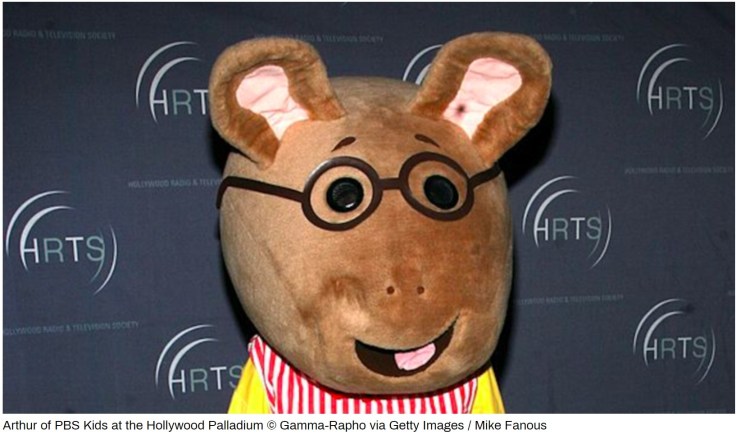
Come on, if there was one thing kids’ TV programming was desperately crying out for, it was a gay cartoon rat getting married, teaching us all a timely lesson about “diversity.”
So, that’s exactly what the season premiere of the Public Broadcasting Service’s (PBS) “Arthur” cartoon delivered. The episode featured a surprise wedding between the titular aardvark’s humanoid rat teacher and his male partner who appears to also be an aardvark…as CNN put it, “leaving us all in happy tears.”

While many people seemed unsurprised that Mr. Ratburn, a ‘man’ whose principal interests include eating cake and bird-watching, turned out to be a homosexual, there were, nonetheless, heavy celebrations across social media post-nuptials.
Indeed, social justice warriors everywhere were hardly able to contain their glee over the inter-species, same-sex pairing up. If nothing else, the episode confirmed that even kids just barely out of toddlerhood can no longer avoid being pummelled with lessons about identity politics.
Arthur has been on the air for a whopping 22 SEASONS, making it the longest running children’s cartoon on television. So, perhaps we can chalk its success up to being so very in tune with the zeitgeist — and its willingness to take on responsibilities that might otherwise be left to parents. Like lessons about gay marriage, for example.
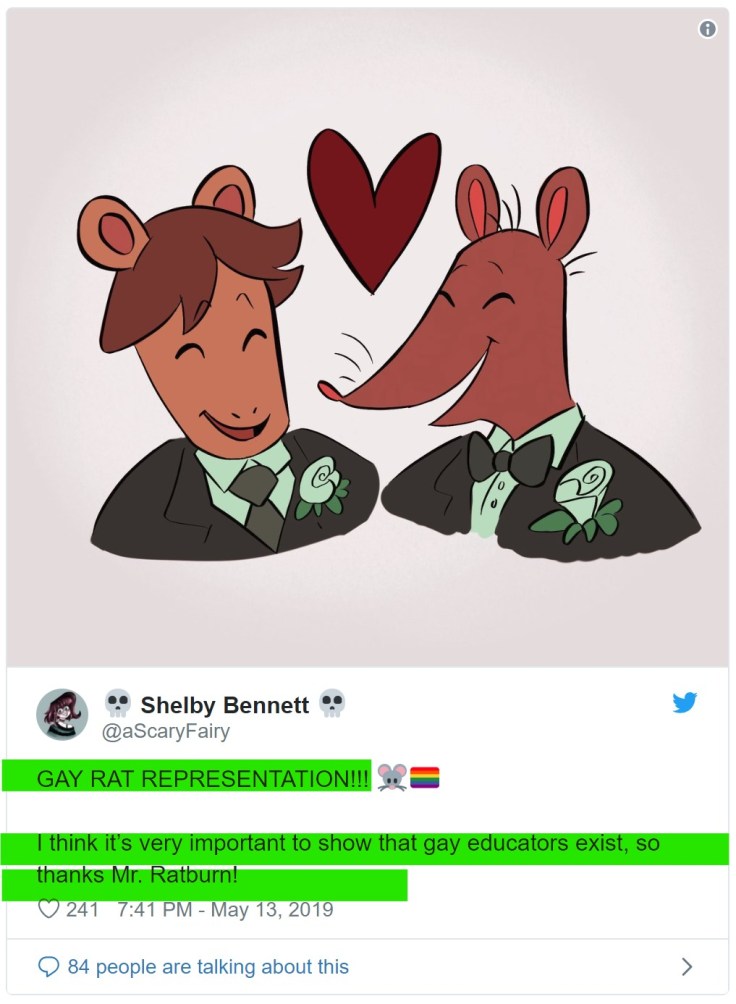
Should decisions of when and how to teach children about adult relationships really be made by television producers trying to impart their personal values onto everyone else’s kids? Regardless of whether the relationship is heterosexual or same-sex, marriage is hardly a topic many people would expect to be cropping up in a cartoon for four-year-olds.
What’s next? Are busy parents going to have to start vetting the shows their toddlers are watching and pick ‘liberal’ or ‘conservative’ ones depending on their own political persuasions? Can a parent not sit their child in front of a television show without wondering what wisdom and life lessons the friendly animated characters are going to be imparting next?
Of course, there’s no grave danger in a child learning about marriage and the basics of sexuality (some people are gay, some are straight, etc.), but are these topics really age-appropriate for the under-fives?
ALSO ON RT.COM‘Cartoons kill’: Kids’ movies show more death than adult ones, study finds
It’s not the first time that PBS has dealt with same-sex relationships in a supposedly child-friendly manner, either. The publicly-funded network ran an episode in 2005 which ambitiously featured two lesbian couples. Although, it appears on that occasion, “Arthur” was a bit ahead of its time and it was forced to pull the episode following parental complaints.
In a statement to People magazine, the network commented on the importance of accurately representing “the diversity of communities across the nation,” as well as the “wide array of adults in the lives of children who look to PBS KIDS every day.”
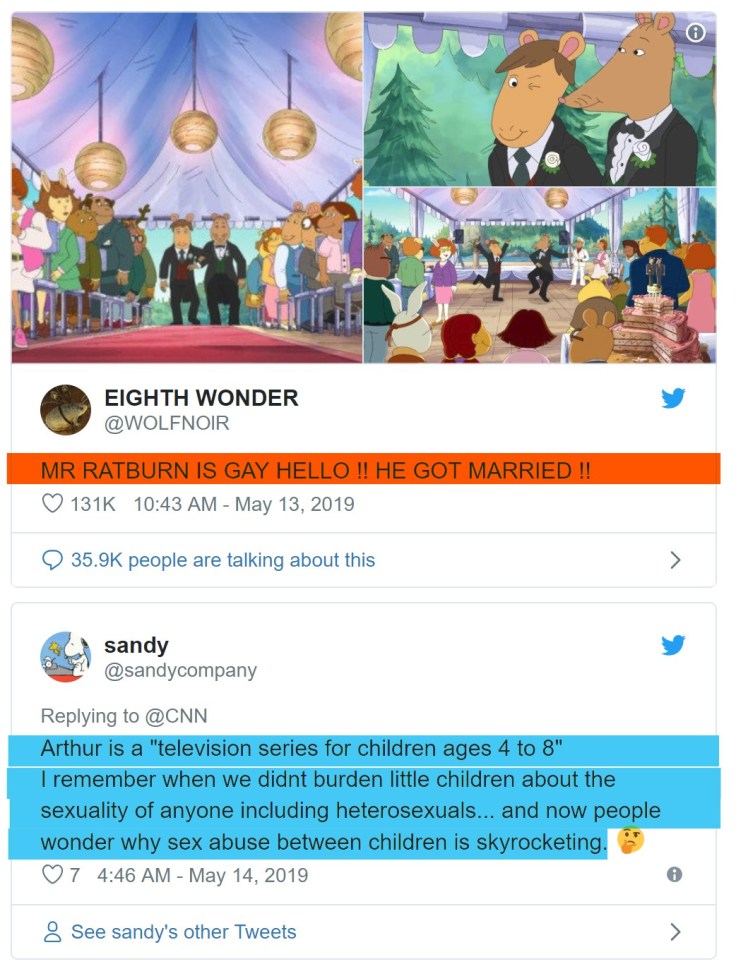
Social media reaction varied from extreme excitement that wedding bells were finally ringing for Mr. Ratburn to concern that PBS had taken their efforts to promote diversity and educate young kids a tad too far. Some were even downright angry that the channel had decided to “burden” children with thoughts of sexuality and adult relationships, homosexual or otherwise.




 Tom's Blog