
Published on Apr 7, 2019

By Joseph Curl
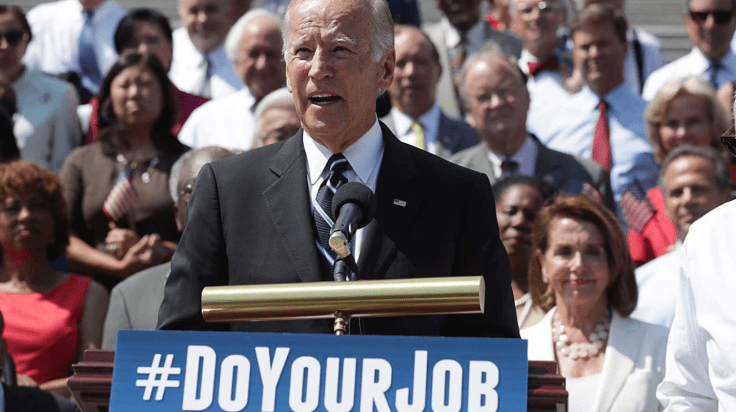
It’s all cool, bro.
But House Speaker Nancy Pelosi, a woman, doesn’t think the new allegations should prevent Biden from moving into the White House.
Asked on Monday if she thinks the claims from two women should prevent Biden from being president, Pelosi said: “No. No, I do not.”
“I don’t think that this disqualifies him from being president,” the California Democrat said. “Not at all.”
On Tuesday, though, she had some advice for Biden: No more touching.
“Join the straight-arm club,” Pelosi told a breakfast hour Washington event on Tuesday, the Associated Press reported.
“Just pretend you have a cold and I have a cold,” Pelosi said.
Pelosi, D-Calif., told the event, which was sponsored by Politico, that Biden “has to understand that in the world we are in now people’s space is important to them and what’s important is how they receive it, not necessarily how you intended it.”
Democrats have a huge tolerance for misogynist men — as long as they’re Democrats. Liberals fiercely defended then President Bill Clinton after he had an affair with a White House intern his daughter’s age and lied under oath about it, saying the whole story was “just about sex.” Clinton’s alleged sexual promiscuity was long reported, including affairs with lounge singers and accusations that he raped or sexually accosted at least three women.
Meanwhile, Democrats became enraged over allegations that Brett Kavanaugh, then a nominee for a seat on the Supreme Court, had supposedly once pushed girl onto a bed at a drunken high school party 35 years ago.
Last week, Lucy Flores, a former Nevada Democratic assemblywoman who was running for higher office, came out with allegations that Biden inappropriately touched her during a campaign rally in 2014, saying she felt uncomfortable and demeaned by his touching.
Then on Monday, another woman came forward with new allegations. Amy Lappos told the Hartford Courant that “Biden touched her inappropriately and rubbed noses with her during a 2009 political fundraiser in Greenwich when he was vice president.”
“It wasn’t sexual, but he did grab me by the head,” Amy Lappos told The Courant. “He put his hand around my neck and pulled me in to rub noses with me. When he was pulling me in, I thought he was going to kiss me on the mouth.”
And she said Biden crossed the line. “There’s absolutely a line of decency. There’s a line of respect. Crossing that line is not grandfatherly. It’s not cultural. It’s not affection. It’s sexism or misogyny.”
Biden’s fellow Democrats, especially the ones who are already running for president, have let him twist in the wind — or pounced on the allegations outright.
“I believe Lucy Flores,” Sen. Elizabeth Warren of Massachusetts said in Iowa on Sunday. “And Joe Biden needs to give an answer.”
When Sen. Bernie Sanders of Vermont was asked if Flores’ allegation disqualifies Biden from running for president, he said: “That’s a decision for the vice president to make.”
Former Colorado Gov. John Hickenlooper, also a 2020 candidate, said Biden’s actions were cause for concern. “Certainly, I think it’s very disconcerting and I think that women have to be heard and we should start by believing them.” And another candidate, Sen. Amy Klobuchar of Minnesota said she has “no reason not to believe” Flores.
“I think we know from campaigns and politics that people raise issues and they have to address them, and that’s what he will have to do with the voters if he gets into the race,” she said on Sunday.

By Chris White

House Speaker Nancy Pelosi described the Climate Action Now Act as one of many steps toward Democratic efforts to confront global warming. In particular, the bill aims to preventPresident Donald Trump from removing the United States from the non-binding Paris Climate accord. (RELATED: McConnell And Senate Republicans Vote To Kill Green New Deal)
The bill is a watered-down version of New York Rep. Alexandria Ocasio-Cortez’s Green New Deal, which called for shifting completely away from fossil fuels and toward green energy. The GND was torpedoed in the Senate on Tuesday after Republicans voted en masse against the resolution while Democrats voted present.
Ocasio-Cortez, a Democrat, was not present Wednesday during the roll out of the Climate Action Act.

The GND was introduced in February and called for “10-year national mobilizations” toward a series of goals aimed at fighting global warming. A fact sheet posted online during the introduction claimed the plan would “mobilize every aspect of American society on a scale not seen since World War 2.” It also became an object of ridicule as a draft suggested the end of cows and drastically curbing airplane travel.
House Democrats along with most of the Democratic Party’s quickly expanding 2020 presidential field have voiced support for the measure. Democratic Sens. Elizabeth Warren of Massachusetts and Cory Booker of New Jersey, who both announced their bids for the 2020 nomination, for instance, signed on as Senate co-sponsors of the proposal.
Pelosi’s office has not yet responded to The Daily Caller News Foundation’s request for comment about why Ocasio-Cortez was absent.

By Tyler Durden
So embarrassing that when Senate majority leader McConnell tried to force the Democratic party’s presidential contenders into an embarrassing vote over the berserk, MMT-inducing climate-change proposal (which Republicans are confident that even sober liberal will oppose), not a single Democrat voted for it. Instead, in the vote which was blocked late on Tuesday with a vote of 0-57, 43 Democrats voted merely “present”, including the Senate’s half-dozen presidential candidates, to sidestep the GOP maneuver and, as Bloomberg put it, “buy time to build their campaign positions.”
The vote was the first of many attempts by Republicans to force (socialist, MMT) supporters of the Green New Deal to come into the spotlight and suffer the public scrutiny. The proposal – mostly a collection of goals for mitigating climate change rather than a fully formed plan of action – which according to some would cost north of $100 trillion and would require the launch of helicopter money, also known as “MMT”, has been a favorite target for criticism by McConnell and Republicans ever since freshman Representative Alexandria Ocasio-Cortez of New York and Senator Ed Markey of Massachusetts rolled it out in February.
“I could not be more glad that the American people will have the opportunity to learn precisely where each one of their senators stand on this radical, top-down, socialist makeover of the entire U.S. economy,” McConnell said before the vote.
Alas, that opportunity was denied because instead of voicing their support for the most ludicrous proposal in socialist history, 43 Democrats decided to take the easy way out.
Even the six Democratic presidential contenders, including Cory Booker of New Jersey, Elizabeth Warren of Massachusetts, Kamala Harris of California, Kirsten Gillibrand of New York, Bernie Sanders of Vermont and Amy Klobuchar of Minnesota, all voted present.
At this point, the candidates for the Democratic nomination generally haven’t spelled out specific proposals. Senator Cory Booker of New Jersey has called the Green New Deal “bold,” and Senator Kamala Harris of California has said it’s “an investment” worth the cost. Senator Amy Klobuchar of Minnesota described it somewhat less enthusiastically, as an “aspiration” to act on climate change.
Fresh off what has been dubbed the best day in Trump’s presidency, on Tuesday Trump, no longer the subject of Russia collusion conspiracy theories, met with Senate Republicans at the Capitol, and according to Lindsey Graham the president told them regarding the Green New Deal, “make sure you don’t kill it too much because I want to run against it” in 2020.
Well, so far so good. In an attempt to save face with progressives, Adam Green, a co-founder of the grassroots Progressive Change Campaign Committee, said McConnell was trying to force some “no” votes at a time when Democrats are still reviewing the plan. Voting “present” shows that Democrats aren’t going to hamper things with an early dissent, he said.
While the “present” votes were to be expected, what came as a surprise is that three Democrats voted with Republicans against the resolution including Kyrsten Sinema of Arizona, Joe Manchin of West Virginia, and Doug Jones of Alabama, who faces a tough re-election campaign next year in a deep-red state. Independent Angus King of Maine, a member of the Democratic caucus, also voted against the measure.
The challenge for Democrats looking ahead to next year’s campaigns is to avoid having their support for a still-evolving climate proposal tarred by Republican efforts to portray it as an extremist agenda that would do away with hamburgers and airplane travel.
“It’s one thing to be on the campaign trail and say here is what I believe in and fill in the details,” said Democratic strategist Rodell Mollineau, who was a top aide to former Senate Democratic leader Harry Reid. “It’s another thing to go on record and let other people fill in the details for you.”
As Bloomberg notes, “the Green New Deal has more than 100 congressional Democrats as co-sponsors, including the six senators running for president. While Democrats are united on the need for significant action to stem climate change, they don’t agree on specific proposals.” As a result, McConnell introduced his own version, drawing on the language of the Democratic measure.
Top Senate Democrat Chuck Schumer tried to shield Democrats from having to expose splits between moderates and progressives on the issue. He dismissed the vote as “gotcha politics” intended by Republicans to distract from the fact that they don’t have their own plan to curb greenhouse gas emissions.
“Republicans want to force this political stunt to distract from the fact that they neither have a plan nor a sense of urgency to deal with the threat of climate change,” he said.
Following tonight’s Senate vote, Democrats plan to introduce a resolution in the House this week that calls for the U.S. to remain part of the Paris Climate Accord and requires the Trump administration to create a plan to meet its emission reduction goal, according to a senior Democratic aide. As a reminder, in 2017 Trump announced that he intends to pull out of the Paris agreement, under which the U.S. pledged to reduce greenhouse gas emissions by at least 26 percent from 2005 levels by 2025.
While Senate Democrats weren’t under any real pressure from outside progressive groups to vote for the Green New Deal at this point, they will be in due course.
Meanwhile, capitalizing on the ultra-liberal faction within the Democratic Party, the GOP’s message focuses on the botched February rollout of the proposal, which included the release of documents from Ocasio-Cortez’s office promising economic security even for those “unwilling to work,” and suggesting the eventual elimination of air travel and “farting cows.”

MARCH 19, 2019
As Beto O’Rourke throws his hat into an already crowded field — and boasts $6.1 million in donations in the first 24 hours — Democratic debate season draws ever closer.
And Los Angeles will play host for at least one of those showdowns when UCLA and the Human Rights Campaign present a forum for 2020 presidential candidates in the fall.
It will focus specifically on lesbian, gay, bisexual and transgender issues, offering candidates “an opportunity to speak about their policy platforms and plans to move LGBTQ equality forward,” according to a statement.
No media partner has yet been announced, but the forum will be televised.
The event is scheduled for Oct. 10 at Royce Hall, on the eve of National Coming Out Day, and will be held in addition to an already-announced Democratic Primary Debate that month.
Unlike that event, candidates at the UCLA/HRC forum will fully outline their platforms one at a time.
Democratic candidates can qualify for the event by receiving 1 percent or more of the vote in three separate national polls or by receiving donations from 65,000 different people in 20 different states.
According to the most recent polling data, that would mean places at the podium for Bernie Sanders, Kamala Harris, Elizabeth Warren, Cory Booker, Beto O’Rourke, Amy Klobuchar and John Hickenlooper. Should he announce as expected, Joe Biden will be there, too.
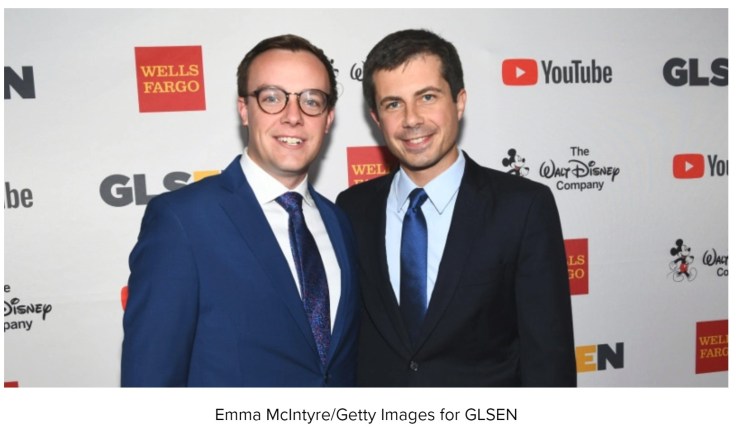
But so far only one LGBT candidate has expressed an interest in running: Pete Buttigieg, the mayor of South Bend, Indiana. Having reached 65,000 donors, Buttigieg has qualified for inclusion in the debates, should his exploratory run become an official one. And if that happens, expect Buttigieg to be a breakout star of the LGBTQ forum.
This is the first such HRC-hosted forum since 2007, when Barack Obama appeared alongside Hillary Clinton, John Edwards and others. Like the announced forum in October, that discussion, broadcast on Logo and attended by an LGBTQ-leaning crowd, centered around gay rights.
Twelve years has made a world of difference in that arena. Back then, a majority of candidates felt any advancements in LGBTQ rights should stop short of legalizing same-sex marriage, then only legal in Massachusetts.
Then Sen. Obama argued for a “strong version” of civil unions, saying, “My view is that we should try to disentangle what has historically been the issue of the word ‘marriage,’ which has religious connotations to some people, from the civil rights that are given to couples.”
In 2012, while campaigning for a second term in office, Obama came around to backing same-sex marriage.
Clinton, then a New York senator, took a similar stand, calling her opposition to same-sex marriage a “personal position” but insisting she believed “in equality.” She added: “How we get to full equality is the debate we’re having.”
After a decade opposing it, Clinton eventually voiced her support for same-sex marriage in 2013.
Only two long-shot candidates — Dennis Kucinich, then an Ohio congressman, and Mike Gravel, an Alaska senator from 1969 to 1981 — offered full-throated endorsements of same-sex marriage.
“When you understand what real equality is, you understand that people who love each other must have the opportunity to be able to express that in a way that’s meaningful,” Kucinich said to cheers.
Gravel, meanwhile, said the front runners were “playing it safe” and predicted same-sex marriage “will be a nonissue in the next presidential campaign in 2012.” In fact, it would remain hotly debated until the Supreme Court’s ruling on June 26, 2015, which held all state same-sex marriage bans to be unconstitutional.
LGBTQ issues were largely ignored or de-emphasized by Donald Trump in his 2016 presidential campaign — though Trump did make history by becoming the first Republican presidential nominee to mention LGBTQ rights in his acceptance speech.
Earlier that same year, however, after meeting with the anti-LGBTQ conservative think tank the Heritage Foundation, Trump voiced opposition to same-sex marriage and pledged to appoint justices to the Supreme Court who would reverse the “shocking” Obergefell v. Hodges decision that legalized it.
Since taking office, Trump — who chose Mike Pence, a strident opponent of civil liberties for LGBTQ citizens, as his vice president — is widely seen as having significantly set back LGBTQ rights and advancements in the U.S.
His administration has rolled back workplace protections for LGBTQ workers, scrapped census plans to study the LGBT population, eliminated AIDS research and treatment funding from the federal budget, and announced a ban on transgender personnel in the armed forces.
“Millions of LGBTQ people will have their rights on the ballot in 2020,” HRC president Chad Griffin said in a statement announcing the planned fall forum. “But today we are also a powerful voting bloc that will help determine the outcome. We’re excited to partner with UCLA Luskin and create an opportunity to hear candidates’ agendas for moving equality forward.”

By EMILY ZANOTT
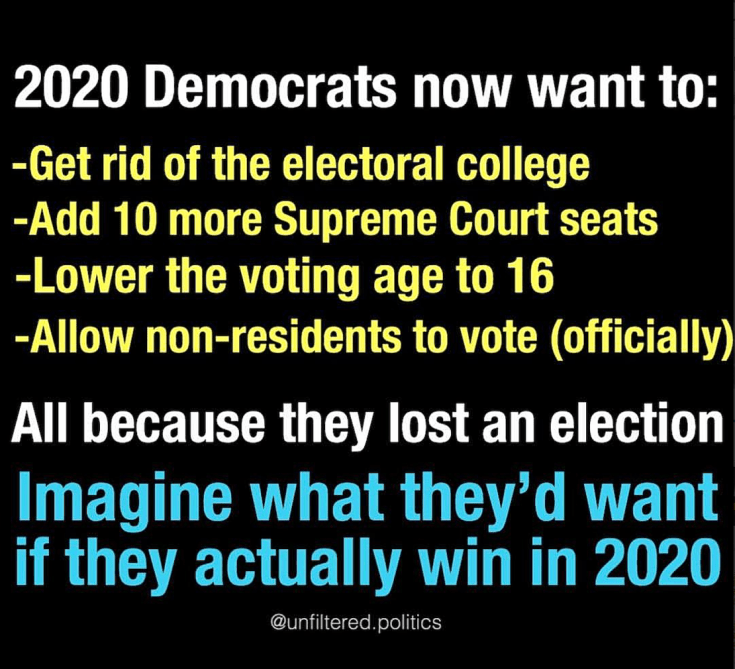
The plan to eliminate the Electoral College has caught fire among Democratic presidential hopefuls, and Warren is just the latest in a line of prospective nominees who want to replace the age-old system of allowing each state a certain number of votes proportional to their size and population with a “national popular vote” that will, of course, favor Democrats.
Warren, however, may have been the first to announce her plan in a state that would be cut out of the presidential process almost completely were the “national popular vote” system adopted.
Ironically, CNN reports, Warren announced her plan by suggesting that a national popular vote would make sure all Americans count equally in the process of electing a President.
“Come a general election, presidential candidates don’t come to places like Mississippi. They also don’t come to places like California or Massachusetts, because we’re not the battleground states,” she said. My view is that every vote matters and the way we can make that happen is that we can have national voting and that means get rid of the Electoral College — and every vote counts.”
Warren is right on one count: around 90% of electioneering takes place in 10 or 11 major battleground and swing states. But eliminating the Electoral College wouldn’t necessarily change the plan to win the presidency; it would merely change the select destinations.
Presidential candidates still would not go to “places like Mississippi” in the event of a national popular vote. Places like California (which Democrats do, in fact, visit, if only to collect checks from Hollywood bigwigs), New York, and Virginia would more than dominate electoral politics — they would, essentially, be able to exercise near-imperial rule over most other states.
That’s fine for Democrats, but not exactly fine for the people of Mississippi.
Warren’s plan also has other problems. Like a handful of more extreme Democratic proposals, promising to abolish the Electoral College is a bit like a fifth grader promising to make every day pizza day in the cafeteria as part of his platform for heading up the student council: it just isn’t going to happen without a major change in how party politics operates.
The Electoral College is enshrined in the Constitution and would require an amendment to alter, and an amendment involves calling a Constitutional convention (difficult), or obtaining 2/3 of the vote in both houses of Congress (nearly impossible). And although a handful of states have pledged to buck the Electoral College system and assign their Electors to the winner of the national popular vote, acting on those votes could trigger a firestorm of litigation and a potential Constitutional crisis.
Warren, though, seems pretty much willing to commit to any proposal that earns her even a fraction of a percent at this point. Trailing far behind the leaders, and unable to move her numbers above 7%, it looks as if her bid to become president is over just weeks after it started. In addition to the Electoral College, Warren has proposed support for reparations (though she isn’t sure what that looks like), and has tacitly endorsed packing the Supreme Court with additional judges.
And yet, none of these three extreme proposals has moved her any further up in the polls.
READ MORE: CONSTITUTION ELECTORAL COLLEGE ELIZABETH WARREN HILLARY CLINTON




 Tom's Blog