Pope Francis Urges Carbon Penalties to Avert Climate ‘Catastrophe’

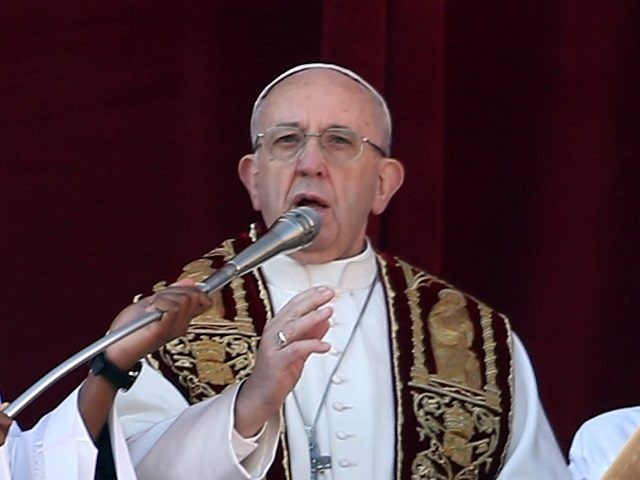
VATICAN CITY, VATICAN - DECEMBER 25: Pope Francis delivers his Christmas Urbi Et Orbi blessing from the central balcony of St. Peter's Basilica on December 25, 2017 in Vatican City, Vatican. (Photo by Franco Origlia/Getty Images)

By Thomas D. Williams, PHD.D.

ROME — Pope Francis warned of disastrous consequences if humanity does not immediately react to the threat of climate change, since the world has reached a “critical moment” and there is no time to waste.

“Dear friends, time is running out!” the pope told a group of participants in a Vatican-sponsored conference on energy transition Friday. “We cannot afford the luxury of waiting for others to come forward or of prioritizing short-term economic benefits. The climate crisis requires decisive action from us, here and now.”

Despite the pontiff’s frequent denunciation of a “politics of fear,” he seemed determined to paint as frightening a picture as possible of an impending climate apocalypse in order to incite people to action.

This conference “takes place at a critical moment,” Francis said. “Today’s ecological crisis, especially climate change, threatens the very future of the human family, and this is not an exaggeration. For too long we have collectively ignored the fruits of scientific analysis, and catastrophic predictions can no longer be viewed with contempt and irony.”

The pope’s words Friday went beyond sounding a general alarm and scorning climate-change skeptics. They also urged specific political action, most notably regarding penalties for carbon usage such as a carbon tax.

“A carbon pricing policy is essential if humanity wants to use the resources of creation wisely,” he said. “The failure to manage carbon emissions has produced a huge debt that will now have to be repaid with interest from those who come after us.”

The cost of carbon usage must be paid here and now by those who use it, and not deferred for future generations to cover, he proposed.

“Our use of common environmental resources can be considered ethical only when the social and economic costs of their use are recognized in a transparent manner and are fully sustained by those who use them, rather than by other populations or future generations,” he said.

The pope reiterated the popular belief that “the effects on the climate will be catastrophic if we exceed the 1.5ºC threshold outlined in the Paris Agreement goals,” for which we have “only a little over a decade.”

“In the face of a climatic emergency, we must take appropriate measures, in order to avoid committing a grave injustice towards the poor and future generations. We must act responsibly well considering the impact of our actions in the short and long term,” he said.

“Future generations are soon to inherit a very ruined world,” the pontiff stressed. “Our children and grandchildren should not have to pay the cost of the irresponsibility of our generation.”

Appearing to take a page from AOC’s Green New Deal, Francis expressed his conviction that an energy transition from fossil fuels to a low-carbon society “can generate new employment opportunities, reduce inequality, and increase the quality of life for those affected by climate change.”

Today “a radical energy transition is needed to save our common home,” he warned. “There is still hope and the time remains to avoid the worst impacts of climate change, provided that there is prompt and resolute action.”

WESTERN MIDDLE CLASSES ARE REVOLTING GLOBALLY AGAINST HYPOCRITICAL ELITES

Western Middle Classes Are Revolting Globally Against Hypocritical Elites

Hard-working taxpayers rejecting globalist agenda

By Victor Davis Hanson

What is going on with the unending Brexit drama, the aftershocks of Donald Trump’s election and the “yellow vests” protests in France?

What drives the growing estrangement of southern and eastern Europe from the European Union establishment? What fuels the anti-EU themes of recent European elections and the stunning recent Australian re-election of conservatives?

Screen Shot 2019-06-14 at 11.16.02 AM

Put simply, the middle classes are revolting against Western managerial elites. The latter group includes professional politicians, entrenched bureaucrats, condescending academics, corporate phonies and propagandistic journalists.

What are the popular gripes against them?

One, illegal immigration and open borders have led to chaos. Lax immigration policies have taxed social services and fueled multicultural identity politics, often to the benefit of boutique leftist political agendas.

Two, globalization enriched the cosmopolitan elites who found worldwide markets for their various services. New global markets and commerce meant Western nations outsourced, offshored and ignored their own industries and manufacturing (or anything dependent on muscular labor that could be replaced by cheaper workers abroad).

Three, unelected bureaucrats multiplied and vastly increased their power over private citizens. The targeted middle classes lacked the resources to fight back against the royal armies of tenured regulators, planners, auditors, inspectors and adjusters who could not be fired and were never accountable.

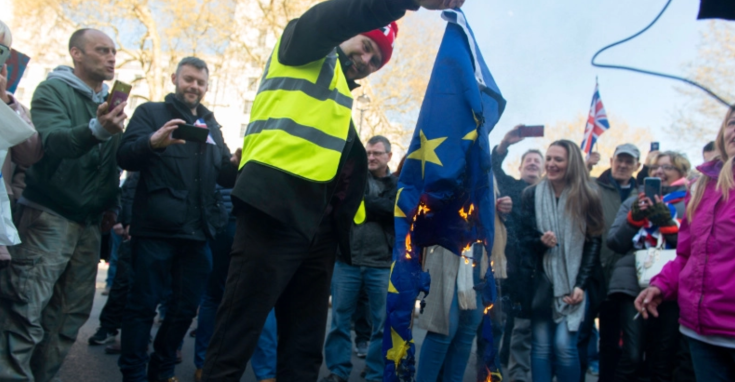
Enlarge ImageA Yellow Vest Pro-Brexit Protestor seen with an EU flag modified with a Swastika during a rally at Trafalgar Square.
A Yellow Vest Pro-Brexit Protestor seen with an EU flag modified with a Swastika during a rally at Trafalgar Square.Getty Images

Four, the new global media reached billions and indoctrinated rather than reported.

Five, academia, rather than focusing on education, became politicized as a shrill agent of cultural transformation — while charging more for less learning.

Six, utopian social planning increased housing, energy, and transportation costs.

One common gripe framed all these diverse issues: The wealthy had the means and influence not to be bothered by higher taxes and fees, or to avoid them altogether. Not so much the middle classes, who lacked the clout of the virtue-signaling rich and the romance of the distant poor.

In other words, elites never suffered the firsthand consequences of their own ideological fiats.

Green policies were aimed at raising fees on, and restricting the use of, carbon-based fuels. But proposed green belt-tightening among the hoi polloi was not matched by cutbacks in their second and third homes, overseas vacations, luxury cars, private jets and high-tech appurtenances.

In education, government directives and academic hectoring about admissions quotas and ideological indoctrination likewise targeted the middle classes but not the elite. The micromanagers of Western public schools and universities often preferred private academies and rigorous traditional training for their own children.

Elites relied on old-boy networks to get their own kids into colleges. Diversity administrators multiplied at universities while indebted students borrowed more money to pay for them.

In matters of immigration, the story was much the same. Western elites encouraged the migration of indigent, unskilled and often poorly educated foreign nationals who would ensure that government social programs — and the power of the elites themselves — grew.

The champions of open borders made sure that such influxes did not materially affect their own neighborhoods, schools and privileged way of life.

Elites masked their hypocrisy by virtue-signaling their disdain for the supposedly xenophobic, racist or nativist middle classes. Yet the non-elite have experienced firsthand the impact on social programs, schools and safety from sudden, massive and often illegal immigration from Latin America, the Middle East, Africa and Asia into their communities.

As for trade, few still believe in “free” trade when it remains so unfair. Why didn’t elites extend to China their same tough-love lectures about global warming or about breaking the rules of trade, copyrights and patents?

The middle classes became nauseated by elites’ constant trashing of their culture, history and traditions, including the tearing down of statues, the Trotskyizing of past heroes, the renaming of public buildings and streets and, for some, the tired and empty whining about “white privilege.”

If Western nations were really so bad, and so flawed at their founding, why were millions of non-Westerners risking their lives to reach Western soil?

How was it that elites themselves had made so much money, had gained so much influence and had enjoyed such material bounty and leisure from such a supposedly toxic system — benefits that they were unwilling to give up despite their tired moralizing about selfishness and privilege?

In the next few years, expect more grass-roots demands for the restoration of the value of citizenship. There will be fewer middle-class apologies for patriotism and nationalism. The non-elite will become angrier about illegal immigration, demanding a return to the idea of measured, meritocratic, diverse and legal immigration.

Because elites have no answers to popular furor, the anger directed at them will only increase until they give up — or finally succeed in their grand agenda of a nondemocratic, all-powerful Orwellian state.

‘Christchurch Call’ is a blueprint for more online censorship — and Zuckerberg is a big fan

CAP

By Danielle Ryan

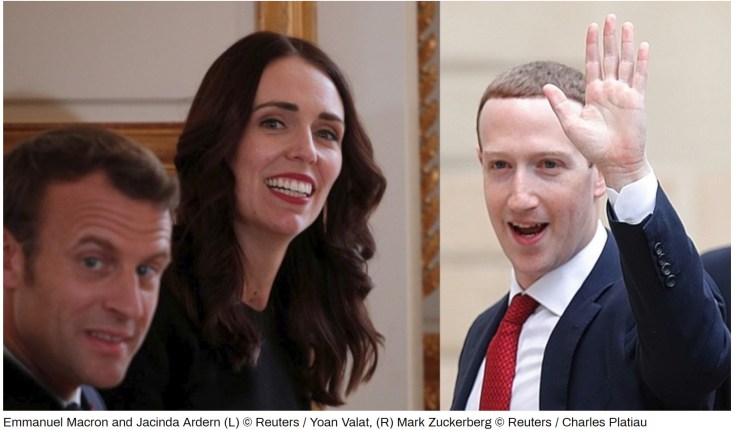
There is nothing inherently wrong with the new ‘Christchurch Call’ to curb violent and terrorist content online. No one in their right mind wants mass shootings live-streamed online — but it’s what comes next that should worry us.

Drawn up in the aftermath of the Christchurch mosque massacre, which was streamed live online, New Zealand Prime Minister Jacinda Ardern’s ‘Christchurch Call’ is billed as a “roadmap for action” and calls for the “immediate and permanent” removal of “terrorist and violent extremist content” from social media platforms. It has been signed by 18 governments and eight tech companies.

On the face of it, that sounds fine. It’s difficult to argue against removing terrorist content from the platforms so many of us use on a daily basis. The trouble is, Ardern has already admitted that the pledge is simply a “starting point” — and if you were expecting this to be the moment at which social media companies finally began to push back a little bit, sorry to disappoint you, but they’re all in on it together.

ALSO ON RT.COMFacebook ban on Alex Jones and others is a form of modern-day book burning

Endorsing censorship

Lord of social media, Facebook CEO Mark Zuckerberg, who is afflicted with an obvious and ever-worsening God complex, offered a full-throated endorsement of online censorship a few days ago, saying “…the question of what speech should be acceptable and what is harmful needs to be defined by regulation, by thoughtful governments.”

That’s right, Zuck thinks “thoughtful governments” should be deciding what is “acceptable” for us to say online. There’s no ambiguity there. It’s a simple, straight-forward endorsement of the idea that governments should be allowed to regulate our speech. If that doesn’t worry you, then maybe you’re the kind of person who reads dystopian novels and cheers for the wrong side.

Zuckerberg’s comment isn’t exactly out of the blue. Facebook is already under fire for censoring political speech from both the right and left ends of the political spectrum. The company has banned a slew of right-wing commentators and conservative agitators from its platform and taken worrying steps against leftist and anti-war activists around the world.

Just the beginning

So, if social media companies aren’t going to fight back on our behalf (and they clearly are not), who will? The obvious answer is “journalists” — but they don’t appear to be in too much of a rush to halt this creeping censorship either. Some of them appear to be advocating more censorship, rather than less.

ALSO ON RT.COMNo kissing gays or conservative hunters: Overcautious Facebook blocks political ads in SwedenIn an interview with Le Monde on Monday, Ardern was asked why she decided to focus “uniquely on violent terrorist content, and not more broadly on hate speech, which also contributes to the drift in social media?”

Ardern replied that focusing on terrorist content was just the “point of departure” on which everyone could agree. So this is a journey we are on. We’ve departed at ‘terrorism is bad’ — but where will we end? Ardern said she was wary that going any further right now would “open the way for debate” on potential risks to freedom of expression. But in a joint press conference on Wednesday with French President Emmanuel Macron, she said her hope was that working together, governments and tech companies could “eliminate ideologies of hate.”

That would be lovely — and if only the word were so simple, we could just eliminate all the meanies from the internet and live in an online utopia. Unfortunately, this is completely unrealistic, and when you start talking about eliminating certain ideologies, that’s where things get sketchy. Particularly if we’re going to delegate the task of deciding what is and is not “harmful” (as Zuckerberg said) to “thoughtful governments.”

‘Hate speech’ or ‘free speech’?

Florida’s Republican governor Ron DeSantis is set to sign a bill that would make it a “hate crime” to “demonize” or“delegitimize” Israel. The bill purports to be about “anti-Semitism” but it’s really just a vehicle to censor and even criminalize political speech. You see, that’s the kind of thing that “thoughtful” politicians get up to if left to their own devices. Then again, the Florida bill probably isn’t something that would ring alarm bells at Facebook HQ, either. Zuckerberg already happily complies with orders from the Israeli government to delete Palestinian activist accounts.

As for the US government, it has refused to sign Ardern’s ‘Christchurch Call’ citing first amendment rights — but declining to sign a vague and non-binding agreement doesn’t mean much. Capitol Hill is still swarming with politicians just dying to enforce more restrictions on free speech.

ALSO ON RT.COMFrance wants more govt regulation of Facebook and Zuckerberg calls it ‘model’ approachDemocratic Senator Chris Murphy tweeted in the aftermath of last year’s Infowars ban that the very “survival of [US] democracy” depends on Facebook’s willingness to “take down” more websites that “tear our country apart.” Sure, why don’t they just get rid of any content that could conceivably be categorized as divisive? Sounds like a foolproof plan.

A US government intelligence report last year highlighted a former RT show hosted by Abby Martin as an example of content that sowed “radical discontent” in society for critically covering controversial issues like US regime change wars, fracking, capitalism and police brutality. Be careful out there, you never know what could be defined as “radical” content next.

As journalist Igor Ogorodnev wrote in a recent oped, the aftermath of an atrocity “is a honeypot for short-sighted do-gooders buzzing about looking to do something, but also opportunist politicians to realize their long-harbored ambitions.”

Trying to distract us

Social media is what the public uses to organize en masse in the 21st century.

Is it any wonder that Macron, facing months of Yellow Vest protests against his government, is helping lead the charge toward more online censorship?

A French government report recently called for the eradication of content that damages “social cohesion” and warned that“false information,”“unfounded rumors” and “individuals pursuing political or financial objectives” can have an impact on “the social order.” But who decides what constitutes “false information” and “unfounded rumors”? Is Macron’s government “thoughtful” enough for Zuckerberg?

ALSO ON RT.COMWhite House posts call for social media censorship stories, triggering hope & cynicismOf course, it’s much easier for governments to pass the blame for social discontent onto companies like Facebook, while arguing that censorship is the only solution. If they didn’t do that, they’d have to admit that what really drives mass discontent are the neoliberal policies that have had a detrimental effect on basic standards of living, wiped out people’s life savings and ravaged the planet.

But maybe that’s all something Ardern and Macron can work on some other day — that is, if we’re allowed to talk about it.

The statements, views and opinions expressed in this column are solely those of the author and do not necessarily represent those of RT.

Record number of attacks on gays in France: report

Record number of attacks on gays in France: report

By AFP

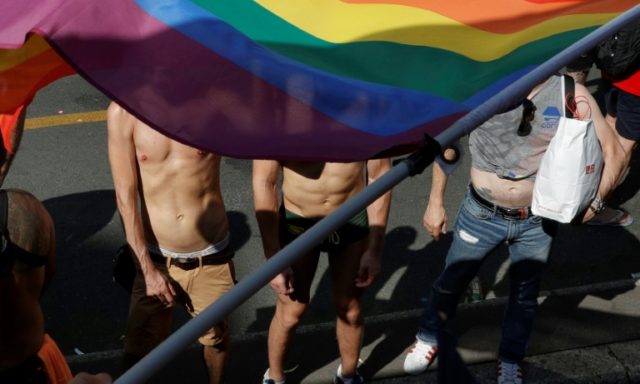
Paris (AFP) – Assaults in France on lesbian, gay, bisexual and transgender people hit a new record in 2018, “a dark year” for the LGBT community, French group SOS Homophobie reported Tuesday.

The non-profit association registered 231 physical attacks, up from the previous annual record of 188 anti-LGBT assaults back in 2013 linked to same-sex marriage legislation.

“2018 was a dark year for LGBT people,” said SOS Homophobie co-presidents Véronique Godet and Joël Deumier in the yearly report.

The number of assaults jumped 66 percent over 2017, with a spike towards the end of the year when a case a day was being reported to the group.

SOS Homophobie’s helpline, website and legal services collected 1,905 statements from witnesses of abuse of the gay community, 15 percent more than the previous year.

The breakdown of cases, which could involve multiple categories, showed 62 percent involved rejection, 51 percent insults, 38 percent discrimination and 20 percent harassment. Threats and defamation made up 17 percent each with physical assault on 13 percent.

Some 66 percent of witnesses were men, who were “more inclined to talk about it and turn to SOS Homophobie to denounce what they suffered”.

The association said the 42 percent leap in reporting of violence against lesbians appeared linked to the greater willingness of victims to speak out and the influence of the #MeToo movement.

With 23 percent of reported cases, Internet was the leading place for the expression of LGBT phobia in France.

Facebook and Twitter act like an “echo chamber” of daily cases with the social networks recording more than half of all reported cases, the group said.

Tear gas fired during May Day demonstrations in Paris, scores detained

CAP

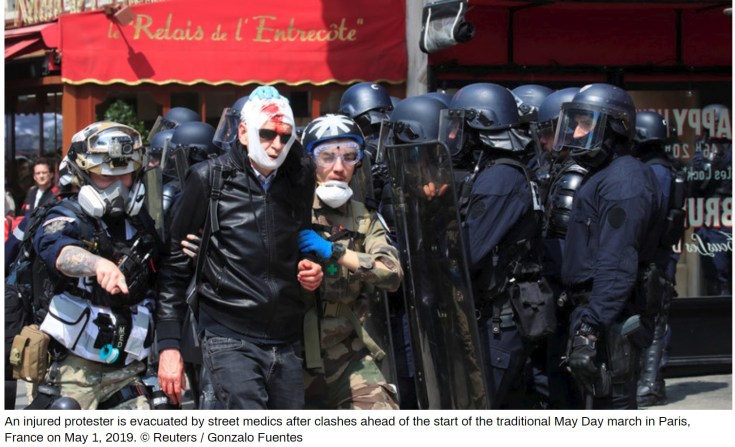
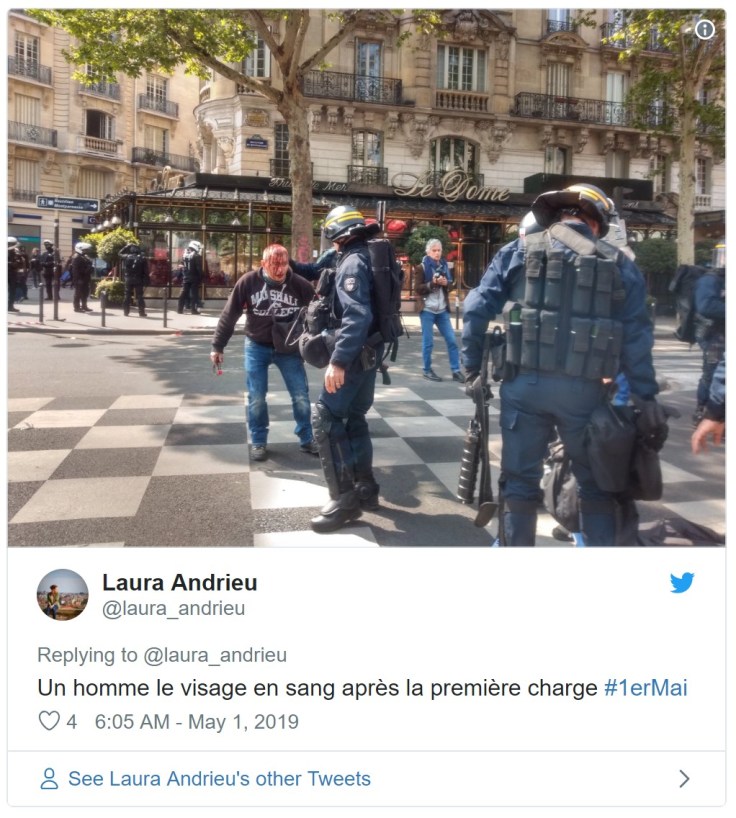
Demonstrators marching in Paris to mark International Workers’ Day have been met with tear gas, images from the French capital show, with reports of over 350 people detained.

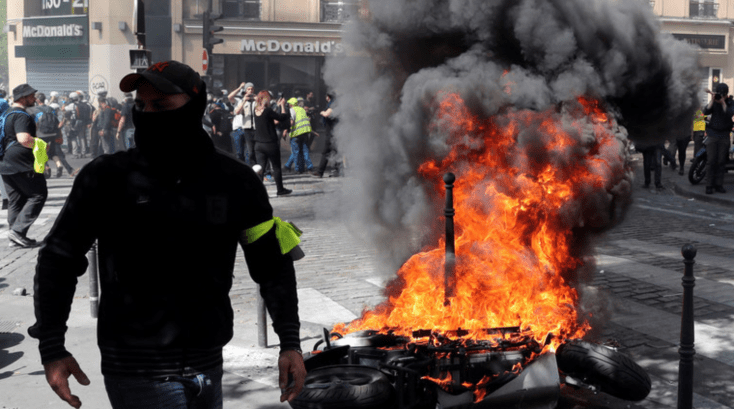
The procession was scheduled to start at 2:30pm local time but clashes have already erupted between riot police and protesters who have turned out in their thousands. Huge plumes of smoke can be seen rising from tear gas canisters or smoke grenades along the protest route.

CAP

Some 380 protestors were arrested on Wednesday and more than 17,700 “preventive checks” carried out by police, according to French reports.

Meanwhile, France Info reports that a group of between 200 and 300 protesters tried to break into a police station in Besançon, eastern France. Local authorities said efforts were made to break into the station via the car park behind the building, but were repelled by police using tear gas.

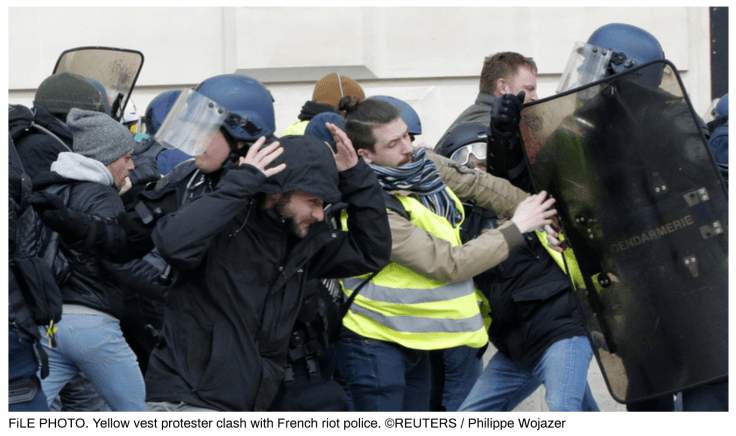
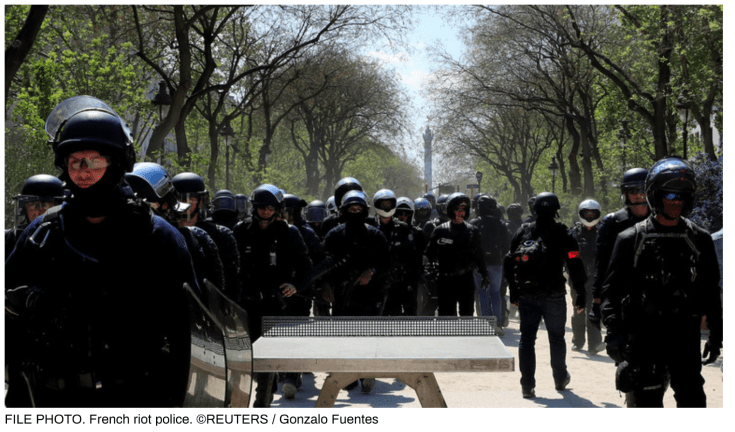
In Paris, protesters in some parts of the city have begun erecting barricades to block the advance of charging riot police. According to the latest media reports, 14 police officers sustained injuries.

CAP

Journalists at the scene reported seeing protesters throwing projectiles at police, who continued to charge the crowd and fire gas canisters. Several protesters and at least one policemen have reportedly been injured in the clashes.

Demonstrators including Yellow Vest protesters, labor unions, pensioners, and students are marching through the streets of Paris to celebrate International Workers’ Day. Each year, May 1 is marked by large demonstrations of workers and labor activists who organize marches to campaign for improved working conditions and other social issues.

Yellow Vests & Black Blocs? France braces for possible protest perfect storm on May 1

Screen Shot 2019-04-30 at 10.35.21 AM

Labor Day is the traditional date for mass protests in France, occasionally quite violent. This year the authorities fear a confluence of the radical part of the Yellow Vest movement with the dreaded Black Bloc anarchists.

On Monday evening, Didier Lallement, the freshly-appointed head of the Paris police, held a high-profile meeting with several other security-related officials to discuss the measures that need to be taken before, and on, May Day. DSPAP, the largest department of the capital’s police force, released a memo detailing preventive action against possible rioting on Wednesday, according to Libération. The special focus will be on trains arriving in Paris.

Screen Shot 2019-04-30 at 10.36.45 AM

The French authorities are concerned that mass demonstrations on Labor Day will escalate due to a “yellow and black wave,” a possible alliance between the domestic Yellow Vests movement and international anarchists from the so-called ‘Black Blocs’. If it happens, the result may pale last year’s upheaval, which resulted in over 200 arrests in Paris.

Yellow Vests, or ‘Gilets jaunes’ in French, have been staging anti-government protests for 24 consecutive weeks, objecting to austerity policies of President Emmanuel Macron. ‘Black blocs’ is a term used for a ragtag alliance of anti-capitalist and anarchist activists, who wear black clothes and masks to conceal their identities and typically join rallies staged by other groups to engage in vandalism of businesses and clash with the police.

Screen Shot 2019-04-30 at 10.38.12 AM

The fear is partially fueled by the public support voiced by some prominent figures among the Yellow Vests in the run up to May Day. The date was also portrayed as a key moment for their cause by many supporters. This may sound ominous considering Yellow Vests’ rejection of concessions offered by the government and a record of rioting in the previous weeks.

Yellow Vests take to the streets in rejection of Macron’s ‘rubbish’ olive branch (PHOTO, VIDEO)

The French authorities toughened up laws on public demonstrations in response to the weekly protests, banned gatherings in some parts of Paris and imposed additional security measures on Saturdays, when the demonstrations usually happen.

Ahead of Labor Day, some French politicians like MP Eric Ciotti argued that Black Blocs should be preemptively banned, Le Figaro reported. The daily said while the sentiment was hardly new, such a ban would be difficult to implement in practice due to the nature of the anarchist movement. They are not an organization that can be denied a permit to rally. They have no definitive leaders to slap them with a restriction order. And they have shown the capacity to adapt to whatever response law enforcement prepares against them.

France Foils “Extremely Violent” Terror Attack

See the source image

Four arrested in plot targeting security personnel

Monday, April 29, 2019

French police arrested four people suspected of plotting an “extremely violent” attack on security forces, according to the Paris prosecutor’s office.

Three men and a teenage minor had reportedly been working to accumulate weapons for the attack, which would have targeted security personnel.

The minor was already serving a three year probation sentence for attempting to travel to Syria to join ISIS in 2017, and the three men had criminal histories, as well.

“Four people are being held over a plan to carry out an extremely violent terror attack,” Interior Minister Christophe Castaner told reporters. “We had sufficient evidence to lead us to believe that a major attack was being planned.”

apprehensions of “individuals suspected of preparing imminent violent acts, susceptible to target security forces.”

A newly-released study found that Islamists have been responsible for 91 percent of all terrorism-related deaths in Europe since 2000.

“The study, called the Black and White Book of Terrorism in Europe, is a project spearheaded by Spanish MEP and president of the Foundation for Victims of Terrorism, Maité Pagazaurtundua,” reports Paul Joseph Watson. “According to the data gathered, which was reported on by left-leaning French newspaper Le Figaro, 753 people were killed in terror attacks across Europe from 2000 to 2018.”

See the source image

“91 percent of these victims were killed by Muslim extremists, with just 14 victims being killed by right-wing extremists and 13 by left-wing extremists, as well as one killed by an animal rights extremist.”

Terrorism has been on the rise in France in recent years, with more than 250 people killed since 2015

See the source image

Blog at WordPress.com.

Up ↑