‘How is this not meddling?’ Twitter bans Tommy Robinson, Sargon of Akkad campaign accounts

CAP

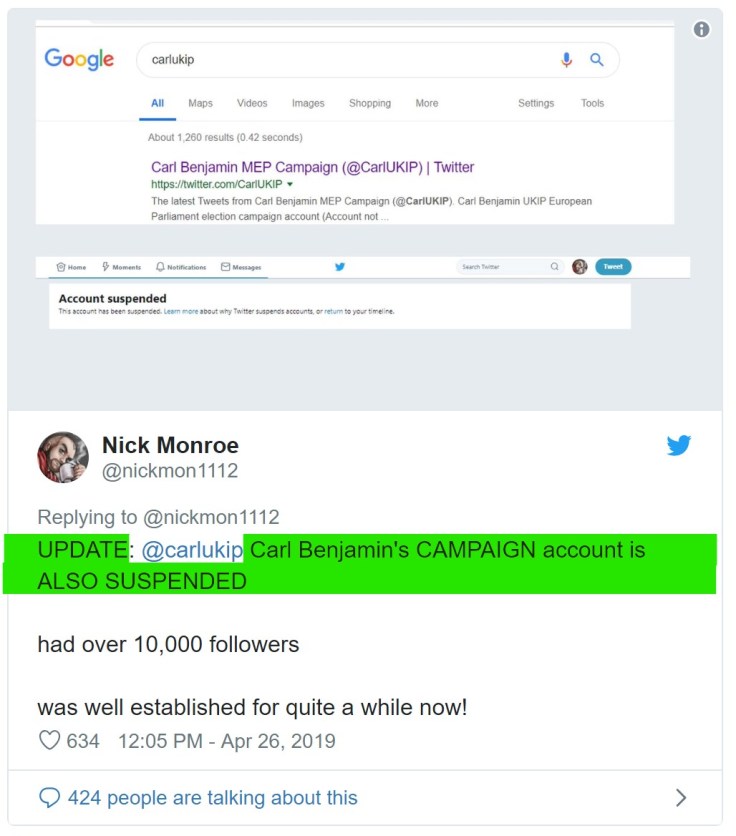
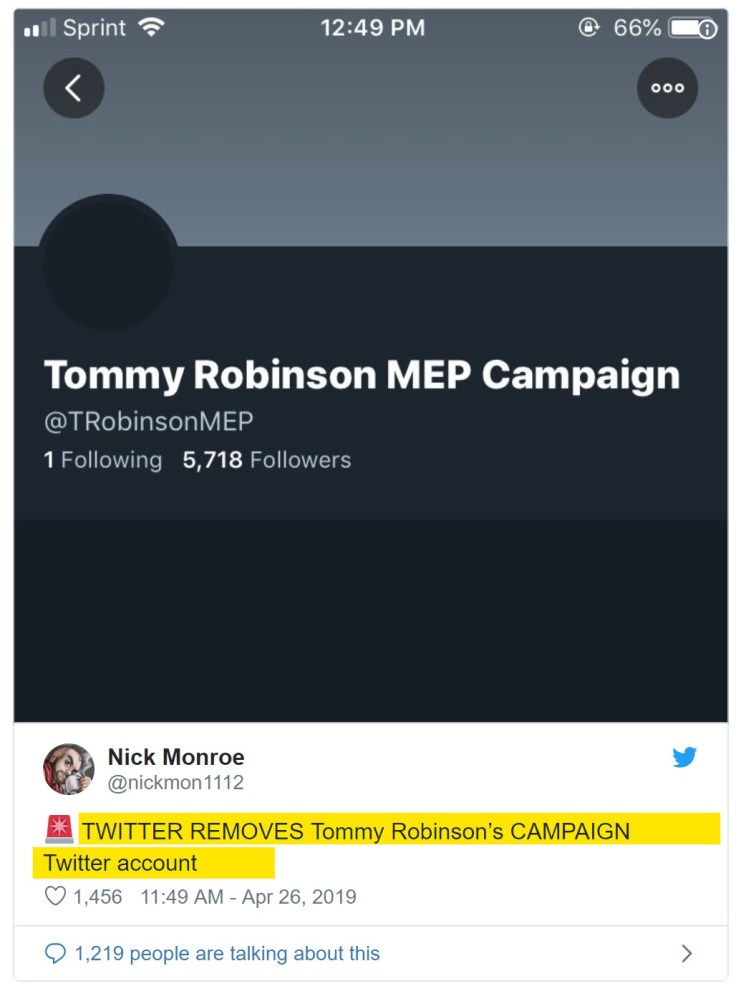
Campaign accounts of two British candidates for the European Parliament, Tommy Robinson and Carl Benjamin, have been deleted by Twitter, prompting outcries of election meddling with less than a month before the vote.

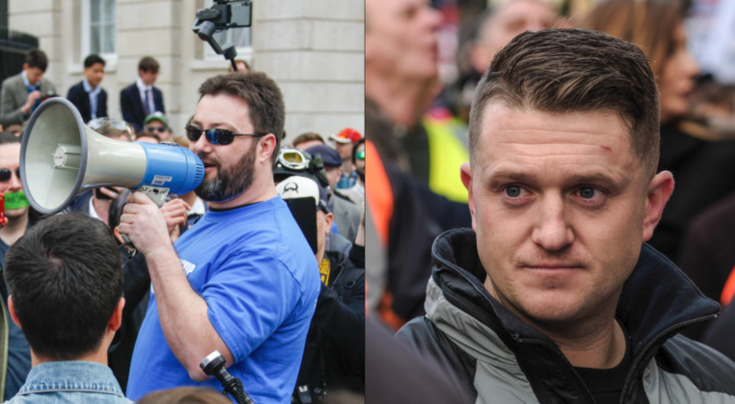
Robinson and Benjamin – better known under his YouTube handle ‘Sargon of Akkad’ – are running in the May 23 election, which the UK will have to participate in due to the ongoing Brexit delays. Benjamin is a member of the UK Independence Party (UKIP), while Robinson announced his independent candidacy on Thursday.

CAP

CAP

Both of them have had personal accounts purged from Twitter a while ago, but the accounts terminated on Friday were run by their campaign staff, and not them personally.

“We are investigating why, but strongly suspect this is a deliberate act of political censorship to deny a candidate his voice in a crucial election,” Benjamin’s campaign staffer Michael De La Broc said, adding the campaign will complain to the election authorities and maybe even seek restitution in court for “political interference by a foreign entity in our elections.”

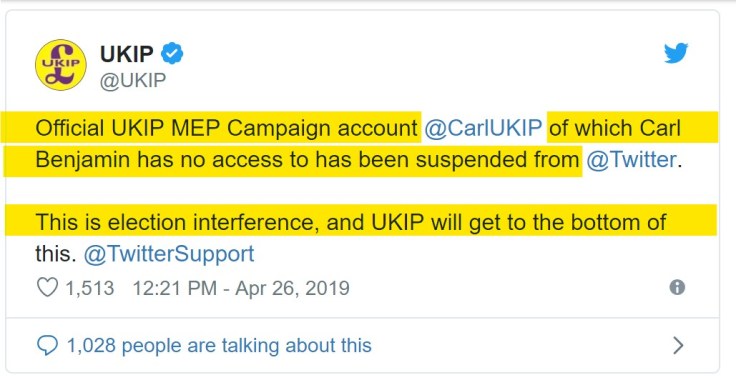
UKIP has also declared the ban “election interference” and vowed to “get to the bottom” of the issue.

CAP

Benjamin has come under attack by the media and establishment politicians, who have accused him of “racist” speech. The YouTuber maintains he fights for free speech and against political correctness.

Mainstream media have described Robinson as a “far-right activist” and accused him of “Islamophobia.” He was banned from Facebook and Instagram in February over alleged “hate speech.”

British Muslim organization Tell MAMA has claimed credit for reporting Robinson’s campaign account to Twitter, saying it’s using the candidacy to circumvent his personal ban.

The purge of MEP candidates comes just three days after Twitter CEO Jack Dorsey went to the White House and met with US President Donald Trump to address complaints about “shadowbanning” and suspensions disproportionately targeting conservative voices on the social media platform.

While Twitter and other social media platforms have defended censorship on grounds that they are companies and not the government, last year a federal judge in the US ruled that Twitter is a “designated public forum,” and that Trump is not allowed to block people from his personal account on grounds of political speech.

Nationalism Continues Its Takeover of European Politics

By Jose Nino

According to a Politico list, Italian Deputy Prime Minister Matteo Salvini and Brexit Party leader Nigel Farage were ranked as the two most important Members of European Parliament (MEP) during the 2014-2019 parliamentary term.

This list of “40 MEPs who mattered”  ranks MEPs who “set the agenda and stood out from their peers, driving trends both within the legislative arena and in the wider EU political debate.”

Politico pointed to Salvini’s “talent for plain speaking and using social media (not to mention the Euroscepticism) that propelled him to his current position as Italy’s de facto leader, where he has been driving the European debate from the right ever since.”

Salvini has taken his political rise to another level by rolling out a political supergroup of populist parties across the EU, notably made up of the Alternative for Germany (AfD), the Austrian Freedom Party (FPÖ), and the French National Rally.

The young populist leader aims to form the biggest coalition in the European Parliament by outing the centrist European People’s Party and “change the rules of Europe.” Salvini and his populist coalition wants to roadblock the progressive, centralized project of the EU and revert to a union of European nations.

Controversial policies like mass migration and the negative social effects they have brought about have spurred the rise of populism throughout Europe.

BLP reported how Salvini’s La Lega (League) party is set to make big gains in the European Parliament.

Politico also placed former UKIP leader current Brexit Party leader Nigel Farage in the second spot in this ranking. Farage was described as “the star speechmaker of the 2014-2019 Parliament.”

After the British government announced that it would be participating in the European Parliament elections, Farage declared that his Brexit Party would be participating as well to defeat the establishment and “fight back against the betrayal of democracy.”

An Open Europe poll found that the Brexit Party was in third place behind Labour and Conservatives.

Over the past few weeks BLP has found that populism is a growing movement across the West and is here to stay.

recent poll shows that immigration is still the #1 issue for Republican voters in the 2020 elections.

Given Trump latest success in securing $1 billion in wall funding and his proposal of sending illegal aliens to sanctuary cities, Trump looks to poised to win a second term.

Minister Szijjarto: “Hungary maintains zero tolerance stance on migration”

By HUNGARY JOURNAL 4 February 2019

Hungary has a policy of zero tolerance for migration and will never back any document that uses the UN’s global migration compact as a point of reference, foreign minister Peter Szijjarto said, responding to a query by MTI.

Peter Szijjarto commented on recent reports by several Hungarian news portals citing a German news agency’s EU diplomatic source as saying that Hungary’s government has refused all of the European Union’s offers of a compromise on a joint position on migration, and has isolated itself within the bloc.

“Pro-migration politicians are continuing to run amok”, the minister said. Every EU document will try to refer to the UN’s global migration compact in spite of the fact that nine EU member states did not vote for it, he added.

Szijjarto said the Hungarian government will never support the compact, which he said wanted to facilitate immigration. “A document on which there is no unanimous agreement by all member states cannot be a point of reference”, he said.

The minister added that Hungary’s isolation “has long been a pipe dream for those who support migration”. “Anyone who says no to migration will continue to be our ally”, he said.

Viktor Orban attacks George Soros, who “is open about wanting to take over European institutions”

By 

The European Parliament’s debate on the rule of law in Hungary will be a “George Soros-type seance, an election rally, a campaign event”, Prime Minister Viktor Orban told public Kossuth Radio.

Orban said he had always fought for “the Hungarian national interest” but he would not aid and abet next week’s “pro-migration campaign event” in Brussels.

The European left wing’s Spitzenkandidat, Frans Timmermans, who is currently the first Vice-President of the European Commission, is “Soros’s man”, he said, referring to the American-Hungarian billionaire.

“Soros is now open about wanting to take over European institutions”, the prime minister insisted.

See the source image

The progress of the infringement procedures against Hungary, which the commission decided to step up on Thursday, is also a sign of Soros’s big influence “and that he wants to increase it even further”, Orban said. This attempt should be thwarted at May’s EP election, “where we want pro-migration MEPs to be left in minority”, he said.

Regarding the EP’s decision to triple the funding of “Soros’s NGOs”, Orban said that this was “a decision executing point six of the Soros-plan”. The initiative to couple funding with the rule of law in member states was a “primitive proposal”contrary to EU rules, he said. Such a ruling would need the votes of all member states, and he would never vote for it. “It will not become reality”, the prime minister said.

Orban said his ruling Fidesz party had always opposed such “anti-Hungary” decisions, while the Hungarian opposition had supported them.

The ‘Gilets Jaunes’ Are Unstoppable: “Now, The Elites Are Afraid”

By Tyler Durden

screen shot 2019-01-21 at 3.45.05 pm

Authored by Christophe Guilluy via Spiked-Online.com,

The gilets jaunes (yellow vest) movement has rattled the French establishment. For several months, crowds ranging from tens of thousands to hundreds of thousands have been taking to the streets every weekend across the whole of France. They have had enormous success, extracting major concessions from the government. They continue to march.

Back in 2014, geographer Christopher Guilluy’s study of la France périphérique (peripheral France) caused a media sensation. It drew attention to the economic, cultural and political exclusion of the working classes, most of whom now live outside the major cities. It highlighted the conditions that would later give rise to the yellow-vest phenomenon. Guilluy has developed on these themes in his recent books, No Society and The Twilight of the Elite: Prosperity, the Periphery and the Future of Francespiked caught up with Guilluy to get his view on the causes and consequences of the yellow-vest movement.

spiked: What exactly do you mean by ‘peripheral France’?

Christophe Guilluy: ‘Peripheral France’ is about the geographic distribution of the working classes across France. Fifteen years ago, I noticed that the majority of working-class people actually live very far away from the major globalised cities – far from Paris, Lyon and Toulouse, and also very far from London and New York.

Technically, our globalised economic model performs well. It produces a lot of wealth. But it doesn’t need the majority of the population to function. It has no real need for the manual workers, labourers and even small-business owners outside of the big cities. Paris creates enough wealth for the whole of France, and London does the same in Britain. But you cannot build a society around this. The gilets jaunes is a revolt of the working classes who live in these places.

They tend to be people in work, but who don’t earn very much, between 1000€ and 2000€ per month. Some of them are very poor if they are unemployed. Others were once middle-class. What they all have in common is that they live in areas where there is hardly any work left. They know that even if they have a job today, they could lose it tomorrow and they won’t find anything else.

spiked: What is the role of culture in the yellow-vest movement?

Guilluy: Not only does peripheral France fare badly in the modern economy, it is also culturally misunderstood by the elite. The yellow-vest movement is a truly 21st-century movement in that it is cultural as well as political. Cultural validation is extremely important in our era.

One illustration of this cultural divide is that most modern, progressive social movements and protests are quickly endorsed by celebrities, actors, the media and the intellectuals. But none of them approve of the gilets jaunes. Their emergence has caused a kind of psychological shock to the cultural establishment. It is exactly the same shock that the British elites experienced with the Brexit vote and that they are still experiencing now, three years later.

The Brexit vote had a lot to do with culture, too, I think. It was more than just the question of leaving the EU. Many voters wanted to remind the political class that they exist. That’s what French people are using the gilets jaunes for – to say we exist. We are seeing the same phenomenon in populist revolts across the world.

spiked: How have the working-classes come to be excluded?

Guilluy: All the growth and dynamism is in the major cities, but people cannot just move there. The cities are inaccessible, particularly thanks to mounting housing costs. The big cities today are like medieval citadels. It is like we are going back to the city-states of the Middle Ages. Funnily enough, Paris is going to start charging people for entry, just like the excise duties you used to have to pay to enter a town in the Middle Ages.

The cities themselves have become very unequal, too. The Parisian economy needs executives and qualified professionals. It also needs workers, predominantly immigrants, for the construction industry and catering et cetera. Business relies on this very specific demographic mix. The problem is that ‘the people’ outside of this still exist. In fact, ‘Peripheral France’ actually encompasses the majority of French people.

spiked: What role has the liberal metropolitan elite played in this?

Guilluy: We have a new bourgeoisie, but because they are very cool and progressive, it creates the impression that there is no class conflict anymore. It is really difficult to oppose the hipsters when they say they care about the poor and about minorities.

But actually, they are very much complicit in relegating the working classes to the sidelines. Not only do they benefit enormously from the globalised economy, but they have also produced a dominant cultural discourse which ostracises working-class people. Think of the ‘deplorables’ evoked by Hillary Clinton. There is a similar view of the working class in France and Britain. They are looked upon as if they are some kind of Amazonian tribe. The problem for the elites is that it is a very big tribe.

The middle-class reaction to the yellow vests has been telling. Immediately, the protesters were denounced as xenophobes, anti-Semites and homophobes. The elites present themselves as anti-fascist and anti-racist but this is merely a way of defending their class interests. It is the only argument they can muster to defend their status, but it is not working anymore.

Now the elites are afraid. For the first time, there is a movement which cannot be controlled through the normal political mechanisms. The gilets jaunes didn’t emerge from the trade unions or the political parties. It cannot be stopped. There is no ‘off’ button. Either the intelligentsia will be forced to properly acknowledge the existence of these people, or they will have to opt for a kind of soft totalitarianism.

A lot has been made of the fact that the yellow vests’ demands vary a great deal. But above all, it’s a demand for democracy. Fundamentally, they are democrats – they want to be taken seriously and they want to be integrated into the economic order.

spiked: How can we begin to address these demands?

Guilluy: First of all, the bourgeoisie needs a cultural revolution, particularly in universities and in the media. They need to stop insulting the working class, to stop thinking of all the gilets jaunes as imbeciles.

Cultural respect is fundamental: there will be no economic or political integration until there is cultural integration. Then, of course, we need to think differently about the economy. That means dispensing with neoliberal dogma. We need to think beyond Paris, London and New York.
Police employ tear gas & water cannons as Yellow Vest protests enter 9th week (VIDEO)

screen shot 2019-01-12 at 12.23.15 pm

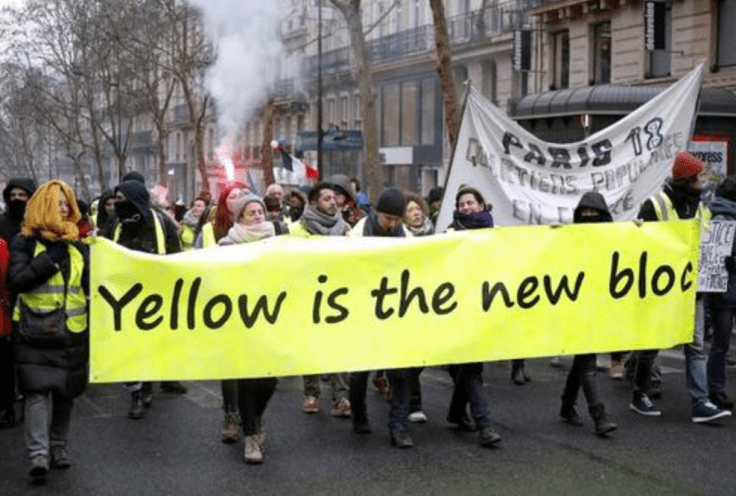
Yellow Vest demonstrators returned to the streets of Paris and other French cities on Saturday, and some were met by police with tear gas and water cannons as the authorities pledged zero tolerance to violence.

More than 32,000 people took part in the protests in Paris, Marseille, Bordeaux, Lyon, Strasbourg, and other cities, according to Interior Ministry data.

Around 8,000 demonstrators, both locals and those coming from other parts of the country, were rallying in the French capital. Some 5,000 riot police with special equipment and armored vehicles oversaw the protests.

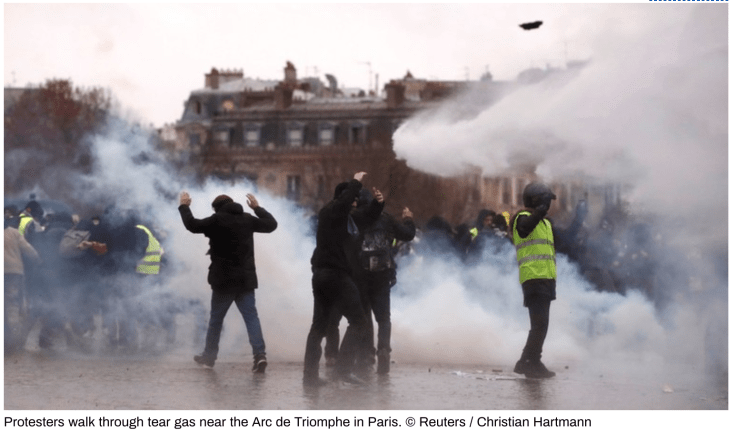
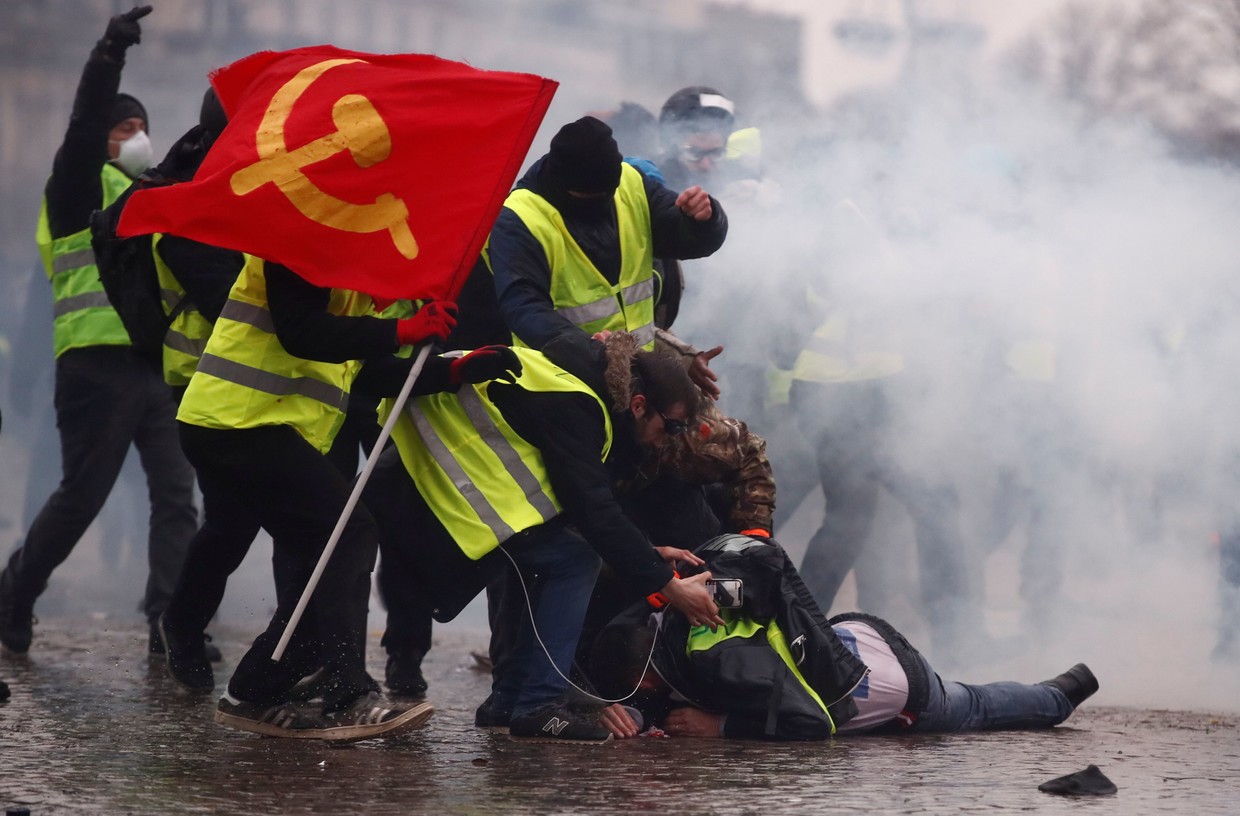
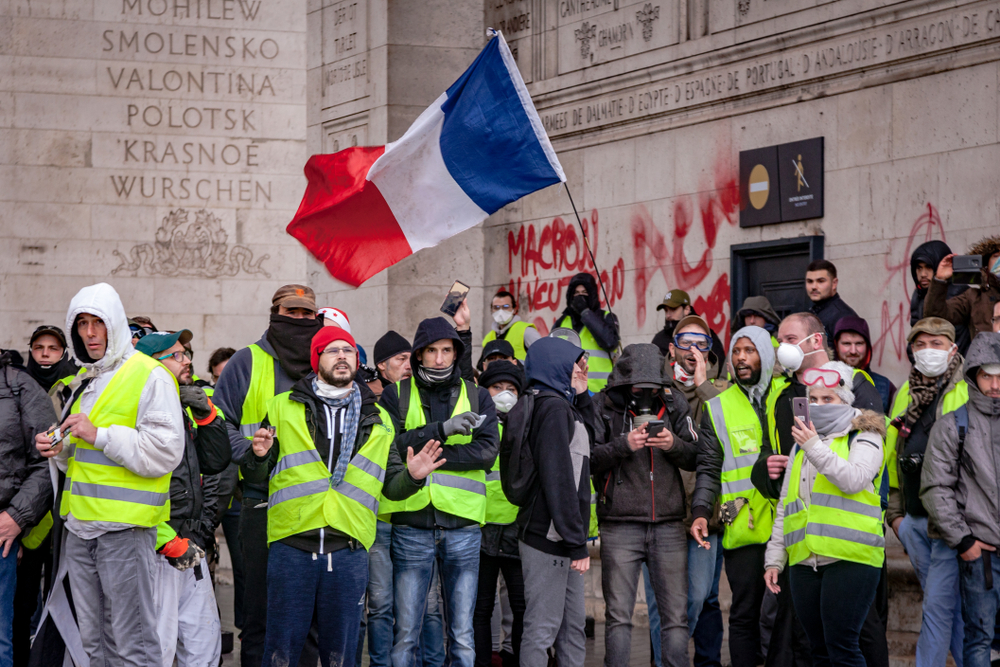
Clashes eventually erupted at the iconic Champs Elysees and Arc de Triomphe, with police using tear gas and water cannons to calm the angry crowds. Hundreds of people were arrested during the standoff, with most of them put in custody, the law enforcers said.

“We’ve come to Paris to make ourselves heard, and we wanted to see for ourselves at least once what’s going on here,” a man, who travelled to Paris from western France to attend the protest, told AFP.


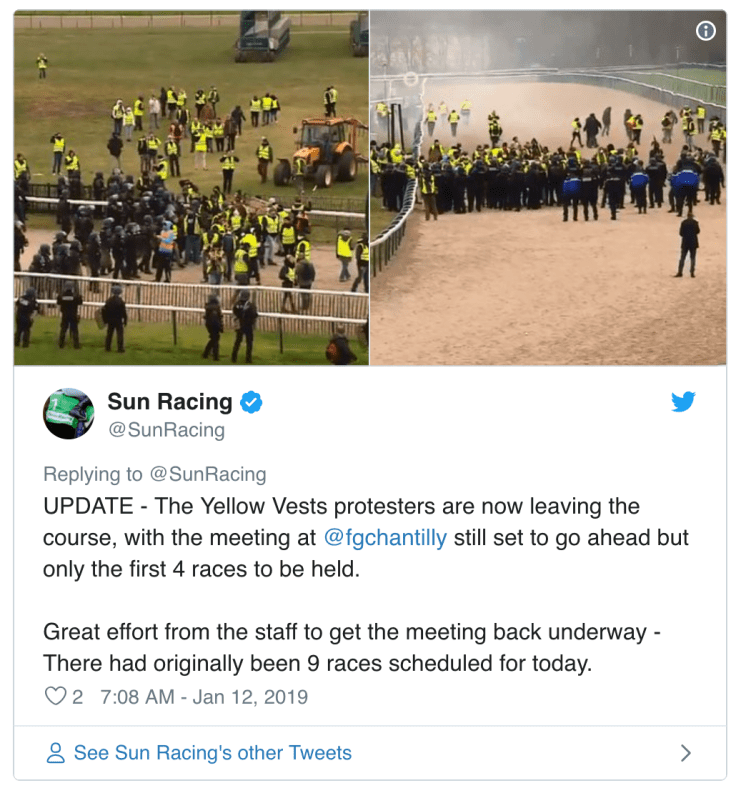
Around 1,000 demonstrators also made their way to the hippodrome and caused a delay of races in the horseracing town of Chantilly, north of Paris.

screen shot 2019-01-12 at 12.28.19 pm

In Nimes, police deployed tear gas against protesters after a tense standoff in the downtown.

17 people were also arrested during clashes in Bourges in central France, where the local authorities said that 5,000 were rallying.

screen shot 2019-01-12 at 12.30.14 pm
The French government earlier vowed zero tolerance for violence at the protests, with 80,000 security personnel deployed across France on the weekend.

The Yellow Vest movement, which took its name from the high-visibility jackets worn by the demonstrators, kicked off in November over a government-proposed hike in fuel taxes. As the weekend protests saw more people participating and started turning violent, the government dropped the planned increase.

But the demonstrations continued as the movement morphed into wider discontent with President Emmanuel Macron’s pro-business agenda, a decline in living standards, and growing inequality.

Think your friends would be interested? Share this story!


Yellow vests Acte 9: Gloves on both sides are definitely off

By   

French interior minister Castaner and the yellow vest movement are on the warpath.

The French yellow vest (‘gilet jaunes’) movement is entering its ninth edition Saturday 12 januari. And instead of cooling down things seem to be heating up and spreading.

While the gilets jaunes are calling for a massive bankrun, in an effort to damage or even collapse the French- and eventually the EU banking system, the government dispatches 80 thousand police and army personnel to try and contain the protests.

See the source image

French Interior Minister Castaner today even heightened the tension by saying that protesters will be held accountable for acts committed by fellow gilets jaunes during Saturday’s protests.

Earlier this week there where some tensions between the Italian and French government. Italy’s support for the yellow vest movement was not appreciated by the French.


EU politicians to join anti-Hungarian Government protests ‘to serve interests of George Soros’

By HUNGARY JOURNAL 8 January 2019

screen shot 2019-01-08 at 11.03.25 am

The left-wing RED movement – founded by Socialist MEP Istvan Ujhelyi – holds a protest on Tuesday in Brussels’ Schuman Square.

The Hungarian speakers – MEP Istvan Ujhelyi (MSZP/S&D), Barnabas Mester (RED), MEP Benedek Javor (Parbeszed/Greens-EFA), Balazs Nemeth (Momentum), Janos Kendernay (LMP) and MEP Csaba Molnar (DK/S&D) – will be joined by Dutch Green MEP Judith Sargentini, the rapporteur of the report about the rule of law in Hungary.

According to Fidesz MEP Tamas Deutsch, left-liberal opposition parties want to form a joint, pro-immigration list for the elections. He accused them of serving George Soros’s interests and questioned Sargentini’s objectivity and motivations.


Neighbourhoods in Brussels out of control: Emergency services tricked and attacked

By 

Firemen in Brussels had to flee from youths in the multicultural suburb of Molenbeek several times. The fire brigade’s union is “sick of it”, Belgian newspaper HLN reports.

During New Year’s Eve the fire brigade were attacked with stones and fireworks and a house burned to the ground as firemen had to wait for police protection.

“It’s the same situation at Zwarte Vijvers [Molenbeek] every year, Eric Labourdette of the labour union says. “They call us to report small fires and then attack us when we want to help,” he says.

According to Labourdette, the situation in the neighbourhood is out of control, is “youths were plundering shops and no control is possible”.

“Totally unacceptable”, regional Interior Minister Pieter de Crem said about the dangerous situation for emergency services to work in the area.

The Minister calls for a crackdown by the police to prevent the formation of no-go areas in the neighbourhoods.

“Brussels should have planned more carefully for the eventuality of such incidents, given the fact that similar problems occurred in the past,” De Crem said.

See the source image

Europe’s patriots on course to win European elections as globalist Macron has lost control

By 

Capture

The European Parliamentary elections are in May 2019. This year, more than previous MEP elections is likely to be profoundly consequential with a turnout that has not been previously seen.

According to the Financial Times, it will be a showdown between the beleaguered French President Emmanuel Macron and the man voted by his own people as the most trusted and popular politician in history, Italy’s Deputy Premier and Interior Minister Matteo Salvini. A battle between Globalists and Populists.

Mr. Salvini was already popular with Italian voters, but when he stood up to Brussels over his ‘Italian’s first’ budget, the people of Italy only grew to love him more. In fact, in recent polls the Italian people said they see him as the real leader of Italy, even over the Prime Minister.

The populist Minister Salvini has challenged the outgoing French President Emmanuel Macron’s pro-European agenda which interferes with individual countries’ sovereignty.

Many people in Italy now see Emmanuel Macron as the enemy of their country, as he embodies all that is imperialist about the EU.

Some of Macron’s advisors have warned against a political showdown with Salvini because his own popularity has bottomed out in his own country, weakening his position. As Salvini’s influence strengthens, Macron’s influence weakens.

As one of the Yellow Vest protesters summed up Macron’s ‘leadership’: “Our elites are talking about the end of world when we are talking about the end of the month.”

If the parties on the right can form a unified front potentially under Salvini, the elections could be the biggest overhaul of the EU since its founding.

The Financial Times states that “according to an aggregation of surveys by Pollofpolls.eu, Mr. Salvini’s League will surge from six per cent of the vote and five of Italy’s seats in the European Parliament in 2014, to 33 per cent and 29 seats.

France’s right is on course to win 21 per cent, pushing Mr Macron’s La République En Marche! centrist party into second place, and giving Ms Le Pen a chance of redemption EUROafter a disappointing presidential election campaign in 2017.

Viktor Orban’s right-wing Fidesz party is almost certain to confirm its dominance in Hungary. The Eurosceptic Alternative for Germany looks likely to double its tally of seven per cent and seven seats.

Poland’s conservative Law and Justice party is expected to win 41 per cent and 24 seats, up from 32 per cent and 19 seats.”

It is no wonder, given Mr. Macron’s tarnished image due to the Yellow Vests in his country, that Salvini is not expecting much of a challenge from the French President.

As he told Politico this month, “Macron is not a problem for me. He is a problem for the French people”.

Blog at WordPress.com.

Up ↑