
Interview with a French Yellow Vest protester: “We will fight until the elites fall”

Exclusive interview with the French Yellow Vest ‘Pierre’ in Paris by Swedish journalist and writer Katerina Janouch.
(Pierre is not his real name – and he wants to remain anonymous because he is worried about otherwise risking his job). He wants change in France, and he has participated in most of the protests that the Yellow Vests have arranged in Paris.
Katerina asks how his dedication began. “I was tired of sitting at home doing nothing”, he says. “So, therefore, I went out into the streets when the Yellow Vest protests started a few months ago. It felt good to be involved and make a difference.”
Last weekend was messy, Pierre confirms, a group of maybe 100 Antifa supporters were looking to pick a fight. “They are useful idiots of the elite and the police ignore them, and at the same time they attack us peaceful protesters.”
“But there is also a difference in whom you come across. The regular cops are respectful, while the BAC (Brigade Anti Criminalité) are aggressive and don’t know how to handle the protesters.”
“They don’t wear official uniforms, but jeans and black helmets and they are the ones who use violence against ordinary unarmed people. Every time I see them, I cover my face because they shoot flash-balls and they also use other kinds of weapons that are lethal.”
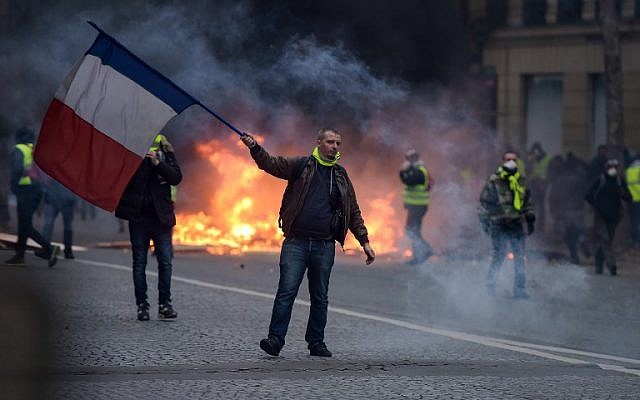
“And there is no justice. One guy threw pâté at the police, he got four months in prison. For throwing pâté! While another who drove into the protesters with the intention of harming people only got a one month suspended sentence.”
“People with yellow vests are judged harder. They try to scare us as much as they can, they use violence and legal penalties against us citizens who protest against the abuse of power.”
Pierre develops his opinion on Macron and the goal of the French Yellow Vests: “Of course we want Macron to resign – but it is not enough to replace him, it is not the solution. For years we have elected different politicians but the result has been the same. They are traitors, they don’t do things that benefit the French people.”
“Macron’s agenda is complete. He was elected by the elite and he destroys France’s sovereignty. For example, it has been said that there is no French culture…”
Katerina breaks in: “A number of Swedish politicians have said that as well. That there is no Swedish culture.”
“It is because they want to wipe out the nation states”, says Pierre. “Weaken the unity of the people and thereby make it easy to control them.”

“Macron and his followers are globalists, they don’t care about the French people. When he was elected, it was as a result of something that could be likened to exhaustion.”
“People were sick of the right and of the left. They were hoping for something new, but they were also intimidated by the media, which painted a picture that there would be chaos if Marine Le Pen’s Front National came to power. And Macron was portrayed as a hero. People wanted change and saw Macron as someone who could give them that.”
Former President François Hollande has been described as an extremely unpopular politician. However, Hollande’s unpopularity fades when one sees and hears how the French people react to Macron today.
“Macron is really despised”, says Pierre. “Wherever he goes, people boo, he can’t go anywhere without being criticised and scolded. I can’t see that he’ll stay in power for three years. He has offended the French too much, over and over again, accusing his own people of being lazy, alcoholics and so on…”
So what do you want to achieve? Macron’s resignation, and what else?
“We want direct democracy”, says Pierre. “The constitution must be amended. If there are laws we disagree with, we should be able to repeal them.”
“If the politicians don’t work for us, we should be able to get rid of them. The battle will be hard, it’s we the people against the elites, and they hold on to what they have, they don’t want to let go of their power. But we will fight until they fall.”
Do you want France to leave the EU?
“Yes, I want Frexit, many Yellow Vests want it, although not everyone. But I’m tired of French laws being dictated by Brussels.”
“Those of us who want Frexit don’t want Brussels to control and make decisions about France without us having anything to say about it. And I don’t trust the politicians in Brussels. They don’t act in the interest of the people.”
“In the past I believed in the EU. But now that I see what they have done with Europe, I don’t want it anymore. The EU is not working for the good of the Europeans. Juncker sits there and speaks with contempt of the people, disempowering them.”
“They’re threatening that there will be chaos if the countries leave the EU. They scare people. But what is the chaos? I believe in a pure trade union, not a superiority that interferes in how the countries are governed and questions freedom of expression and so on.”
“We need a Bruxit – to get rid of the bureaucrats who work for lobby organisations, and replace them with people who work for Europe’s best. But it’s not easy, these systems are so ingrained.”
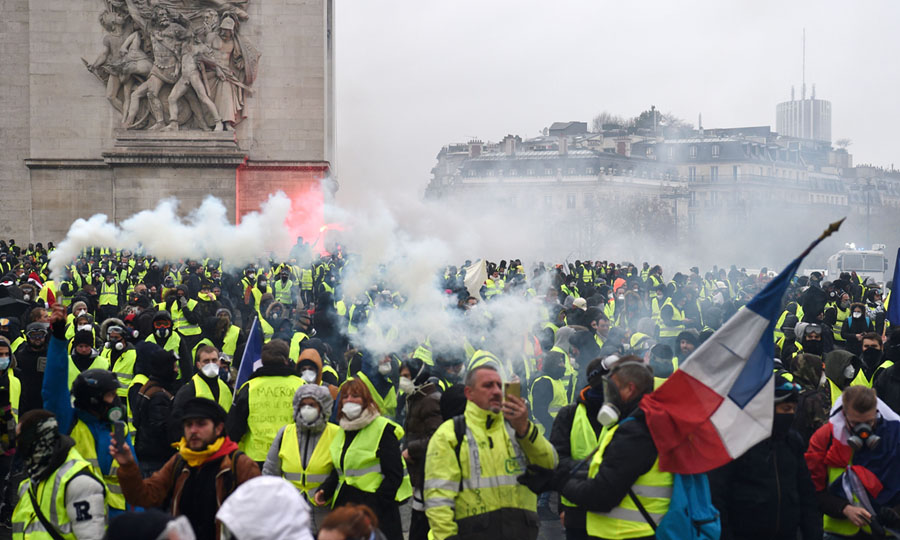
Nevertheless, Pierre believes a change for the better will come. “Macron is the last symbol of globalism, we see how these elites fall. Like Merkel. Instead, Salvini, Trump, Kurz in Austria are elected… more and more countries are starting to wake up.”
“We will not give up! We are full of fighting spirit and strong in the knowledge that the people always prevails in the end. They don’t want more abuse of power and a detached elite who controls them. We want direct democracy, an opportunity to remove politicians who harm the country, and to tear up laws that don’t benefit our people.”
“We won’t give up. If nothing else, we will fight for those who have been injured, for people who lost their eyes and others who have been beaten up and assaulted. Their injuries will not be in vain.”
What do you want to say to the Yellow Vests in other countries?
“You must organise yourselves, and stand united. We are fighting large systems, but we are also growing into a powerful worldwide movement. Don’t stop fighting! The more protesters there are, the stronger we become. Don’t give up! Bon Courage!”
Yellow Vests Leader “Handicapped For Life” By Police
By Dan Lyman

A leading figure of the French ‘Yellow Vests’ movement has been “handicapped for life” and may lose his eye after being shot by police in Paris, according to his attorney.
Jerome Rodrigues, 40, who has become a recognizable character in the anti-globalist protest campaign, was live-streaming last weekend’s demonstrations when he was reportedly blasted in the face with a ‘flashball’ – a 40mm rubber round being utilized by riot police.
“He is in shock,” Rodrigues’s lawyer told BFM TV. “He will be handicapped for life.”
“It is a tragedy for him and his family.”
Rodrigues’s own footage indicates he was likely shot at close range, fueling speculation that he may have been targeted.
Rodrigues was reportedly placed in an artificial coma overnight and expects he will lose his eye completely.
“I will lose my eye, family,” Rodrigues wrote on Facebook.

Rodrigues addressed the media from his hospital room, telling them that he had also been hit with a ‘stingball grenade’ during the attack.
“Everything happened very quickly. They threw a grenade at me and I took a [rubber] bullet. I was attacked twice — a grenade to the foot, and the bullet,” Rodrigues told LCI.
In the moments before he was shot, Rodrigues was reportedly warning fellow Yellow Vests to move out of the area due to a mounting presence of ‘black bloc’ agitators – radical leftist militants – who were likely amassing to attack police.
Infowars Europe has been reporting from the ground in France for the Yellow Vests protests. See some of our reports here, here, and here.
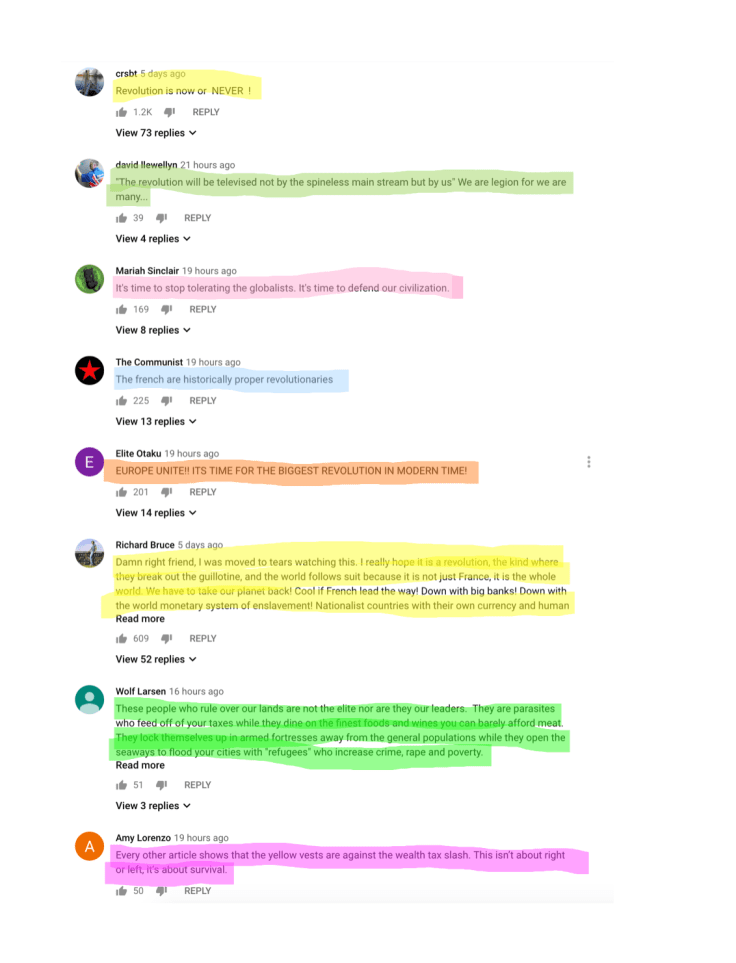
The ‘Gilets Jaunes’ Are Unstoppable: “Now, The Elites Are Afraid”
By Tyler Durden
Authored by Christophe Guilluy via Spiked-Online.com,
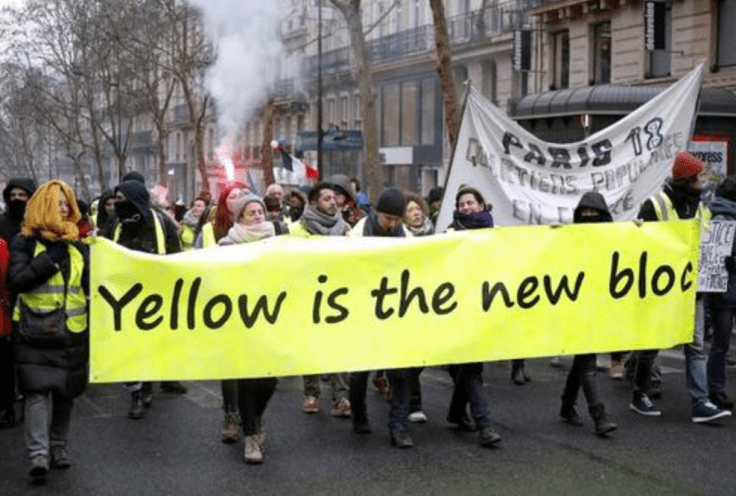
The gilets jaunes (yellow vest) movement has rattled the French establishment. For several months, crowds ranging from tens of thousands to hundreds of thousands have been taking to the streets every weekend across the whole of France. They have had enormous success, extracting major concessions from the government. They continue to march.
Back in 2014, geographer Christopher Guilluy’s study of la France périphérique (peripheral France) caused a media sensation. It drew attention to the economic, cultural and political exclusion of the working classes, most of whom now live outside the major cities. It highlighted the conditions that would later give rise to the yellow-vest phenomenon. Guilluy has developed on these themes in his recent books, No Society and The Twilight of the Elite: Prosperity, the Periphery and the Future of France. spiked caught up with Guilluy to get his view on the causes and consequences of the yellow-vest movement.
spiked: What exactly do you mean by ‘peripheral France’?
Christophe Guilluy: ‘Peripheral France’ is about the geographic distribution of the working classes across France. Fifteen years ago, I noticed that the majority of working-class people actually live very far away from the major globalised cities – far from Paris, Lyon and Toulouse, and also very far from London and New York.
Technically, our globalised economic model performs well. It produces a lot of wealth. But it doesn’t need the majority of the population to function. It has no real need for the manual workers, labourers and even small-business owners outside of the big cities. Paris creates enough wealth for the whole of France, and London does the same in Britain. But you cannot build a society around this. The gilets jaunes is a revolt of the working classes who live in these places.
They tend to be people in work, but who don’t earn very much, between 1000€ and 2000€ per month. Some of them are very poor if they are unemployed. Others were once middle-class. What they all have in common is that they live in areas where there is hardly any work left. They know that even if they have a job today, they could lose it tomorrow and they won’t find anything else.
spiked: What is the role of culture in the yellow-vest movement?
Guilluy: Not only does peripheral France fare badly in the modern economy, it is also culturally misunderstood by the elite. The yellow-vest movement is a truly 21st-century movement in that it is cultural as well as political. Cultural validation is extremely important in our era.
One illustration of this cultural divide is that most modern, progressive social movements and protests are quickly endorsed by celebrities, actors, the media and the intellectuals. But none of them approve of the gilets jaunes. Their emergence has caused a kind of psychological shock to the cultural establishment. It is exactly the same shock that the British elites experienced with the Brexit vote and that they are still experiencing now, three years later.
The Brexit vote had a lot to do with culture, too, I think. It was more than just the question of leaving the EU. Many voters wanted to remind the political class that they exist. That’s what French people are using the gilets jaunes for – to say we exist. We are seeing the same phenomenon in populist revolts across the world.
spiked: How have the working-classes come to be excluded?
Guilluy: All the growth and dynamism is in the major cities, but people cannot just move there. The cities are inaccessible, particularly thanks to mounting housing costs. The big cities today are like medieval citadels. It is like we are going back to the city-states of the Middle Ages. Funnily enough, Paris is going to start charging people for entry, just like the excise duties you used to have to pay to enter a town in the Middle Ages.
The cities themselves have become very unequal, too. The Parisian economy needs executives and qualified professionals. It also needs workers, predominantly immigrants, for the construction industry and catering et cetera. Business relies on this very specific demographic mix. The problem is that ‘the people’ outside of this still exist. In fact, ‘Peripheral France’ actually encompasses the majority of French people.
spiked: What role has the liberal metropolitan elite played in this?

Guilluy: We have a new bourgeoisie, but because they are very cool and progressive, it creates the impression that there is no class conflict anymore. It is really difficult to oppose the hipsters when they say they care about the poor and about minorities.
But actually, they are very much complicit in relegating the working classes to the sidelines. Not only do they benefit enormously from the globalised economy, but they have also produced a dominant cultural discourse which ostracises working-class people. Think of the ‘deplorables’ evoked by Hillary Clinton. There is a similar view of the working class in France and Britain. They are looked upon as if they are some kind of Amazonian tribe. The problem for the elites is that it is a very big tribe.
The middle-class reaction to the yellow vests has been telling. Immediately, the protesters were denounced as xenophobes, anti-Semites and homophobes. The elites present themselves as anti-fascist and anti-racist but this is merely a way of defending their class interests. It is the only argument they can muster to defend their status, but it is not working anymore.
Now the elites are afraid. For the first time, there is a movement which cannot be controlled through the normal political mechanisms. The gilets jaunes didn’t emerge from the trade unions or the political parties. It cannot be stopped. There is no ‘off’ button. Either the intelligentsia will be forced to properly acknowledge the existence of these people, or they will have to opt for a kind of soft totalitarianism.
A lot has been made of the fact that the yellow vests’ demands vary a great deal. But above all, it’s a demand for democracy. Fundamentally, they are democrats – they want to be taken seriously and they want to be integrated into the economic order.
spiked: How can we begin to address these demands?

Guilluy: First of all, the bourgeoisie needs a cultural revolution, particularly in universities and in the media. They need to stop insulting the working class, to stop thinking of all the gilets jaunes as imbeciles.
Cultural respect is fundamental: there will be no economic or political integration until there is cultural integration. Then, of course, we need to think differently about the economy. That means dispensing with neoliberal dogma. We need to think beyond Paris, London and New York.
Soros ‘person of the year’ indeed: In 2018 globalists pushed peoples’ patience to the edge
By Robert Bridge

Since 2015, the proponents of neoliberalism have been pushing ahead with their plans for open borders and globalist agenda without the consent of the people. The last 365 days saw that destructive agenda greatly challenged.
In light of the epic events that shaped our world in 2018, it seems the Yellow Vests – the thousands of French citizens who took to the streets of Paris to protest austerity and the rise of inequality – would have been a nice choice for the Financial Times’ ‘person of the year’ award. Instead, that title was bestowed upon the billionaire globalist, George Soros, who has arguably done more meddling in the affairs of modern democratic states than any other person on the planet.
Perhaps FT’s controversial nomination was an attempt to rally the forces of neoliberalism at a time when populism and nascent nationalism is sweeping the planet. Indeed, the shocking images coming out of France provide a grim wake-up call as to where we may be heading if the globalists continue to undermine the power of the nation-state.

It is no secret that neoliberalism relentlessly pursues a globalized, borderless world where labor, products, and services obey the hidden hand of the free market. What is less often mentioned, however, is that this system is far more concerned with promoting the well-being of corporations and cowboy capitalists than assisting the average person on the street. Indeed, many of the world’s most powerful companies today have mutated into “stateless superpowers,” while consumers are forced to endure crippling austerity measures amid plummeting standards of living. The year 2018 could be seen as the tipping point when the grass-roots movement against these dire conditions took off.
Since 2015, when German Chancellor Angela Merkel allowed hundreds of thousands of undocumented migrants into Germany and the EU, a groundswell of animosity has been steadily building against the European Union, perhaps best exemplified by the Brexit movement. Quite simply, many people are growing weary of the globalist argument that Europe needs migrants and austerity measures to keep the wheels of the economy spinning. At the very least, luring migrants with cash incentives to move to Germany and elsewhere in the EU appears incredibly shortsighted.
Indeed, if the globalist George Soros wants to lend his Midas touch to ameliorating the migrant’s plight, why does he think that relocating them to European countries is the solution? As is becoming increasingly apparent in places like Swedenand France, efforts to assimilate people from vastly different cultures, religions and backgrounds is an extremely tricky venture, the success of which is far from guaranteed.

One worrying consequence of Europe’s season of open borders has been the rise of far-right political movements. In fact, some of the harshest criticism of the ‘Merkel plan’ originated in Hungary, where its gutsy president, Viktor Orban, hopes to build “an old-school Christian democracy, rooted in European traditions.” Orban is simply responding to the democratic will of his people, who are fiercely conservative, yet the EU parliament voted to punish him regardless. The move shows that Brussels, aside from being adverse to democratic principles, has very few tools for addressing the rise of far-right sentiment that its own misguided policies created.
Here it is necessary to mention once again that bugbear of the political right, Mr. Soros, who has received no political mandate from European voters, yet who campaigns relentlessly on behalf of globalist initiatives through his Open Society Foundations (OSF) (That campaign just got some serious clout after Soros injected $18bn dollars of his own money into OSF, making it one of the most influential NGOs in the world).
With no small amount of impudence, Soros has condemned EU countries – namely his native Hungary – for attempting to protect their territories by constructing border barriers and fences, which he believes violate the human rights of migrants (rarely if ever does the philanthropist speak about the “human rights” of the native population). In the words of the maestro of mayhem himself: “Beggar-thy-neighbor migration policies, such as building border fences, will not only further fragment the union; they also seriously damage European economies and subvert global human rights standards.”
Through a leaked network of compromised EU parliamentarians who do his bidding, Soros says the EU should spend $30 billion euros ($33bln) to accommodate “at least 300,000 refugees each year.” How will the EU pay for the resettling of migrants from the Middle East? Soros has an answer for that as well. He calls it “surge funding,” which entails “raising a substantial amount of debt backed by the EU’s relatively small budget.”

Any guesses who will be forced to pay down the debt on this high-risk venture? If you guessed George Soros, guess again. The already heavily taxed people of Europe will be forced to shoulder that heavy burden. “To finance it, new European taxes will have to be levied sooner or later,” Soros admits. That comment is very interesting in light of the recent French protests, which were triggered by Emmanuel Macron’s plan to impose a new fuel tax. Was the French leader, a former investment banker, attempting to get back some of the funds being used to support the influx of new arrivals into his country? The question seems like a valid one, and goes far at explaining the ongoing unrest.

At this point, it is worth remembering what triggered the exodus of migrants into Europe in the first place. A large part of the answer comes down to unlawful NATO operations on the ground of sovereign states. Since 2003, the 29-member military bloc, under the direct command of Washington, has conducted illicit military operations in various places around the globe, including in Iraq, Libya and Syria. These actions, which could be best described as globalism on steroids, have opened a Pandora’s Box of global scourges, including famine, terrorism and grinding poverty. Is this what the Western states mean by ‘humanitarian activism’? If the major EU countries really want to flout their humanitarian credentials, they could have started by demanding the cessation of regime-change operations throughout the Middle East and North Africa, which created such inhumane conditions for millions of innocent people.
This failure on the part of Western capitals to speak out against belligerent US foreign policy helps to explain why a number of other European governments are experiencing major shakeups. Sebastian Kurz, 32, won over the hearts of Austrian voters by promising to tackle unchecked immigration. In super-tolerant Sweden, which has accepted more migrants per capita than any other EU state, the anti-immigrant Sweden Democrats party garnered 17.6 percent of the vote in September elections – up from 12.9 percent in the previous election. And even Angela Merkel, who is seen by many people as the de facto leader of the European Union, is watching her political star crash and burn mostly due to her bungling of the migrant crisis. In October, after her Christian Democratic Union (CDU) suffered a stinging setback in Bavaria elections, which saw CDU voters abandon ship for the anti-immigrant AfD and the Greens, Merkel announced she would resign in 2021 after her current term expires.
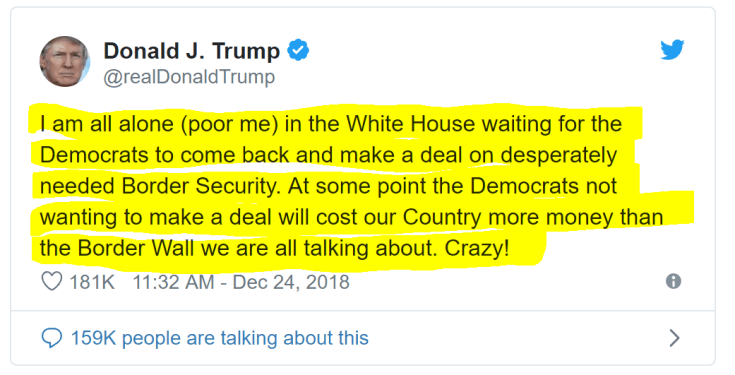
Meanwhile, back in the US, the government of President Donald Trump has been shut down as the Democrats refuse to grant the American leader the funds to build a wall on the Mexican border – despite the fact that he essentially made it to the White House on precisely that promise. Personally, I find it very hard to believe that any political party that does not support a strong and viable border can continue to be taken seriously at the polls for very long. Yet that is the very strategy that the Democrats have chosen. But I digress.
The lesson that Western governments should have learned over the last year from these developments is that there exists a definite red line that the globalists cross at risk not only to the social order, but to their own political fortunes. Eventually the people will demand solutions to their problems – many of which were caused by reckless neoliberal programs and austerity measures. This collective sense of desperation may open the door to any number of right-wing politicians only too happy to meet the demand.
Better to provide fair working conditions for the people while maintaining strong borders than have to face the wrath of the street or some political charlatan later. Whether or not Western leaders will change their neoliberal ways as a populist storm front approaches remains to be seen, but I for one am not betting on it.
Like this story? Share it with a friend!
Tear gas fired as Yellow Vests and police clash in French city of Rouen (VIDEOS)
Yellow Vests in Rouen as the street fills with tear gas.
French police have deployed tear gas in a bid to quell Yellow Vest protesters in a tense stand-off in the city of Rouen in Normandy.
Demonstrations quickly spiralled out of control in the northern French city on Saturday as protesters and riot police clashed in the streets of the picturesque town.
Journalist Simon Louvet, who is in Rouen, tweeted: “The GJ (Gilet Jaunes) are in the streets around Jeanne D’Arc Street and are gassed, they flee running and regroup.”are gassed, they flee running and regroup.”
The protesters also set fire to the entrance of the local office of the Bank of France, the country’s central bank.
Away from the violence, a large group of protesters also marched through the streets, waving French flags and chanting slogans.
Paris, the scene of the most dramatic demonstrations since the rallies began in November, was significantly quieter than previous weeks but it also saw dozens of Yellow Vests gathered on Champs-Elysees on Saturday.
On Thursday, a group of the protesters attempted to storm the Mediterranean castle that serves as President Emmanuel Macron’s summer retreat.
The weeks of demonstrations have polarized France. The movement began as rallies against fuel-price hikes, but it soon morphed into nationwide protests against government policies.
The fuel hikes were scrapped by the government but people have continued to demand more concessions, including lower taxes and even Macron’s resignation.
Like this story? Share it with a friend!
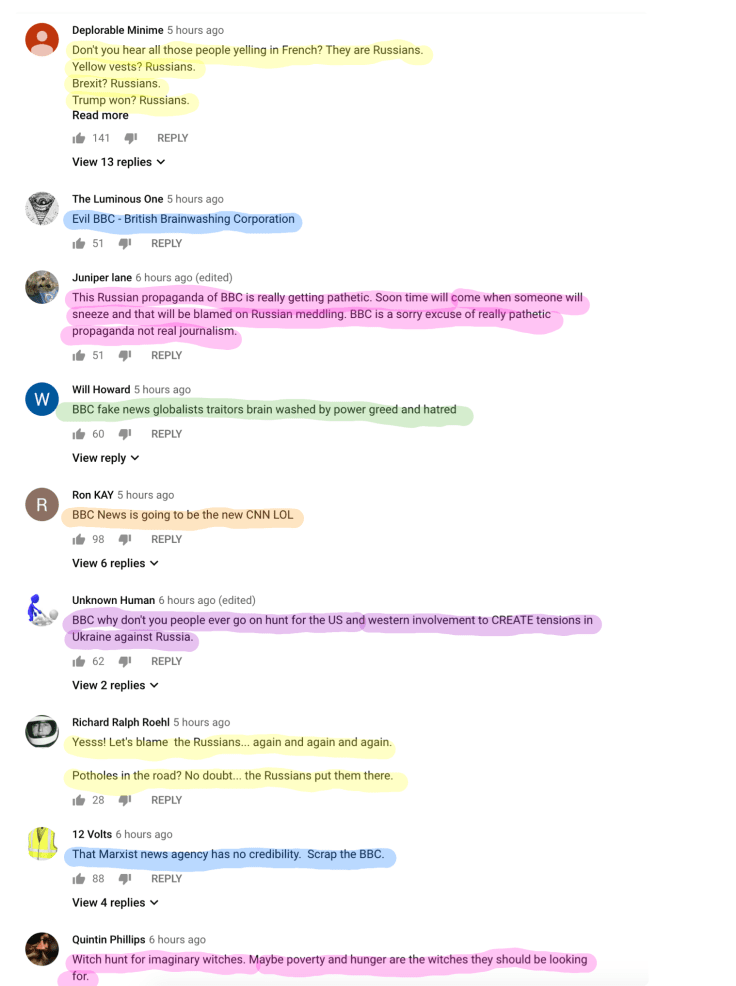
‘Editors out for blood’: BBC on the hunt for Moscow link to Yellow Vest protests
The BBC is desperate in its quest to ‘find’ the dreaded Kremlin hand behind the French protests, messages obtained by Russian media indicate. They reveal attempts by one of its journalists to find any trace of Russian involvement.
VIRAL VIDEO: FRENCH POLICE DUMP DISABLED MAN OUT OF WHEELCHAIR – REPORT

Brutal riot suppression also reported by another journalist – watch & share!
DECEMBER 10, 2018
French police responding to the ongoing riots threw a disabled man out of his wheelchair, according to this independent journalist on Twitter:
“…After a verbal exchange and manhandling from the officers physically lifting the man and setting his wheelchair in the mud (where he can’t move it) he tries to yell at them, they spin his chair away so that he can’t,” wrote journalist Brett MacDonald on Twitter.
You can read more of MacDonald’s reporting here.
Raw, On-The-Ground Reporting From France
Infowars Europe had its own reporter on the ground during mass demonstrations against carbon taxes in Paris, France:
Brutal Suppression by French Police Reported by Journalist – Watch
What is Really Happening in France?
Here is the truth about what is really going in in France
 Tom's Blog