
Published on Jan 29, 2019


Published on Jan 29, 2019
By Tyler Durden
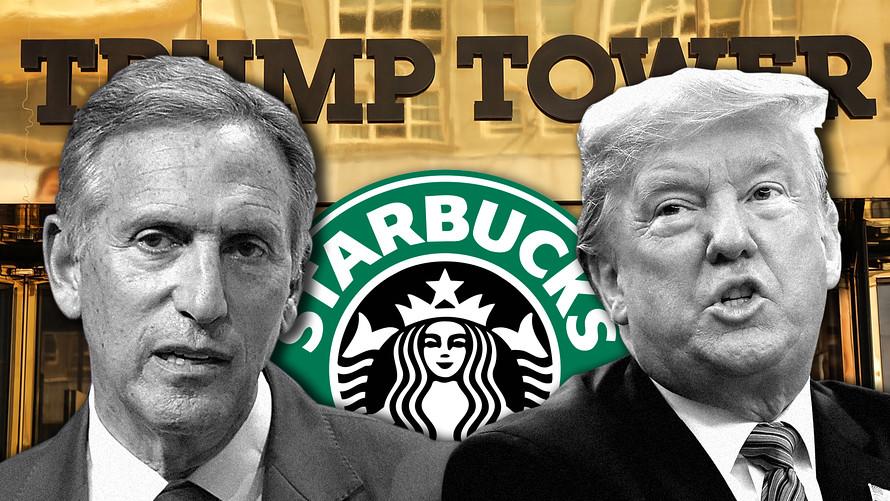
Putting it bluntly was a heckler at a New York Barnes & Noble, who told Schultz: “Don’t help elect Trump, you egotistical, billionaire asshole.”
Fellow billionaire Michael Bloomberg warned Schultz not to run as an independent, writing on Monday that he had to make the same decision in 2008 when he was considering running for office.
“I faced exactly the same decision now facing others who are considering it,” said Bloomberg. “The data was very clear and very consistent. Given the strong pull of partisanship and the realities of the electoral college system, there is no way an independent can win.“
“In 2020, the great likelihood is that an independent would just split the anti-Trump vote and end up re-electing the President.That’s a risk I refused to run in 2016 and we can’t afford to run it now,” Bloomberg added. “We must remain united, and we must not allow any candidate to divide or fracture us. The stakes couldn’t be higher.“
Schultz, on the other hand, thinks that there are enough moderate voters on both sides of the aisle who are sick of the status quo and will rally behind him.
“I believe that lifelong Democrats and lifelong Republicans are looking for a home,” Schultz told Axios on Sunday night – acknowledging that a vote-splitting campaign “is going to create hate, anger, disenfranchisement from friends, from Democrats.”
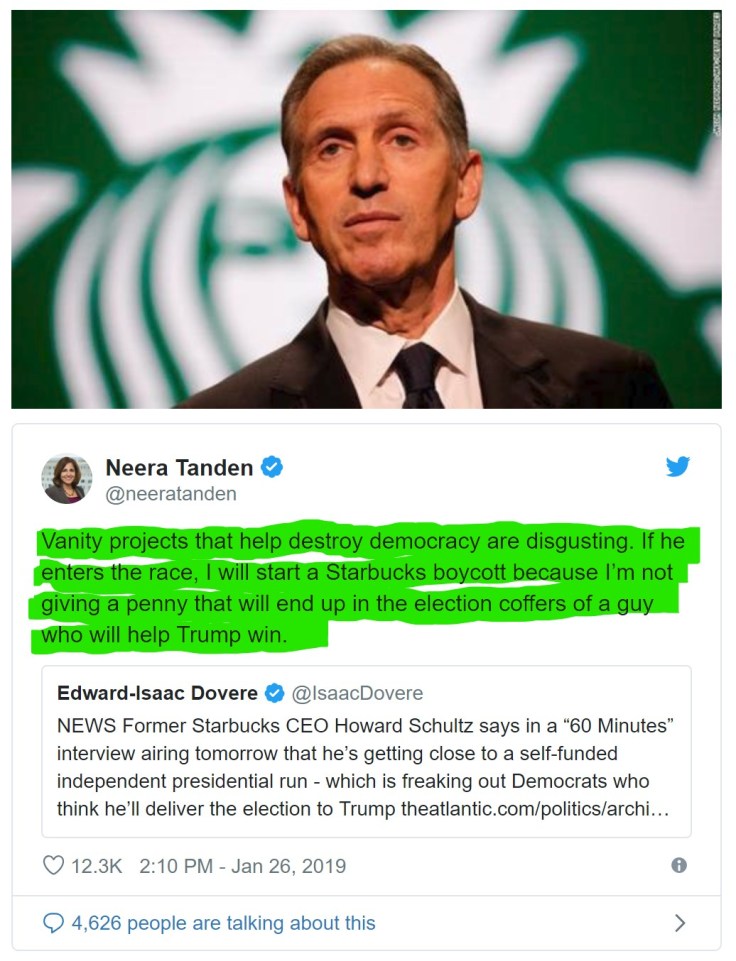
Neera Tanden, president of the Center for American Progress, called for a Starbucks boycott if Schultz enters the race, tweeting: “Vanity projects that help destroy democracy are disgusting. If he enters the race, I will start a Starbucks boycott because I’m not giving a penny that will end up in the election coffers of a guy who will help Trump win.”
Other prominent Democrats have shared the anti-Schultz sentiment:
“I have a concern that, if he did run, that, essentially, it would provide Donald Trump with his best hope of getting reelected,” 2020 hopeful Julián Castro told CNN’s State of the Union on Sunday. “I would suggest to Mr. Schultz to truly think about the negative impact that that might make.”
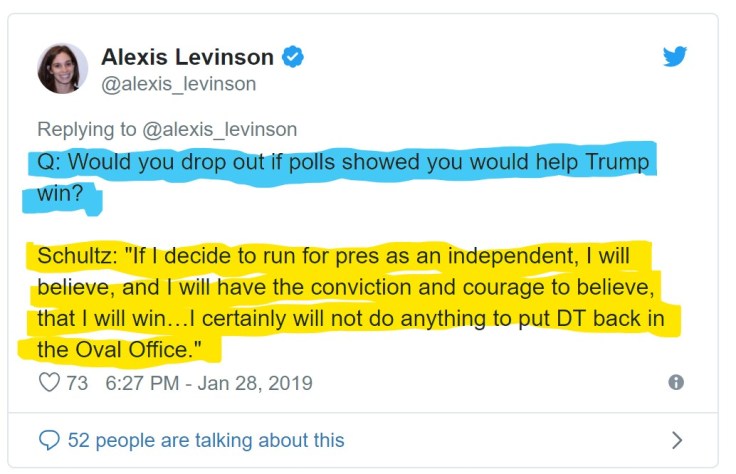
During his Monday interview at Barnes & Noble, Schultz said that he wouldn’t “do anything” to help Trump win again, however he says he believes he would win if he runs.
The former Starbucks head blasted Trump in a Sunday “60 Minutes” interview – saying he isn’t fit to serve as president, and that both Democrats and Republicans are “consistently not doing what is necessary on behalf of the American people.”
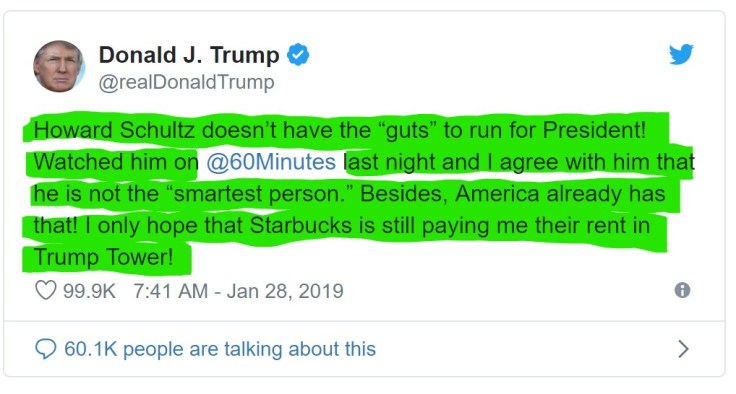
In response to the interview, Trump tweeted on Monday: “Howard Schultz doesn’t have the “guts” to run for President! Watched him on @60Minutes last night and I agree with him that he is not the “smartest person.” Besides, America already has that! I only hope that Starbucks is still paying me their rent in Trump Tower!”
Schultz’s retort? Nada.
“I’m not going to respond to that. It’s childish. I’m not trying to win the Twitter primary” he said.
Schultz, worth $3.4 billion, owns 33 million shares of Starbucks as of June 26, 2018. He stepped down as executive chairman and board member last June after joining the company in 1982, and is now chairman emeritus.
Watch Schultz’s entire hour-long interview below:
By Jim Hoft
This was a must-see presentation.
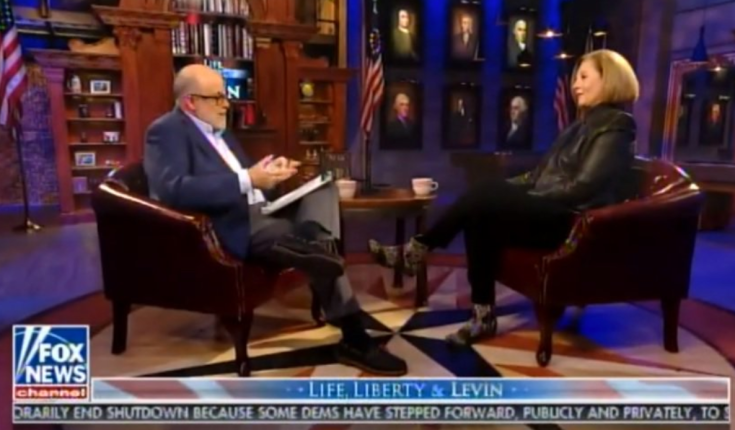 Sidney Powell is an expert of Department of Justice corruption and has followed the career of Democrat hatchetman Andrew Weissmann who has destroyed thousands of lives during his career as federal prosecutor only to see his cases overturned years later by superior court rulings.
Sidney Powell wrote LICENSED TO LIE: Exposing Corruption in the Department of Justice after seeing a core group of federal prosecutors break all the rules, make up crimes, hide evidence, and send innocent people to prison in the Enron case.
On Sunday Mark Levin and Sidney Powell discussed the upcoming release of the Mueller report.
CAST YOUR VOTE: Do You Still Trust President Trump?
Sidney warned that the report, which will likely be authored by Andrew Weissmann, will destroy Trump. That is the goal and that is why Democrats are looking forward to its release.
Sidney Powell: Mr. Weissmann could write a report that would make giving your mother a nice Christmas present sound like a federal criminal offense.
Mark Levin: Isn’t that why Pelosi, and the media and the Democrats say, “Let’s wait for the report. Let’s wait for the report,” because they know who is going to be writing the report and I suspect they know some of the things, frankly, that are going to be in the report. Wasn’t Mr. Weissmann at the Hillary Clinton victory party?
Sidney Powell: Yes, I’ve heard that’s true… The other thing you need to know is Mr. Weissmann is a master manipulator of the media. He did that during the Enron litigation also. In fact, he sat in the courtroom with his arm around Mary Flood who was the lead reporter of the Houston Chronicle.
By Patrick Howley

Explained:
“The indictment of Roger Stone may help explain the insurance policy that Peter Strzok was talking to Lisa Page about in August of 2016. In the indictment, on page 17 section 35 titled “STONE’s False and Misleading Testimony About Communications with the Trump Campaign“, there is a very curious admission. It talks about insider knowledge of numerous communications in the Trump Campaign.
“In truth and in fact, and as described above, STONE spoke to multiple individuals involved in the Trump Campaign….“ and “a. On multiple occasions, STONE told senior Trump Campaign officials…“.
This is important because it highlights the question, did the FBI or CIA use Stefan Halper or Joseph Mifsud to hack the Trump Campaign’s emails? Stefan Halper, who is widely reported by most news organizations as a spy/source for the CIA/FBI, emailed Carter Page, George Papadopoulus and Sam Clovis of the Trump Campaign. Sam Clovis even reported to Tucker Carlson in May of 2018 that he received emails from Stefan Halper with attachments in 2016. The indictment of Papadopoulus references numerous communications with the professor. Joseph Mifsud has been reported as the professor and as a possible British spy. Did these email communications have spy software attached and did Peter strzok’s August 1st 2016 trip to London involve him passing anything to Halper?”
REFERENCES:
https://www.wsj.com/articles/when-carter-page-met-stefan-halper-1527029988
https://www.foxnews.com/politics/strzok-page-and-the-fbi-texting-scandal-explained
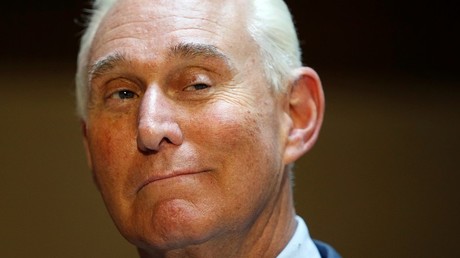
Longtime President Trump political adviser Roger Stone reveals that he was the victim of a set-up meeting by a Russian using a fake Western name — but he did not fall for it.
More details are coming out about the Crossfire Hurricane plot to target members of President Trump’s team with fake Russian meetings in order to trigger surveillance measures. The FBI is facing massive criticism after the New York Times reported that the FBI launched a quiet investigation into the Trump-Russia hoax after James Comey’s firing.
“By way of example, as you know, back in June I sent this Committee a letter regarding a longtime FBI informant named Gennadiy Vasilievich Vostretsov who, under the alias “Henry Greenberg”, was sent to approach my client in May 2016 with claims of having access to information that could impact the election,” writes Stone’s attorney Grant Smith in a letter to Rep. Devin Nunes.
“Mr. Stone not only immediately and forcefully declined to participate in anything this FBI informant was proposing, but never saw or spoke to the informant again. Mr. Stone believes it highly likely that Mr. Vostretsov/Greenberg’s status as an FBI informant was not “former”, and that Vostretsov/Greenberg was, in fact, actively working on behalf of the FBI at the time of their meeting, acting upon a calculated effort to entrap Mr. Stone and, further, to infiltrate and compromise the Trump effort. Notably, Vostretsov was admitted to the country nine separate times on an FBI Informant’s visa,” Smith writes on Stone’s behalf.
Stone is demanding that the full transcript of his interview with the House Intelligence Committee be released to the public to prove once and for all that Stone did not collude with the Russians during the 2016 presidential election.
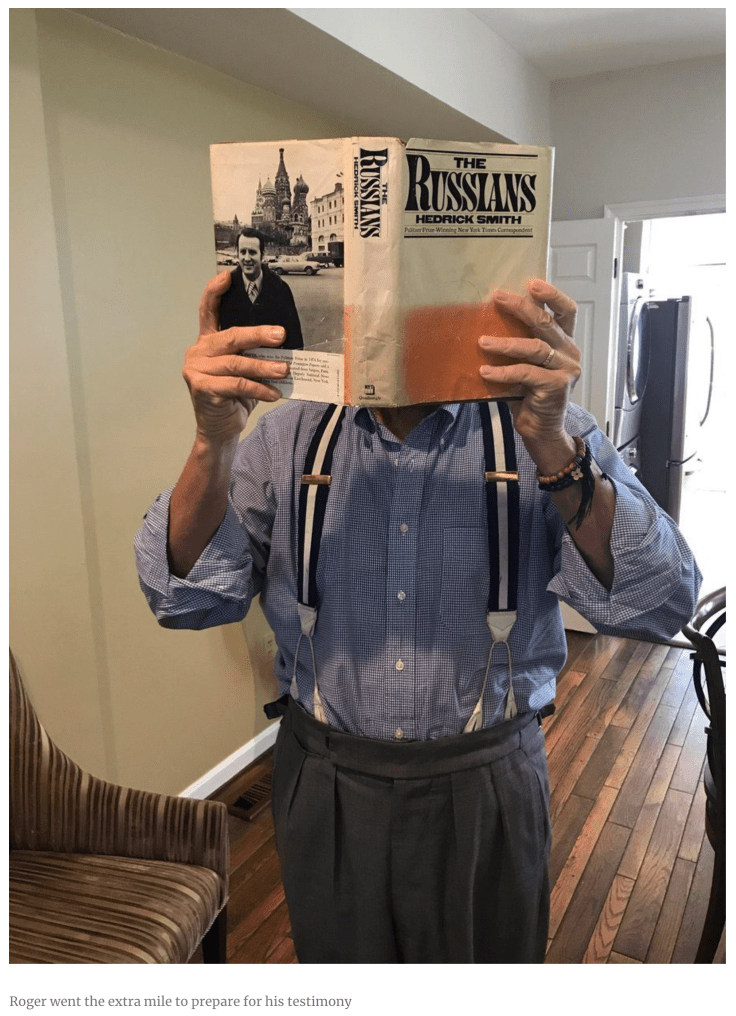
The Republican strategist also accuses Democrat California congressman and presidential aspirant Eric Swalwell of lying to create the narrative that Stone changed his testimony.
“Congressman Eric Swalwell told MSNBC that I lied to the House Intelligence Committee and that I ‘amended’ my testimony three times. This is categorically false,” Stone said in a statement provided to Big League Politics.
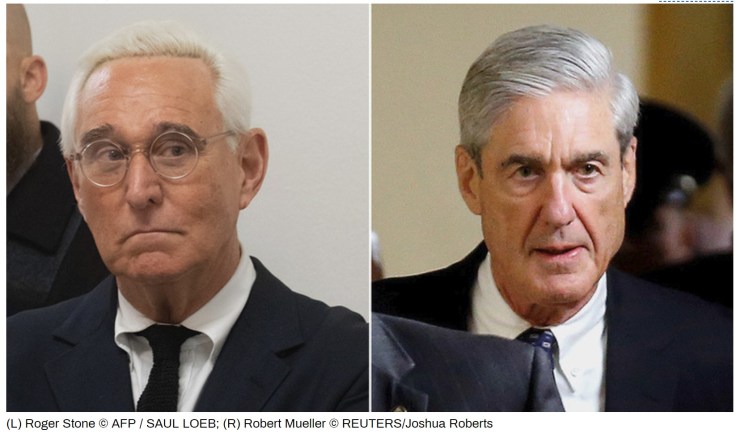
He was arrested at his home in Fort Lauderdale, Florida, following Thursday’s indictment by the office of the US Special Counsel Robert Mueller which is investigating Trump and his associates over allegations surrounding his 2016 campaign.
Stone is facing one count of obstruction of proceedings, one count of witness tampering, and five counts of false statements.
It is alleged that Stone, who officially left the Trump campaign in August 2015, told campaign officials in July 2016 about future WikiLeaks (referred to in Mueller’s document as “Organization 1”) releases of damaging information found in leaked Democratic National Committee (DNC) emails. US intelligence claims the emails were hacked by Russian “government actors.”
During Trump’s campaign, Stone boasted about having connections with WikiLeaks co-founder Julian Assange, but later said it wasn’t a direct link. Instead, he said that he relied on New York radio host Randy Credico (named “Person 2” in the Thursday indictment) as a “go-between.”
The indictment says Stone lied to the House Intelligence Committee about his alleged contacts with WikiLeaks and tried to convince another person to give false testimony.
Stone, a long-time ally of Trump, was recently praised by the US president for saying he would “never testify against Trump” and for having “guts” in the face of the “rogue and out of control prosecutor” Mueller.

The FBI showed up at Stone’s door in force. Agents arrived armed with assault rifles and clad in body armor, and without warning.
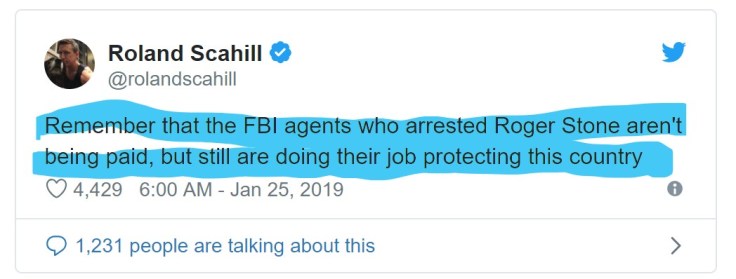
FBI agents are among those left without pay due to the ongoing US government shutdown, and the fact that they still went and arrested Stone had the anti-Trump ‘Resistance’ praising on them on Twitter for “protecting this country.”
Since Trump came to power, FBI Special Counsel Robert Mueller’s ‘Russiagate’ probe has been investigating the US intelligence community’s allegations that he had colluded with Russia during the 2016 campaign. Stone’s arrest is arguably the most significant of the probe, which has so far resulted in several high-profile arrests on charges unrelated to the still unproven “collusion.”
Russia has dismissed all allegations of working to put Trump in power or control his decisions.
ALSO ON RT.COMMueller shoots down BuzzFeed’s latest ‘Russiagate’ scoop with a rare dismissal
Many of Trump’s opponents blame Russia for his surprise 2016 victory against Hillary Clinton. In April 2018, the House Intelligence Committee concluded that Trump had not colluded with Moscow, but later the Senate committee said he did, choosing to side with US intelligence assessments.
Those assessments, as well as media reports often based on unnamed sources (many of which have since proven to be false) remain the chief basis for the ‘Russiagate’ allegations, as Mueller’s team has so far failed to uncover proof of collusion in its two-year probe.
If you like this story, share it with a friend!
By Tyler Durden
Authored by Christophe Guilluy via Spiked-Online.com,
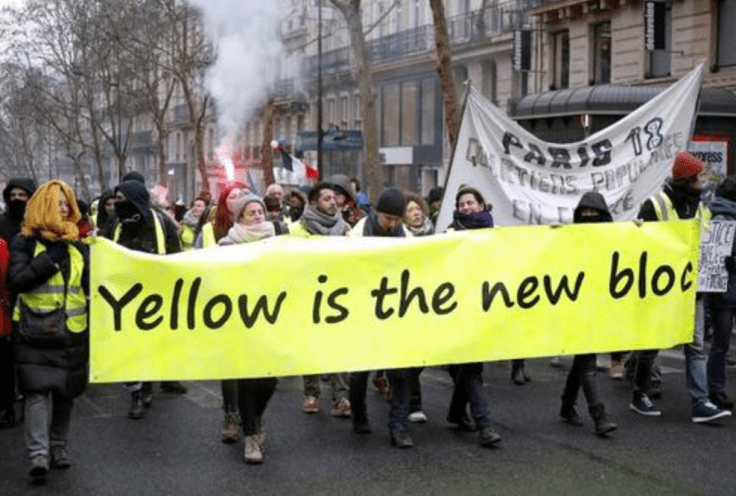
Back in 2014, geographer Christopher Guilluy’s study of la France périphérique (peripheral France) caused a media sensation. It drew attention to the economic, cultural and political exclusion of the working classes, most of whom now live outside the major cities. It highlighted the conditions that would later give rise to the yellow-vest phenomenon. Guilluy has developed on these themes in his recent books, No Society and The Twilight of the Elite: Prosperity, the Periphery and the Future of France. spiked caught up with Guilluy to get his view on the causes and consequences of the yellow-vest movement.
spiked: What exactly do you mean by ‘peripheral France’?
Christophe Guilluy: ‘Peripheral France’ is about the geographic distribution of the working classes across France. Fifteen years ago, I noticed that the majority of working-class people actually live very far away from the major globalised cities – far from Paris, Lyon and Toulouse, and also very far from London and New York.
Technically, our globalised economic model performs well. It produces a lot of wealth. But it doesn’t need the majority of the population to function. It has no real need for the manual workers, labourers and even small-business owners outside of the big cities. Paris creates enough wealth for the whole of France, and London does the same in Britain. But you cannot build a society around this. The gilets jaunes is a revolt of the working classes who live in these places.
They tend to be people in work, but who don’t earn very much, between 1000€ and 2000€ per month. Some of them are very poor if they are unemployed. Others were once middle-class. What they all have in common is that they live in areas where there is hardly any work left. They know that even if they have a job today, they could lose it tomorrow and they won’t find anything else.
spiked: What is the role of culture in the yellow-vest movement?
Guilluy: Not only does peripheral France fare badly in the modern economy, it is also culturally misunderstood by the elite. The yellow-vest movement is a truly 21st-century movement in that it is cultural as well as political. Cultural validation is extremely important in our era.
One illustration of this cultural divide is that most modern, progressive social movements and protests are quickly endorsed by celebrities, actors, the media and the intellectuals. But none of them approve of the gilets jaunes. Their emergence has caused a kind of psychological shock to the cultural establishment. It is exactly the same shock that the British elites experienced with the Brexit vote and that they are still experiencing now, three years later.
The Brexit vote had a lot to do with culture, too, I think. It was more than just the question of leaving the EU. Many voters wanted to remind the political class that they exist. That’s what French people are using the gilets jaunes for – to say we exist. We are seeing the same phenomenon in populist revolts across the world.
spiked: How have the working-classes come to be excluded?
Guilluy: All the growth and dynamism is in the major cities, but people cannot just move there. The cities are inaccessible, particularly thanks to mounting housing costs. The big cities today are like medieval citadels. It is like we are going back to the city-states of the Middle Ages. Funnily enough, Paris is going to start charging people for entry, just like the excise duties you used to have to pay to enter a town in the Middle Ages.
The cities themselves have become very unequal, too. The Parisian economy needs executives and qualified professionals. It also needs workers, predominantly immigrants, for the construction industry and catering et cetera. Business relies on this very specific demographic mix. The problem is that ‘the people’ outside of this still exist. In fact, ‘Peripheral France’ actually encompasses the majority of French people.
spiked: What role has the liberal metropolitan elite played in this?

Guilluy: We have a new bourgeoisie, but because they are very cool and progressive, it creates the impression that there is no class conflict anymore. It is really difficult to oppose the hipsters when they say they care about the poor and about minorities.
But actually, they are very much complicit in relegating the working classes to the sidelines. Not only do they benefit enormously from the globalised economy, but they have also produced a dominant cultural discourse which ostracises working-class people. Think of the ‘deplorables’ evoked by Hillary Clinton. There is a similar view of the working class in France and Britain. They are looked upon as if they are some kind of Amazonian tribe. The problem for the elites is that it is a very big tribe.
The middle-class reaction to the yellow vests has been telling. Immediately, the protesters were denounced as xenophobes, anti-Semites and homophobes. The elites present themselves as anti-fascist and anti-racist but this is merely a way of defending their class interests. It is the only argument they can muster to defend their status, but it is not working anymore.
Now the elites are afraid. For the first time, there is a movement which cannot be controlled through the normal political mechanisms. The gilets jaunes didn’t emerge from the trade unions or the political parties. It cannot be stopped. There is no ‘off’ button. Either the intelligentsia will be forced to properly acknowledge the existence of these people, or they will have to opt for a kind of soft totalitarianism.
A lot has been made of the fact that the yellow vests’ demands vary a great deal. But above all, it’s a demand for democracy. Fundamentally, they are democrats – they want to be taken seriously and they want to be integrated into the economic order.
spiked: How can we begin to address these demands?

Guilluy: First of all, the bourgeoisie needs a cultural revolution, particularly in universities and in the media. They need to stop insulting the working class, to stop thinking of all the gilets jaunes as imbeciles.
Cultural respect is fundamental: there will be no economic or political integration until there is cultural integration. Then, of course, we need to think differently about the economy. That means dispensing with neoliberal dogma. We need to think beyond Paris, London and New York.
By
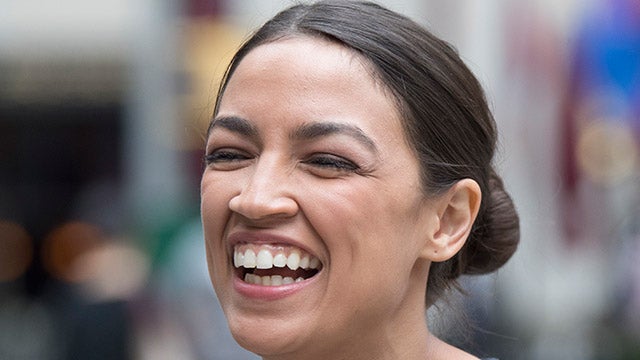
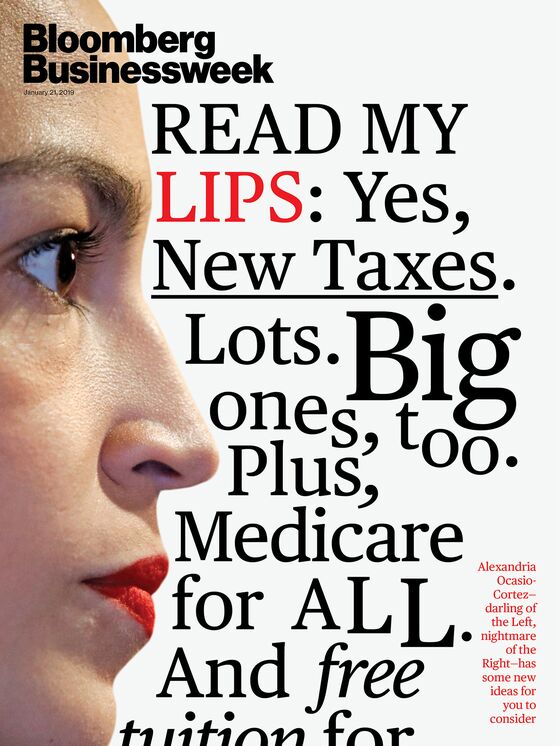
Ocasio-Cortez, the mediagenic 29-year-old from the Bronx, N.Y., is the youngest woman ever elected to the House of Representatives. In an appearance on 60 Minutes with Anderson Cooper that aired on Jan. 6, she was talking up the Green New Deal, a plan to move the U.S. to 100 percent renewable energy by 2035. Cooper challenged her by saying the program would require raising taxes. “There’s an element, yeah, where people are going to have to start paying their fair share,” she replied. Asked for specifics, she said, “Once you get to the tippy tops, on your 10 millionth dollar, sometimes you see tax rates as high as 60 or 70 percent.”
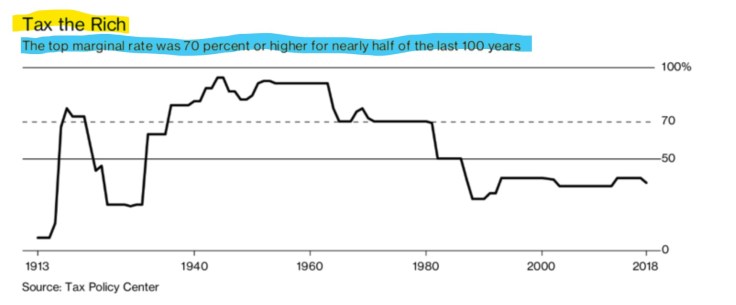
Seventy percent! For perspective, the top rate under the tax law that passed in December 2017 is 37 percent. And now, suddenly, a number so extreme that no one in polite society dared utter it became a focal point of debate. Ocasio-Cortez’s fans—she has 2.4 million followers on Twitter alone—loved it. Some pundits dug up economic research defending rates in the 70 percent range. Others pointed out that Ocasio-Cortez was actually lowballing the historical comparison: Top rates were 90 percent or higher as recently as the 1960s. Defenders of low tax rates heaped abuse on her, which backfired on them by inflaming her supporters.
What Ocasio-Cortez understands is that getting an idea talked about, even unfavorably, is a necessary, if insufficient, step on the path to adoption. (President Trump also gets this.) “It’s the easiest thing to say, ‘No, we can’t change anything,’ ” says Eric Foner, a Pulitzer Prize-winning historian who recently retired from Columbia University. “Most of the big ideas in American history started among radical groups who were told, ‘No, you’re never going to be able to achieve that.’ ” Foner sees parallels between the strategies of today’s left-leaning Democrats and the radical Republicans who fought slavery before the Civil War, “which was put out an agenda, be aware that you can’t just accomplish it all at once, obviously, but change the political discourse by pushing your agenda and then work with those who are willing to do some of it.”
Ocasio-Cortez was actually less radical than she could have been on 60 Minutes. She passed up the opportunity to move the Overton Window on another of her pet issues: budget deficits. She adheres to a doctrine called Modern Monetary Theory that’s catching on among young, left-leaning politicians and older policymakers alike.
Its counterintuitive core idea is that deficits don’t matter if you borrow in your own currency, just as long as they don’t cause inflation. Unless the economy is at risk of overheating, MMTers say, paying for a new government program doesn’t require cutting another or raising taxes.
Ocasio-Cortez could have said, “No, Anderson, we wouldn’t need to raise taxes to pay for the Green New Deal. But I want to raise taxes anyway, because I believe in redistributing money from the rich to the poor.” That really would have lit up the internet. Randall Wray, an MMT theorist who’s a senior scholar at the Levy Economics Institute of Bard College, wrote in an email that he was “a bit disappointed” that Ocasio-Cortez connected tax hikes to the Green New Deal. Stephanie Kelton, another MMT theorist and Bernie Sanders’s economic adviser during his race for the Democratic nomination in 2016, says she thinks reducing inequality is the real reason Ocasio-Cortez favors higher rates on the rich: “It’s kind of a recognition that levels of income and wealth inequality parallel those of the 1920s.”

Whatever the particulars, Ocasio-Cortez wants to raise tax rates—by a lot. Since the Reagan Revolution of the 1980s, Democrats have been almost as allergic as Republicans to raising taxes. Hillary Clinton didn’t advocate increasing rates on top incomes at all during her 2016 presidential campaign. Even Sanders, that wild socialist from Vermont, dared propose a top rate of only 52 percent when he ran for president.
But with Ocasio-Cortez, antitax conservatives immediately sensed that a taboo was being broken, that a crack has opened up in the dam they’d spent decades building and reinforcing. Grover Norquist, the president of Americans for Tax Reform, who in 1986 devised the famous Taxpayer Protection Pledge that commits signers to vote against any net increases in taxes, on Twitter likened her proposal to slavery. “Slavery is when your owner takes 100% of your production. Democrat congresswoman Ocasio-Cortez wants 70% (according to CNN) What is the word for 70% expropriation?” he tweeted.
Norquist now says he remains confident that tax rates won’t rise to 70 percent, because “it’s such a bad idea.” In fact, he says he thinks Democrats are hurting only themselves by entertaining it. Ocasio-Cortez, he says, is a “pied piper” leading her party to its demise. It’s not at all clear, though, that higher taxes on the rich are a losing issue for Democrats. A Hill-HarrisX poll conducted on Jan. 12 and Jan. 13 found that 59 percent of registered voters supported the idea of raising the top rate to 70 percent. That included 45 percent of Republican voters. Thanks perhaps to the presidential campaign of Sanders, who like Ocasio-Cortez calls himself a democratic socialist, even “socialism” is no longer a dirty word: Gallup reported in August that 57 percent of Democrats and those leaning Democratic had a positive view of socialism, while only 47 percent had a positive view of capitalism.
What would a 70 percent top tax rate do to the U.S. economy and businesses? The rap on high rates is that they discourage work and promote wasteful tax-sheltering. Even many economists who think the rich pay too little say the better solution is to eliminate loopholes—subjecting more income to taxation rather than taxing a narrow base at a high rate.
Norquist argues that a 70 percent top rate would trigger an exodus of high-earning individuals from the U.S., saying that the last time U.S. rates were that high, they were also high in other nations, reducing the incentive to move. The Tax Foundation, a right-of-center think tank, said on Jan. 14 that a 70 percent top rate on ordinary income (not capital gains) exceeding $10 million “would not raise much revenue.” “Not much revenue” in this case means an estimated $189 billion in total over 10 years—or $292 billion before accounting for the likelihood that people in that tax bracket would work less and invest less in their noncorporate businesses.
On the other hand, economists supportive of Ocasio-Cortez were quick to point out that Denmark has among the world’s highest living standards despite a 56.5 percent tax rate on incomes above about $80,000 a year, a far lower threshold than her $10 million. A 2011 paper by Nobel laureate Peter Diamond of MIT and Emmanuel Saez of the University of California at Berkeley advocated top total tax rates (federal plus state) for the richest Americans of 73 percent on ordinary income (again, not capital gains). They assumed that an extra dollar of income for someone in that bracket has very little value in comparison to a dollar received by a lower-income person. Critics of their research have said Diamond and Saez treat the rich as sheep to be shorn and underestimate how much high tax rates would discourage people from getting advanced degrees or starting businesses. Diamond rejects the criticism, cites the need for more public investment, and says, “I’m perfectly comfortable” with Ocasio-Cortez’s 70 percent rate.
One thing that most people don’t know about Ocasio-Cortez is that she was a science nerd in high school in Westchester County, N.Y. In 2007, out of almost 1,500 students from 46 countries competing in the Intel International Science and Engineering Fair, she was one of four second-place winners in the microbiology category. (Her research was on the effect of antioxidants on roundworms.) It’s a biographical detail that adds another dimension to the story of a young woman born in the Bronx to parents of Puerto Rican descent who became the first in her family to attend college. While she was away at school her father died, pushing the family to the brink of financial ruin. “When you come from a working-class background, it often feels like you’re just one disaster away from everything falling apart,” she said in an Instagram video about a year ago.
Like former President Barack Obama, Ocasio-Cortez became a community organizer after graduating from college, in 2011, and supported herself as a waitress and bartender. She worked for Sanders’s campaign in 2016. After that, things happened fast. She ran for the Democratic nomination in her Bronx-Queens congressional district and upset Joe Crowley. Chairman of the House Democratic Caucus, Crowley had been seen as a candidate to succeed Nancy Pelosi of California as speaker. He outspent Ocasio-Cortez 18 to 1 and had endorsements from New York Governor Andrew Cuomo, New York City Mayor Bill de Blasio, and both New York senators. She won huge.
No one shifts the Overton Window on any subject without strong communications skills, and Ocasio-Cortez is ninja-level in that department. She thrills supporters by going after critics hard on social media, which she uses the way an older generation used street rallies. “I’m a firm believer that organizing never stops,” she told Cooper in the 60 Minutes interview. One of her first acts after her election was to visit the office of Pelosi—not to seek her blessing but to support climate change activists who were occupying the soon-to-be speaker’s office. Now Ocasio-Cortez works two doors away from Pelosi—but not for her. She’s floated the idea of creating a progressive caucus among the Democrats, modeling it on the powerful Freedom Caucus on the right. Among her allies are new members Ilhan Omar of Minnesota, the first Somali-American elected to Congress; New Mexico’s Deb Haaland, one of the first American Indian women elected to Congress; and Rashida Tlaib of Michigan, the first Palestinian-American in Congress.
“This is a movement; this is not me,” Ocasio-Cortez said in an Instagram video last year.
Both Ocasio-Cortez and Trump are social media virtuosos. They excel at turning back attacks on their credibility. Attempts to challenge them on facts come across to their supporters as mean-spirited and unfair—the knee-jerk reaction of an establishment trying to suppress outside voices. So it was when Ocasio-Cortez mistakenly said on social media last year that the Pentagon had lost track of $21 trillion in funds, a figure that was about 30 times the Department of Defense’s annual budget. Unlike Trump, she corrects her mistakes. “The thing that’s hard is that you’re supposed to be perfect all the time on every issue and every thing,” she said on Instagram last year.
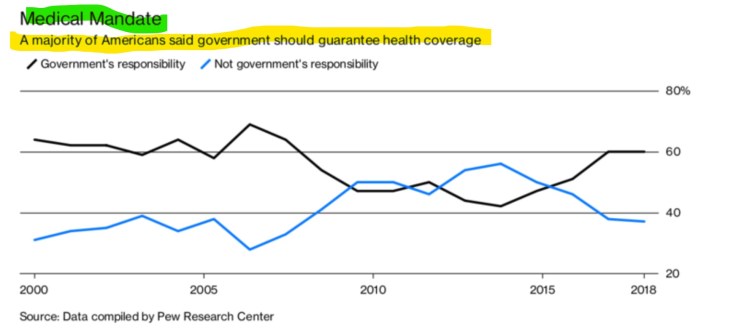
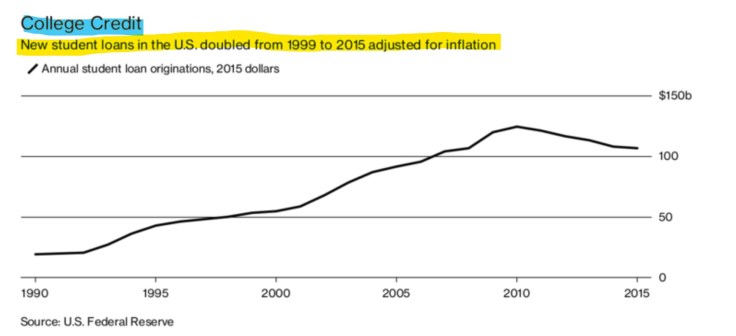
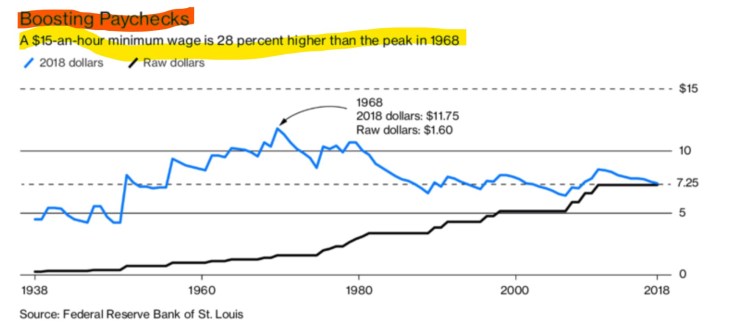
Implicit in that statement: Ocasio-Cortez has plenty more Overton Windows to shift and no intention of slowing down for the critics. Aside from the Green New Deal and higher taxes on the rich, she favors Medicare for all, a federal guarantee of a job, abolition of the U.S. Immigration and Customs Enforcement bureau, and tuition-free college or trade school. She also wants to slash military spending, ban assault weapons, and bring back Glass-Steagall, the Depression-era law that separated commercial and investment banks.
That may all sound like tail risk to American businesses, which have been enjoying deregulation under Trump. Saikat Chakrabarti, Ocasio-Cortez’s chief of staff, says, “This is the kind of plan where you can’t go to Wall Street executives first to try to get them to buy into it. You gotta show ’em.”
The question is whether she’ll be able to show them, or anyone. A week after Ocasio-Cortez came to Washington, fellow Democrats complained that she was disruptive and not a team player. Chief among her sins: threatening to back the primary opponents of members of Congress who aren’t liberal enough for her. “I’m sure Ms. Cortez means well, but there’s almost an outstanding rule: Don’t attack your own people,” Representative Emanuel Cleaver II, a Missouri Democrat, told Politico. “We just don’t need sniping in our Democratic Caucus.”
To pass any of their initiatives, Ocasio-Cortez and her allies will have to defeat the proven Republican strategy of using budget deficits as a justification for opposing new spending. That’s where Modern Monetary Theory comes in. It says a government can spend money without raising taxes—indeed, without even borrowing from the public via bonds. The government simply creates new money to pay its bills. The only constraint on spending under MMT is that the government could use up too much of the nation’s productive capacity, which would result in high inflation. As long as inflation remains low, as it is now, deficits are no problem. The usual reply from other economists is that even a nation that owes debt in its own currency can suffer a crisis if investors lose faith in its ability to service the debt without resorting to the printing press.
One precinct where deficits still matter, and MMT most certainly does not, is the office of House Speaker Pelosi. On Jan. 3, under Pelosi’s direction, the House passed a set of rules including pay-as-you-go, which requires legislation that would increase the deficit to be offset by tax increases or spending cuts. PAYGO, as it’s known, is contrary to the spirit of MMT and hamstrings liberal Democrats by making most of their spending initiatives impossible. Ocasio-Cortez was one of only three Democrats to oppose the provision, along with Ro Khanna of California and Tulsi Gabbard of Hawaii.
Ocasio-Cortez had another setback when she was passed over for a coveted seat on the Ways and Means Committee, which oversees taxes, Social Security, and Medicare. But she recovered nicely by getting a seat along with other progressives on the powerful House Financial Services Committee, headed by Maxine Waters of California. Carolyn Maloney, a fellow New York Democrat, says, “I was once that young woman who others tried to rein in. I certainly don’t believe in doing that to anyone else. Representative Ocasio-Cortez is bringing new energy and a new approach, and we should all embrace that.”
Ocasio-Cortez’s disregard for political niceties is both her strongest quality as an activist and potentially her Achilles’ heel as a representative. She shows no sign of dialing back. One way or another, says Kelton, the economic adviser, “the conversation is shifting. The space is opening up.” —With Allison McCartney


 Tom's Blog