All corrupt on the Western front? Der Spiegel latest to fall from media mountaintops

See the source image

By Robert Bridge

Once again, a reporter has been accused of writing fake stories – over a span of years – reinforcing the suspicion that we are living in a post-truth world where words, to paraphrase Kipling, “are the most powerful drug.”

This week, Der Spiegel, the German news weekly, was forced to admit that one of its former star reporters, the award-winning Claas Relotius“falsified his articles on a grand scale.”

Indeed, it seems the disgraced journalist was motivated more by fiction writers John le Carre and Tom Clancy than by any media heavyweights, like Andrew Breitbart and Walter Cronkite.

Relotius, who just this month took home Germany’s Reporterpreis (‘Reporter of the Year’) for his enthralling tale of a Syrian teenager, “made up stories and invented protagonists,” Der Spiegel admitted.

All corrupt on the Western front? Der Spiegel latest to fall from media mountaintops

There is a temptation to rationalize Relotius’s multiple indiscretions, not to mention the failure of his fastidious employer to unearth them for so long, as an unavoidable part of the dog-eat-dog media jungle. After all, journalists are not robots – at least not yet – and we are all humans prone to poor judgment and mistakes, perhaps even highly unethical ones.

That explanation, however, falls short of explaining the internal forces battering away at the foundation of Western media, an institution built on the shifting sand of lies, disinformation and outright propaganda. And what is readily apparent to those outside of the Western media fortress is certainly even more apparent to those inside.

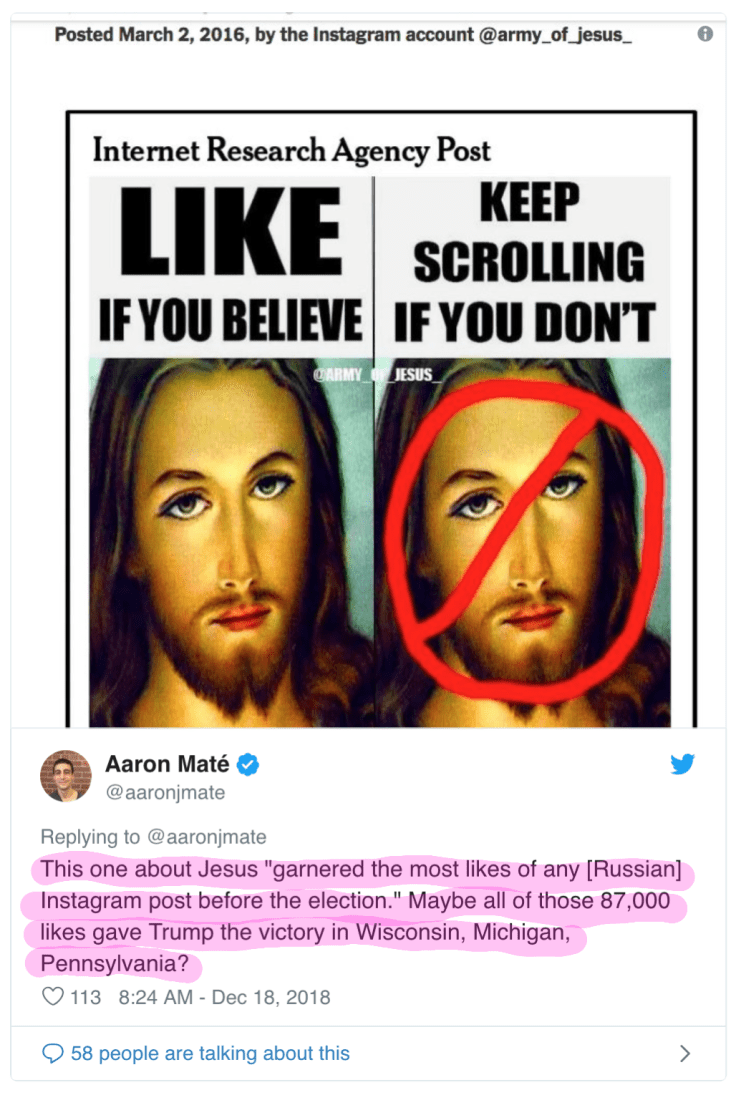
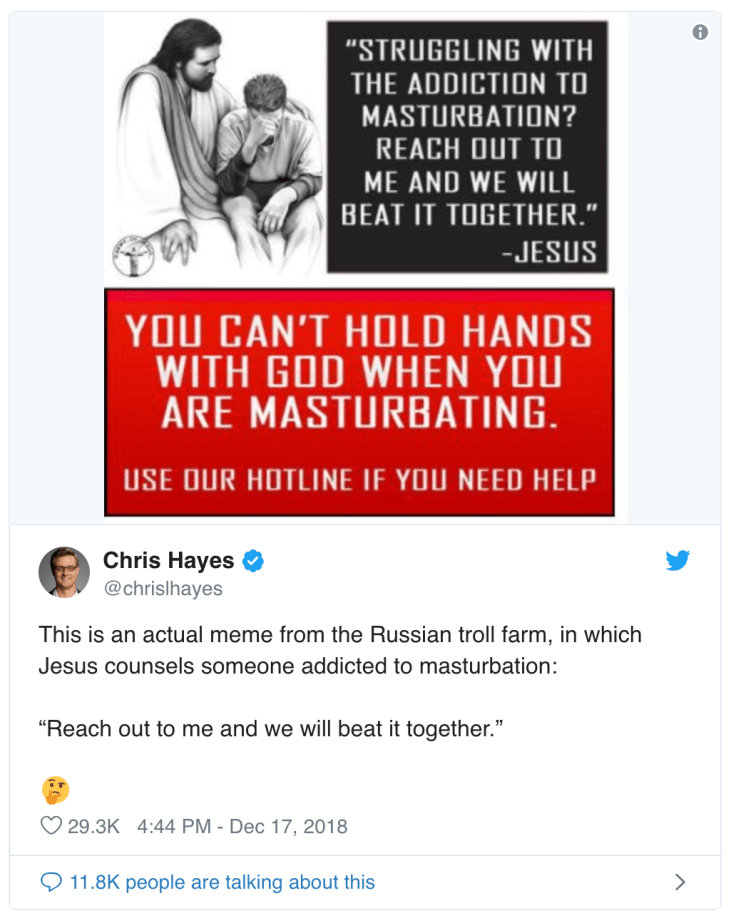
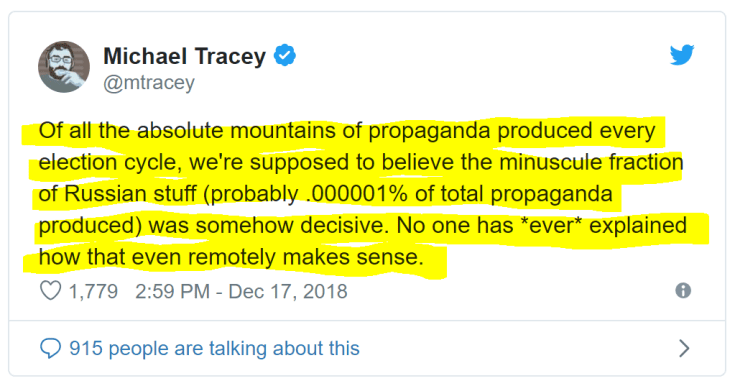
A good example is Russiagate. This elaborate myth, which has been peddled repeatedly and without an ounce of 100-percent real beef since the US election of 2016, goes like this: A group of Russian hackers, buying a few hundred social media memes for just rubles to the dollar, were able to do what all the Republican campaign strategists, and all the special interests groups, with all of their billions of dollars in their massive war chest, simply could not: keep Democratic voters at home on the couch come Election Day – a tactic now known as “voter suppression operations” – thereby handing the White House to Donald Trump on a silver platter. Or shall we say ‘a Putin platter’?

Capture

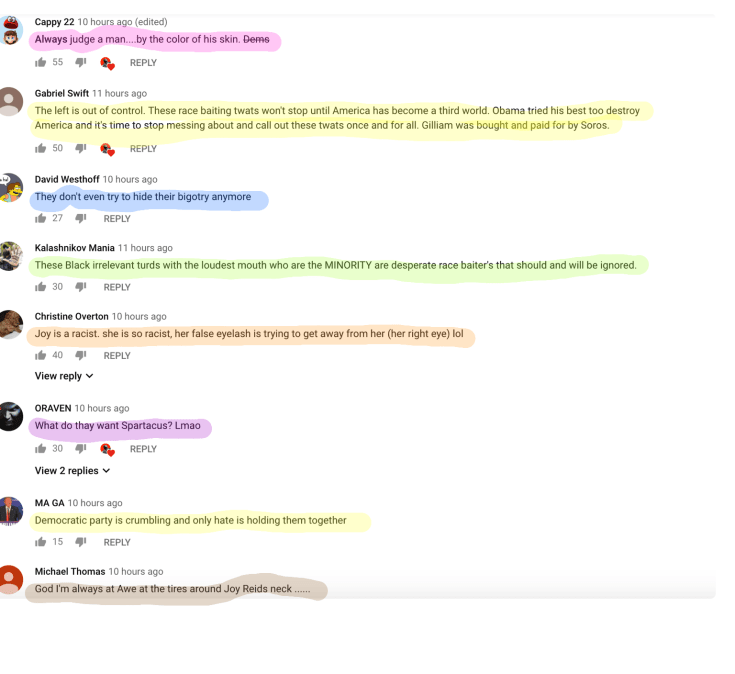
Don’t believe me? Here’s the opening line of a recent Washington Post article that should be rated ‘R’ for racist: “One difference between Russian and Republican efforts to quash the black vote: The Russians are more sophisticated, insidious and slick,” wailed Joe Davidson, who apparently watched too many Hollywood films where the Russkies play all of the villains. “Unlike the Republican sledgehammers used to suppress votes and thwart electorates’ decisions in various states, the Russians are sneaky, using social media come-ons that ostensibly had little to do with the 2016 vote.”

Meanwhile, Der Spiegel, despite being forced to come clean over the transgressions of Claas Relotius, will most likely never own up to its own factual shortcomings with regards to their dismal reporting on Russia.

For example, in an article published last year entitled ‘Putin’s work, Clinton’s contribution,’ the German weekly lamented that “A superpower intervenes in the election campaign of another superpower: The Russian cyber-attack in the US is a scandal.” Just like their fallen star reporter, Der Spiegel regurgitated fiction masquerading as news.
Capture

However, there is no need to limit ourselves to just media-generated Russian fairytales. The Western media has contrived other sensational stories, with its own cast of dubious characters, and with far greater consequences.

Consider the reporting in the Western media prior to the 2003 Iraq War, when most journalists were behaving as cheerleaders for military invasion as opposed to conscientious objectors, or at least objective observers. In fact, two reporters with the New York Times, Michael Gordon and Judith Miller, arguably gave the Bush administration and a hardcore group of neocons inside Washington, which had been pushing for a war against Saddam Hussein for many years, the barest justification it required for military action.

Just six months before the bombs started dropping on Baghdad, Gordon and Miller penned a front-page article in the Times that opened with this stunning claim: “Iraq has stepped up its quest for nuclear weapons and has embarked on a worldwide hunt for materials to make an atomic bomb, Bush administration officials said today.”

The article in America’s ‘paper of record’ then proceeded to build the case for military action against Iraq by quoting an assortment of anonymous senior administration officials, anonymous Iraqi defectors, and anonymous chemical weapons experts. In fact, much of the story was based on comments provided by one ‘Ahmed al-Shemri,’ a pseudonym for someone purported to have been connected to Hussein’s chemical-weapons program. The authors quoted the mystery man as saying: “All of Iraq is one large storage facility.”

Gordon and Miller also claimed their source had said that “he had been told that Iraq was still storing some 12,500 gallons of anthrax.” Several months later, just weeks before the US invasion of Iraq commenced, US Secretary of State Colin Powell invited the UN General Assembly to imagine what a “teaspoon of dry anthrax” could do if unleashed on the public.

Powell, who later said the testimony would be a permanent “blot” on his record, even shook a tiny faux sample of the deadly biological agent in the Assembly for maximum theatrical effect.

Shortly after the release of the Times piece, top Bush officials appeared on television and alluded to Miller’s story in support of military action. Meanwhile, UN inspectors on the ground in Iraq never found chemical weapons or the materials needed to build atomic weapons. In other words, the $1-trillion-dollar war against Iraq, which led to the deaths of tens of thousands of innocent civilians, was a completely senseless act of aggression against a sovereign state, which the US media helped perpetrate.

Aside from the question of whether readers really put much faith in these fantastic media stories, complete with pseudonymous characters and impossible to prove claims; there remains another question. Does the Western media itself believe its own stories?  The answer seems to be no, at least not always.

With regards to the Russiagate story, for example, an investigative journalism outfit, Project Veritas, caught a few Western journalists off-guard about their true feelings in relation to the claims against Russia, and their feelings in general about the state of the media.

“I love the news business, but I’m very cynical about it – and at the same time so are most of my colleagues, CNN Supervising Producer John Bonifield admitted, unaware he was being secretly filmed.

When pushed to explain why CNN was beating the anti-Russia drum on a daily basis, things became clearer: “Because it’s ratings,” Bonifield said. “Our ratings are incredible right now.”

In the same media sting operation, Van Jones, a prominent CNN political commentator who has pushed the anti-Russia position numerous times on-air, completely changed his tune when caught off-air and off-guard. “The Russia thing is just a big nothing burger,” he remarked.

This brings us back to the story of the fallen Der Spiegel journalist. It seems that a deep cynicism has taken hold in at least some parts of the Western media establishment. Journalists seem increasingly willing to produce extremely tenuous, fact-challenged stories, many of which are barely held together by a rickety composite of anonymous entities.

And why not? If their own media bosses are permitting gross fabrications on a number of major issues, not least of all related to Russia, and further afield in Syria, why should the journalists be forced to play by the rules?

Under such oppressive conditions, where the media appears to be merely the mouthpiece of the government’s position on a number of issues, those working inside this apparatus will eventually come around to the conclusion that truth is not the main priority. The main priority is hoodwinking the public into believing something even when the facts – or lack of them – point to other conclusions.

Thus, it is no surprise when we find Western reporters imitating the greatest fiction writers, because in reality that is what they have already become.

@Robert_Bridge

Think your friends would be interested? Share this story!

THE NEW YORK TIMES WAS AGAINST WAR IN SYRIA BEFORE IT WAS FOR IT

See the source image

What a difference a year can make for The New York Times

By Joe Simonson

What a difference a year can make for The New York Times.

As President Donald Trump announced his decision Wednesday to withdraw the nation’s 2,000 troops from Syria, a bipartisan cadre of opinion-havers attacked him as recklessly abandoning allies in the region and jeopardizing America’s influence over foreign affairs.

One newspaper was particularly harsh: The Times.

Quickly after Secretary of Defense James Mattis announced his resignation (in part as a protest against Trump’s decision on Syria) Thursday, America’s paper of record quickly produced a scathing editorial, proclaimingJim Mattis Was Right.”

See the source image

“Who will protect America now?” The Times asked.

The editorial frets about how American troops leaving Syria “hampers morale” of “allied forces like the Kurds.” (RELATED: Trump Explains His Decision To Withdraw From Syria)

“It could also risk getting American soldiers killed or wounded for objectives their commanders had already abandoned,” writes The Times.

Yet almost a year ago, on Jan. 19, 2018, that same editorial board raked the president over the coals for even daring to continue America’s policy of military adventurism.

The Times expressed concern that more American troops beyond the 2,000 initially deployed could soon be sent overseas in a mission without any clear goals.

“Syria is a complex problem. But this plan seems poorly conceived, too dependent on military action and fueled by wishful thinking,” The Times said.

See the source image

While on Thursday The Times worried that leaving Syria could leave the Kurds vulnerable to Turkey, at the beginning of 2018, the paper also believed that the U.S. would be setting up a clash between the minority group and a NATO ally.

“Turkey, which views the Kurds as an enemy, has threatened a cross-border assault. All of this raises the grim possibility that American troops will clash with Turkey, a NATO ally,” The Times wrote last January.

Nowhere in Thursday’s editorial does The Times ever point to an alternative timeline for withdrawal for American forces in Syria. Such an omission is quite startling, considering last January the paper’s chief criticism of sending forces to the region was setting up just another forever-war in the Middle East.

One thing is clear from these two diametrically opposed editorials: The job of The Times isn’t to provide valid criticisms of Trump, but to simply oppose him at all costs.

IS THE FEDERAL RESERVE ACTUALLY TRYING TO CAUSE A STOCK MARKET CRASH?

Is The Federal Reserve Actually TRYING To Cause A Stock Market Crash?

It is insanity to raise interest rates when stocks are already crashing, but the Federal Reserve did it anyway

Michael Snyder | Economic Collapse – DECEMBER 20, 2018

The Federal Reserve has decided not to come to the rescue this time. 

All of the economic numbers tell us that the economy is slowing down, and on Wednesday Fed Chair Jerome Powell even admitted that economic conditions are “softening”, but the Federal Reserve raised interest rates anyway.  As one top economist put it, raising rates as we head into an economic downturn is “economic malpractice”.  They know that higher rates will slow down the economy even more, but it isn’t as if the Fed was divided on this move.  In fact, it was a unanimous vote to raise rates.  They clearly have an agenda, and that agenda is definitely not about helping the American people.

Early on Wednesday, Wall Street seemed to believe that the Federal Reserve would do the right thing, and the Dow was up nearly 400 points.  But then the announcement came, and the market began sinking dramatically.

The Dow Jones Industrial Average lost 720 points in just two hours, and the Dow ended the day down a total of 351 points.  This is the lowest that the Dow has been all year, 60 percent of the stocks listed on the S&P 500 are in bear market territory, and at this point approximately four trillion dollars of stock market wealth has been wiped out.

We haven’t seen anything like this since the last financial crisis.  This is officially the worst quarter for the stock market since the fourth quarter of 2008, and it is the worst December that Wall Street has experienced since 1931.

It is insanity to raise interest rates when stocks are already crashing, but the Federal Reserve did it anyway.

They knew what kind of reaction this would cause on Wall Street and in other global markets, but that didn’t stop them.  The financial world is in utter turmoil, and this move by the Fed has definitely added fuel to the fire.

Could it be possible that they actually want a stock market crash?

Some are suggesting that the reason why the vote was unanimous was because they wanted to send a “strong signal” to President Trump.  He has been extremely critical of the Federal Reserve in recent weeks, and this could be a way for the Fed to show Trump who is really in charge.

They are calling this “the Trump economy”, but that is simply not true.  And when Barack Obama was in the White House, it wasn’t “the Obama economy” either.  Ultimately, it is the Federal Reserve that is running the economy, and they fiercely guard their independence and their authority.

President Trump knows that the only way that he is going to win in 2020 is if the economy is doing well, and he also understands that higher interest rates will slow the economy down.

So essentially the Federal Reserve has a tremendous amount of political power in their hands.

During the Obama era, the Fed pushed interest rates all the way to the floor and kept them there for many years.

But now the Federal Reserve has raised interest rates seven times since Donald Trump took office, and four of those rate hikes have been under current Fed Chair Jerome Powell.

Needless to say, it certainly doesn’t take a lot of imagination to figure out how Donald Trump is feeling about Powell at this moment.

Capture

Meanwhile, we continue to get more indications that the U.S. economy is heading for difficult times.  Just consider the following news about FedEx

FedEx shares are plunging after what Morgan Stanley called a “jarring” cut to its annual forecasts, suggesting global growth is slowing far more than most expect – in fact, the bank hinted at the possibility of a “severe recession” unfolding – and prompting expectations of an “uber-dovish hike” by the Fed.

The global logistics bellwether slashed its outlook just three months after raising the view, reflecting an unexpected and abrupt change in the company’s view of the global economy amid rising trade tensions between the U.S. and China. Not only were the cuts were deeper than the Street expected according to Morgan Stanley analyst Ravi Shanker, but everyone is pointing to the following comment from the press release: “Global trade has slowed in recent months and leading indicators point to ongoing deceleration in global trade near-term.”

To see the term “severe recession” used in such a context is more than just a little bit alarming.

The last time the U.S. economy went through a recession, millions of Americans lost their jobs and we saw a wave of mortgage defaults unlike anything we had ever seen before in modern American history.

Are we about to go through something similar?

Earlier today, a CNN article also used the term “recession”, and it discussed the fact that investors now want big corporations to focus on paying down their debts instead of buying back shares of stock…

Fears of an economic slowdown — or even recession — have turned a spotlight on the debt that businesses piled up during the past decade, when borrowing costs were historically low.

For the first time since the Great Recession, investors want companies to prioritize paying down debt rather than investing in the future or share buybacks and dividends, according to a Bank of America Merrill Lynch survey of global fund managers.

But stock buybacks are one of the only things that has been propping up the stock market.  The only way for the bubble to continue is for corporations to go into dizzying amounts of debt in order to fund massive stock buybacks, because the Federal Reserve clearly does not intend to support the markets right now.

At least for the short-term, the Federal Reserve could have calmed the markets and encouraged economic activity by leaving interest rates alone.

In the end, they decided not to do that, and that makes one wonder what they are really trying to achieve.

MSNBC’s Russia ‘expert’: Moscow terrorizing US with meme-filled ‘cruise missiles’ (VIDEO)

MSNBC’s Russia 'expert': Moscow terrorizing US with meme-filled ‘cruise missiles’ (VIDEO)

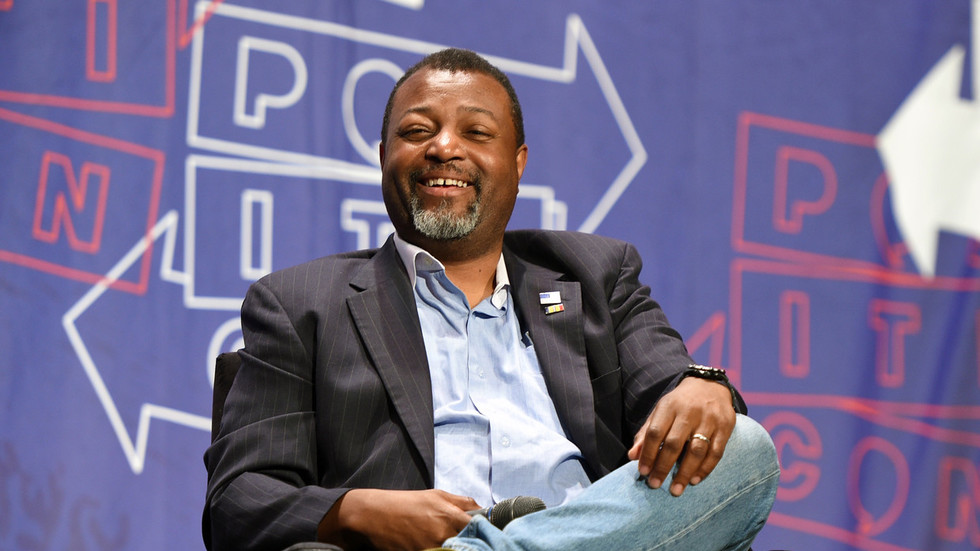
Malcolm Nance

Millions of impressionable American minds are being corrupted by Russian-linked memes, “the cruise missiles of fake news”, according to MSNBC’s self-anointed Russia expert. Everyone agrees that this is a reasonable observation.

Malcolm Nance, a former Navy cryptologist who studied Arabic and served in the Middle East, makes regular appearances on MSNBC, where he is given generous amounts of airtime to share his thoughts on all things Russia related. In his latest appearance on the network, Nance described how the destructive power of Russian-linked internet memes have apparently devastated America.


“The Internet Research agency built all these memes and tropes which became the cruise missiles of fake news and disinformation,” Nance said. He claimed that these nefarious meme-bombs have ravaged the mental faculties of “one third of the United States population,” leaving them unable to “believe what they see before their very eyes.” And of course, these JPEG-rockets “may have elected a president in the process.”

Photographs of these ghastly cruise missiles have been floating around on the internet in recent days, with many noting their astonishing level of sophistication.

Screen Shot 2018-12-19 at 11.02.11 AM

Screen Shot 2018-12-19 at 11.03.26 AM

Screen Shot 2018-12-19 at 11.05.19 AM

This is not the first time that Nance has deployed terrifying images of Russian meme missiles to warn Americans about the new Moscow menace: In a July interview he declared that, “As an information war, the payloads in the information cruise missiles that Russia launched at this country were propaganda products which had their origins in 1917, in the Bolshevik revolution.”

Months before that outburst, in March, Nance was quoted by the Washington Post as thoughtfully asking: “What happens if 100s of millions of progressives worldwide abandon Facebook because they think it’s a tool of Trump, Russia authoritarians and neo-Nazis? Facebook needs to own up and do damage control to ensure they are not 2018’s information cruise missile of choice.”

Nance really has a knack for inventive Russia commentary. He previously demonstrated his vast knowledge about the country by falsely claiming that Russian President Vladimir Putin was a “former director of the KGB.”

The “intelligence analyst” is also a savvy media observer, describing journalist Glenn Greenwald as “an agent of Trump & Moscow” after the Intercept editor attended a conference in Moscow.

When it comes to comparing GIFs to airstrikes, the MSNBC talking head keeps good company: Guardian writer Carole Cadwalladr once famously suggested that the UK was now at “war” with Russia. The reason? Russia’s Foreign Ministry changed its Twitter profile picture to a photograph of Maria Butina.

BREAKING: Transcript of James Comey Testimony to Joint House Committee Round #2 – (Full transcript pdf)…

Screen Shot 2018-12-18 at 4.54.04 PM

Former FBI Director James Comey appeared December 17th, 2018, for a second round of questions by a joint House committee oversight probe into the DOJ and FBI conduct during the 2016 presidential election and incoming Trump administration.

The Joint House Committee just released the transcript (full pdf below):

https://www.scribd.com/embeds/395972408/content?start_page=1&view_mode=&access_key=key-VowRINMl7U6kF9efRfAx

This was just released.  Analysis to follow.


Trump-Russia dossier was created so Clinton could challenge 2016 election results – Steele

See the source image

The British ex-spy who authored the infamous dossier alleging collusion between President Donald Trump and the Kremlin said one of his goals was to give Hillary Clinton legal basis to challenge the 2016 election results.

Christopher Steele’s salacious 17-page report was commissioned by Fusion GPS, a firm connected to Clinton’s campaign.

“Based on that advice, parties such as the Democratic National Committee and HFACC Inc. (also known as ‘Hillary for America’) could consider steps they would be legally entitled to take to challenge the validity of the outcome of that election,” Steele wrote in recently unsealed declaration that was published by the Washington Times.

ALSO ON RT.COMComey admits FBI failed to verify Steele Dossier it used to obtain a spy warrant on Trump’s aide

See the source image

His statement is part of a series of answers which Steele provided in a defamation suit brought by three Russians who head Alfa Bank, who were named in the dossier as part of the alleged collusion conspiracy between Trump and the Kremlin.

The court challenge never came. Instead, the unsubstantiated dossier was leaked to news outlets such as BuzzFeed, fuelling Russiagate hysteria and serving as the backbone of a two-year probe that has yet to corroborate any of the document’s core claims. The document was also used by the FBI to obtain a warrant to spy on former Trump aide Carter Page, who was accused by Steele of meeting secretly with Kremlin insiders in Moscow. Incredibly, former FBI Director James Comey admitted that his agency had not verified the dossier’s contents before using it to justify the warrant.
The dossier itself has apparently fallen out of favor with many of its early champions: One of the first journalists to report on Steele’s research has stated that many of Steele’s central claims have yet to be substantiated and are “likely false.”

ALSO ON RT.COMSteele dossier’s main claims ‘likely false,’ admits journalist who helped launch RussiagateThe defamation case against Steele was dismissed by a DC Superior Court judge, but lawyers representing the Russian bankers have launched an appeal in US District court, attaching Steele’s revelatory statements as part of their filing. Steele claimed that internet traffic data had been observed between Alfa Bank and a computer served linked to the Trump Organization. The allegation has yet to be proven, with some reports suggesting that the flagged data actually originated from an internet spam farm based outside Philadelphia.

Steele faces similar legal trouble in London, where he is being sued for defamation by Russian entrepreneur Aleksej Gubarev. In one of his memos, Steele accused Gubarev of personally hacking DNC computers. Gubarev has also sued BuzzFeed for publishing the unverified claim as part of its uncritical coverage of the dossier.

Like this story? Share it with a friend!

Russia! The gift that keeps giving for the BBC, even on the streets of France

Russia! The gift that keeps giving for the BBC, even on the streets of France

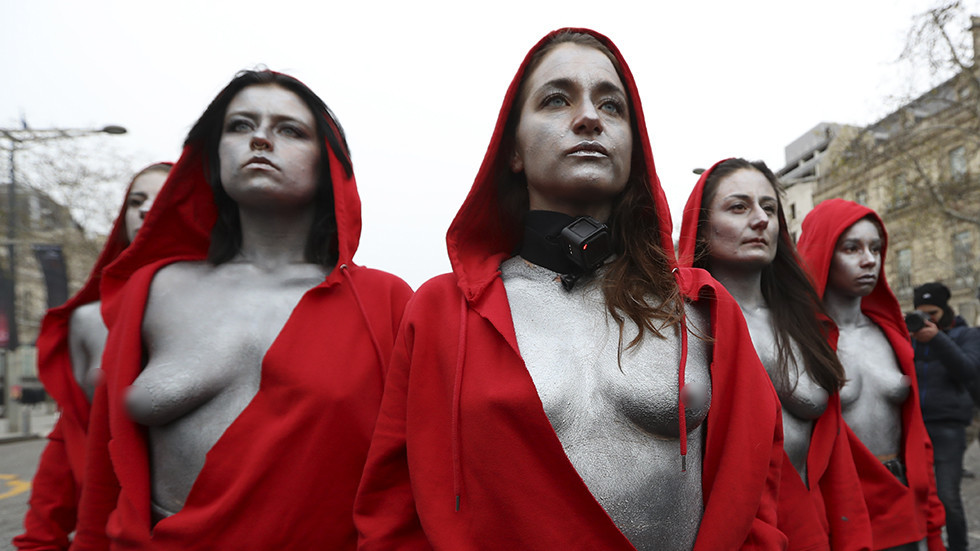
Luxembourg’s artist Deborah de Rebortis (C) and a group of women dressed as “Marianne”, December 15, 2018 © AFP / Valery Hache

By Robert Bridge

Given the rash of conspiracy theories leveled against Russia of late, it is no surprise that the BBC is deep-sea fishing for a Kremlin angle to explain the protests against the government of French President Emmanuel Macron.

Dear failing leaders of France, are basement-level ratings getting you down? Are violent riots spooking the tourists? Are running street protests at the height of the holiday season placing a drag on consumer spending? Have no fear because the BBC is here with a one-size fits all bogeyman to explain virtually everything. Please have a seat because the name alone will send shock waves of bone-chilling fear surging through your entire body.

This new and improved beast of burden to explain every uprising, lost election, accident and wart, popularly known as ‘Russia’ – a strategy rebuked by none other than President Putin as “the new anti-Semitism” – provides craven political leaders with a ready-made alibi when the proverbial poo hits the fan. Yes! It can even rescue Emmanuel Macron, who just experienced his fifth consecutive weekend of protests in the French capital and beyond.

Here is the real beauty of this new media product, which may just outsell Chanel No.5 this holiday season. Reporting on ‘Russia’ does not require any modicum of journalistic ethics, standards or even proof to peddle it like snake oil to an unsuspecting public.

Simply uttering the name ‘Russia’ is usually all it takes for the fairytale to grow wings, spreading its whimsical lies around the world. ‘Russia’ is truly the gift that keeps on giving!

Allow me to demonstrate how easy it is to apply. Just this weekend, BBC journalist Olga Ivshina was engaged in correspondence with a stringer in France. In an effort to explain what has sparked the French protests, Ivshina gratuitously tossed out some live ‘blame Russia’ bait.

“And maybe some Russian business is making big bucks on it,” the BBC journalist solicited in an effort to conjure up fake news out of thin air. “Maybe they are eating cutlets out there en masse, for example. Or maybe the far-right are the main troublemakers?”

ALSO ON RT.COMBBC endorses reporter’s actions seeking to find Russian influence in Yellow Vest protestsWhen the question only managed to elicit an uncomfortable laugh from the stringer, the nonplussed BBC journalist exposed more trade secrets than was probably advisable. In fact, what followed seems to have been the only nugget of truth to emerge from the discussion.

Ivshina confided that she was looking for various angles” since the broadcaster, like a modern day Dracula flick, was “out for blood.

When RT reached out to BBC for some explanation, the British broadcaster reasoned that since the French Foreign Minister Jean-Yves Le Drian had “spoken publicly about media reports of a possible Russian influence in the protests, it was perfectly reasonable for our correspondent to raise the subject.”

It also said the finished report did not mention a “possible connection with Russia at all.”

At this point, it is only natural to ask if such a knee-jerk anti-Russia bias in other news events – for example, the Skripal affair – demands that the BBC mindlessly toe the government line instead of, oh, I don’t know, pursuing the truth. A naïve question, of course, but please humor me.

Suffice it to recall that before any evidence was presented to the public in the poisoning of ex-spy Sergei Skripal and his daughter Yulia in Salisbury, British Prime Minister Theresa May declared it was “highly likely” that Russia was to blame.

That reckless comment was then launched around Planet Google by the Western leaders and their laptop media without further ado, not to mention a little thing called evidence. At the very least, you would expect the British people to demand much more for their tax pounds which fund the BBC.

Do you see how easy and effective this type of journalism is? The basis for the claims of ‘Russian interference’ by the French foreign minister should sound very familiar. Echoing claims of ‘Russian meddling’ in the 2016 US presidential elections through the use of social media, the minister pulled the very same rabbit out of his hat to suggest why hundreds of thousands of French citizens were suddenly out on the street, protesting against the unpopular policies of a former investment banker turned president.

As Bloomberg reported: “France opened a probe into possible Russian interference in the Yellow Vest protests, after… about 600 Twitter accounts known to promote Kremlin views began focusing on France, boosting their use of the hashtag #giletsjaunes.”

Keep in mind that the purchase of a few hundred Facebook ads is how the US Democratic Party – itself the focus of a number of potentially-criminal activities, as revealed by WikiLeaks – has attempted to explain the failure of Hillary Clinton to beat the Republican maverick Donald Trump in the race to the White House, as well as conceal its many wrongdoings.

Never mind that a Facebook executive admitted that Russia-linked posts had negligible impact on that part of the US brain that is responsible for pulling levers and making independent choices on election day.

Meanwhile, the recent and very explosive comment by Google CEO, Sundar Pichai, further confirms that the claim of Russian interference in the US political system was a well-done nothing burger.

“We undertook a very thorough investigation, and… we now know that there were two main ad accounts linked to Russia which advertised on Google for about $4,700 in advertising,” Pichai told a stone-faced US congressional probe last week.

Screen Shot 2018-12-17 at 4.56.02 PM

Back to the French streets, with some unavoidable sarcasm.

Of course, the French would never think of protesting against Emmanuel Macron’s aggressive neo-liberal policies, which have subjected the French people to painful austerity measures at the same time that the French government has embraced an open door immigration policy.

The only explanation that makes any sense – at least for those whose careers depend upon it, that is – is that the Russians monkeyed with the French mentality, causing Macron’s popularity rating to plunge, while at the same time inducing the French to take to the streets en masse.

The problem with that media narrative, first tossed out by a French minister without any evidence and then regurgitated by an obedient media, is that so many people are willing to accept it at face value. Or perhaps I underestimate the intelligence of the average news consumer and such a comment actually helped spur the French protesters into action for being taken as fools. We can always dream.

@Robert_Bridge

Like this story? Share it with a friend!

DEEP STATE CROOKS: Mueller Took Down Strzok’s 302 Report AFTER STRZOK WAS CAUGHT in Text Messages PLOTTING AGAINST TRUMP


Capture

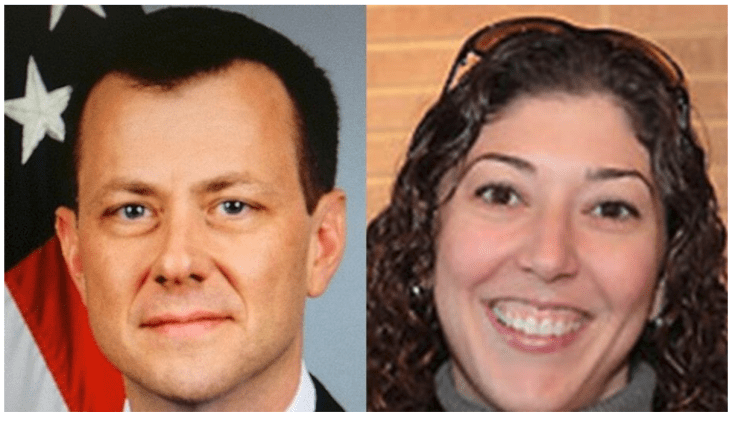
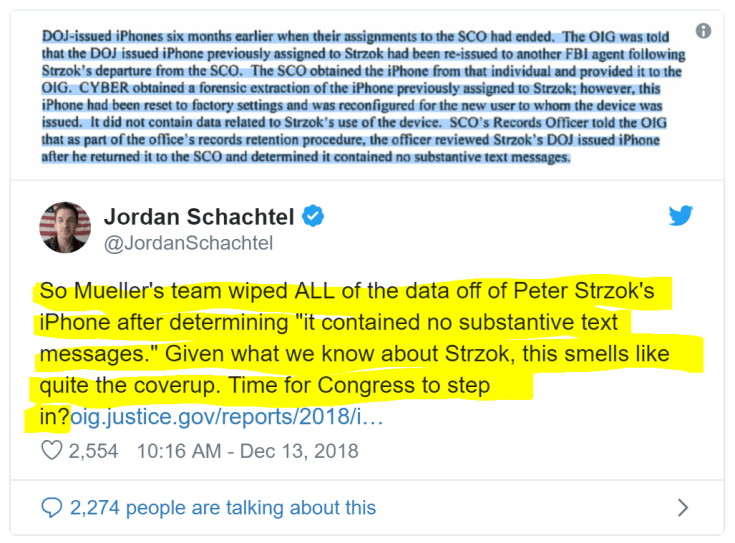
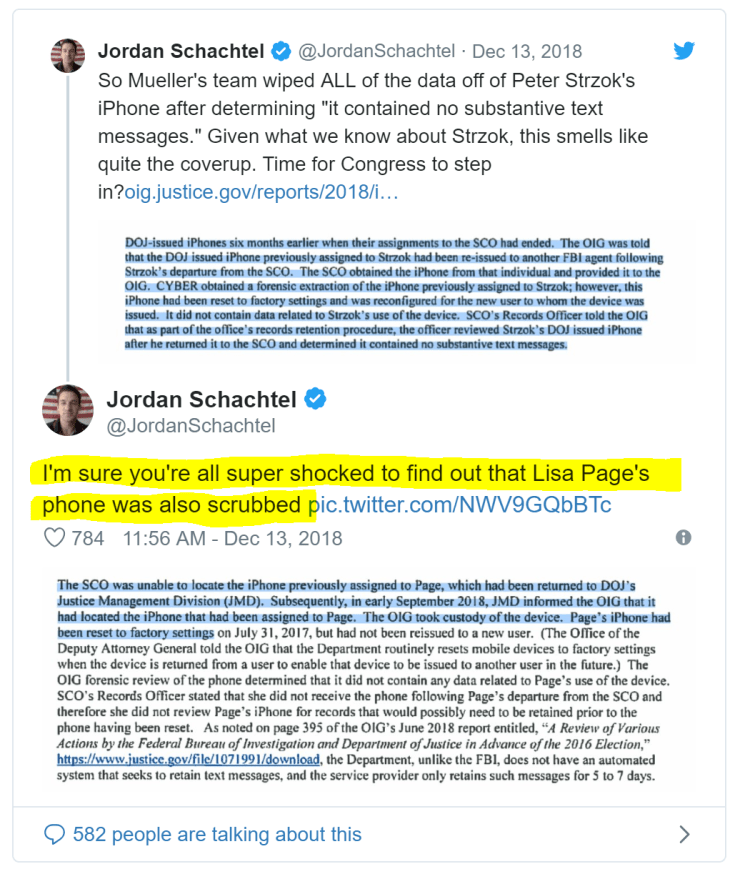
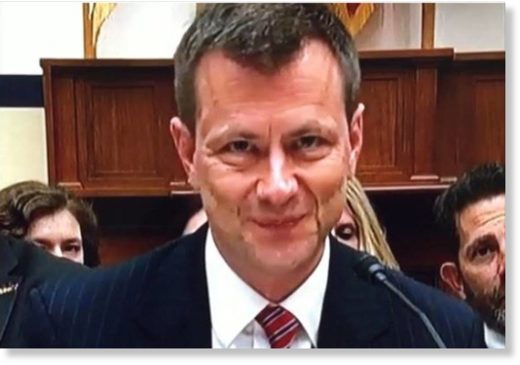
Mueller’s Spcecial Counsel team of 13 angry Democrats scrubbed Peter Strzok’s phone and then turned it over to the Office of Inspector General investigators AFTER Peter Strzok was fired from the special counsel.

Peter Strzok was fired from the Special Counsel after text messages surfaced showing that he had a strong hatred for Donald Trump and his supporters.

See the source image

Peter Strzok was reassigned in the summer of 2017 to the FBI’s human resource department after his dismissal from the Mueller witch hunt in July 2017.

His lover Lisa Page reportedly resigned from the FBI in May 2018 – and was removed from Special Counsel on July 15th, 2017.  She was fired  two weeks before Strzok was fired from the special counsel.

Lisa Page’s phone was scrubbed and not turned over to OIG until September 2018.

Via The Donald page on Reddit:

Capture

Strzok’s anti-Trump lover Lisa Page’s phone was also scrubbed clean.

Capture

Now this…

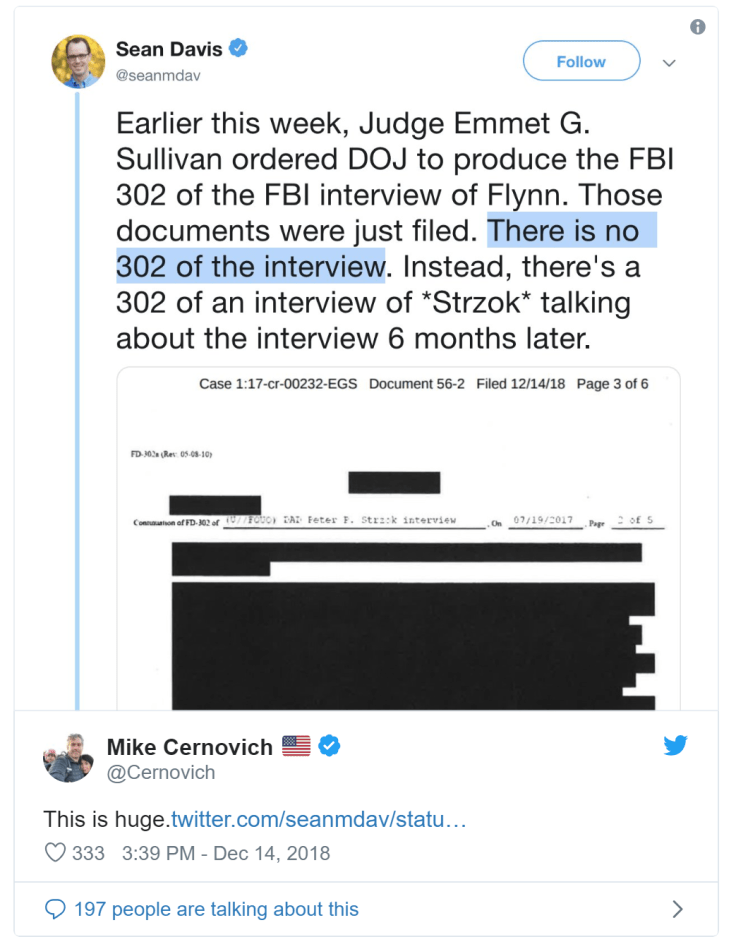
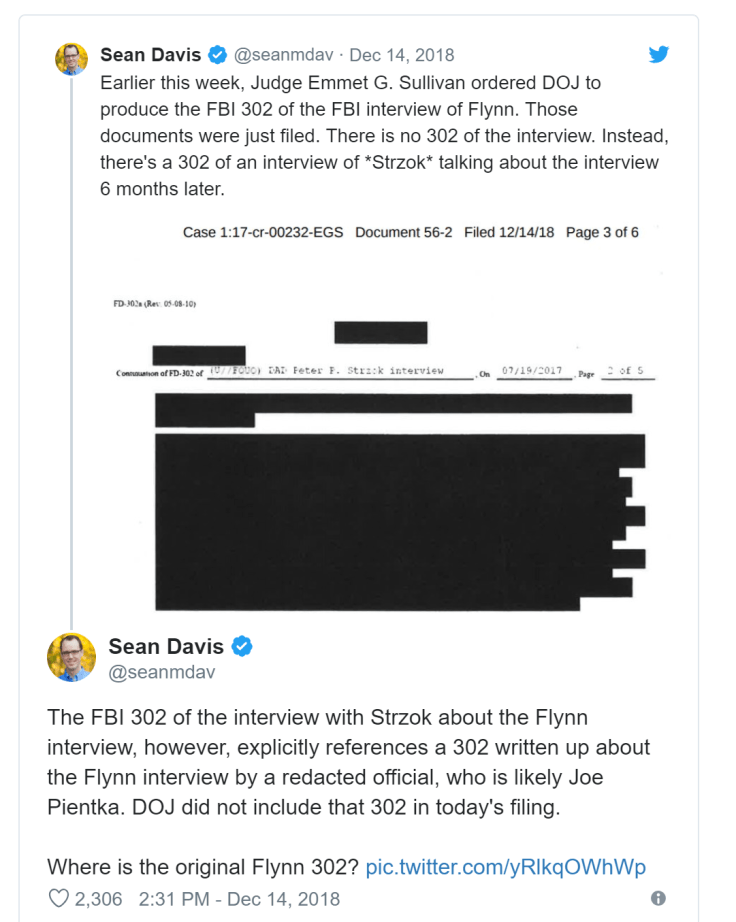
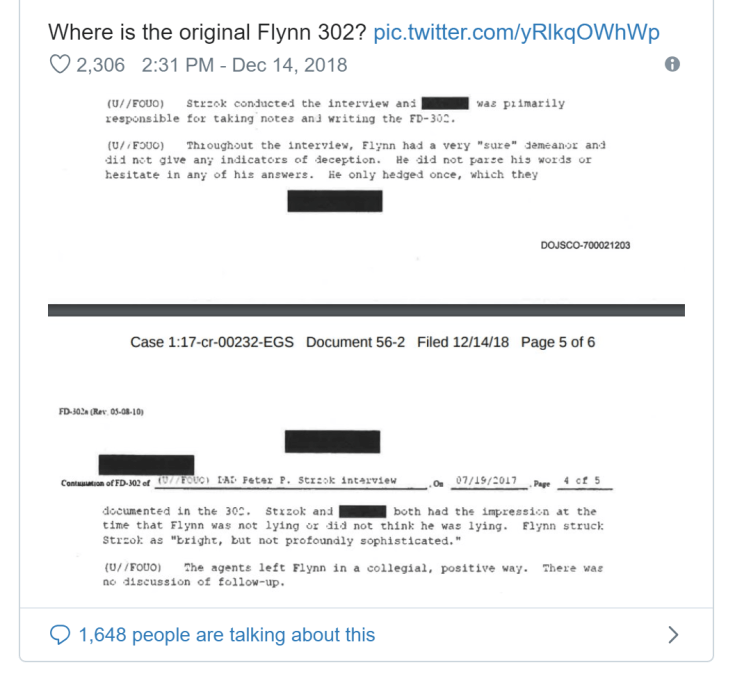
The only known 302 report provided by Robert Mueller to Judge Emerson this week was a report created on July 19, 2017, six months after the setup of Flynn by FBI agents in the White House in January.

Capture

Peter Strzok and Lisa Page were caught sharing messages from 2016 where they discussed a coordination between the FBI and DOJ to destroy Trump with strategic leaks to the media.

Attorney Lisa Page was reportedly removed from the Special Counsel in July 2017 — two weeks before Strzok was fired from the special counsel.

The date of her removal was July 15, 2017.

The 302 report Mueller handed over to the judge in Michael Flynn’s case is marked July 19, 2017.

CaptureCapture

This means Mueller was taking the talking points from a man they knew was extremely biased against President Trump and in affair with another Deep State official. They had fired him from the Special Counsel around this time period according to the Inspector General report.

Dirty Cop Robert Mueller took the 302 report from Strzok AFTER there was evidence Strzok was caught plotting against Donald Trump. And it appears the 302 report interview took place AFTER his lover quit and before he was fired from the special counsel.

Then the Mueller witch hunt scrubbed his phone clean before turning it over to investigators.

Blog at WordPress.com.

Up ↑