TECHTech Censorship: Instagram Bans Pro-Trump Cartoonist Ben Garrison

By

Ben Garrison Banned Instagram

Pro-Trump political cartoonist Ben Garrison was banned from Instagram earlier today, as the platform claimed he posted hate speech and violated the platform’s terms.

Garrison discovered his ban when logging into the platform today. He was greeted with a notification seeming to suggest the cartoonist posted something the platform considers “hate speech,” however, it is unclear what may have been offensive about his post.

“We removed your post because it doesn’t follow our Community Guidelines on hate speech or symbols,” the notification read. “If you violate our guidelines again, your account may be restricted or disabled.”

When Garrison attempted to accept the notification and access his count, he received a second notification informing him “Your account has been disabled for violating our terms.”

Garrison took to Twitter, citing his ban as an example of tech censorship and bias.

“#WhosNext” wrote Garrison, “Anyone who disagrees with the #Democrat Narrative #censorship ramp up for #2020Elections” he asked rhetorically. Garrison also used the #StopTheBias hashtag popularized by President Donald J. Trump.

CAP

Garrison joins a slew of conservatives who have been banned from the Facebook-owned platform.

British commentator and politician Tommy Robinson was banned last year during his legal hurdles, with former Proud Boys leader and VICE founder Gavin McInnes banned two months later.

Last week, Canadian politician and journalist Faith Goldy gave an exclusive interviewto Big League Politics after she was banned by Facebook and Instagram.

“Facebook, without any warning to me, has informed Canada’s state journalists that they consider me to be a ‘Dangerous Individual,’” Faith Goldy told Big League Politics. 

“What a farce! I’m a 29-year-old Canadian girl who loves my country and makes videos citing statistics from my kitchen table,” she continued. “If enemies of nationalism consider little ol’ me to be a threat, it shows you how weak their arguments really are. Newsflash: Ideas took countries and whole continents by storm long before Instagram models and Facebook likes were a thing.”

Goldy was banned from Instagram, too, which is owned by Facebook.

Last month Facebook, the parent company of Instagram, was forced to apologizeafter it banned President Trump’s social media director Dan Scavino.

(NO, IT’S NOT AN APRIL FOOL’S JOKE.) – Facebook plans to curate ‘high quality’ news for its users from ‘trusted outlets’

Screen Shot 2019-04-02 at 10.40.40 AM

Mark Zuckerberg is considering hiring human “editors” to hand-pick “high-quality news” to show Facebook users in an effort to combat fake news — and no, it’s not an April Fool’s joke.

In his ongoing quest to satisfy the political censorship demands of Western governments, Zuckerberg told German publishing house Axel Springer that he is considering the introduction of a dedicated news section for the social media platform, which would potentially use humans to curate the news from “broadly trusted” outlets. Zuckerberg said Facebook might also start paying news publishers to include their articles in this dedicated news section in an effort to reward “high-quality, trustworthy content.”

With social media censorship already at worryingly high levels, who will decide which outlets are “broadly trusted” and which are untrustworthy? What qualifies one outlet as more “trusted” than another? Will Zuckerberg make the criteria public?

Collective punishment? Zuckerberg’s call for internet regulation is aimed at competitors – analyst

Fresh from the anti-climactic Russiagate saga and long-awaited Mueller report, will Facebook penalize all the outlets that incessantly pushed the Trump/Russia “collusion” narrative and hyped fake “bombshells” for more than two years sans evidence, or will the likes of MSNBC and Rachel Maddow automatically earn “trusted status? The answer to that question is blindingly obvious.

Facebook’s efforts to combat fake news are reminiscent of other recent efforts from apps like NewsGuard, the US government-linked app which rates news websites according to their “trustworthiness” and, unsurprisingly, targets alternative media sites which do not strictly adhere to establishment narratives. If recent history is any indicator, Facebook’s own efforts to rate news will also fall directly in line with US government objectives.

The social media giant has been rightly accused of blatant censorship on multiple occasions in recent memory — and there doesn’t seem a way that a group of Facebook-hired editors could be trusted to curate the news for anyone, unless it took some serious steps to address its various biases. In fact, even if it did that, isn’t hiring human editors with their own political biases and preferences to sift through all the available news and select the stories deemed fit for public consumption just an Orwellian idea in the first place?

Facebook should probably already be aware of the pitfalls when it comes to hiring human editors for such purposes. During the 2016 US presidential election, the company’s solution to political bias in its trending news section was to fire the human editors responsible for it. Maybe Zuckerberg thinks this time it will be different? Or maybe, and more likely, this is just another PR effort to placate the pro-censorship crowd on Capitol Hill.

There is no shortage of examples of Facebook censorship at this point. Last year, the platform inexplicably took down the English-language page belonging to left-leaning, Venezuela-based news network Telesur — and deleted the page belonging to Venezuela Analysis, another left-leaning outlet offering commentary critical of Washington’s foreign policy in Latin America. The pages were later restored, but Facebook was not forthcoming with an explanation.

Changes made to Facebook algorithms to combat “fake news” in 2017, saw traffic to multiple socialist and government accountability websites plummeting — including Police the Police (a page exposing US police brutality) and the Free Thought Project (which promotes government transparency). Alternative news websites like Truth-out.org, Democracy Now and Alternet also suffered as a result of those algorithm changes.

More recently, Facebook suspended popular pages run by Maffick Media, which is 51 percent owned by RT’s video agency Ruptly. Coincidentally, the content on those pages is also highly critical of the US government. Funnily enough, Facebook isn’t often caught censoring popular pages whose content is Washington-friendly. The Maffick pages were later restored, but Facebook forced them to include more explicit information about their funding, which in itself is no big deal, but it is a requirement curiously not demanded of US government-funded or linked pages.

ALSO ON RT.COMZuckerberg asks governments for more internet regulation in self-flagellation exercise

Not only has Facebook been accused of censorship, however, it has also been found to be working at the behest of certain governments — but again, only Washington-friendly ones, of course.

The Intercept reported last year that Facebook met with Israeli government officials and complied with orders to delete the accounts belonging to certain Palestinian activists. Facebook quickly bowed to Israel’s demands after threats that it would be forced into complying with the deletion orders by law if it failed to do so voluntarily.

But things don’t look to be getting any better on the Facebook censorship front since then. A journalist for Israeli news outlet +972 Magazine tweeted on Monday that Facebook was now punishing news sites (in the form of lower views) for publishing content that “could be a negative experience” for users — whatever that means. The content in question was an article by the magazine about Gaza’s Great Return march and the casualties inflicted on protesters by the Israeli army.
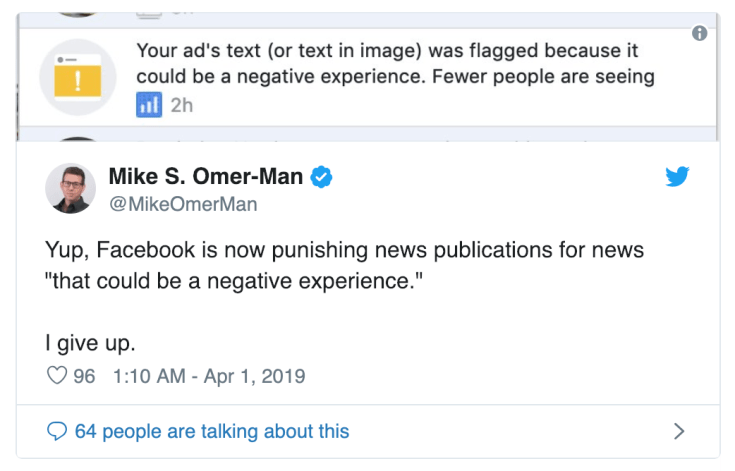
Screen Shot 2019-04-02 at 10.42.59 AM

With such a terrible track record when it comes to political bias and willingness to censor news and information, don’t be surprised if Facebook’s planned “dedicated news section” of “high-quality” information turns out to be a failure.

Danielle Ryan

Facebook bans all praise of ‘white nationalism’ & ‘white separatism’

CAP

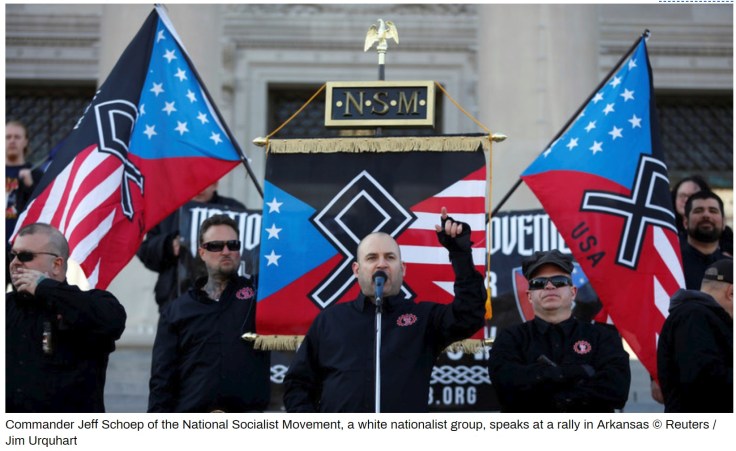
Facebook has announced that it will ban content relating to ‘white nationalism’ and ‘white separatism’ from its platform. The nature of the content that will be banned raises some free speech concerns.

Facebook’s hate speech policies already forbid any content praising or promoting “white supremacy.” The company has, until now, drawn a distinction between this content and “white nationalism” and “white separatism,” much to the ire of civil rights activists, who argue that the terms are interchangeable.

“Going forward,” the company announced in a blog post on Wednesday, “while people will still be able to demonstrate pride in their ethnic heritage, we will not tolerate praise or support for white nationalism and separatism.”

As of next week, users attempting to post such content will be redirected to Life After Hate, a nonprofit staffed by former extremists that seek to turn young people away from white supremacy. The new policy will apply to both Facebook and Instagram.

White nationalism and white separatism are hazy concepts. Facebook initially considered them in the same category of Basque separatism in Spain, the Zionist movement, or Malcolm X-style black separatism. However, the latest decision seems to place explicitly white movements into a category of their own.

Enforcing the ban will likely prove controversial, especially in the United States where Facebook has been accused of a pervasive anti-conservative bias. Phrases like “I am a proud white nationalist” and “Immigration is tearing this country apart; white separatism is the only answer” will now be banned, the company told Motherboard. Less explicit and “coded”references will be removed on a case-by-case basis, an opaque policy that will surely draw accusations of misuse.

Behind the scenes, most of the content sifting will be done using artificial intelligence and machine learning, Facebook said on Wednesday.

Facebook’s clampdown on the extreme right comes less than two weeks after gunman Brenton Tarrant murdered 50 worshippers at two mosques in Christchurch, New Zealand. Tarrant livestreamed his rampage on Facebook, and the social media giant was criticized for failing to take down reposts of the video quick enough in the days afterward.

Tarrant’s murder spree, inspired by a blend of white supremacist and fascist ideologies, prompted New Zealand’s Prime Minister Jacinda Arden to issue a “global call” to fight the “ideology” of racism, particularly online.

Think your friends would be interested? Share this story!

Facebook stored 7 years of passwords in plaintext, but it’s OK, they’re trustworthy!

CAP

Over half a billion Facebook users’ passwords sat unsecured on the company’s servers for years, the tech giant admitted, after an investigation uncovered the egregious bug – but it’s OK, only Facebook employees could access them.

Facebook acknowledged the glaring oversight after an anonymous employee blew the whistle to Krebs on Security, admitting “hundreds of millions of Facebook Lite users, tens of millions of other Facebook users, and tens of thousands of Instagram users” had been affected, then adding insult to injury with a casual admission that they’d discovered the security flaw “as part of a routine security review in January.”

The scandal-plagued social media giant hastened to assure users that “no passwords were exposed externally and we didn’t find any evidence of abuse to date,” but their post was cold comfort from the company whose CEO has explicitly called the users who trust him “dumb f***s.”

As many as 600 million users – anyone who created their password after 2012 – had their login credentials stored in a plaintext, unencrypted database where they could be searched by any one of 20,000 Facebook employees, according to the leaker.

Passwords – especially high-value passwords like Facebook’s – are normally “hashed,” or cryptographically scrambled to prevent hackers from using them even if they are able to break into a company’s servers. Storing this data in unsecured plaintext is the cyber-security equivalent of allowing guards to walk in and out of a bank vault without passing through a metal detector.

Facebook says it has fixed the bug and promised to notify all users whose passwords were stored unencrypted. The vulnerability is only the latest in a seemingly endless string of outrages. Earlier this month, it emerged that Facebook had made users’ ostensibly private phone numbers – given for security purposes only – into just another searchable attribute, with no option to opt out and the added indignity of those numbers being targeted with ads. In September, data from some 30 million accounts was stolen via compromised access tokens and, in December, seven million users learned that third-party app developers could access their private photos – even those they’d never uploaded to the platform.

While it had their attention, Facebook took the opportunity on Thursday to notify users about a cool new “physical security key” they could login with – a “small hardware device that goes in the USB drive of your computer” ideal for “high-risk users including journalists, activists, political campaigns and public figures.”

“There is nothing more important to us than protecting people’s information,” said Pedro Canahuati, vice president of engineering, security and privacy for Facebook – while presumably hiding a smirk.

Like this story? Share it with a friend!

EXCLUSIVE: DEEP INSIDE A LEFTIST TROLL FARM

Link between “fashwave” ideology and YangGang meme culture exposed

 | Infowars.com – MARCH 20, 2019

Millie Weaver investigates meme trends and hoaxes surrounding the infamous YangGang surreptitiously supporting Andrew Yang’s 2020 presidential campaign.

Millie exposes a link between an emerging “Fashwave” accelerationist ideology found infiltrating the YangGang meme culture, as well as the Christchurch Shooter’s Manifesto. We watched in live action as trolls targeted various conservative content with coordinated dog-pile attacks.


Trump to ‘look into’ Facebook censorship after site gags his social media chief

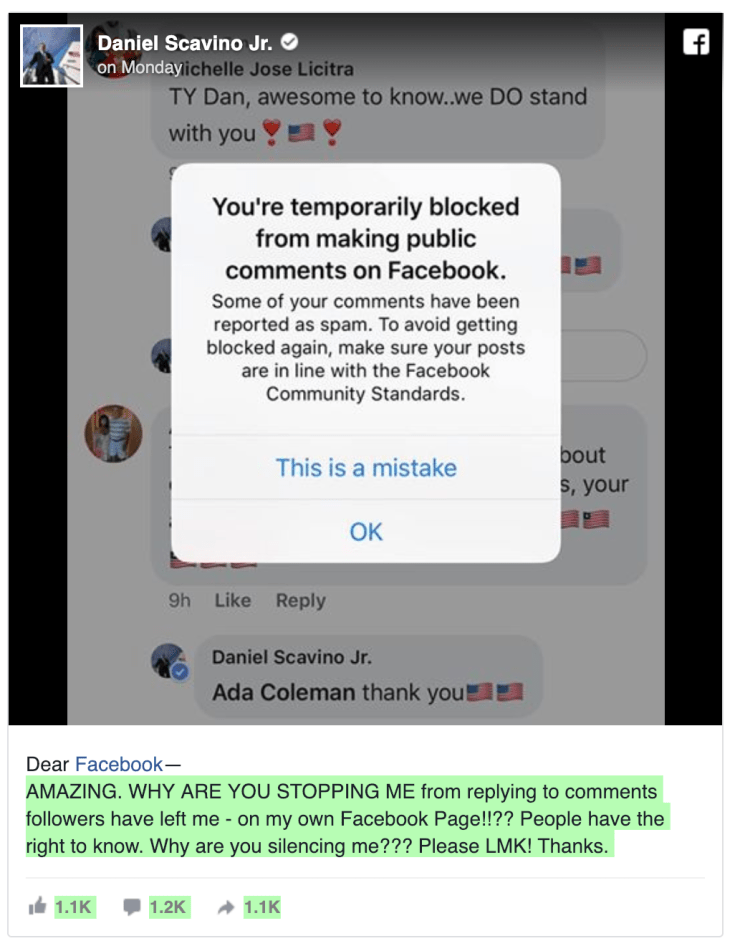
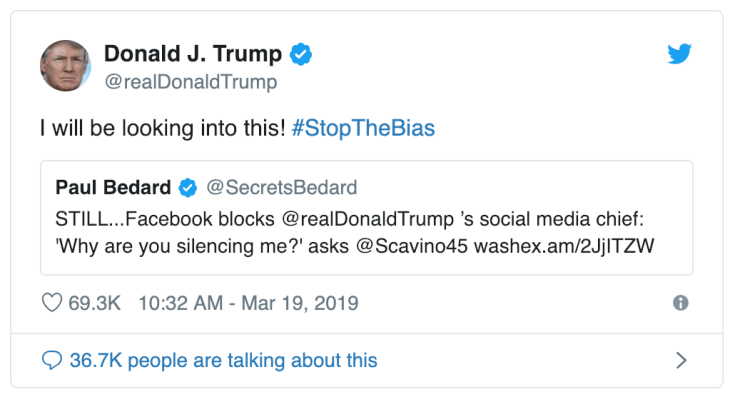
President Donald Trump has promised to look into accusations of anti-conservative bias on Facebook, after the social media giant apparently blocked his social media chief Dan Scavino from commenting.

Scavino complained on Monday that Facebook had abruptly blocked him from replying to his followers, with the company claiming his comments had been reported as spam.

“AMAZING. WHY ARE YOU STOPPING ME from replying to comments,” he wrote. “People have the right to know. Why are you silencing me???”

Screen Shot 2019-03-20 at 11.29.08 AM

“I will be looking into this!” Trump tweeted in response. The president has often accused Silicon Valley tech companies of discriminating against conservative users, and did so again on Tuesday. “Facebook, Google and Twitter, not to mention the Corrupt Media, are sooo on the side of the Radical Left Democrats,” he tweeted. “But fear not, we will win anyway, just like we did before!”

Screen Shot 2019-03-20 at 11.30.03 AM

Facebook CEO Mark Zuckerberg has repeatedly dismissed accusations of liberal bias directed at the company. Grilled by Republican lawmakers on the topic last year, Zuckerberg claimed that their examples of censorship were once-off mistakes, but did admit that most of his employees probably lean left politically.

These accusations have come from within the company too. An anonymous whistleblower told conservative watchdog Project Veritas last month that Facebook actively developed and uses “deboosting” tools to suppress and delete right-wing content. Last year, a Facebook employee called the company a liberal “monoculture that’s intolerant of different views,”and savaged Facebook’s workforce for being “quick to attack – often in mobs – anyone who presents a view that appears to be in opposition to left-leaning ideology.”

The employee’s rant, posted on an internal message board, attracted the support of more than 100 other workers, who formed a group called ‘FB’ers for Political Diversity.’

Blog at WordPress.com.

Up ↑