
3RD MIGRANT WAVE HEADS TO U.S. FROM EL SALVADOR

Group of 300 Salvadorians bound for U.S. southern border despite warnings from government
Reuters – OCTOBER 28, 2018
SAN SALVADOR (Reuters) – A new group of migrants gathered and left from the capital of El Salvador on Sunday, headed for the United States after thousands of other Central Americans began similar journeys in recent weeks, angering U.S. President Donald Trump.
The group of more than 300 Salvadorans that left San Salvador on Sunday came together after thousands of Hondurans in mid-October left their country in a large group, becoming an international news story and a key issue in the U.S. congressional elections.
A second group of Hondurans was moving through Guatemala last week, and at one point numbered more than 1,000 people before beginning to fragment.
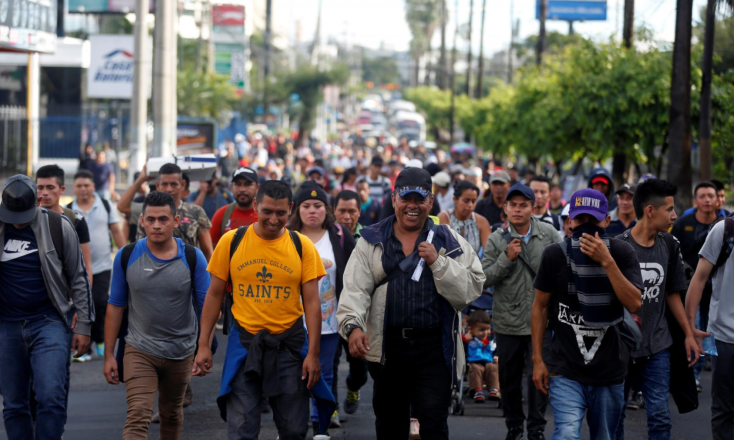
People walk in a caravan of migrants departing from El Salvador en route to the United States, in San Salvador, El Salvador, October 28, 2018. REUTERS/Jose Cabezas
Trump and his fellow Republicans have sought to make immigration a major issue before the Nov. 6 elections, in which the party is battling to keep control of Congress.
The Salvadoran migrants organized using social networks like Facebook and WhatsApp over the last couple of weeks, inspired by the group of mostly Hondurans currently crossing Mexico.
Salvadoran police traveled with the group on Sunday as they left San Salvador, the migrants carrying backpacks and water bottles and protecting themselves from the hot sun with hats. Some mothers pushed their children in strollers.
Several migrants, gathered by the capital’s ‘Savior of the World’ statue before leaving, said they were headed to the United States.
“We’re asking the all-powerful to look after us, to guide us, to free us from all that is bad,” shouted Hernan Quinteros, 49, a driver who urged his fellow travelers to tie up their shoes ahead of the long trip.
El Salvador’s left-wing government said it had solidarity with the migrants and respected their right to mobilize, but urged them not to risk their lives on the way.
Second migrant caravan forming at Guatemala-Mexico border

Migrants disembark from a truck in which they had gotten a ride, as a thousands-strong caravan of Central American migrants slowly makes its way toward the U.S. border, between Pijijiapan and Tonala, Mexico.
By Natalie Musumeci
A second caravan of migrants seeking asylum in the United States is forming at the Guatemala-Mexico border.
Migrants in the town of Tecun Uman, Guatemala, said Thursday they were waiting for between 1,500 and 4,000 people to mass for another caravan like the first that came through the town and is now in Mexico about 1,000 miles from the nearest US border crossing at McAllen, Texas.
SEE ALSO
Meet the man behind the migrant caravan headed to US
The bridge connecting Tecun Uman to Ciudad Hidalgo in Mexico is closed – and migrants said they planned to cross the Suchiate River dividing the countries via rafts or by wading through the waist-deep water, USA Today reported.
Mexico shut that bridge under pressure from President Trump.
“We are in a horrible crisis in our country,” said Gabriela Patricia Aguilar Lainez, 37, one of those gathering in the town plaza with her 3-year-old daughter, according to USA Today. “We are in a political crisis, an economic crisis, and a crime crisis.”
According to the news outlet, there was no evidence that the new group of migrants from Honduras was funded by a particular organization.
The migrants said they simply banded together to flee violence that has torn apart their home countries and because there is strength in numbers.
“Our country is failed,” said Honduras native Kevin Escobar, 26, who had traveled six days walking and hitching rides to get to the Guatemala-Mexico border.
“I have to find a way to help my family and that means going to another country.”
UNICEF reported Friday that some of the estimated 2,300 children traveling with the first caravan are ill or suffering from dehydration.
The migrants were planning what would be their most ambitious single-day trek since they crossed into Mexico, setting their sights for Friday on reaching Arriaga, a march of about 62 miles.
Trump sent a message to the marchers in a tweet Thursday.
“To those in the Caravan, turnaround, we are not letting people into the United States illegally,” the commander-in-chief tweeted. “Go back to your Country and if you want, apply for citizenship like millions of others are doing!”
GA toddler paralyzed overnight… Polio-like disease fears grow nationwide…

By Audrey Washington
ATLANTA – A Georgia mother said her toddler went to bed sick and woke up paralyzed from the neck down.
It’s the latest in a series of mysterious illnesses that are baffling doctors. Two young patients were recently treated at Scottish Rite after they fell ill and then woke up partially paralyzed.
Doctors are still working to figure out what causes acute flaccid myelitis, or AFM, but they tell Channel 2 Action News the rare condition is similar to polio, in that it can cause muscle weakness or partial paralysis.
And like polio, doctors believe AFM is caused by a virus, but they don’t know which virus.
That was the case for a 2-year-old Abigail. Her mother said one moment she was a healthy child who came down with a double ear infection and fever. Then a few days later, she woke up paralyzed from the neck down.
Doctors diagnosed Abigail with AFM. She’s now in rehab making great progress.
“It’s a rare occurrence its one in a million, in a million,” said Dr. Anthony Fauci, National Institute of Allergy and Infectious Diseases Director.
Across the country, the Atlanta-based Centers for Disease Control and Prevention reports 62 confirmed cases of AFM in 22 states, and 93 possible cases.
“It’s really heartbreaking. No parent should ever have to experience that and what makes it worse, it’s not the tubes, it’s not the treatments, what makes is worse is not knowing what caused it,” said Abigail’s mother, Erica Palacios.
There were 5 cases reported in Georgia in 2016.
Doctors said the West Nile Virus may be the cause in some of the cases.
“It’s a very frustrating situation we do not know definitively what it is, although there is a suspicion, a strong suspicion that it is associated with a particular type of virus that we recognize,” Fauci said.
What CDC Doesn’t Know
- Among the people who were diagnosed with AFM since August 2014:
- The cause of most of the AFM cases remains unknown.
- We don’t know what caused the increase in AFM cases starting in 2014.
- We have not yet determined who is at higher risk for developing AFM, or the reasons why they may be at higher risk.
- We do not yet know the long-term effects of AFM. We know that some patients diagnosed with AFM have recovered quickly, and some continue to have paralysis and require ongoing care.
What CDC Is Doing
CDC is actively investigating AFM cases and monitoring disease activity. We are working closely with healthcare providers and state and local health departments to increase awareness for AFM. We are encouraging healthcare providers to recognize and report suspected cases of AFM to their health departments, and for health departments to send this information to CDC to help us understand the nationwide burden of AFM. CDC is also actively looking for risk factors and possible causes of this condition.
CDC activities include:
- Urging healthcare providers to be vigilant for AFM among their patients, and to send information about suspected cases to their health departments
- Verifying clinical information of suspected AFM cases submitted by health departments, and working with health departments and neurologists to classify cases using a case definition adopted by the Council of State and Territorial Epidemiologists (CSTE)
- Testing specimens, including stool, blood, and cerebrospinal fluid, from suspected AFM cases
- Working with healthcare providers, experts, and state and local health departments to investigate and better understand the AFM cases, including potential causes and how often the condition occurs
- Providing new and updated information to healthcare providers, health departments, policymakers, the public, and partners in various formats, such as scientific journals and meetings, and CDC’s AFM website and social media
- Using multiple research methods to further explore the potential association of AFM with possible causes as well as risk factors for AFM. This includes collaborating with experts to review MRI scans of people from the past 10 years to determine how many AFM cases occurred before 2014, updating treatment and management protocols, and engaging with several academic centers to conduct active surveillance simultaneously for both AFM and respiratory viruses.
Trump to migrant caravan: Go back home and apply legally, you won’t be let in
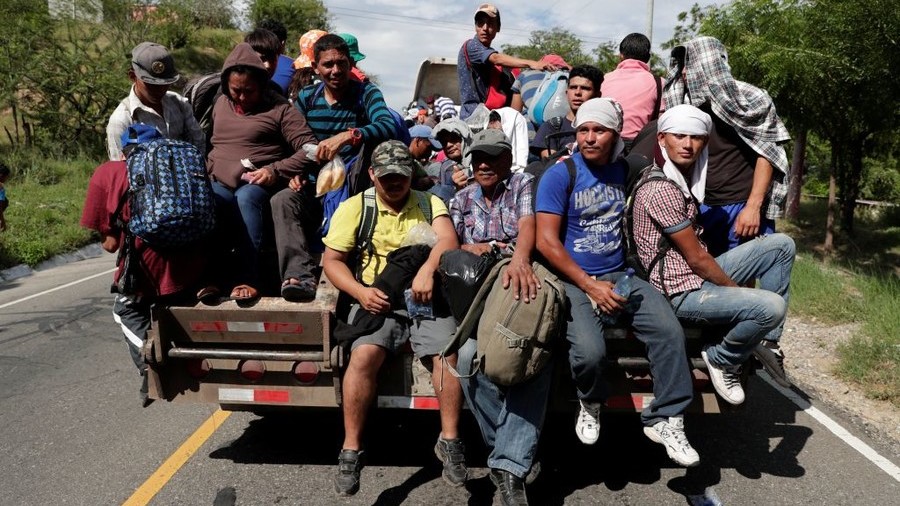
Central American migrants hitchhike on a pick-up truck in Mexico on their way to the US. © Reuters / Luis Echeverria
US President Donald Trump has for the first time directly addressed Central American migrants making their way towards the US southern border, telling them that they will not be permitted to enter the country illegally.
In a Thursday afternoon tweet, Trump told migrants that the US is “not letting people into the United States illegally” and advised them to go back to their own countries and “apply for citizenship like millions of others” have done.

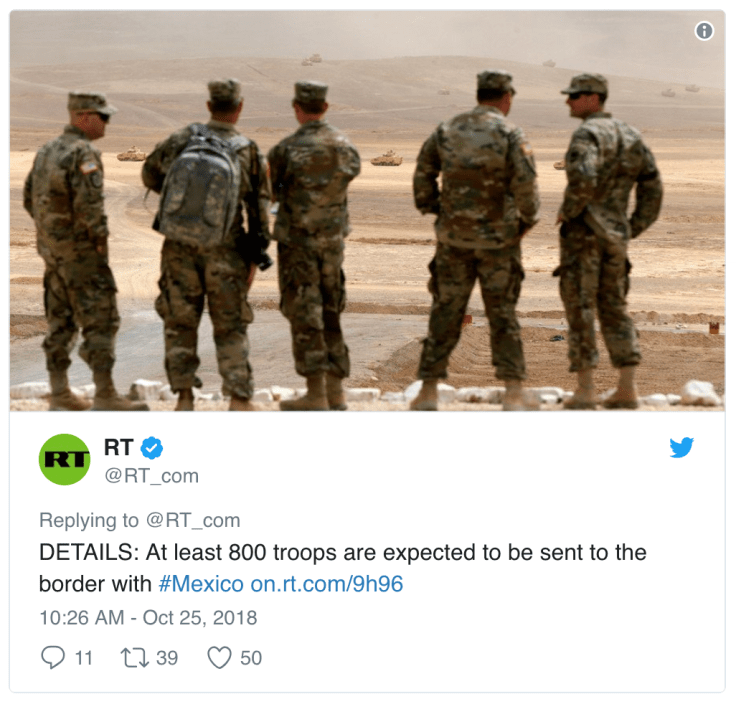
Previously, Trump had referred to some of the migrants making the trek to the border as “hardened criminals” and suggested that “unknown Middle Easterners” were among the crowds. Earlier on Thursday, the Pentagon announced that “several hundred” US troops would be sent to the border to beef up security there.
The migrant caravan swelled to an estimated 7,000 people last week after hundreds of poverty-stricken Hondurans left their country two weeks ago. Some have already arrived at the Guatemala-Mexico border, breaking through fences and clashes with riot police, while others attempted to cross by river on makeshift rafts.
Like this story? Share it with a friend!
Soros-funded uni campus for US programs ‘forced out’ of Hungary, opening in Vienna
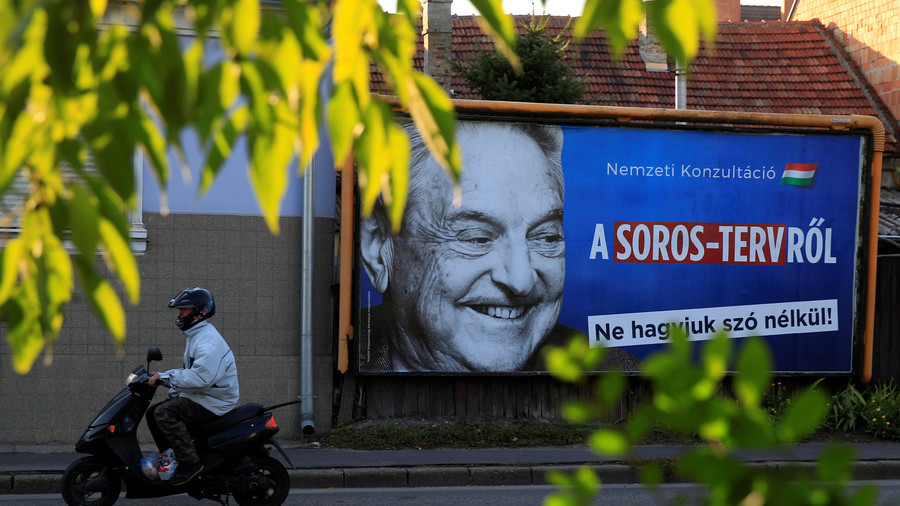
The George Soros-funded Central European University is set to flee Budapest for Vienna in the latest round of a long-running ideological battle between the billionaire media magnate and Viktor Orban’s conservative government.
CEU, which had previously pledged to remain operational in Budapest, is set to open a new Vienna campus which will offer US-accredited degrees from 2019, claiming a new law prevents it from doing so in Hungary.
Hungarian-born Soros has been a vocal critic of Orban’s government, accusing him of leading an “unrelenting propaganda campaign” against him and turning Hungary into a“mafia state”. Orban, in turn, has accused Soros of supporting “everything that changes the traditional European lifestyle” over his support for immigration.
The university, founded by Soros in 1991, made headlines last year after thousands of Hungarians took to the streets to protest the new rules which meant that it would no longer be allowed to issue diplomas accredited to the US unless it opened a campus there or reached some kind of deal with the government.
CEU’s ability to offer US-accredited degrees made the university highly marketable to students. The government argued that this put other institutions and students at a disadvantage, but CEU and anti-government protesters said the rule change was an attack on its academic freedom.
But the battle has continued unsolved for months. The university claims it has complied with all new legal requirements and that Orban has simply refused to sign an agreement needed for it to remain operational in Budapest.
University President and Rector Michael Ignatieff said on Thursday that if Orban does not sign a deal “within one month” all US-accredited degree programs will be moved to Vienna.
“We have repeatedly indicated our openness to find a solution that guarantees our institutional integrity and academic freedom. We have waited as long as we possibly can,” Ignatieff said, adding it would be “irresponsible for us not to pursue arrangements” for the university’s future. A spokesperson for the Hungarian government, however, called the university’s announcement a “Soros-style political ploy.”
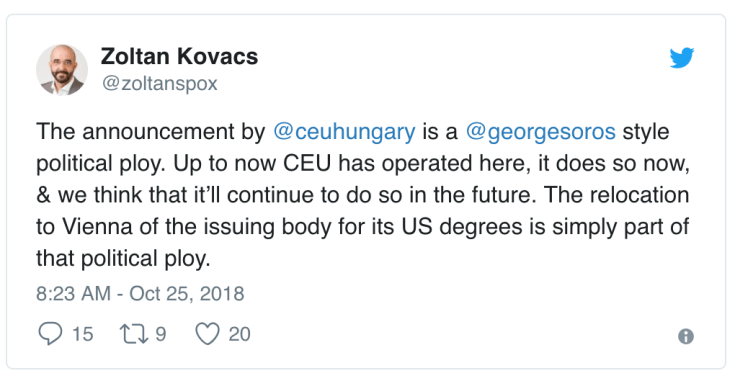
This is the latest in a line of public standoffs between Soros and the Orban government. In May, Soros’ Open Society Foundations ended its operations in the country citing an “increasingly repressive political and legal environment.” Earlier, Vice Chairman of the ruling Fidesz party, Szilard Nemeth, had said that Soros and his NGOs should be “swept out” of Hungary because they are “pushing global big capital and a related political correctness.”
In June, the Hungarian parliament passed a ‘Stop Soros’ law which could result in punishments for anyone helping illegal immigrants claim asylum in the country — the name of the law referencing Soros’ support for pro-immigration policies.
READ MORE: Crowds march to defend Soros funded university in Budapest (VIDEO, PHOTOS)
Soros has also been a figure of hate in the US, with some Republicans recently suggesting that the pro-immigration billionaire had organized the caravan of migrants making its way from Honduras to the US’s southern border. On Monday, authorities said a pipe bomb had been delivered to Soros’ New York address.
Like this story? Share it with a friend!
 Tom's Blog