A new law proposed by a California State Senator would provide gift cards to citizens of the state for staying sober.
Senate Bill 888, proposed by San Francisco’s Scott Weiner, would make recovering former meth users eligible to receive gift cards and other financial rewards for staying sober. Weiner has a controversial record as a state legislator, at one point proposing a law that made declining to reveal one’s HIV status to a sexual partner no longer a felony.
Methamphetamine has a particularly strong presence in California, and the state is one of the few in the country where more die from use of the cheap drug than they do of opioid overdoses.
California has a massive drug problem, a blight worsened by the state’s homeless population- by far the largest in the country.
Addicts would submit to regular drug tests to receive state benefits under the bill. They’d be made eligible for subsidized treatment with California’s Medi-Cal, the state medicare program.
Participants in the program can receive up to $330 in gift cards.
Weiner’s legislation may actually have some merits. Creating a cash incentive for drug users to stay clean may ultimately prove more effective than costly and ineffective state-controlled drug recovery programs. In any case, it’s likely paying addicts is a more efficient use of resources then locking them up in the stacked California prison system after committing crimes to fuel their addiction.
But it’s a tragedy that the state has come to this. California used to represent the dreams and aspirations of the American middle class, not ground zero for homelessness and drug addiction.
A new video posted on Sunday shows former New York City Mayor Mike Bloomberg explaining how healthcare will “bankrupt us,” unless we deny care to the elderly.
Mike Bloomberg:All of these costs keep going up. Nobody wants to pay anymore money. And at the rate we’re going healthcare is going to bankrupt us. So not only do we have a problem we’ve got to sit here and say which things we’re going to do and which things we’re not. Nobody wants to do that. If you show up with prostrate cancer and you’re 95 years old, we should say go and enjoy, you’ve had a long life, there’s no cure and we can’t do anything. If you’re a young person, we should do something about it. Society’s not willing to do that, yet.”
Spoken like a true heartless socialist.
How horrible.
Bloomberg explaining how healthcare will “bankrupt us,” unless we deny care to the elderly.
“If you show up with cancer & you’re 95 years old, we should say…there’s no cure, we can’t do anything.
A young person, we should do something. Society’s not willing to do that, yet.” pic.twitter.com/7E5UFHXLue
Phil McGraw, best known as Dr. Phil, credited Medicare and Medicaid with compromising the quality of health care in a Tuesday interview with Joe Rogan. Insufficient compensation for physicians via Medicare and Medicaid, said Dr. Phil, transformed medicine into a “high-volume business” in which quality is sacrificed in pursuit of quantity.
Dr. Phil characterized the status quo of American health care as overmedicating patients (starts at 25:29):
JOE ROGAN: When you see all these folks that are on medication today, how many of these people do you think legitimately should be on medication? Is it something you can asses?
DR. PHIL: I can’t answer that … but in my personal experience, most of the people that I see on medications, in my opinion, don’t need most of the medications they’re on. Now, that’s just anecdotal. It’s my opinion. If you ask me to hand you a research survey or study to support that — I can’t hand it to you, or I can’t point you to one.
I can just tell you, after 45 years in this experience, I see people that are on medication. They’ve usually seen someone for six or eight minutes, and said, “I’m really feeling kind of down.” Here’s some Prozac. Here’s this. Here’s that. They give it to them. They don’t even really ask why. They just give it to them because medicine has become a high-volume business, and that’s not necessarily the doctors’ fault. I mean, the way that it’s now funded — Medicare and Medicaid — you’ve got to turn them and burn them or you can’t stay in business. So it’s a high volume business, so they throw pills at them because they don’t have an hour to sit down or don’t take an hour to sit down and say, “Let’s find out what’s going on.”
…
Most of the people I see on medications — not all, but most of the people I see are on too many medications in too high a dose or either don’t need it at all, and I am really bothered by polypharmacy. Thar’s where I really get frustrated.
JOE ROGAN: Yeah, what you’re saying is a very common sense approach, but it’s not the norm, today. It seems like more people are treating this — air quotes — depression issue as if it’s a medical disorder like diabetes, or something where you need medication.
ADHD and ADD are overly diagnosed, assessed Dr. Phil.
“Wastebasket diagnoses like ADD and ADHD,” began Dr. Phil. “What used to be a spoiled brat is now ADD or ADHD, so they start prescribing these neo-cortical stimulants like Ritalin, and you give a kid that does not need a neo-cortical stimulant a stimulant, you’re really going to throw him off the charts, now, because you’ve got a normally active brain that you’re now making hyperactive,s o you’re creating a problem that didn’t exist before the medication because you didn’t do the proper diagnosis.”
“You cannot chemically babysit your children,” added Dr. Phil.
Opioids are too quickly prescribed to patients, said Dr. Phil, describing opioid addiction and abuse as amounting to a national “epidemic”:
Medications are too readily administered. That’s certainly what we’ve seen in the opioid epidemic, right now. Opioids are so readily prescribed right now that there are enough opioid prescriptions for every man, woman, and child in America to have their own bottle, and if you renew that prescription one time — one time — if you are taking those opioids at the seven-day mark, your chance of being addicted one year is one-in-12, and if renew it [and] you’re still taking them at 30 days, your likelihood of being addicted is one-in-three. These things are getting written with way too high a pill-count, and so we’re seeing a whole different kind of addiction, now, coming out of the suburbs, and they take them for awhile and they’re very expensive, and after they take them for awhile, heroin is cheaper, so they dump the opioids and start taking the heroin. So you’re seeing soccer mom heroin addicts that you weren’t seeing 10 years ago because they get started on prescription opioids and then they can’t afford them — or finally the doctor cuts them off and they’re addicted — so they start taking heroin because it’s cheaper.
Mental health professionals are insufficiently available in rural regions, stated Dr. Phil.
“Fifty-eight percent of our rural markets today have no psychiatrists available, and something like roughly 50 [percent] have no mental health professionals available, at all; none,” remarked Dr. Phil. “So there’s just nobody available in the outlying areas. I think the more people you can get into the profession, so long as there’s a degree of competency, the better.”
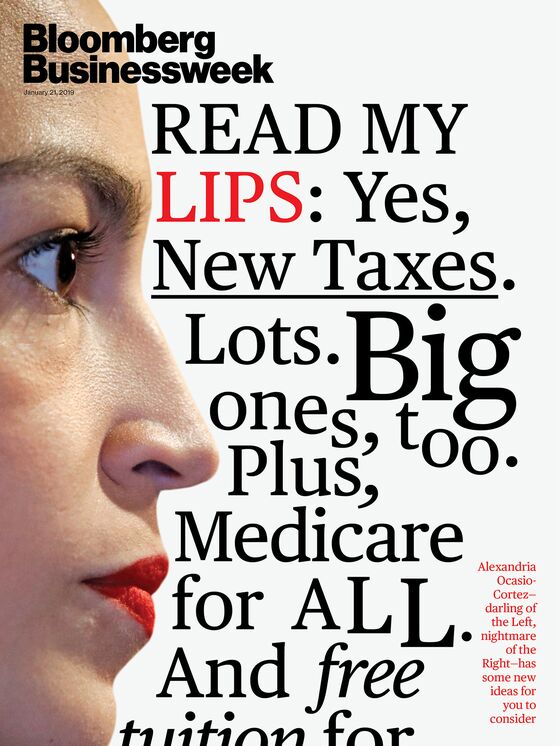
(Bloomberg Businessweek) — Alexandria Ocasio-Cortez might not have seen eye to eye with Joseph Overton, the late free-market advocate. But she has a firm grasp of the concept for which he is best known: theOverton Window. The term refers to the range of ideas that are at any given time considered worthy of public discussion. Thanks largely to her, the Overton Window on tax rates has just been moved significantly to the left.
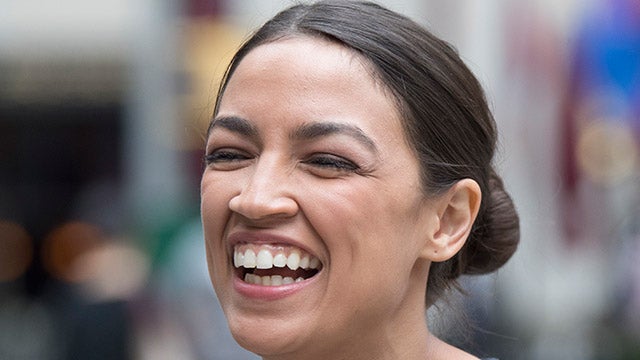
Ocasio-Cortez, the mediagenic 29-year-old from the Bronx, N.Y., is the youngest woman ever elected to the House of Representatives. In an appearance on 60 Minutes with Anderson Cooper that aired on Jan. 6, she was talking up the Green New Deal, a plan to move the U.S. to 100 percent renewable energy by 2035. Cooper challenged her by saying the program would require raising taxes. “There’s an element, yeah, where people are going to have to start paying their fair share,” she replied. Asked for specifics, she said, “Once you get to the tippy tops, on your 10 millionth dollar, sometimes you see tax rates as high as 60 or 70 percent.”
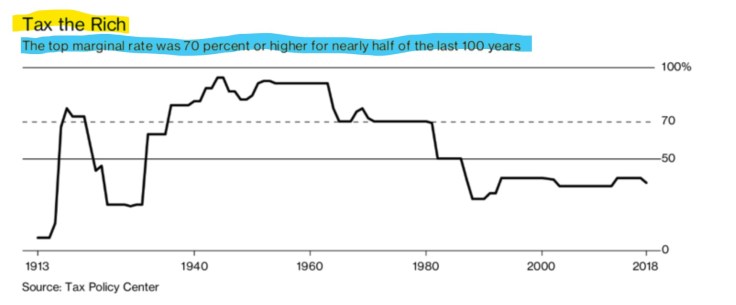
Seventy percent! For perspective, the top rate under the tax law that passed in December 2017 is 37 percent. And now, suddenly, a number so extreme that no one in polite society dared utter it became a focal point of debate. Ocasio-Cortez’s fans—she has 2.4 million followers on Twitter alone—loved it. Some pundits dug up economic research defending rates in the 70 percent range. Others pointed out that Ocasio-Cortez was actually lowballing the historical comparison: Top rates were 90 percent or higher as recently as the 1960s. Defenders of low tax rates heaped abuse on her, which backfired on them by inflaming her supporters.
What Ocasio-Cortez understands is that getting an idea talked about, even unfavorably, is a necessary, if insufficient, step on the path to adoption. (President Trump also gets this.) “It’s the easiest thing to say, ‘No, we can’t change anything,’ ” says Eric Foner, a Pulitzer Prize-winning historian who recently retired from Columbia University. “Most of the big ideas in American history started among radical groups who were told, ‘No, you’re never going to be able to achieve that.’ ” Foner sees parallels between the strategies of today’s left-leaning Democrats and the radical Republicans who fought slavery before the Civil War, “which was put out an agenda, be aware that you can’t just accomplish it all at once, obviously, but change the political discourse by pushing your agenda and then work with those who are willing to do some of it.”
Ocasio-Cortez was actually less radical than she could have been on 60 Minutes. She passed up the opportunity to move the Overton Window on another of her pet issues: budget deficits. She adheres to a doctrine called Modern Monetary Theory that’s catching on among young, left-leaning politicians and older policymakers alike.
Its counterintuitive core idea is that deficits don’t matter if you borrow in your own currency, just as long as they don’t cause inflation. Unless the economy is at risk of overheating, MMTers say, paying for a new government program doesn’t require cutting another or raising taxes.
Ocasio-Cortez could have said, “No, Anderson, we wouldn’t need to raise taxes to pay for the Green New Deal. But I want to raise taxes anyway, because I believe in redistributing money from the rich to the poor.” That really would have lit up the internet. Randall Wray, an MMT theorist who’s a senior scholar at the Levy Economics Institute of Bard College, wrote in an email that he was “a bit disappointed” that Ocasio-Cortez connected tax hikes to the Green New Deal. Stephanie Kelton, another MMT theorist and Bernie Sanders’s economic adviser during his race for the Democratic nomination in 2016, says she thinks reducing inequality is the real reason Ocasio-Cortez favors higher rates on the rich: “It’s kind of a recognition that levels of income and wealth inequality parallel those of the 1920s.”
Whatever the particulars, Ocasio-Cortez wants to raise tax rates—by a lot. Since the Reagan Revolution of the 1980s, Democrats have been almost as allergic as Republicans to raising taxes. Hillary Clinton didn’t advocate increasing rates on top incomes at all during her 2016 presidential campaign. Even Sanders, that wild socialist from Vermont, dared propose a top rate of only 52 percent when he ran for president.
But with Ocasio-Cortez, antitax conservatives immediately sensed that a taboo was being broken, that a crack has opened up in the dam they’d spent decades building and reinforcing. Grover Norquist, the president of Americans for Tax Reform, who in 1986 devised the famous Taxpayer Protection Pledge that commits signers to vote against any net increases in taxes, on Twitter likened her proposal to slavery. “Slavery is when your owner takes 100% of your production. Democrat congresswoman Ocasio-Cortez wants 70% (according to CNN) What is the word for 70% expropriation?” he tweeted.
Norquist now says he remains confident that tax rates won’t rise to 70 percent, because “it’s such a bad idea.” In fact, he says he thinks Democrats are hurting only themselves by entertaining it. Ocasio-Cortez, he says, is a “pied piper” leading her party to its demise. It’s not at all clear, though, that higher taxes on the rich are a losing issue for Democrats. A Hill-HarrisX poll conducted on Jan. 12 and Jan. 13 found that 59 percent of registered voters supported the idea of raising the top rate to 70 percent. That included 45 percent of Republican voters. Thanks perhaps to the presidential campaign of Sanders, who like Ocasio-Cortez calls himself a democratic socialist, even “socialism” is no longer a dirty word: Gallup reported in August that 57 percent of Democrats and those leaning Democratic had a positive view of socialism, while only 47 percent had a positive view of capitalism.
What would a 70 percent top tax rate do to the U.S. economy and businesses? The rap on high rates is that they discourage work and promote wasteful tax-sheltering. Even many economists who think the rich pay too little say the better solution is to eliminate loopholes—subjecting more income to taxation rather than taxing a narrow base at a high rate.
Norquist argues that a 70 percent top rate would trigger an exodus of high-earning individuals from the U.S., saying that the last time U.S. rates were that high, they were also high in other nations, reducing the incentive to move. The Tax Foundation, a right-of-center think tank, said on Jan. 14 that a 70 percent top rate on ordinary income (not capital gains) exceeding $10 million “would not raise much revenue.” “Not much revenue” in this case means an estimated $189 billion in total over 10 years—or $292 billion before accounting for the likelihood that people in that tax bracket would work less and invest less in their noncorporate businesses.
On the other hand, economists supportive of Ocasio-Cortez were quick to point out that Denmark has among the world’s highest living standards despite a 56.5 percent tax rate on incomes above about $80,000 a year, a far lower threshold than her $10 million. A 2011 paper by Nobel laureate Peter Diamond of MIT and Emmanuel Saez of the University of California at Berkeley advocated top total tax rates (federal plus state) for the richest Americans of 73 percent on ordinary income (again, not capital gains). They assumed that an extra dollar of income for someone in that bracket has very little value in comparison to a dollar received by a lower-income person. Critics of their research have said Diamond and Saez treat the rich as sheep to be shorn and underestimate how much high tax rates would discourage people from getting advanced degrees or starting businesses. Diamond rejects the criticism, cites the need for more public investment, and says, “I’m perfectly comfortable” with Ocasio-Cortez’s 70 percent rate.
One thing that most people don’t know about Ocasio-Cortez is that she was a science nerd in high school in Westchester County, N.Y. In 2007, out of almost 1,500 students from 46 countries competing in the Intel International Science and Engineering Fair, she was one of four second-place winners in the microbiology category. (Her research was on the effect of antioxidants on roundworms.) It’s a biographical detail that adds another dimension to the story of a young woman born in the Bronx to parents of Puerto Rican descent who became the first in her family to attend college. While she was away at school her father died, pushing the family to the brink of financial ruin. “When you come from a working-class background, it often feels like you’re just one disaster away from everything falling apart,” she said in an Instagram video about a year ago.
Like former President Barack Obama, Ocasio-Cortez became a community organizer after graduating from college, in 2011, and supported herself as a waitress and bartender. She worked for Sanders’s campaign in 2016. After that, things happened fast. She ran for the Democratic nomination in her Bronx-Queens congressional district and upset Joe Crowley. Chairman of the House Democratic Caucus, Crowley had been seen as a candidate to succeed Nancy Pelosi of California as speaker. He outspent Ocasio-Cortez 18 to 1 and had endorsements from New York Governor Andrew Cuomo, New York City Mayor Bill de Blasio, and both New York senators. She won huge.
No one shifts the Overton Window on any subject without strong communications skills, and Ocasio-Cortez is ninja-level in that department. She thrills supporters by going after critics hard on social media, which she uses the way an older generation used street rallies. “I’m a firm believer that organizing never stops,” she told Cooper in the 60 Minutes interview. One of her first acts after her election was to visit the office of Pelosi—not to seek her blessing but to support climate change activists who were occupying the soon-to-be speaker’s office. Now Ocasio-Cortez works two doors away from Pelosi—but not for her. She’s floated the idea of creating a progressive caucus among the Democrats, modeling it on the powerful Freedom Caucus on the right. Among her allies are new members Ilhan Omar of Minnesota, the first Somali-American elected to Congress; New Mexico’s Deb Haaland, one of the first American Indian women elected to Congress; and Rashida Tlaib of Michigan, the first Palestinian-American in Congress.
“This is a movement; this is not me,” Ocasio-Cortez said in an Instagram video last year.
Both Ocasio-Cortez and Trump are social media virtuosos. They excel at turning back attacks on their credibility. Attempts to challenge them on facts come across to their supporters as mean-spirited and unfair—the knee-jerk reaction of an establishment trying to suppress outside voices. So it was when Ocasio-Cortez mistakenly said on social media last year that the Pentagon had lost track of $21 trillion in funds, a figure that was about 30 times the Department of Defense’s annual budget. Unlike Trump, she corrects her mistakes. “The thing that’s hard is that you’re supposed to be perfect all the time on every issue and every thing,” she said on Instagram last year.
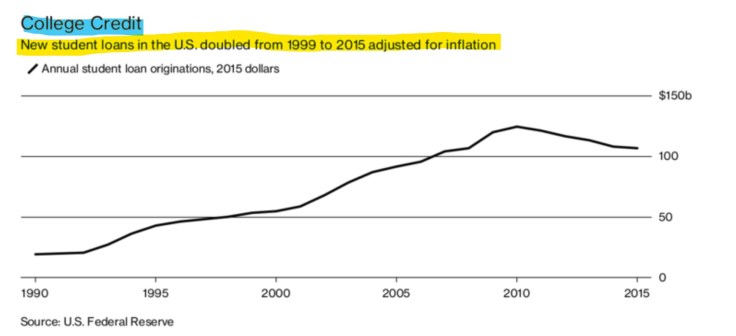
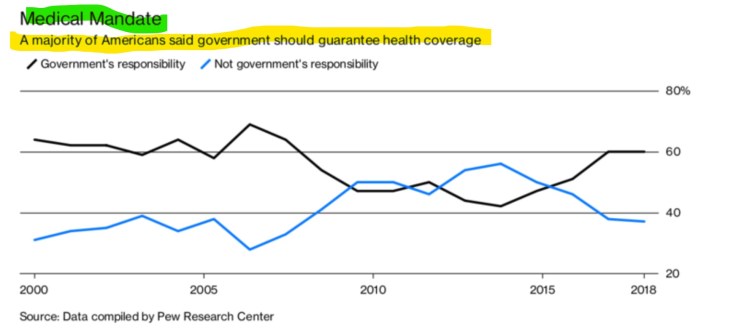
Implicit in that statement: Ocasio-Cortez has plenty more Overton Windows to shift and no intention of slowing down for the critics. Aside from the Green New Deal and higher taxes on the rich, she favors Medicare for all, a federal guarantee of a job, abolition of the U.S. Immigration and Customs Enforcement bureau, and tuition-free college or trade school. She also wants to slash military spending, ban assault weapons, and bring back Glass-Steagall, the Depression-era law that separated commercial and investment banks.
That may all sound like tail risk to American businesses, which have been enjoying deregulation under Trump. Saikat Chakrabarti, Ocasio-Cortez’s chief of staff, says, “This is the kind of plan where you can’t go to Wall Street executives first to try to get them to buy into it. You gotta show ’em.”
The question is whether she’ll be able to show them, or anyone. A week after Ocasio-Cortez came to Washington, fellow Democrats complained that she was disruptive and not a team player. Chief among her sins: threatening to back the primary opponents of members of Congress who aren’t liberal enough for her. “I’m sure Ms. Cortez means well, but there’s almost an outstanding rule: Don’t attack your own people,” Representative Emanuel Cleaver II, a Missouri Democrat, told Politico. “We just don’t need sniping in our Democratic Caucus.”
To pass any of their initiatives, Ocasio-Cortez and her allies will have to defeat the proven Republican strategy of using budget deficits as a justification for opposing new spending. That’s where Modern Monetary Theory comes in. It says a government can spend money without raising taxes—indeed, without even borrowing from the public via bonds. The government simply creates new money to pay its bills. The only constraint on spending under MMT is that the government could use up too much of the nation’s productive capacity, which would result in high inflation. As long as inflation remains low, as it is now, deficits are no problem. The usual reply from other economists is that even a nation that owes debt in its own currency can suffer a crisis if investors lose faith in its ability to service the debt without resorting to the printing press.
One precinct where deficits still matter, and MMT most certainly does not, is the office of House Speaker Pelosi. On Jan. 3, under Pelosi’s direction, the House passed a set of rules including pay-as-you-go, which requires legislation that would increase the deficit to be offset by tax increases or spending cuts. PAYGO, as it’s known, is contrary to the spirit of MMT and hamstrings liberal Democrats by making most of their spending initiatives impossible. Ocasio-Cortez was one of only three Democrats to oppose the provision, along with Ro Khanna of California and Tulsi Gabbard of Hawaii.
Ocasio-Cortez had another setback when she was passed over for a coveted seat on the Ways and Means Committee, which oversees taxes, Social Security, and Medicare. But she recovered nicely by getting a seat along with other progressives on the powerful House Financial Services Committee, headed by Maxine Waters of California. Carolyn Maloney, a fellow New York Democrat, says, “I was once that young woman who others tried to rein in. I certainly don’t believe in doing that to anyone else. Representative Ocasio-Cortez is bringing new energy and a new approach, and we should all embrace that.”
Ocasio-Cortez’s disregard for political niceties is both her strongest quality as an activist and potentially her Achilles’ heel as a representative. She shows no sign of dialing back. One way or another, says Kelton, the economic adviser, “the conversation is shifting. The space is opening up.” —With Allison McCartney






 Tom's Blog