
Published on Mar 4, 2019


The Vermont senator found himself bogged down in complicated policy issues – and apologies – after fielding questions from audience members whose political loyalties and possible ulterior motives were obscured by CNN. The eyebrow-raising oversight was first spotted by Paste Magazine, which accused CNN, in concert with the Democratic Party, of “stacking” the audience against Sanders by not being upfront about who was tasked with asking the senator questions.
For example, a young woman identified by CNN as a student at American University suggested that Sanders had turned a blind eye to his campaign’s alleged sexist behavior during the 2016 primaries, and asked what the democratic socialist would do to make women feel more included in his 2020 presidential bid. Curiously, the network failed to disclose that the student also happens to be an intern at a major DC lobbying firm – an odd coincidence considering her question was adapted from a Sanders-bashing talking point popular among corporate-friendly Democrats.
CNN was similarly tight-lipped about the backgrounds of other audience members selected to interrogate Sanders.
One audience member labeled as a “George Washington student” was later revealed to be an intern for a Democratic fundraising organization, the Katz Watson Group, and was previously a campaign fellow for ‘Hillary Clinton for America’.
Town hall moderator Wolf Blitzer introduced another audience member as a mother of two who is “active in the Maryland Democrat Party.” It turns out the innocuous mom was actually the chair of her county’s Democratic Central Committee.
CNN conceded that it should have been more transparent about its question-askers.
“Though we said at the beginning of the Town Hall that the audience was made up of Democrats and Independents, we should have more fully identified any political affiliations,” the network said in a statement.
Edward Hall, an economist and co-founder of the Occupy Wall Street movement, told RT that CNN’s deceptive identification practices were “par for the course” and part of a “long-running disease” in US politics, which uses in-fighting to protect corporate interests.
This isn’t the first time that CNN has given Sanders a raw deal. In one notable example, the network was taken to task for declaring Clinton the Democratic candidate even though, at the time, she lacked the required number of pledged delegates to clinch the nomination. Emails published by WikiLeaks famously revealed that CNN contributor Donna Brazile passed town hall debate questions to Hillary Clinton during her 2016 primary against the Vermont lawmaker.
Like this story? Share it with a friend!
By Greg Jaffe and Jenna Johnson
First came former U.S. attorney Joseph diGenova, a Fox News regular and ally of President Trump. “We are in a civil war,” he said. “The suggestion that there’s ever going to be civil discourse in this country for the foreseeable future is over. . . . It’s going to be total war.”
The next day, Nicolle Wallace, a former Republican operative turned MSNBC commentator and Trump critic, played a clip of diGenova’s commentary on her show and agreed with him – although she placed the blame squarely on the president.
Trump, she said, “greenlit a war in this country around race. And if you think about the most dangerous thing he’s done, that might be it.”
With the report by special counsel Robert Mueller reportedly nearly complete, impeachment talk in the air and the 2020 presidential election ramping up, fears that once existed only in fiction or the fevered dreams of conspiracy theorists have become a regular part of the political debate. These days, there’s talk of violence, mayhem and, increasingly, civil war.
A tumultuous couple of weeks in American politics seem to have raised the rhetorical flourishes to a new level and also brought a troubling question to the surface: At what point does all the alarmist talk of civil war actually increase the prospect of violence, riots or domestic terrorism?

Speaking to conservative pundit Laura Ingraham, diGenova summed up his best advice to friends: “I vote, and I buy guns. And that’s what you should do.”
He was a bit more measured a few days later in an interview with The Washington Post, saying that the United States is in a “civil war of discourse . . . a civil war of conduct,” triggered mostly by liberals and the media’s coverage of the Trump presidency. The former U.S. attorney said he owns guns mostly to make a statement, and not because he fears political insurrection at the hands of his fellow Americans.
The rampant talk of civil war may be hyperbolic, but it does have origins in a real crumbling confidence in the country’s democratic institutions and its paralyzed federal government. With Congress largely deadlocked, governance on the most controversial issues has been left to the Supreme Court or has come through executive or emergency actions, such as Trump’s border wall effort.
Then there’s the persistent worry about the 202o elections. “Given my experience working for Mr. Trump, I fear that if he loses the election in 2020 that there will never be a peaceful transition of power,” Michael Cohen, Trump’s former fixer and personal lawyer, told a congressional committee Wednesday.
On that score, Cohen’s not the only one who is concerned. As far back as 2016, Trump declined to say whether he would concede if he lost to Hillary Clinton, prompting former president Barack Obama to warn that Trump was undermining American democracy. “That is dangerous,” Obama said.
The moment was top of mind for Joshua Geltzer, a former senior Obama administration Justice Department official, when he wrote a recent editorial for CNN urging the country to prepare for the possibility that Trump might not “leave the Oval Office peacefully” if he loses in 2020.
“If he even hints at contesting the election result in 2020 . . . he’d be doing so not as an outsider but as a leader with the vast resources of the U.S. government potentially at his disposal,” Geltzer, now a professor at Georgetown Law School, wrote in his piece in late February.
Geltzer urged both major parties to require their electoral college voters to pledge to respect the outcome of the election, and suggested that it might be necessary to ask the secretary of defense and the chairman of the Joint Chiefs of Staff to reaffirm their loyalty to the Constitution over Trump.
“These are dire thoughts,” Geltzer wrote, “but we live in uncertain and worrying times.”
His speculation drew immediate reaction from the right. Former Alaska governor and Republican vice presidential nominee Sarah Palin tweeted a link to an article that called Geltzer’s warnings “rampant crazy.” News Punch, a far-right site that traffics in conspiracy theories, blared: “Obama Official Urges Civil War Against Trump Administration.”
Said Geltzer: “I don’t think I was being paranoid, but, boy, did I inspire paranoia on the other side.”
The concerns about a civil war, though, extend beyond the pundit class to a sizable segment of the population. An October 2017 poll from the company that makes the game Cards Against Humanity found that 31 percent of Americans believed a civil war was “likely” in the next decade.
More than 40 percent of Democrats described such a conflict as “likely,” compared with about 25 percent of Republicans. The company partnered with Survey Sampling International to conduct the nationally representative poll.
Some historians have sounded a similar alarm. “How, when, and why has the United States now arrived at the brink of a veritable civil war?” Victor Davis Hanson, a historian with Stanford University’s Hoover Institution, asked last summer in an essay in National Review. Hanson prophesied that the United States “was nearing a point comparable to 1860,” about a year before the first shots were fired on Fort Sumter, South Carolina.
Around the same time Hanson was writing, Robert Reich, a former secretary of labor who is now a professor at the University of California at Berkeley, imagined his own new American civil war, in which demands for Trump’s impeachment lead to calls from Fox News commentators for “every honest patriot to take to the streets.”
“The way Mr. Trump and his defenders are behaving, it’s not absurd to imagine serious social unrest,” Reich wrote in the Baltimore Sun. “That’s how low he’s taken us.”
Reich got some unlikely support last week from Stephen K. Bannon, Trump’s former chief strategist. “I think that 2019 is going to be the most vitriolic year in American politics since the Civil War, and I include Vietnam in that,” Bannon said in an interview with CBS’s “Face the Nation.”
All the doom, gloom and divisiveness have caught the attention of experts who evaluate the strength of governments around the world. The Economist Intelligence Unit’s Democracy Index, a measure widely cited by political scientists, demoted the United States from “full democracy” to “flawed democracy” in January 2017, citing a big drop in Americans’ trust for their political institutions.
Similarly, Freedom House, which monitors freedom and democracy around the world, warned in 2018 that the past year has “brought further, faster erosion of American’s own democratic standards than at any other time in memory.”
Those warnings about the state of America’s democratic institutions concern political scientists who study civil wars, which usually take root in countries with high levels of corruption, low trust in institutions and poor governance.
Barbara Walter, a professor of political science at the University of California at San Diego, said her first instinct was to dismiss any talk of civil war in the United States. “But the U.S. is starting to show that it is moving in that direction,” she said. “Countries with bad governance are the ones that experience these wars.”
James Fearon, who researches political violence at Stanford University, called the pundits’ warnings “basically absurd.” But he noted that political polarization and the possibility of a potentially serious constitutional crisis in the near future does “marginally increase the still very low odds” of a stalemate that might require “some kind of action by the military leadership.”
“I can’t believe I’m saying this,” he added, “but I guess it’s not entirely out of the question.”
Less clear in the near term is what kind of effect the inflammatory civil war rhetoric has on a democracy that’s already on edge. There’s some evidence that such heated words could cause people to become more moderate. A 2014 study found that when hard-line Israeli Jews were shown extreme videos promoting the Israeli-Palestinian conflict as essential to Israeli pride, a strong army or national unity, they took a more dovish position.
“Extreme rhetoric can lead some people to pull back from the brink,” said Boaz Hameiri, a professor at the University of Pennsylvania and co-author on the study. But that only happens when people already believe a “more moderate version of the extreme views” and find the more extreme message shocking, he said.
In such cases, people recognize the absurdity of their position, worry it reflects badly on them and reconsider it, he said.
If the extreme messages become a normal part of the political debate, the moderating effect goes away, the study found.
Violence is most likely to occur, Hameiri added, when political leaders use “dehumanizing language” to describe their opponents.
Most experts worried that the talk of conflict here, armed or otherwise, was serving to raise the prospects of unrest and diminish trust in America’s already beleaguered institutions.
The latest warnings of civil war from diGenova drew an exasperated response from VoteVets, a liberal veterans advocacy group whose members have fought in actual civil wars in Iraq and Afghanistan.
“Amazing we have to say this but: 1. We are NOT in civil war. 2. Do NOT buy guns (or any weapons) to use against your fellow Americans,” Jon Soltz, the group’s chairman, tweeted in response to diGenova. “Trust us, we have seen war.”
By Joseph Curl
Said Ulysses S. Grant in 1868: “Throughout the war, and from my candidacy for my present office in 1868 to the close of the last presidential campaign, I have been the subject of abuse and slander scarcely ever equaled in political history.”
And Harry S. Truman said in 1955: “Presidents and the members of their Cabinets and their staff members have been slandered and misrepresented since George Washington … when the press is friendly to an administration the opposition has been lied about and treated to the excrescence [sic] of paid prostitutes of the mind.”
Yes, we also had to look up “excrescence,” which it turns out is “a distinct outgrowth on a human or animal body or on a plant, especially one that is the result of disease or abnormality.”
Now that’s cold.
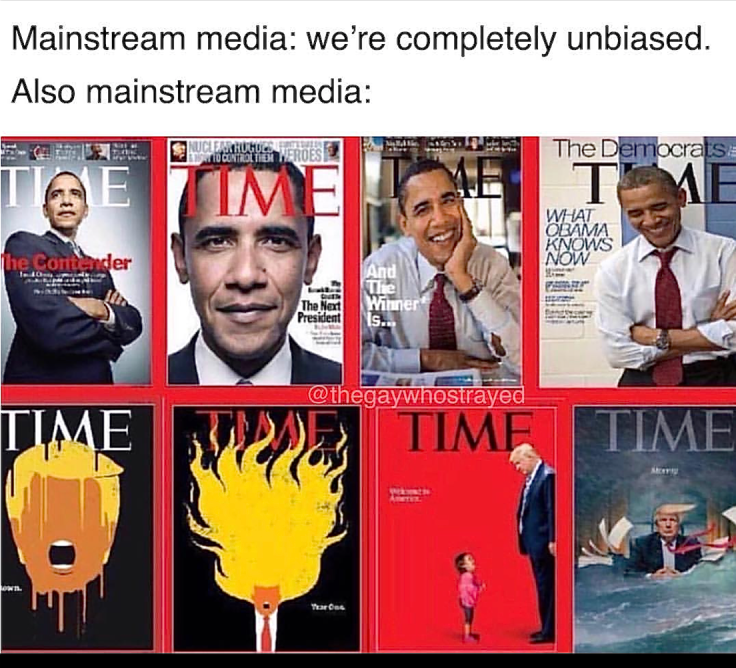
So President Trump’s battle with the American press is nothing new. Far from it. But the reaction from Congress is new — and decidedly more dangerous.
House Democrats reportedly are planning to open an official investigation into alleged abuses of power by President Trump for attacking the media, as well as the Justice Department and the FBI.
“Topics for the inquiry will include Trump’s public humiliation of former Attorney General Jeff Sessions, his attacks on actions by the liberal Ninth Circuit Court and his abuse of reporters as ‘dishonest’ and ‘enemies of the people,'” a source told Bloomberg News this week.
The Judiciary Committee led by Democrat Jerrold Nadler of New York will announce the probe in days, the official said. There are plans to hold public hearings with witnesses, but it’s not immediately clear who will be summoned. A spokesman for Nadler said he had no immediate comment.
Presidents have wide leeway to use their bully pulpit to attack foes and get their way. But the effort comes amid a broader push by Democrats now controlling the House to investigate actions of the president and his administration.
The official said there are questions about whether Trump, through some of his actions, is going too far and undermining the rule of law, a reference to established and defined limits on the arbitrary exercise of power.
The unnamed official said, “Trump’s attacks on the news media, singling them out for abuse and ridicule, potentially threatens freedom of the press, and also could serve to intimidate other journalists.”
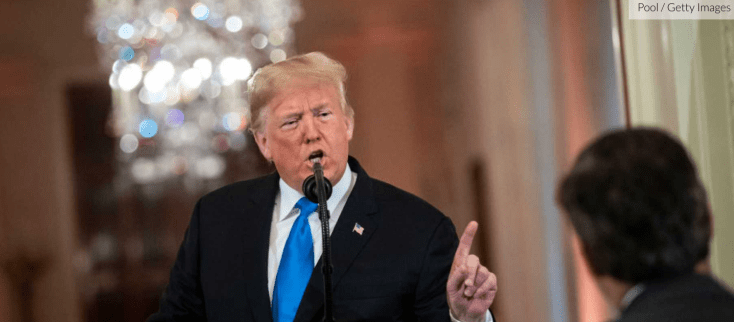
Trump, for his part, has repeatedly made clear that he is attacking the “fake news” media, not the media as a whole. “With all of the success that our Country is having, including the just released jobs numbers which are off the charts, the Fake News & totally dishonest Media concerning me and my presidency has never been worse,” Trump said last January. “Many have become crazed lunatics who have given up on the TRUTH!”
The latest move by Democrats to officially investigate Trump’s criticism is simply an attempt to tie up his agenda with hopes of winning back the White House in 2020. Still, every American should be concerned when the legislative body of the U.S. government uses its power to probe the executive over criticizing the news media.


Speaking to CNN Wednesday, Christine Hallquist, one of the nation’s first transgender gubernatorial candidates stated, “I’m not sure I even know what socialism is,” but added that she agrees with her party’s increasingly favorable view of the failed economic system.
“We need to pass it so we can find out what’s in it,” Hallquist added. “That’s the best reason to pass sweeping overhauls of things like healthcare and our economy: so you can test your policies on the nation like a bunch of little guinea pigs.”
Congressional Democrats Nancy Pelosi and Chuck Schumer also pushed for enacting socialism as soon as possible so the nation can find out what’s in it. “It worked for Obamacare. Well, for us, anyway,” Pelosi said in a press conference.
Finally, Alexandria Ocasio-Cortez chimed in on the conversation, stating that socialism should “like, double the economy or something because we take away all the money and then give it all back so that’s like 2 or 3 times as much money as there was at first.”

In what may be the most perfect illustration of why Congress boasts a 20 percent approval rating, Democratic Rep. Val Demings of Florida has given birth to the Vladimir Putin Transparency Act, a piece of trailblazing legislation which would require US intelligence agencies to sniff out all assets belonging to Russia’s president.
Co-sponsored by New York Republican Elise Stefanik, the bill serves as a powerful rebuke to the partisan politics that continue to paralyze the legislative branch.
As members of the House Intelligence Committee, the two lawmakers have hinted that the bill is payback for Russia’s alleged meddling in the 2016 election.
“The best way to assail the power of Putin and his enablers is to go after the illegal and secret financial streams that fund their operations,”Demings said in a statement. “It’s time to fight back and protect our democracy.”
Although his salary as Russian president would be peanuts for Jeff Bezos, Putin has been identified by his critics as one of the world’s richest man, although apart from statements no one bothered to provide any proof.
By some particularly creative accounts, the Russian leader may have an eye-watering $200 billion discreetly stashed away, maybe in a shoebox under his bed, or maybe in a PayPal account controlled by a trusted friend – nobody knows and that’s why the Vladimir Putin Transparency Act is so important.
The Kremlin on Thursday dismissed the legislation – which could also involve sanctioning Putin’s “discovered” assets – as a case of transparent Russophobia.


 Tom's Blog