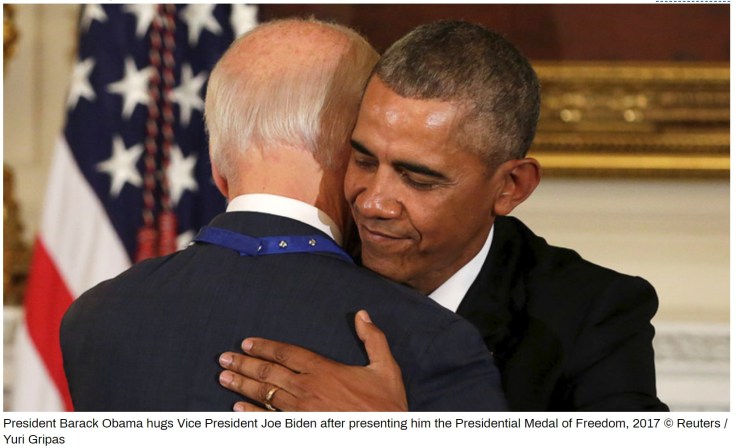
The White House had “not one whisper of scandal” under President Barack Obama – that’s what former VP Joe Biden would have one believe as a selling point for his presidential run. Wait, is that the sound of fact-checkers typing?
“The thing I’m proudest of,” Biden said on Friday of his time at Obama’s right hand, “Not one single whisper of scandal…not one, and that’s because of Barack.”
Joe Biden on his time in the White House with Obama:
Biden was speaking on ‘The View,’ a day after announcing his campaign for the presidency in 2020. The studio audience cheered and host Joy Behar chimed in, calling Barack Obama “amazing.” Of course, Biden is hardly going to besmirch his former partner on live television, and the view of presidents past tends to soften once they’ve left office.
But one has to wonder if the busy liberal fact-checkers would want to correct the Democrats’ favorite candidate, as his administration racked up its fair share of scandals during Obama’s eight years at the helm. Here’re three of the biggest:
Attack of the drones
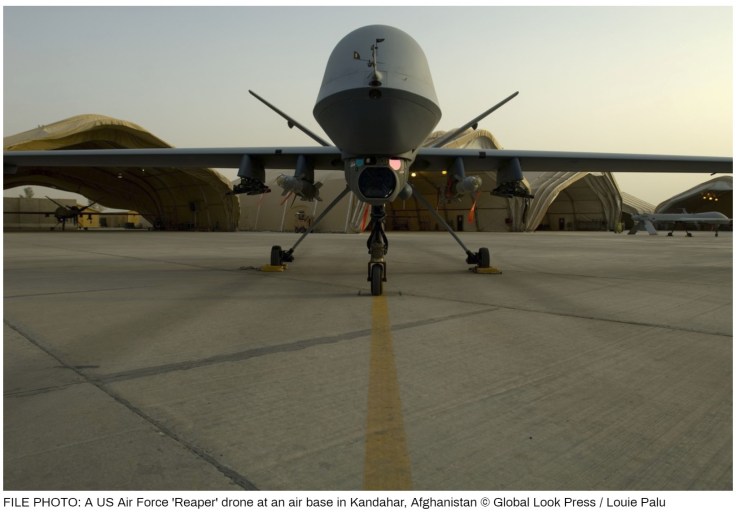
The escalation of drone warfare and the targeted killings of American citizens are some of the biggest and blackest marks on the Obama administration. Although Obama was not the first US president to deploy drones on the battlefield, he was a drone enthusiast from the outset, describing the killer robots as “effective,” “indispensable,” and “the only game in town,”and personally authorizing more strikes in his first year than George W. Bush did in his entire eight years in office.
The whole world became a battlefield. Drone strikes targeted enemies and innocents alike in Pakistan, Syria, Yemen, Somalia, Libya, Afghanistan, and Iraq. Of these strike zones, only Iraq, Afghanistan and Syria were active battlefields. At least four American citizens were killed, including a 16-year-old boy in Yemen, struck two weeks after his father.
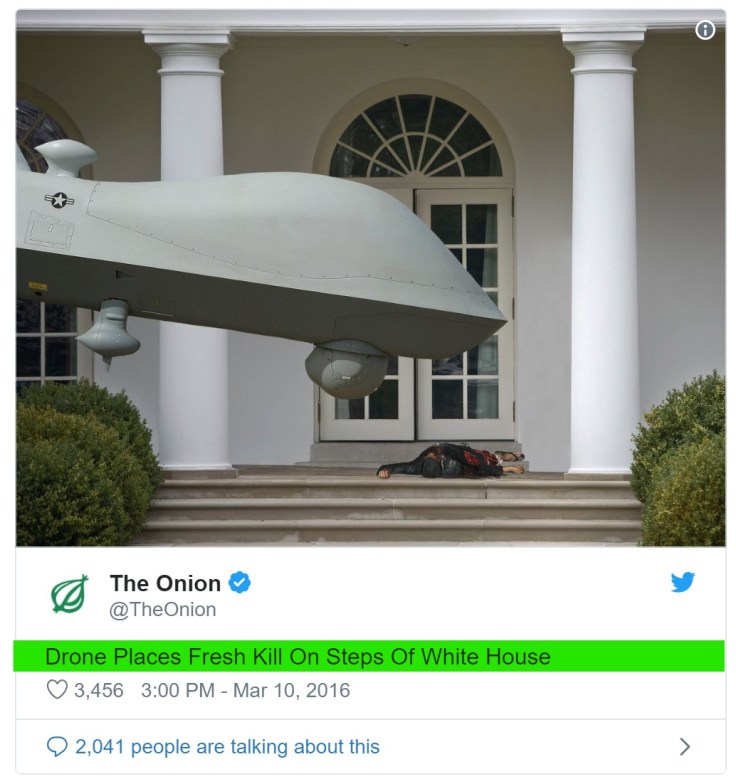
A grand total of 563 strikes killed between 384 and 807 civilians in non-battlefield countries, according to figures from the Bureau of Investigative Journalism.
Technically, it was all legal, of course – after the law in question was written by executive branch lawyers and hidden from Congress and the public.
Fast and Furious
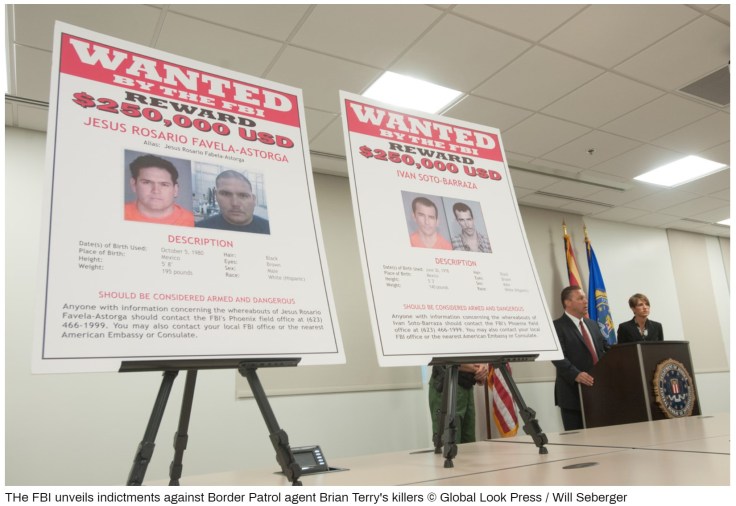
This Fast and Furious had nothing to do with Vin Diesel and Paul Walker. Instead, it was a ‘gunwalking’ scandal that Obama and then-Attorney General Eric Holder desperately tried to keep a lid on. In 2009, the Department of Justice came up with the amazingly bright idea of letting firearms – including .50 caliber rifles powerful enough to rip apart an engine block – fall into the hands of Mexican drug cartels, supposedly as a means of tracking them.
The plan backfired. Federal agents lost track of most of the 2,000 guns, which wound up being used in murders on both sides of the border, including the slaying of Border Patrol agent Brian Terry in 2010.
ALSO ON RT.COM’Fast & Furious’ cartel hitman who killed Border Patrol agent arrested in MexicoBut the Obama administration was non-apologetic. Instead, when the Republican-controlled House kicked up a stink, Holder sought to withhold documents relating to the scandal under subpoena, and Obama later withheld them under executive privilege when Holder was cited for contempt of Congress.
Years later, Mexican authorities are still finding ‘Fast and Furious’ guns at cartel crime scenes. One of the 19 weapons found at the hideout of notorious drug kingpin Joaquin ‘El Chapo’ Guzman in 2016 was a gun knowingly allowed into Mexico by the Justice Department.
Spy games – allied edition
As a Senator, Barack Obama condemned the Bush-era Patriot Act for violating the rights of American citizens. Once in office, he renewed the act, allowing intelligence agencies to carry out ‘roving wiretaps’ on American citizens and collect billions of phone call and text message records every year.
Much has been written about Obama’s expansion of the surveillance state, and his administration’s scattergun use of the 1917 Espionage Act to prosecute whistleblowers like NSA contractor Edward Snowden, but perhaps most personally embarrassing was the revelation – via WikiLeaks – that the US government spied on German Chancellor Angela Merkel’s phone calls.
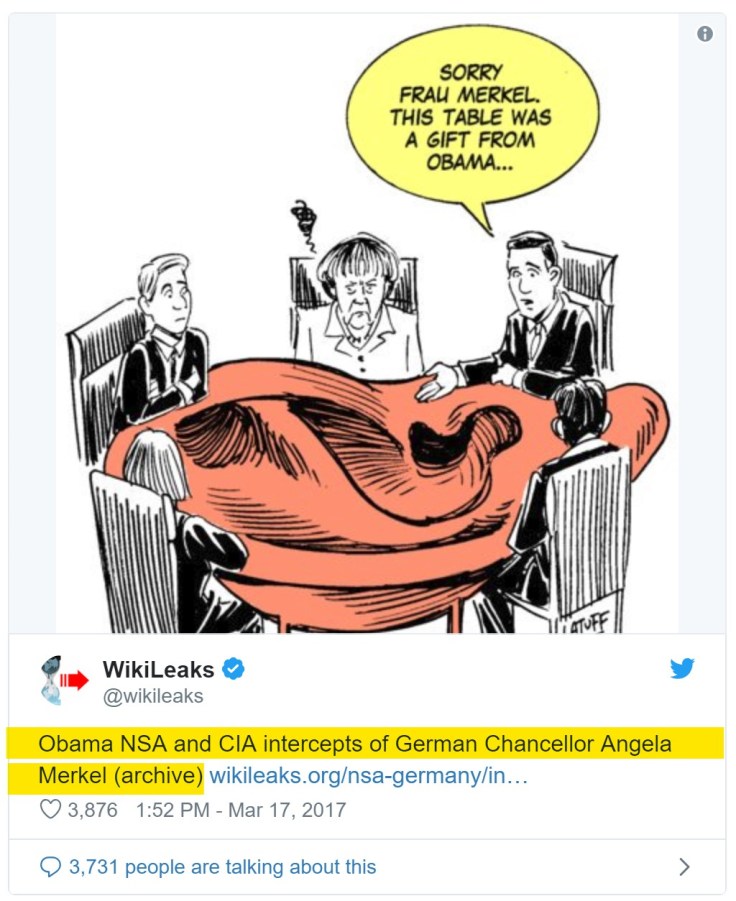
In an angry exchange with Obama, Merkel compared the US National Security Agency (NSA) to the dreaded East German Stasi. Suitably chastised, did Obama move to disarm the US’ surveillance apparatus before leaving office?
Nope. Days after Obama’s January 2017 farewell speech, then-Attorney General Loretta Lynch signed an order giving the NSA additional powers to share intercepted communications with the US’s 16 other intelligence agencies. These communications include internet traffic intercepted through the NSA’s dragnet ‘PRISM’ program, and phone, email, and satellite transmissions gathered abroad.
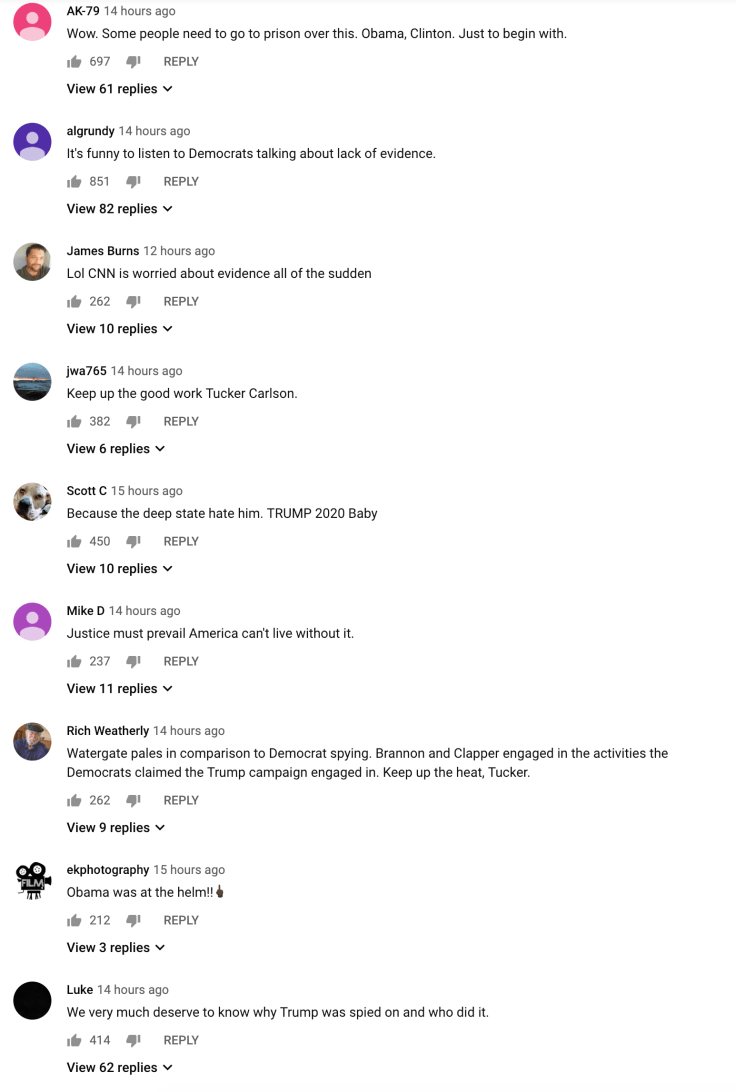
When it comes to totting up the scandals of the Obama years, honorable mention goes to the Benghazi attack that killed ambassador Chris Stevens, Hillary Clinton’s email server scandal, arming jihadist rebels in Syria, and if Republicans are to be believed, authorizing an FBI spying operation on the Trump campaign in 2016.
But Joe Biden would have the voters believe that it is Donald Trump who “will forever and fundamentally alter the character of this nation.”
Hillary Clinton didn’t hold back her glee at the arrest of Julian Assange, mocking both the publisher who she blames for her failed presidential run and the man she lost to in a single “we came, we saw, he died”-level one-liner.
“I do think it’s a little ironic that he may be the only foreigner that this administration would welcome to the United States,” Clinton quipped onstage at a speaking event in New York, chuckling at her own wit and basking in the audience’s mirth.
The former First Lady and failed presidential candidate was asked about the Wikileaks founder’s arrest during the talk – which also included her husband – by moderator (and former Clinton staffer) Paul Begala, who set the stage by quipping that it “couldn’t happen to a nicer guy” after reminding Clinton that she “had some familiarity with the work of Mr. Assange” to audience guffaws.
While Clinton had promised her audience before the talk not to mention President Donald Trump by name – a trick she stole from former president Barack Obama – she had no problem making excuses for his government’s actions.
“It is clear from the indictment that came out that it’s not about punishing journalism, it’s about assisting the hacking of the military computer to steal information from the US government,”she admonished. “The bottom line is that he has to answer for what he has done, at least as it’s been charged.”
Clinton infamously delivered the line “We came, we saw, he died” in reference to Libyan leader Muammar Gaddafi, who was brutally murdered during the NATO invasion of Libya that was one of the highlights of her tenure as Obama’s secretary of state.
WikiLeaks published thousands of incriminating and embarrassing private email messages stolen from former Clinton chief of staff John Podesta and the Democratic National Committee in the run-up to the 2016 election, exposing extensive corruption and malfeasance on the part of the Clinton campaign. Many – including Clinton herself – believe the leak cost her the election.
While Assange faces extradition to the US on charges he conspired with former Army intelligence analyst Chelsea (then Bradley) Manning to hack into a Pentagon computer in 2010 – charges totally unrelated to the 2016 DNC and Podesta leaks – Clinton clearly believes the later leaks are a more serious crime. The DNC – which the leaked emails revealed she controls financially – filed a lawsuit against WikiLeaks last year, accusing the publisher of colluding with Russia and the Trump campaign to “undermine public faith in the US democratic process, denigrate secretary Clinton, and harm her electability and potential presidency” – but never denying the emails’ contents were genuine.
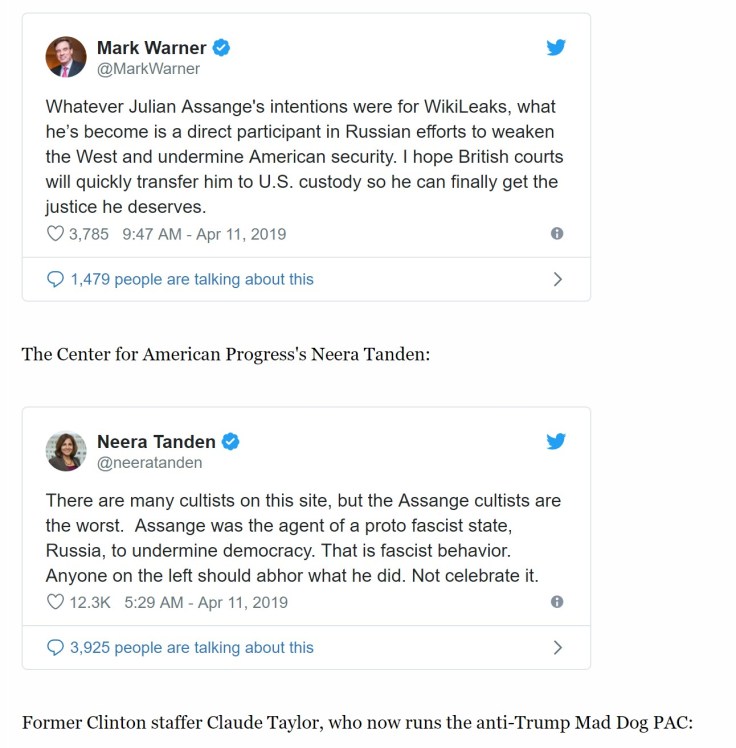
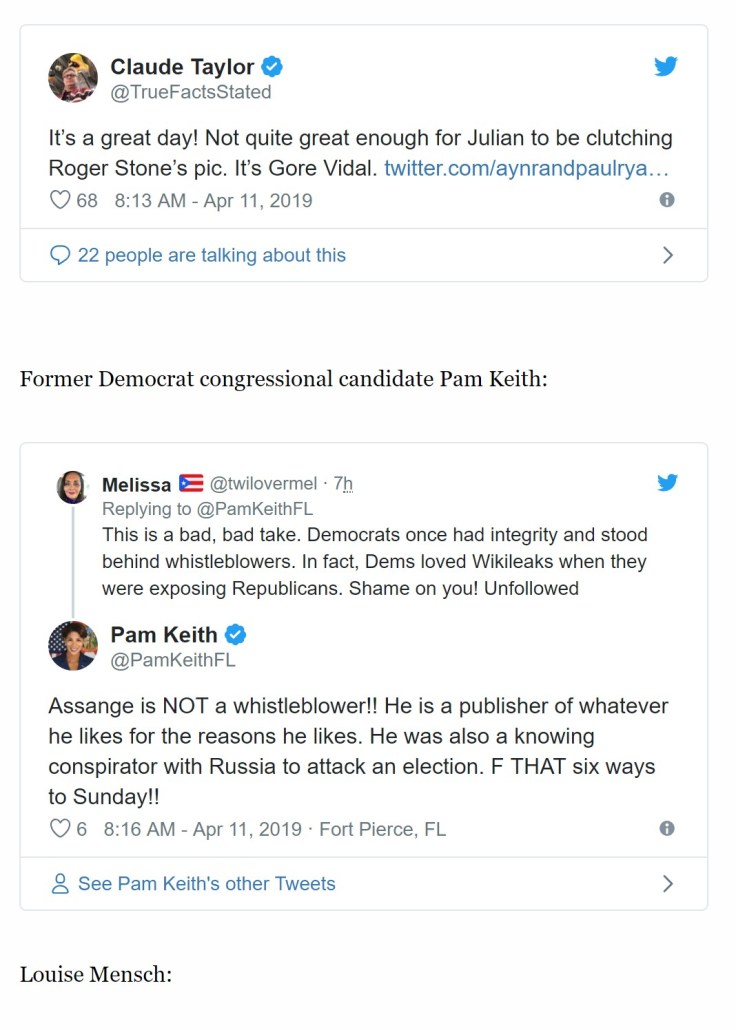
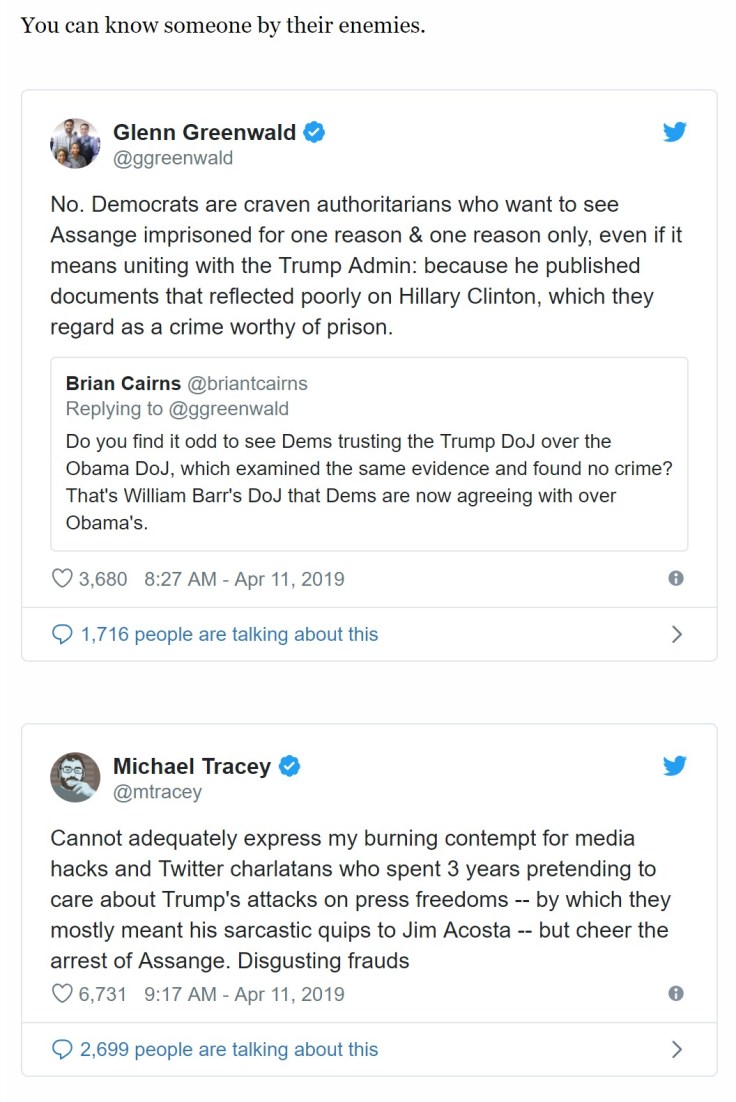
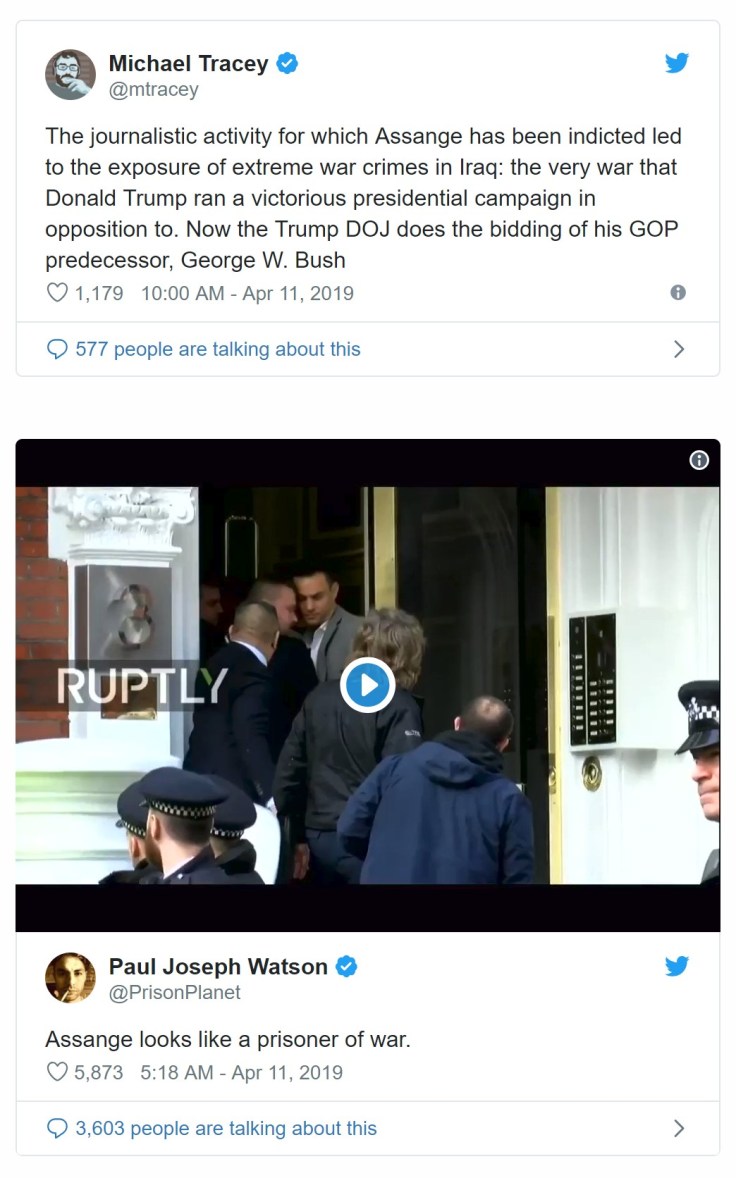
The so-called “liberal” media is ecstatic over the arrest and potential extradition of Wikileaks publisher Julian Assange.
Here’s MSNBC‘s resident deep state agent Malcolm Nance:
The security state agents for NBC/MSNBC cheering the Trump administration for arresting Assange because they're aut… twitter.com/i/web/status/1…— Glenn Greenwald (@ggreenwald) April 11, 2019
NBC News made the decision to hire a team of former military & intelligence officials to "report" & "analyze" the n… twitter.com/i/web/status/1…— Glenn Greenwald (@ggreenwald) April 11, 2019
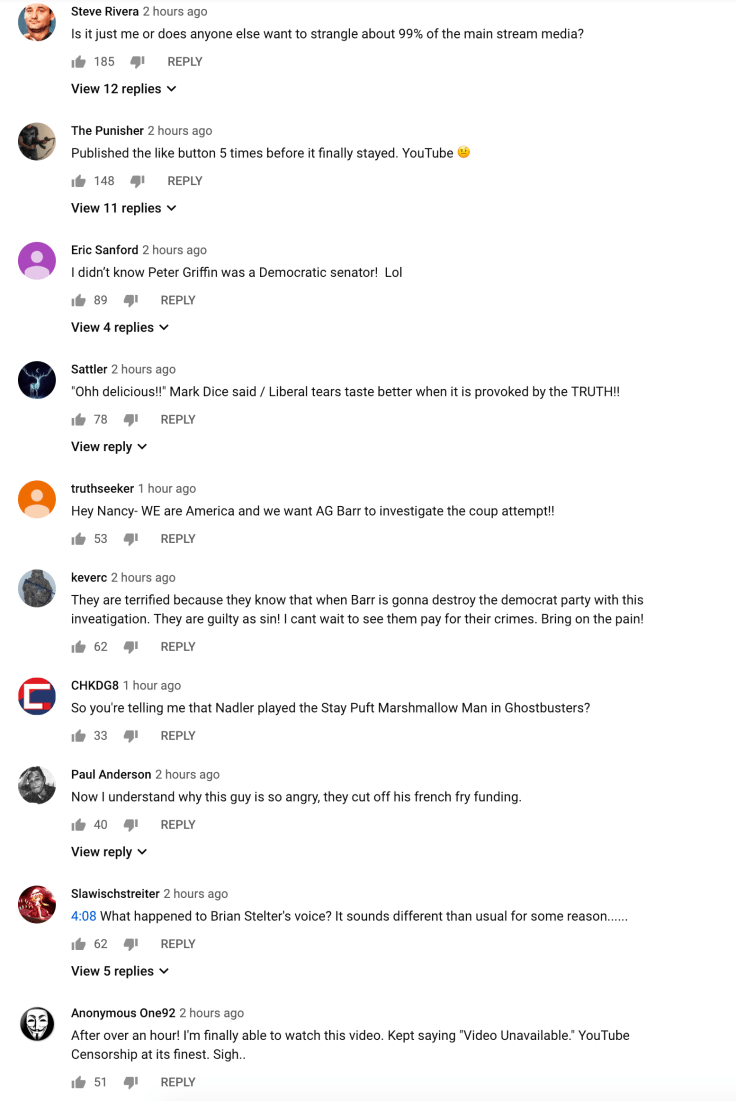
Watch as Dems and MSM talking heads freak out over AG Barr saying he will launch an investigation in Obama's Deep State spying activities against @realDonaldTrump#Spygate#Witchhunt#Spying
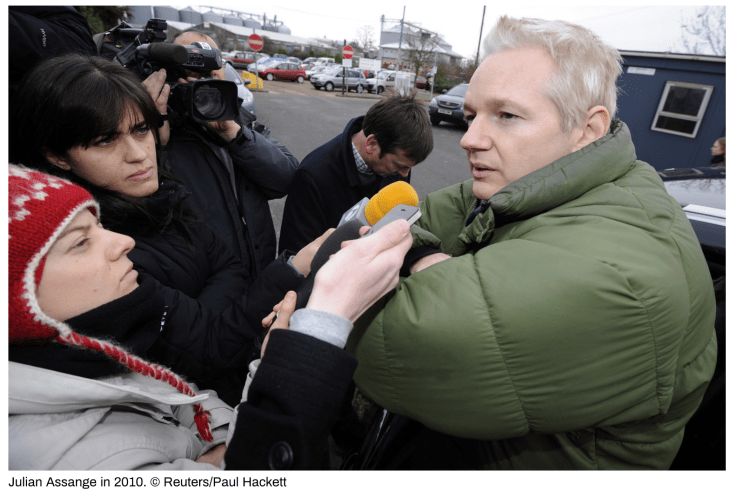
WikiLeaks founder Julian Assange has been taken to Westminster Magistrates Court after his arrest at the Ecuadorian Embassy in London. Photos of the whistleblower defiantly gesturing in a police van have emerged in the media.
Journalist flocked to the white police van carrying the whistleblower into the courthouse. With his hair tied back and sporting a full-length white beard, Assange offered cameras a hardy thumbs up with a wink.
Assange stepped into the courtroom wearing a dark polo shirt and quietly read his Gore Vidal book while he waited for his lawyers to arrive.
Earlier, Metropolitan Police said in a statement that they arrested Assange on a warrant issued by the Westminster Magistrates’ Court in June 2012, for failing to surrender to the court. The police were“invited into the embassy by the Ambassador,” it said.
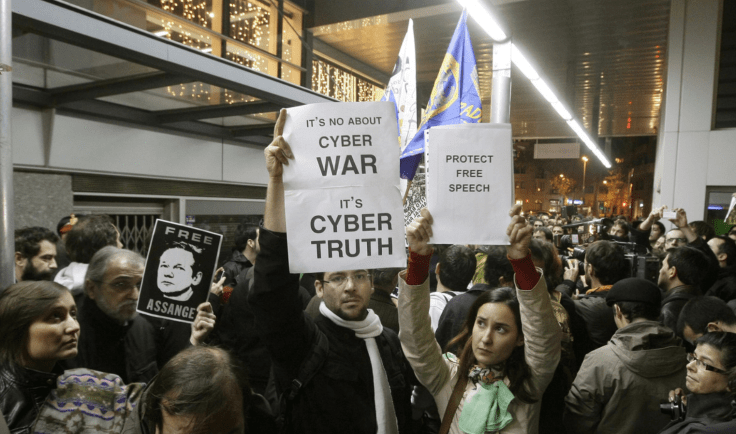
Julian Assange is a pioneering whistleblower in the digital-age, speaking truth to power like no one before him managed on such a significant scale. As he sits in a London jail cell, here’s why we should be grateful for his work.
By setting up the international non-profit organization WikiLeaksin Iceland in 2006, Assange irrevocably shifted the balance of power in the online era.
From humble beginnings as a master coder and hacker, caught by Australian authorities in 1995 but escaping a prison term, to the foremost publisher of sensitive, embarrassing and potentially dangerous material for the world to see, Assange’s storied career as a publisher and whistleblower has captured headlines, and the global public’s attention for years.
RT takes a look back at the key moments in Assange’s career that remind us why the world owes him such a debt of gratitude.
In 2007, WikiLeaks published emails exposing the manuals for Camp Delta, a controversial US detention center in Guantanamo Bay, Cuba which was the focal point for the US war on terror and the final destination for those captured as part of its extraordinary rendition campaign.
The following year the whistleblowing site posted emails from vice presidential candidate Sarah Palin’s private Yahoo email account, again exposing the newfound weakness of the political class in the digital age.
‘Collateral murder’
In a move that would reverberate online and across the world for years, in April 2010 WikiLeaks published footage of US forces summarily executing 18 civilians from an Apache attack helicopter in Iraq. It was an almost unheard of revelation of the brutality of war and the low price of human life in modern conflict.
2010 was a very busy year for Assange as in July WikiLeaks published more than 90,000 classified documents and diplomatic cables relating to the Afghanistan war.
Later, in October 2010, the organization published a raft of classified documents from the Iraq War. The logs were referred to as “the largest leak of classified documents in its history” by the US Department of Defense, according to the BBC. WikiLeaks followed that up in November by publishing diplomatic cables from US embassies around the world.
The Guantánamo Files and Spy Files
In April 2011, WikiLeaks published classified US military documents detailing the behavior and treatment of detainees held at Guantanamo Bay. This leak would be followed, once again, by a vast trove (250 million) of US diplomatic cables.
Throughout this sequence of widely-praised leaks, Assange invited a global audience behind the curtain of international diplomacy and warfare to expose the hidden truths of global power dynamics in a way which would forever change the power structure and landscape, affording a platform to analysts like Chelsea Manning to expose potential war crimes and misdeeds by the US military at large.
Assange and WikiLeaks would also help fellow whistleblowers like Edward Snowden to seek refuge from predatory US authorities, providing aid and comfort to those who risked everything in the pursuit of truth, exposing some of the most egregious mass surveillance programs the world has ever known.
DNC leak
As the 2016 US presidential election loomed, WikiLeaks published nearly 20,000 emails from the Democratic National Committee, which exposed the preferential treatment shown to then-candidate for president Hillary Clinton over her competitor Bernie Sandersin the Democratic primary. Assange boldly informed CNN’s Anderson Cooper that the release was indeed timed to coincide with the Democratic National Convention.
In October that same year, WikiLeaks began publishing emails from Clinton’s campaign manager John Podesta, which shed light on the inner workings of the Democratic nominee’s political machine.
These included excerpts from Clinton’s speeches to Wall Street, politically-motivated payments made to the Clinton Foundation, her consideration of choosing Microsoft co-founder Bill Gates or his wife as a potential running mate, her desire to covertly intervene in Syria, her intention to ring-fence China with missile defense batteries if it did not curtail North Korea’s nuclear ambitions.
Legacy
Following his arrest on the morning of April 11, 2019, Assange’s future remains unclear. He likely faces extradition to the US where it was inadvertently revealed that he has been charged under seal in a US federal court. Former Assange collaborator Chelsea Manning has been imprisoned for refusing to cooperate with the court in relation to the case.
Assange’s legal battle is only just beginning, it seems, but the international following he has forged will undoubtedly grant him a place in the pantheon of history’s champions of truth.
He remains a true digital pioneer, paving the way for so many to follow in his footsteps and expose the untold misdeeds of the powerful, be they political figures or entire militaries. Assange has defiantly shown what a powerful tool digital technology can be and how easily the dynamics of power can be shifted in the 21st century by those brave enough. Unfortunately, he also showed the consequences of wielding such power in the face of such overwhelming international and political opposition.