Comey declares that electronic surveillance is not the same as spying, gives no proof.
By Tom Pappert
During an appearance on CNN, the disgraced former FBI director claimed that “electronic surveillance” is not the same as “spying” in response to Attorney General Bill Barr’s Congressional testimony earlier this week.
James Comeyappeared on CNN yesterday to split hairs regarding the spying accusation raised by Barr during his second day of Congressional testimony. Barr made clear that he believes “spying did occur,” and that he has started an investigation into the matter, though questions remain as to whether it was done legally or as part of an extralegal fishing expedition to find dirt on or sabotage President Donald J. Trump’s campaign.
Comey seemingly admitted that “electronic surveillance”did occur, but objected to use of the term “spying” during the interview.
“With respect to Barr’s comments, I really don’t know what he’s talking about when he talks about spying on the campaign,” said Comey. “It’s concerning, because the FBI and the department of justice conduct court ordered electronic surveillance.”
While Big League Politics will leave these definitions to the legal experts, in Cornell Law School’s definition of “electronic surveillance,” they offer several examples consider what most Americans would consider spying.
According to the school, “wiretapping, bugging, videotaping; geolocation tracking such as via RFID, GPS, or cell-site data; data mining, social media mapping, and the monitoring of data and traffic on the Internet” are all examples of “electronic surveillance.”
Ironically, President Trump was derided for declaring that President Obama had his “wires tapped” on Twitter in 2017. Comey seems to admit this type of “electronic surveillance” occurred, though stops short of clarifying what types were used.
At this point, regardless of the nomenclature, it only remains to be seen whether the FISA warrant used to gather “electronic surveillance” or to “spy” on President Trump’s campaign was legal, or simply an effort to gain intelligence on failed presidential candidate Hillary Clinton’s competition.
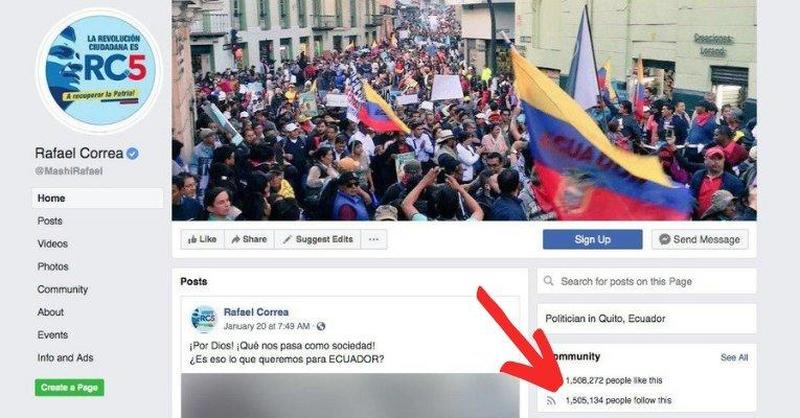
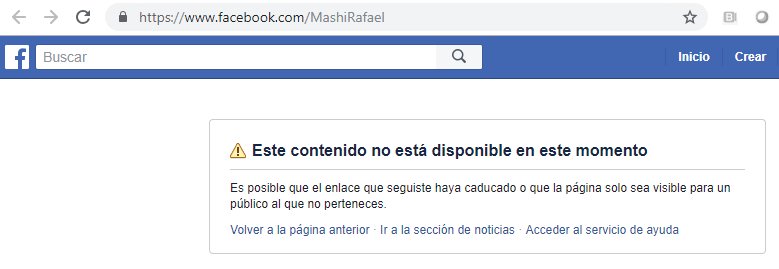
Facebook has unpublished the page of Ecuador’s former president, Rafael Correa, the social media giant confirmed on Thursday, claiming that the popular leftist leader violated the company’s security policies.
In a statement republished by Ecuadorean newspaper El Comercio, a company spokesperson said:
“Protecting the privacy and security of people is central to Facebook [and] we have clear policies that do not allow the disclosure of personal information such as phone numbers, addresses, bank account data, cards, or any record or data that could compromise the integrity physical or financial of the people in our community.”
The move comes on the same day that Ecuador’s government allowed British security personnel to enter their embassy in London to arrest journalist and WikiLeaks founder Julian Assange, who has been sought by U.S. officials for years due to his role in releasing scandalous information implicating Washington in a range of crimes, including war crimes.
Assange, 47, had been living at the Embassy of Ecuador in London since 2012, when then-President Correa granted political asylum to the Australian amid the British government’s attempts to detain him. At the time, Correa called Eduador’s actions an act of sovereign “duty.”
Ecuador’s current leader, Lenin Moreno, was openly opposed to Assange, whom he referred to on various occasions as a “miserable hacker,” an “irritant,” and a “stone in the shoe” of his government. Moreno’s distancing from the asylee came following a 2017 meeting with Trump campaign confidant and political “fixer” Paul Manafort, where the two discussed Ecuador’s handover of Assange to U.K. and U.S. authorities.
In March, WikiLeaks published a tranche of documents dubbed the INA Papers linking President Lenin Moreno to the INA Investment Corporation, an offshore shell company used by Moreno to procure furniture, property, and various luxury items.
The account number for the offshore account allegedly used by the president to launder money was shared across Ecuadorean social networks by netizens of all political stripes, including by Correa – who had about 1.5 million followers and whose Facebook page enjoyed more interactions and attention than that of President Moreno himself.
The account number was also shared alongside personal photos of President Moreno enjoying lavish breakfasts and dinners of lobster—imagery considered especially damning for the people of Ecuador given Moreno’s previous boasting of an austere poverty diet consisting of eggs and white rice.
It also came amid attempts by the neoliberal Ecuadorean government to curry favor with financiers in Europe and the United States amid the continuing debt crisis. In March, the IMF finally bailed out Moreno’s government to the tune of $4.2 billion.
Prior to the removal of the page, Correa lambasted his successor in a series of posts that still remain on Twitter at the time of this writing.
Rafael Correa
✔@MashiRafael
Christine:
I do not know what to tell you. I only ask forgiveness from me and my people. A traitor and corrupt like Moreno does not represent us. I promise not to rest until I see him in jail, where he deserves to be.
Mrs. Christine Assange@AssangeMrs
Shame on you @Lenin#Moreno!
May the Ecuadorean people seek vengeance upon you, you dirty, deceitful, rotten traitor!
May the face of my suffering son haunt your sleepless nights..
And may your soul writhe forever in torturous Purgatory as you have tortured my beloved son! https://twitter.com/SkyNews/status/1116283158943666176 …
Since 2015, Correa—who lives with his family in Brussels, Belgium—had used the social platform to great effect, using strongly-worded posts, video interviews, and live-streams as a platform amid the Ecuadorean media’s de facto blackout of the former leader, who remains reviled by the center-right former opposition and sections of the country’s left.
Former President Correa minced no words in his assessment of Moreno, denouncing him in an English-language tweet as “the greatest traitor in Ecuadorian and Latin American history … Moreno is a corrupt man, but what he has done is a crime that humanity will never forget.”
Rafael Correa
✔@MashiRafael
The greatest traitor in Ecuadorian and Latin American history, Lenin Moreno, allowed the British police to enter our embassy in London to arrest Assange.
Moreno is a corrupt man, but what he has done is a crime that humanity will never forget.
Barnaby Nerberka@barnabynerberka
BREAK: Full @Ruptly video of WikiLeaks founder Julian Assange’s arrest by British police this morning
In a separate tweet responding to Moreno’s announcement of the handover, Correa further tore into what he called “one of the most atrocious acts [and the] fruit of servility, villainy and revenge.”
“From now on worldwide, the scoundrel and betrayal can be summarized in two words: Lenin Moreno,” the popular former president added.
The removal of Correa’s page for violating Facebook’s “community standards” is an unprecedented move, and the former statesman is the most high-profile public political figure to ever be removed from the social platform–placing the economist and icon of Latin American “socialism of the 21st century” in the same unlikely category as right-wing conspiracy theorist and broadcaster Alex Jones.
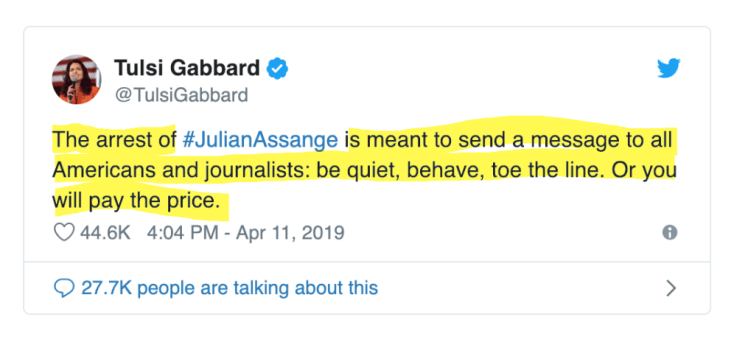
Democrat 2020 presidential candidate Rep Tulsi Gabbard on Thursday forcefully condemned the arrest of Wikileaks publisher Julian Assange saying it was “meant to send a message” to Americans to “be quiet, behave [and] toe the line” or “you will pay the price.”
“The arrest of #JulianAssange is meant to send a message to all Americans and journalists: be quiet, behave, toe the line. Or you will pay the price,” Gabbard said on Twitter.
“The purpose of arresting #JulianAssange is to send a message to the people, especially journalists, to be quiet and don’t get out of line. If we, the people, allow the government to control us through fear, we are no longer free, we are no longer America,” Gabbard said in a follow-up tweet, sharing video of her appearance on CNN Thursday afternoon.
The purpose of arresting #JulianAssange is to send a message to the people, especially journalists, to be quiet and don’t get out of line. If we, the people, allow the government to control us through fear, we are no longer free, we are no longer America. pic.twitter.com/2sedynREP9
On Tuesday, Gabbard released a video saying, “Netenyahu and Saudi Arabia want to drag the United States into war against Iran and Trump is submitting to their wishes.”
“The cost in lives and money will be beyond our imagination.”
Netanyahu and Saudi Arabia want to drag the United States into war with Iran, and Trump is submitting to their wishes. The cost in money and lives will be catastrophic. pic.twitter.com/7GbO92sE3h
Tulsi Gabbard successfully qualified for the Democratic debates on Wednesday after getting over 65,000 individual donors for her campaign.
Thank you! I’m extremely grateful that over 65,000 of you have now donated to our campaign, ensuring our voice will be heard in the upcoming debates. For a small campaign that doesn’t accept PAC money, I knew we had to rely fully on the power of the people. Aloha & Mahalo! pic.twitter.com/Uw303e2JUh
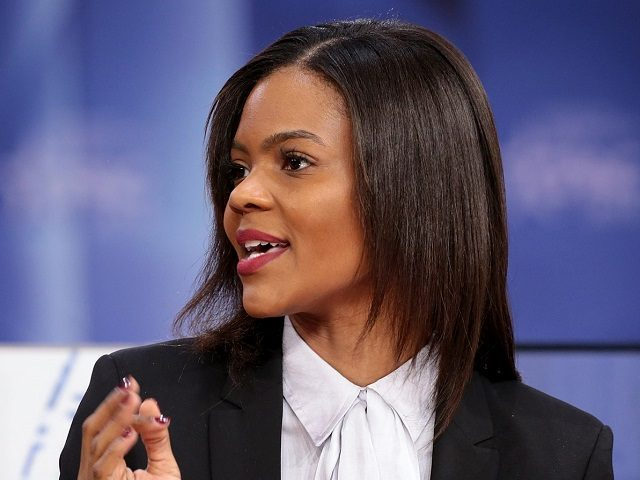
PragerU announced on Wednesday that YouTube has placed another of its videos in “restricted mode,” meaning that not everyone who visits the video-sharing website will be able to watch it. The restricted video is of Candace Owens’ powerful testimony before the House Judiciary Committee hearing on Tuesday.
YouTube has placed yet another PragerU video in “restricted mode,” according to the organization.
This time, the restricted video is of Candace Owens’ testimony before the House Judiciary Committee hearing on Tuesday, which had created several viral moments, one of which has also recently become the most watched C-SPAN video of a House hearing on Twitter.
When YouTube puts a video in “restricted mode,” it means that the video is censored from all users that have enabled the website’s restricted mode feature, which typically include libraries, schools, public institutions, or in any setting where viewers may belong to a younger demographic.
The restricted mode feature is used in order to block videos that have been deemed inappropriate, such as pornography or violence.
RESTRICTED:@Youtube has placed our video of @RealCandaceO's testimony before the House Judiciary Committee in restricted mode.
Why is Youtube trying to prevent people from hearing Candace's words? #RT to share this video! https://t.co/oJZ2T2qCi6
“RESTRICTED: @Youtube has placed our video of @RealCandaceO’s testimony before the House Judiciary Committee in restricted mode,”tweeted PragerU on Wednesday, “Why is Youtube trying to prevent people from hearing Candace’s words?”
“@YouTube clearly has a political bias against conservatives,” continued PragerU in a second tweet, “It just placed our video of @RealCandaceO in restricted mode.”
This is not the first of PragerU’s videos to have ended up on YouTube’s restriction list. According to the organization’s founder, Dennis Prager, 80 of their 400 videos are on a restricted list, meaning that the videos are “lumped with pornography and violence, so that kids in libraries and schools can’t see them,” said Prager.
“If you are not on the left, you are to be shut down,” said Prager to Breitbart News in an interview on SiriusXM’s Breitbart News Daily last February, “We have never, ever had anything like this in American history.”
“We are in a dark age because of the left’s control of Silicon Valley, academia, and media,” added Prager, “It’s a dark age that we are living in right now, and it is entirely left-wing induced.”
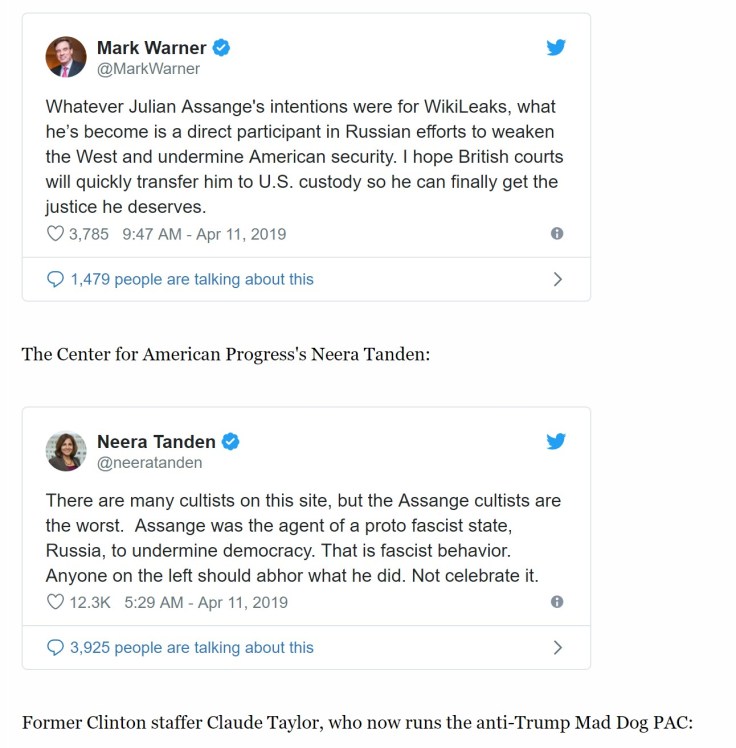
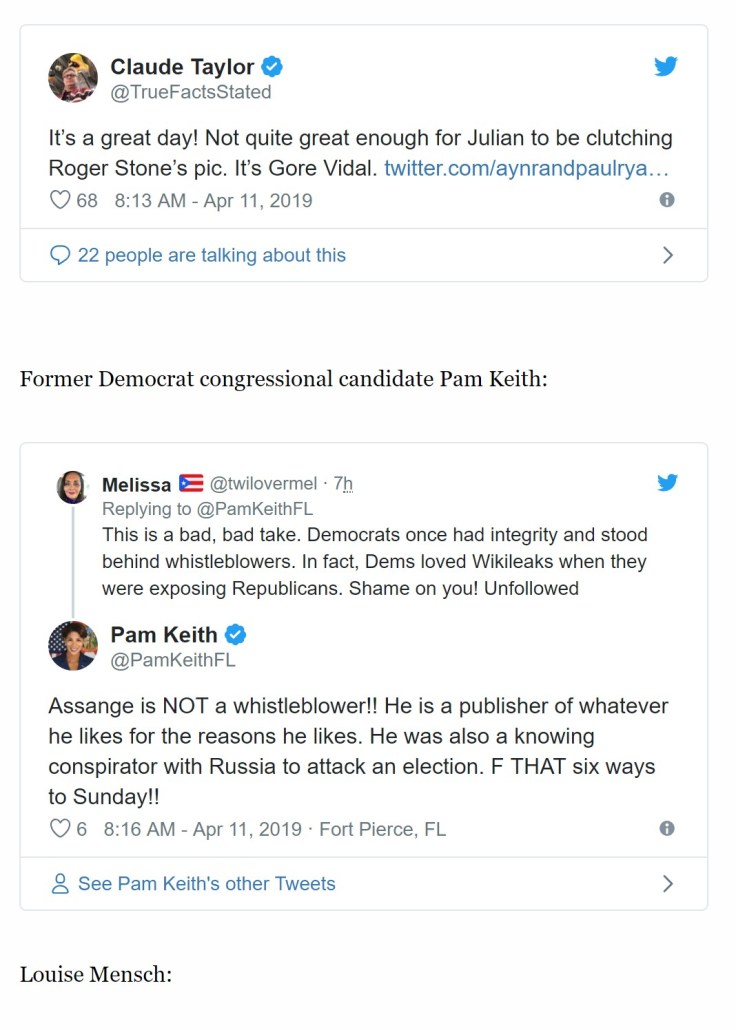
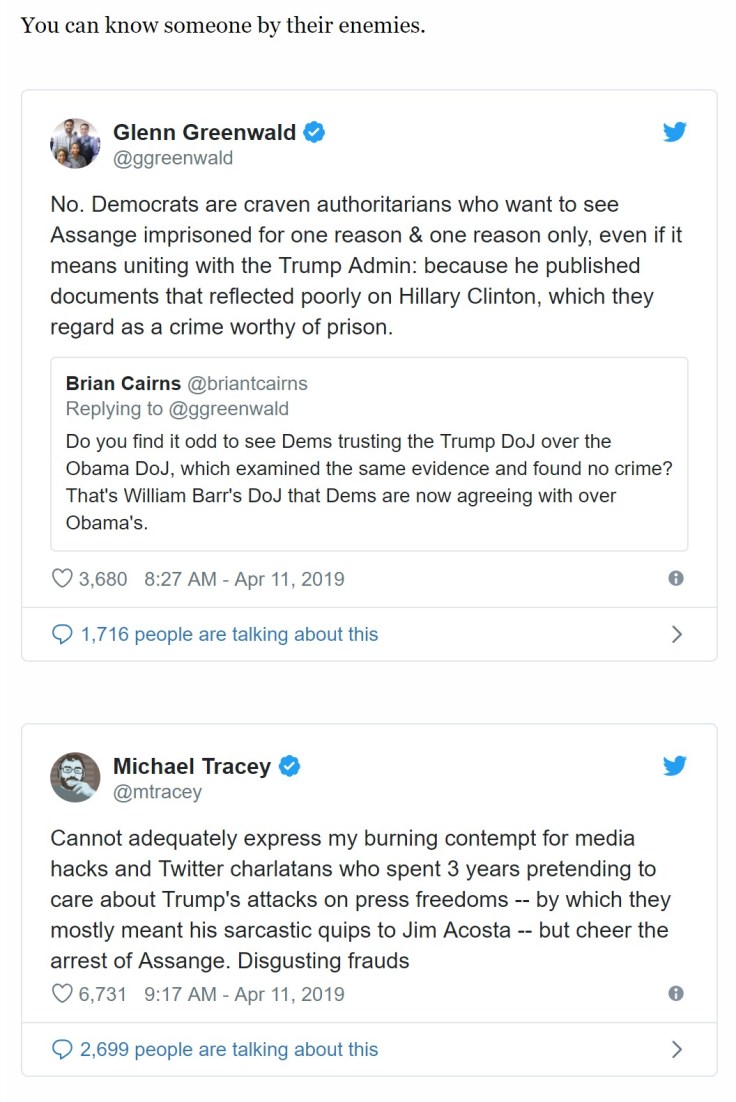
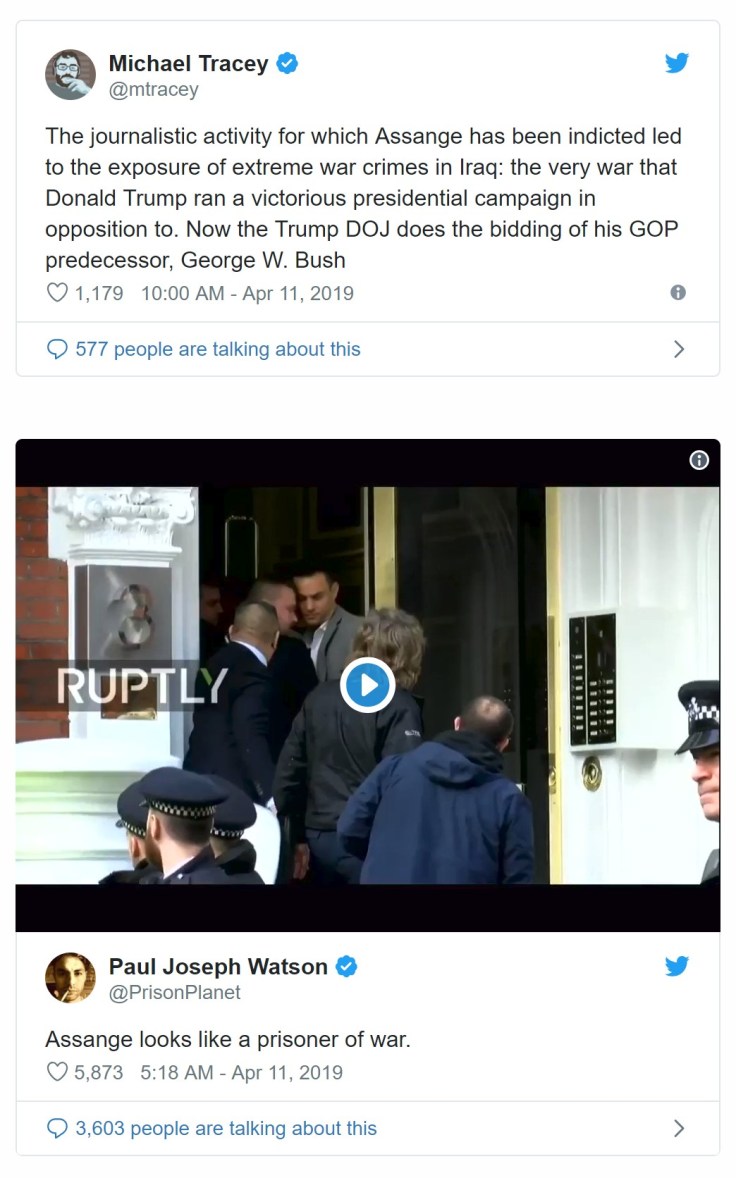
The so-called “liberal” media is ecstatic over the arrest and potential extradition of Wikileaks publisher Julian Assange.
Here’s MSNBC‘s resident deep state agent Malcolm Nance:
The security state agents for NBC/MSNBC cheering the Trump administration for arresting Assange because they're aut… twitter.com/i/web/status/1…— Glenn Greenwald (@ggreenwald) April 11, 2019
NBC News made the decision to hire a team of former military & intelligence officials to "report" & "analyze" the n… twitter.com/i/web/status/1…— Glenn Greenwald (@ggreenwald) April 11, 2019
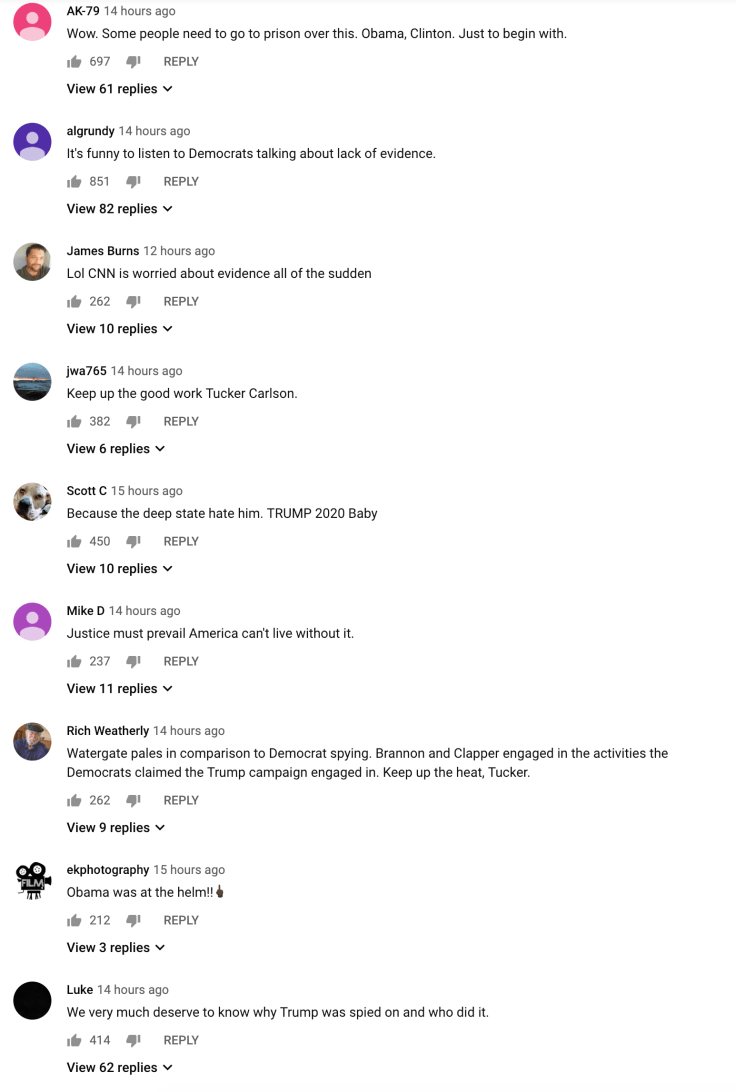
Watch as Dems and MSM talking heads freak out over AG Barr saying he will launch an investigation in Obama's Deep State spying activities against @realDonaldTrump#Spygate#Witchhunt#Spying
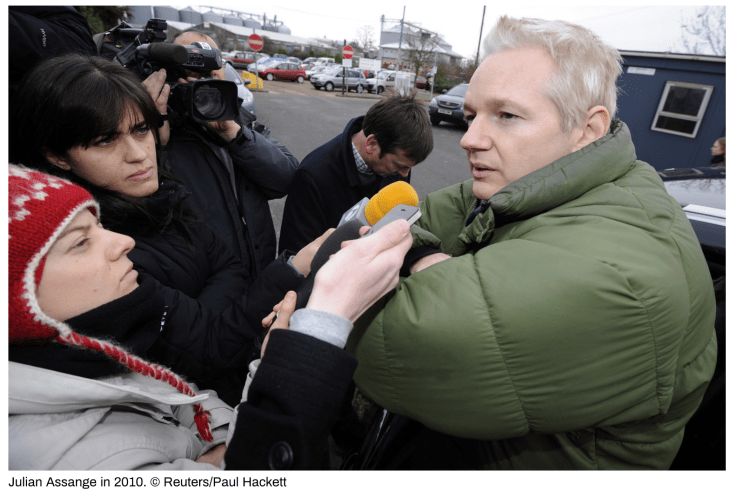
WikiLeaks founder Julian Assange has been taken to Westminster Magistrates Court after his arrest at the Ecuadorian Embassy in London. Photos of the whistleblower defiantly gesturing in a police van have emerged in the media.
Journalist flocked to the white police van carrying the whistleblower into the courthouse. With his hair tied back and sporting a full-length white beard, Assange offered cameras a hardy thumbs up with a wink.
Assange stepped into the courtroom wearing a dark polo shirt and quietly read his Gore Vidal book while he waited for his lawyers to arrive.
Earlier, Metropolitan Police said in a statement that they arrested Assange on a warrant issued by the Westminster Magistrates’ Court in June 2012, for failing to surrender to the court. The police were“invited into the embassy by the Ambassador,” it said.
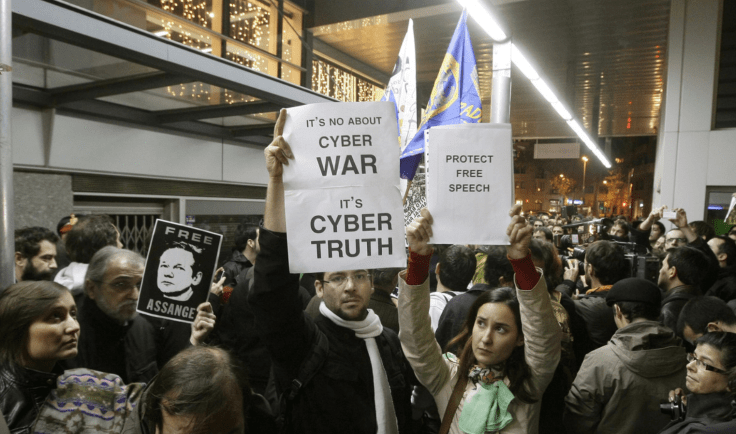
Julian Assange is a pioneering whistleblower in the digital-age, speaking truth to power like no one before him managed on such a significant scale. As he sits in a London jail cell, here’s why we should be grateful for his work.
By setting up the international non-profit organization WikiLeaksin Iceland in 2006, Assange irrevocably shifted the balance of power in the online era.
From humble beginnings as a master coder and hacker, caught by Australian authorities in 1995 but escaping a prison term, to the foremost publisher of sensitive, embarrassing and potentially dangerous material for the world to see, Assange’s storied career as a publisher and whistleblower has captured headlines, and the global public’s attention for years.
RT takes a look back at the key moments in Assange’s career that remind us why the world owes him such a debt of gratitude.
In 2007, WikiLeaks published emails exposing the manuals for Camp Delta, a controversial US detention center in Guantanamo Bay, Cuba which was the focal point for the US war on terror and the final destination for those captured as part of its extraordinary rendition campaign.
The following year the whistleblowing site posted emails from vice presidential candidate Sarah Palin’s private Yahoo email account, again exposing the newfound weakness of the political class in the digital age.
‘Collateral murder’
In a move that would reverberate online and across the world for years, in April 2010 WikiLeaks published footage of US forces summarily executing 18 civilians from an Apache attack helicopter in Iraq. It was an almost unheard of revelation of the brutality of war and the low price of human life in modern conflict.
2010 was a very busy year for Assange as in July WikiLeaks published more than 90,000 classified documents and diplomatic cables relating to the Afghanistan war.
Later, in October 2010, the organization published a raft of classified documents from the Iraq War. The logs were referred to as “the largest leak of classified documents in its history” by the US Department of Defense, according to the BBC. WikiLeaks followed that up in November by publishing diplomatic cables from US embassies around the world.
The Guantánamo Files and Spy Files
In April 2011, WikiLeaks published classified US military documents detailing the behavior and treatment of detainees held at Guantanamo Bay. This leak would be followed, once again, by a vast trove (250 million) of US diplomatic cables.
Throughout this sequence of widely-praised leaks, Assange invited a global audience behind the curtain of international diplomacy and warfare to expose the hidden truths of global power dynamics in a way which would forever change the power structure and landscape, affording a platform to analysts like Chelsea Manning to expose potential war crimes and misdeeds by the US military at large.
Assange and WikiLeaks would also help fellow whistleblowers like Edward Snowden to seek refuge from predatory US authorities, providing aid and comfort to those who risked everything in the pursuit of truth, exposing some of the most egregious mass surveillance programs the world has ever known.
DNC leak
As the 2016 US presidential election loomed, WikiLeaks published nearly 20,000 emails from the Democratic National Committee, which exposed the preferential treatment shown to then-candidate for president Hillary Clinton over her competitor Bernie Sandersin the Democratic primary. Assange boldly informed CNN’s Anderson Cooper that the release was indeed timed to coincide with the Democratic National Convention.
In October that same year, WikiLeaks began publishing emails from Clinton’s campaign manager John Podesta, which shed light on the inner workings of the Democratic nominee’s political machine.
These included excerpts from Clinton’s speeches to Wall Street, politically-motivated payments made to the Clinton Foundation, her consideration of choosing Microsoft co-founder Bill Gates or his wife as a potential running mate, her desire to covertly intervene in Syria, her intention to ring-fence China with missile defense batteries if it did not curtail North Korea’s nuclear ambitions.
Legacy
Following his arrest on the morning of April 11, 2019, Assange’s future remains unclear. He likely faces extradition to the US where it was inadvertently revealed that he has been charged under seal in a US federal court. Former Assange collaborator Chelsea Manning has been imprisoned for refusing to cooperate with the court in relation to the case.
Assange’s legal battle is only just beginning, it seems, but the international following he has forged will undoubtedly grant him a place in the pantheon of history’s champions of truth.
He remains a true digital pioneer, paving the way for so many to follow in his footsteps and expose the untold misdeeds of the powerful, be they political figures or entire militaries. Assange has defiantly shown what a powerful tool digital technology can be and how easily the dynamics of power can be shifted in the 21st century by those brave enough. Unfortunately, he also showed the consequences of wielding such power in the face of such overwhelming international and political opposition.










 Tom's Blog