By Emma R. – 16 January 2019

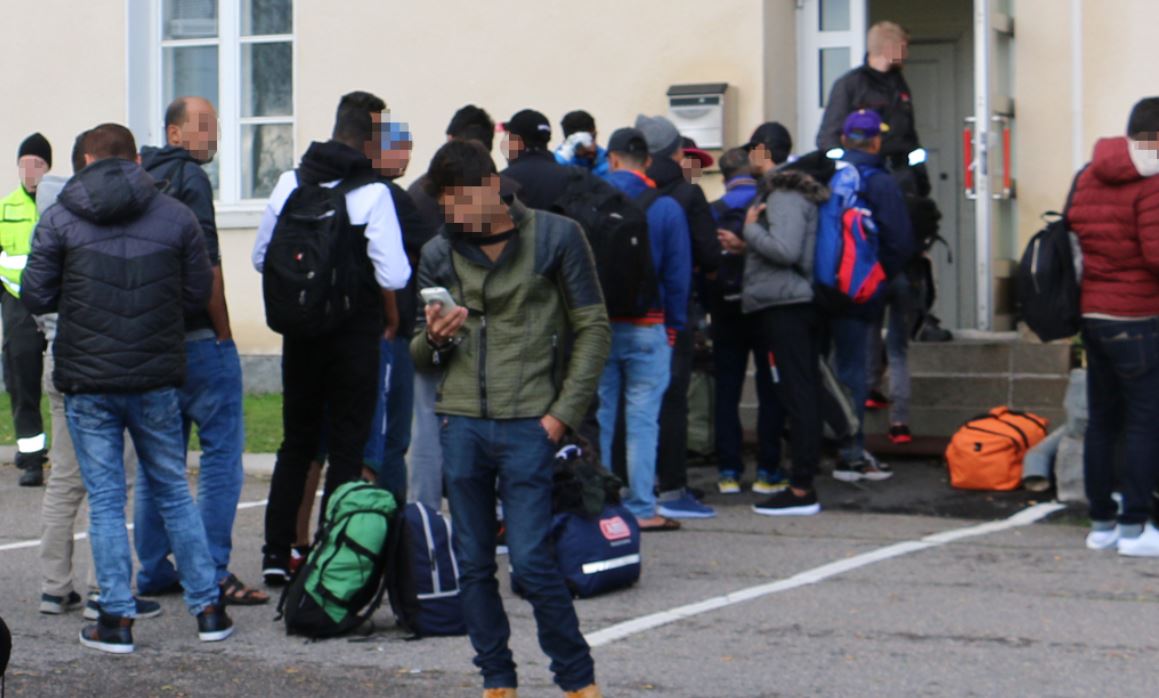
A number of cases of rape and abuse of children, with foreign perpetrators, have been revealed in Oulu in the northern parts of Finland since last autumn, Fria Tider reports.


By Emma R. – 16 January 2019


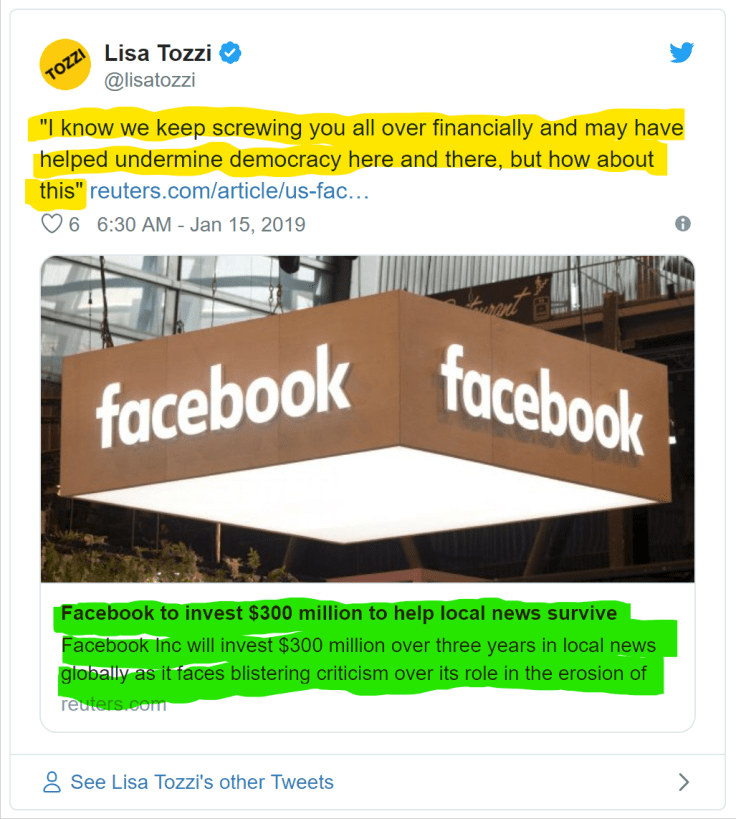
With print newspapers’ advertising revenues in freefall for almost two decades, and local newspapers conglomerating and laying off staff to survive, the industry will take any help it can get. Facebook – with its mountains of fake news, clickbait, and a tricky environment for digital publishers to make money in – has in no small way contributed to the precarious state of modern journalism, but the company now wants to give the fourth estate a booster shot.
The company decided to focus specifically on local news. Vice President of Global News Partnerships Campbell Brown said in a blog post that after examining what kind of news people want to see on Facebook, the company “heard one consistent answer: people want more local news, and local newsrooms are looking for more support.”
Facebook’s support for the new industry has thus far been limited to funding a small selection of news programs from CNN, Fox News, and a handful of others. The social media giant has been far more keen to play policeman, partnering up with an array of third-party “fact checkers”last year to filter out “false narratives” and “intentionally divisive headlines and language that exploit disagreements and sow conflict”from users’ timelines.
Troublingly, even Facebook’s own staff could not explain what exactly the term “false narratives” meant. Additionally, Facebook CEO Mark Zuckerberg met with a consortium of media executives shortly afterwards to talk about his company’s use of algorithms to promote ‘reputable news’ and suppress other content, all to ensure that “people can get trustworthy news on our platform.”
Drawn from CNN, the New York Times, Buzzfeed and others, the overwhelmingly liberal makeup of the panel of executives did little to persuade conservatives – who have long accused the platform of bias – that Facebook would act impartially.
Neither did Facebook’s announcement in August that it would partner up with the aggressively pro-NATO think tank, the Atlantic Council. The Atlantic Council vowed to serve as Facebook’s “eyes and ears” in the fight against fake news, but that fight resulted in hundreds of alternative news pages being purged from the platform in October. The 800 pages spanned the political spectrum, and their removal triggered cries of censorship and accusations that Facebook was waging “a wider war on dissident narratives.”
One banned cartoonist declared Facebook to be “land of the censorship and home of the fake,” while anti-war journalist Caitlin Johnstone called the purge the “latest escalation of corporate censorship used as state censorship in the West.”
Can Facebook then be trusted to fund local journalism?
The answer is unclear. The $300 million will be given to a number of organizations to distribute further. Some of these organizations, like the Pulitzer Center, are household names. Others, like Report for America, are less well known. The Pulitzer Center will receive $5 million to award as grants to local newsrooms around the country, and social justice non-profit Report for America will get $2 million to go towards the hiring of 1,000 journalists over the next five years.
Pulitzer Center founder and executive director Jon Sawyer welcomed the funding, and took time to “applaud Facebook’s commitment to the editorial independence that is absolutely essential to our success.”
No matter how hands-off Facebook stays, some commentators were angered by the company’s new-found role as champion of the local press. After contributing in a large way to the decline of print media, Facebook’s $300 million investment in the industry is, as one cartoon implied, “peanuts.”


by Chris Tomlinson
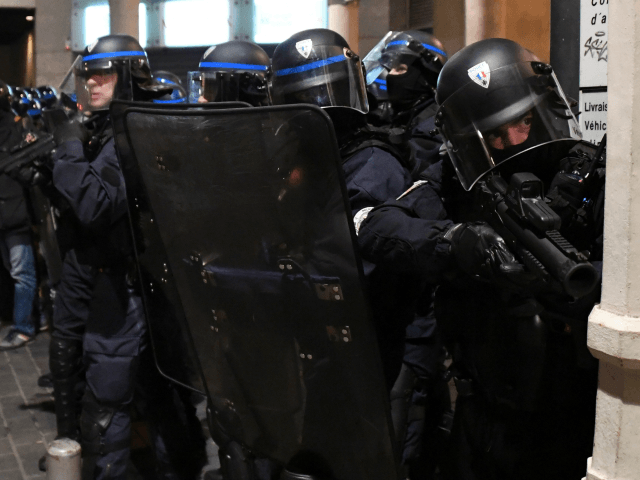
French officers were caught on video brandishing what appeared to be Heckler & Koch G36 assault rifles on the streets of the French capital near the Arc de Triomphe on Saturday, the Daily Mail reports.
Several users on Twitter posted other pictures of officers armed with rifles, with one user claiming he had counted at least a dozen armed officers at around 3 p.m. near the famous monument.
Only a week prior to the “Act IX” protest, former French Minister of Education Luc Ferry had seemingly endorsed the use of live ammunition on Yellow Vest protestors in an interview with French media.

“When you see guys beating up an unfortunate policeman on the ground, let them use their weapons once and for all, that’s enough, these kinds of thugs, these bastards of far right and extreme left or the suburbs that come to beat police officers, we have the fourth-largest army in the world, it is capable of putting an end to this crap,” he said.

Ferry later clarified his statement, saying: “I have obviously never called to shoot the Yellow Vests of which I defended the movement from the beginning. I am simply asking that the police be able to use their NON-lethal weapons… when some people are trying to kill them.”
Yellow Vest activist Gilles Caron commented on the display of the weapons by the officers, saying: “[T]he CRS with the guns were wearing riot control helmets and body armour – they were not a specialised firearms unit.”
He added: “Their job was simply to threaten us with lethal weapons in a manner which is very troubling. We deserve some explanations.”
The Act IX protest saw a return in momentum for the Yellow Vests and once again saw incidents of violence, including several activists attacking a group of journalists in the northern city of Rouen.

Hungary Journal – JANUARY 14, 2019
Deutsch noted that daily Magyar Idok learned that U.S. billionaire Soros had met for talks with the EU leaders on at least 20 occasions. Soros held talks with Jean-Claude Juncker, Frans Timmermans, Emmanuel Macron and Dimitris Avramopoulos, he added.

Deutsch said it was “absurd” that a person claiming to be a philanthropist who represents the official viewpoint of not a single country can meet with EU leaders more frequently than the prime minister or head of state of any EU member state.
Fidesz will ask for explanations, in writing, on the subject matter of all of these meetings, he added.

By Dan Lyman
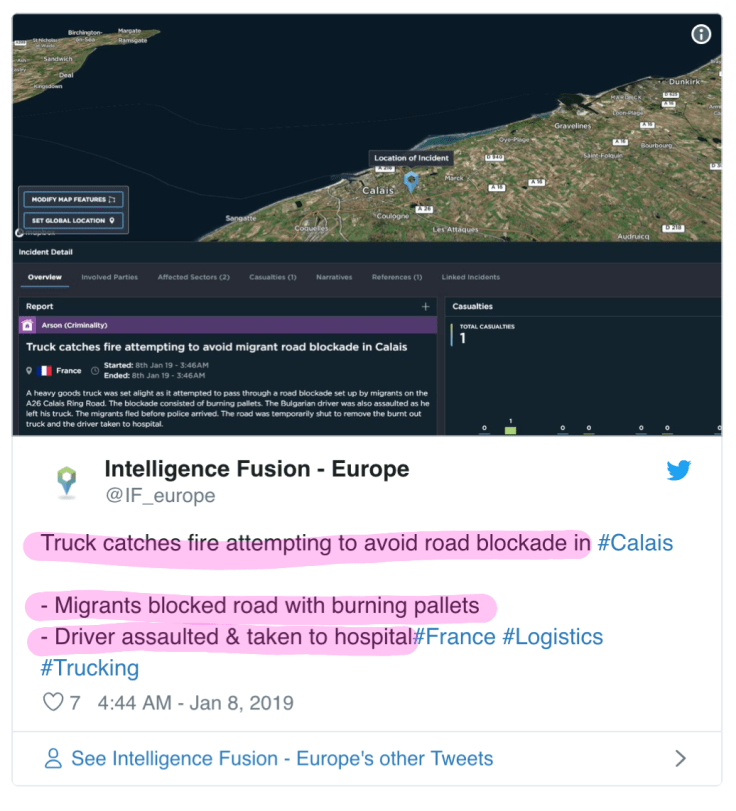
The Bulgarian trucker had attempted to ram through a blockade of flaming pallets erected by migrants on the ring road near Calais, a port hub for many trucks and passenger vehicles traveling to and from the UK.
The driver was taken to hospital after being assaulted by the migrants while he was trying to escape the truck, La Voix Du Nord reports.

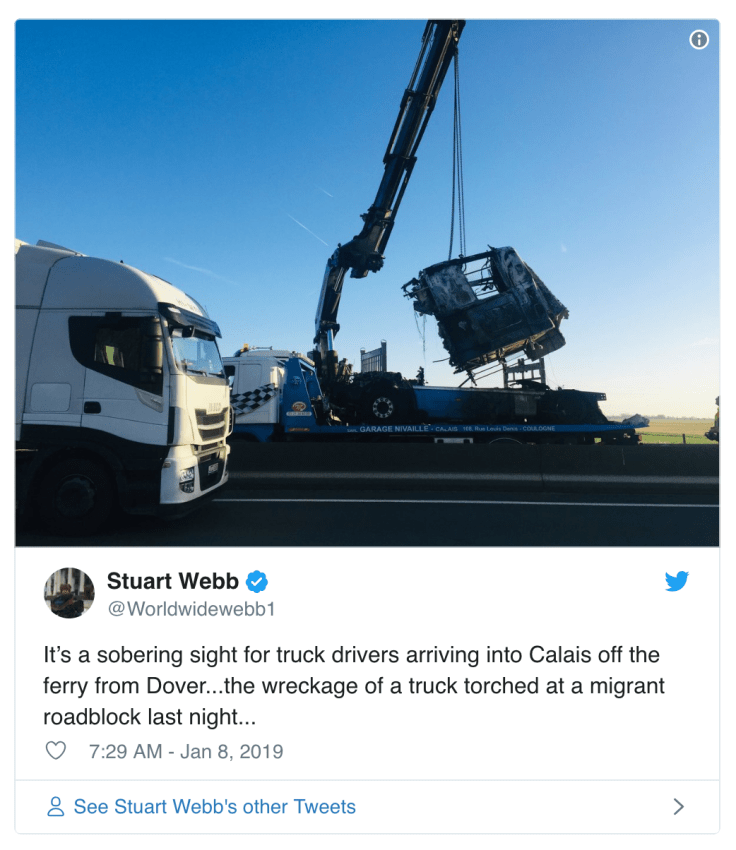
Some social media users shared images of the charred truck and its cargo, which were totally destroyed.

“A first (for me at least). Lorry stopped by migrant barricade on #Calais motorway, set alight last night,” wrote Channel 4 New reporter Paraic O’Brien.
Migrants attempting to commandeer or stowaway inside trucks bound for the UK have become regular occurrences in the Calais region with videos of brazen hijackings and attacks sometimes caught on video.
Police were unable to locate suspects involved in the most recent incident as all had reportedly fled the scene when authorities arrived.

The KwaZulu-Natal health department decided that it would expand its doctor training program in 2019, from 314 to 414. An internal memo leaked to local media revealed, however, that only black doctors would be eligible for the 100 additional slots.
The department remained unapologetic about the policy, tellingTimesLIVE: “South Africa, including KwaZulu-Natal, remains an unequal society with limited opportunities for self-development for those who were historically oppressed.”
Spokesperson Ncumisa Mafunda added that the measure was designed to “address these imbalances of the past.”
Difficulties with recruiting, however, hindered the department’s ability to meet its new quota.
“After difficulties were experienced in recruiting black African candidates for these posts, a deviation was sought from the accounting officer and, out of a total of 77 registrar posts, 21 posts will be offered to non-Black Africans,” Mafunda said.
A spokesperson for Democratic Alliance – the leading opposition party to the ruling African National Congress – argued that any policy was “an aberration of our constitutional values and is racist.”
“Any form or attempt to redress the injustices of the past must ensure that we remain committed to what our constitution says… There must be no exclusion, especially based on the colour of our skin.”
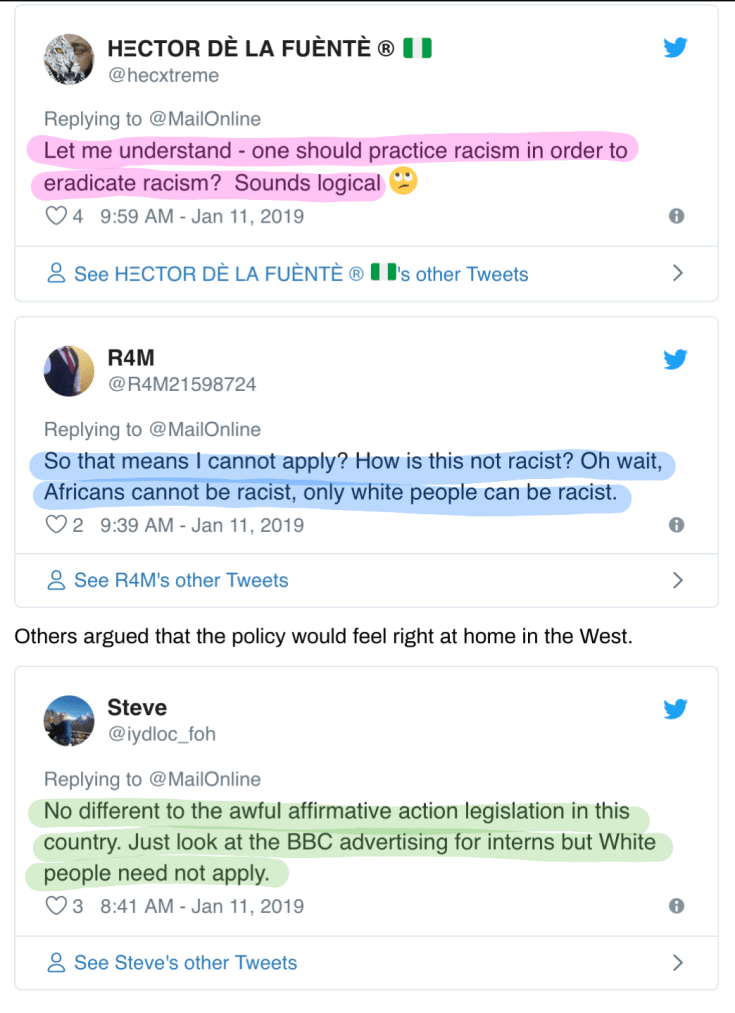
The failed quota was not well received on Twitter, with many calling it openly racist and counter-intuitive.
“Let me understand – one should practice racism in order to eradicate racism? Sounds logical,” one sarcastic Twitter user wrote.

Racial tensions in South Africa have been growing as a result of proposed legislation that would seize land, without compensation, from white farmers. The proposal has been billed as necessary to help correct years of racial inequality in the country as a result of apartheid.
Like this story? Share it with a friend!

More than 32,000 people took part in the protests in Paris, Marseille, Bordeaux, Lyon, Strasbourg, and other cities, according to Interior Ministry data.
Around 8,000 demonstrators, both locals and those coming from other parts of the country, were rallying in the French capital. Some 5,000 riot police with special equipment and armored vehicles oversaw the protests.
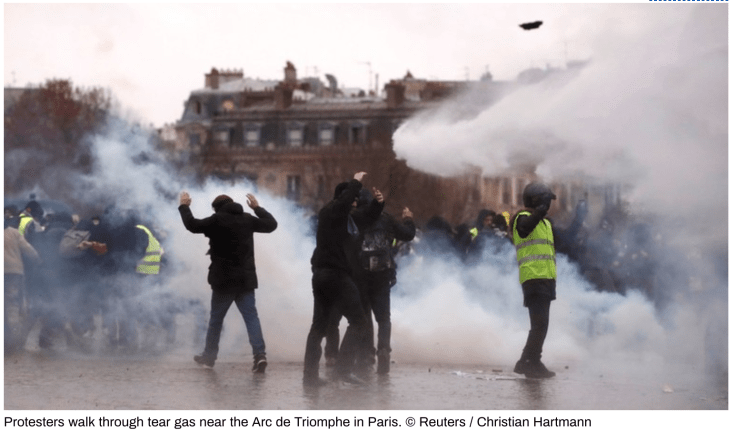
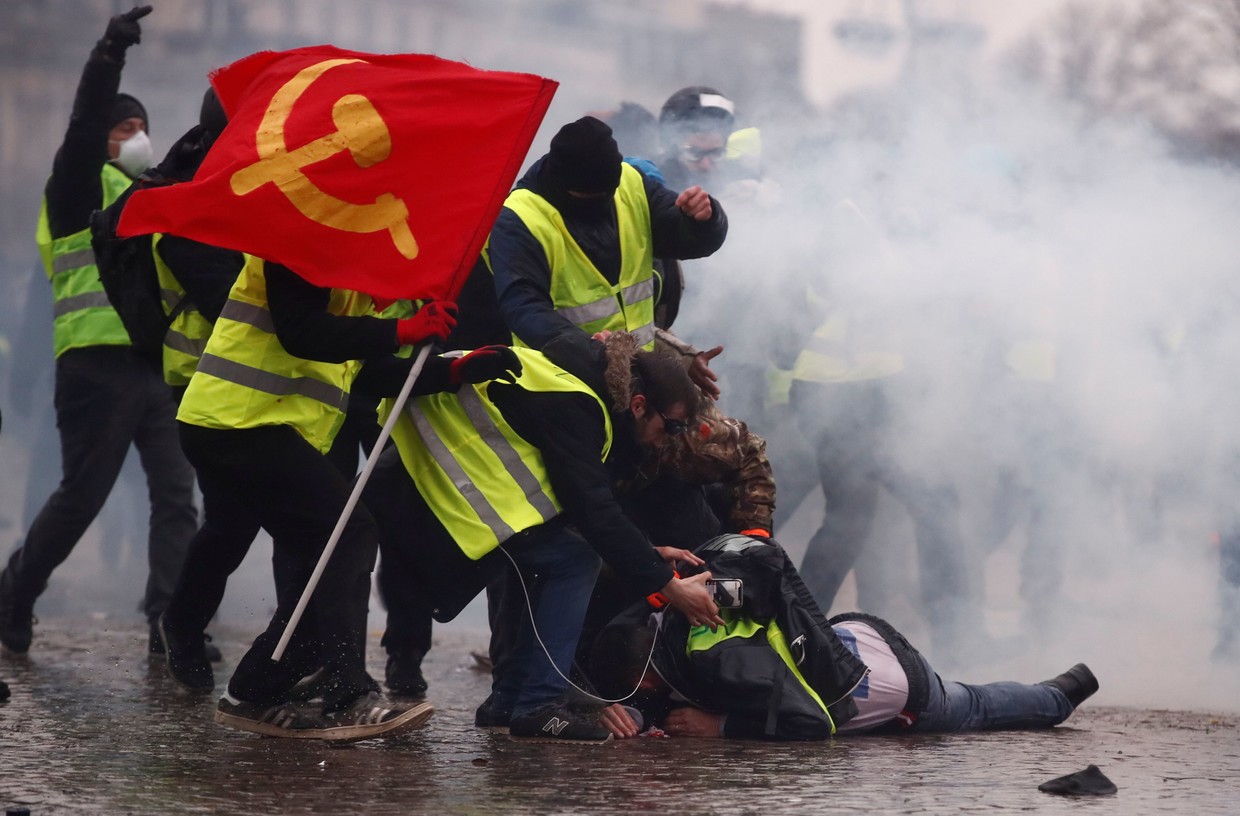
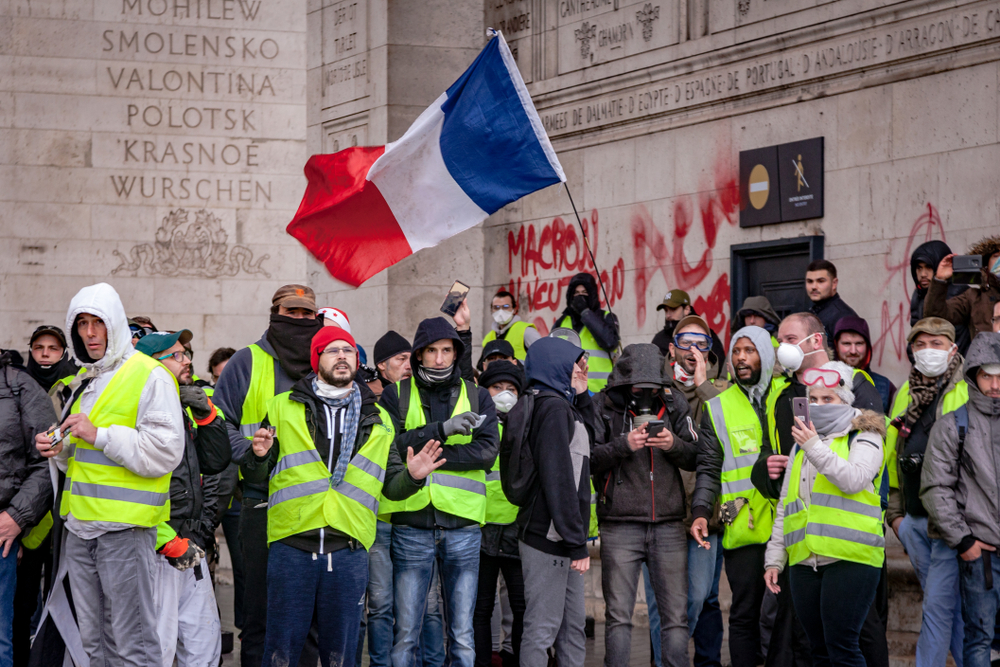
Clashes eventually erupted at the iconic Champs Elysees and Arc de Triomphe, with police using tear gas and water cannons to calm the angry crowds. Hundreds of people were arrested during the standoff, with most of them put in custody, the law enforcers said.
“We’ve come to Paris to make ourselves heard, and we wanted to see for ourselves at least once what’s going on here,” a man, who travelled to Paris from western France to attend the protest, told AFP.
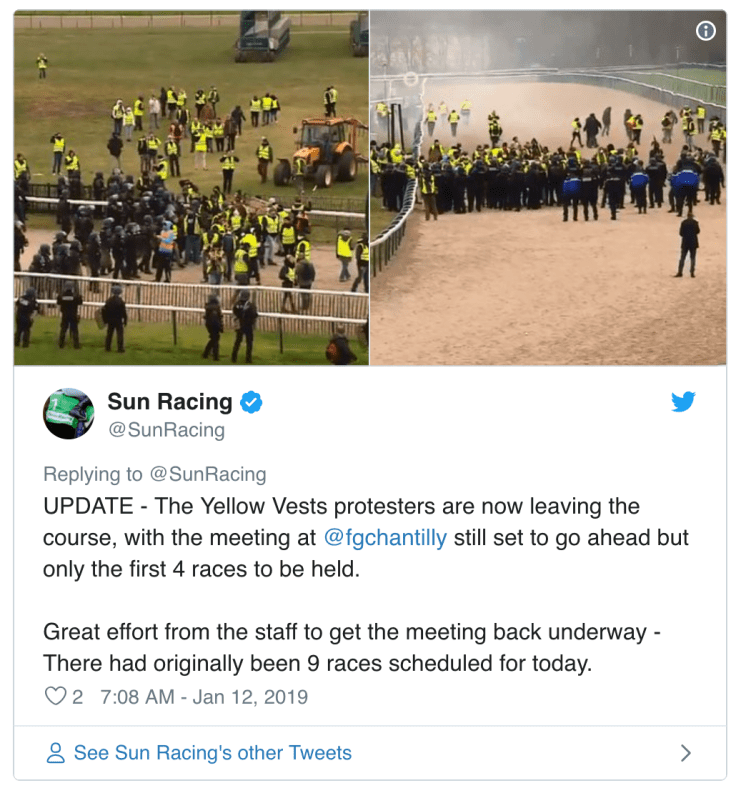
Around 1,000 demonstrators also made their way to the hippodrome and caused a delay of races in the horseracing town of Chantilly, north of Paris.

In Nimes, police deployed tear gas against protesters after a tense standoff in the downtown.
17 people were also arrested during clashes in Bourges in central France, where the local authorities said that 5,000 were rallying.

The Yellow Vest movement, which took its name from the high-visibility jackets worn by the demonstrators, kicked off in November over a government-proposed hike in fuel taxes. As the weekend protests saw more people participating and started turning violent, the government dropped the planned increase.
But the demonstrations continued as the movement morphed into wider discontent with President Emmanuel Macron’s pro-business agenda, a decline in living standards, and growing inequality.
Think your friends would be interested? Share this story!

The French yellow vest (‘gilet jaunes’) movement is entering its ninth edition Saturday 12 januari. And instead of cooling down things seem to be heating up and spreading.
While the gilets jaunes are calling for a massive bankrun, in an effort to damage or even collapse the French- and eventually the EU banking system, the government dispatches 80 thousand police and army personnel to try and contain the protests.

French Interior Minister Castaner today even heightened the tension by saying that protesters will be held accountable for acts committed by fellow gilets jaunes during Saturday’s protests.
Earlier this week there where some tensions between the Italian and French government. Italy’s support for the yellow vest movement was not appreciated by the French.