Europe’s patriots on course to win European elections as globalist Macron has lost control

By 

Capture

The European Parliamentary elections are in May 2019. This year, more than previous MEP elections is likely to be profoundly consequential with a turnout that has not been previously seen.

According to the Financial Times, it will be a showdown between the beleaguered French President Emmanuel Macron and the man voted by his own people as the most trusted and popular politician in history, Italy’s Deputy Premier and Interior Minister Matteo Salvini. A battle between Globalists and Populists.

Mr. Salvini was already popular with Italian voters, but when he stood up to Brussels over his ‘Italian’s first’ budget, the people of Italy only grew to love him more. In fact, in recent polls the Italian people said they see him as the real leader of Italy, even over the Prime Minister.

The populist Minister Salvini has challenged the outgoing French President Emmanuel Macron’s pro-European agenda which interferes with individual countries’ sovereignty.

Many people in Italy now see Emmanuel Macron as the enemy of their country, as he embodies all that is imperialist about the EU.

Some of Macron’s advisors have warned against a political showdown with Salvini because his own popularity has bottomed out in his own country, weakening his position. As Salvini’s influence strengthens, Macron’s influence weakens.

As one of the Yellow Vest protesters summed up Macron’s ‘leadership’: “Our elites are talking about the end of world when we are talking about the end of the month.”

If the parties on the right can form a unified front potentially under Salvini, the elections could be the biggest overhaul of the EU since its founding.

The Financial Times states that “according to an aggregation of surveys by Pollofpolls.eu, Mr. Salvini’s League will surge from six per cent of the vote and five of Italy’s seats in the European Parliament in 2014, to 33 per cent and 29 seats.

France’s right is on course to win 21 per cent, pushing Mr Macron’s La République En Marche! centrist party into second place, and giving Ms Le Pen a chance of redemption EUROafter a disappointing presidential election campaign in 2017.

Viktor Orban’s right-wing Fidesz party is almost certain to confirm its dominance in Hungary. The Eurosceptic Alternative for Germany looks likely to double its tally of seven per cent and seven seats.

Poland’s conservative Law and Justice party is expected to win 41 per cent and 24 seats, up from 32 per cent and 19 seats.”

It is no wonder, given Mr. Macron’s tarnished image due to the Yellow Vests in his country, that Salvini is not expecting much of a challenge from the French President.

As he told Politico this month, “Macron is not a problem for me. He is a problem for the French people”.

Soros ‘person of the year’ indeed: In 2018 globalists pushed peoples’ patience to the edge

By Robert Bridge

Capture.PNG

Since 2015, the proponents of neoliberalism have been pushing ahead with their plans for open borders and globalist agenda without the consent of the people. The last 365 days saw that destructive agenda greatly challenged.

In light of the epic events that shaped our world in 2018, it seems the Yellow Vests – the thousands of French citizens who took to the streets of Paris to protest austerity and the rise of inequality – would have been a nice choice for the Financial Times’ ‘person of the year’ award. Instead, that title was bestowed upon the billionaire globalist, George Soros, who has arguably done more meddling in the affairs of modern democratic states than any other person on the planet.

Perhaps FT’s controversial nomination was an attempt to rally the forces of neoliberalism at a time when populism and nascent nationalism is sweeping the planet. Indeed, the shocking images coming out of France provide a grim wake-up call as to where we may be heading if the globalists continue to undermine the power of the nation-state.

See the source image

It is no secret that neoliberalism relentlessly pursues a globalized, borderless world where labor, products, and services obey the hidden hand of the free market. What is less often mentioned, however, is that this system is far more concerned with promoting the well-being of corporations and cowboy capitalists than assisting the average person on the street. Indeed, many of the world’s most powerful companies today have mutated into “stateless superpowers,” while consumers are forced to endure crippling austerity measures amid plummeting standards of living. The year 2018 could be seen as the tipping point when the grass-roots movement against these dire conditions took off.

Since 2015, when German Chancellor Angela Merkel allowed hundreds of thousands of undocumented migrants into Germany and the EU, a groundswell of animosity has been steadily building against the European Union, perhaps best exemplified by the Brexit movement. Quite simply, many people are growing weary of the globalist argument that Europe needs migrants and austerity measures to keep the wheels of the economy spinning. At the very least, luring migrants with cash incentives to move to Germany and elsewhere in the EU appears incredibly shortsighted.

Indeed, if the globalist George Soros wants to lend his Midas touch to ameliorating the migrant’s plight, why does he think that relocating them to European countries is the solution? As is becoming increasingly apparent in places like Swedenand France, efforts to assimilate people from vastly different cultures, religions and backgrounds is an extremely tricky venture, the success of which is far from guaranteed.

One worrying consequence of Europe’s season of open borders has been the rise of far-right political movements. In fact, some of the harshest criticism of the ‘Merkel plan’ originated in Hungary, where its gutsy president, Viktor Orban, hopes to build “an old-school Christian democracy, rooted in European traditions.” Orban is simply responding to the democratic will of his people, who are fiercely conservative, yet the EU parliament voted to punish him regardless. The move shows that Brussels, aside from being adverse to democratic principles, has very few tools for addressing the rise of far-right sentiment that its own misguided policies created.

Here it is necessary to mention once again that bugbear of the political right, Mr. Soros, who has received no political mandate from European voters, yet who campaigns relentlessly on behalf of globalist initiatives through his Open Society Foundations (OSF) (That campaign just got some serious clout after Soros injected $18bn dollars of his own money into OSF, making it one of the most influential NGOs in the world).

With no small amount of impudence, Soros has condemned EU countries – namely his native Hungary – for attempting to protect their territories by constructing border barriers and fences, which he believes violate the human rights of migrants (rarely if ever does the philanthropist speak about the “human rights” of the native population). In the words of the maestro of mayhem himself: “Beggar-thy-neighbor migration policies, such as building border fences, will not only further fragment the union; they also seriously damage European economies and subvert global human rights standards.”

Through a leaked network of compromised EU parliamentarians who do his bidding, Soros says the EU should spend $30 billion euros ($33bln) to accommodate “at least 300,000 refugees each year.” How will the EU pay for the resettling of migrants from the Middle East? Soros has an answer for that as well. He calls it “surge funding,” which entails “raising a substantial amount of debt backed by the EU’s relatively small budget.”

See the source image

Any guesses who will be forced to pay down the debt on this high-risk venture? If you guessed George Soros, guess again. The already heavily taxed people of Europe will be forced to shoulder that heavy burden. “To finance it, new European taxes will have to be levied sooner or later,” Soros admits. That comment is very interesting in light of the recent French protests, which were triggered by Emmanuel Macron’s plan to impose a new fuel tax. Was the French leader, a former investment banker, attempting to get back some of the funds being used to support the influx of new arrivals into his country? The question seems like a valid one, and goes far at explaining the ongoing unrest.

At this point, it is worth remembering what triggered the exodus of migrants into Europe in the first place. A large part of the answer comes down to unlawful NATO operations on the ground of sovereign states. Since 2003, the 29-member military bloc, under the direct command of Washington, has conducted illicit military operations in various places around the globe, including in Iraq, Libya and Syria. These actions, which could be best described as globalism on steroids, have opened a Pandora’s Box of global scourges, including famine, terrorism and grinding poverty. Is this what the Western states mean by ‘humanitarian activism’? If the major EU countries really want to flout their humanitarian credentials, they could have started by demanding the cessation of regime-change operations throughout the Middle East and North Africa, which created such inhumane conditions for millions of innocent people.

This failure on the part of Western capitals to speak out against belligerent US foreign policy helps to explain why a number of other European governments are experiencing major shakeups. Sebastian Kurz, 32, won over the hearts of Austrian voters by promising to tackle unchecked immigration. In super-tolerant Sweden, which has accepted more migrants per capita than any other EU state, the anti-immigrant Sweden Democrats party garnered 17.6 percent of the vote in September elections – up from 12.9 percent in the previous election. And even Angela Merkel, who is seen by many people as the de facto leader of the European Union, is watching her political star crash and burn mostly due to her bungling of the migrant crisis. In October, after her Christian Democratic Union (CDU) suffered a stinging setback in Bavaria elections, which saw CDU voters abandon ship for the anti-immigrant AfD and the Greens, Merkel announced she would resign in 2021 after her current term expires.

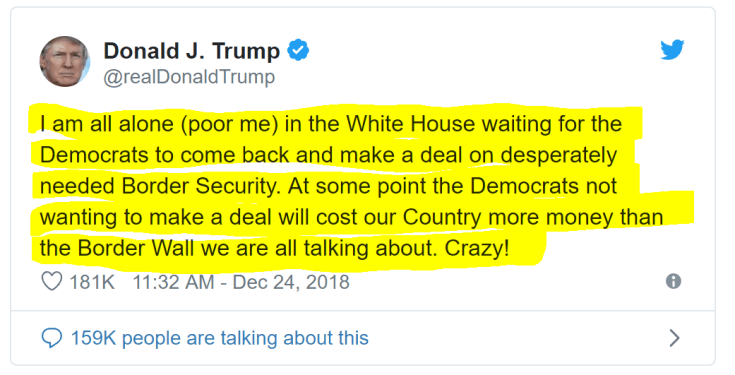
Meanwhile, back in the US, the government of President Donald Trump has been shut down as the Democrats refuse to grant the American leader the funds to build a wall on the Mexican border – despite the fact that he essentially made it to the White House on precisely that promise. Personally, I find it very hard to believe that any political party that does not support a strong and viable border can continue to be taken seriously at the polls for very long. Yet that is the very strategy that the Democrats have chosen. But I digress.

Capture

The lesson that Western governments should have learned over the last year from these developments is that there exists a definite red line that the globalists cross at risk not only to the social order, but to their own political fortunes. Eventually the people will demand solutions to their problems – many of which were caused by reckless neoliberal programs and austerity measures. This collective sense of desperation may open the door to any number of right-wing politicians only too happy to meet the demand.

Better to provide fair working conditions for the people while maintaining strong borders than have to face the wrath of the street or some political charlatan later. Whether or not Western leaders will change their neoliberal ways as a populist storm front approaches remains to be seen, but I for one am not betting on it.

@Robert_Bridge

Like this story? Share it with a friend!

‘Journalists come down’: Yellow Vests chant ‘fake news’ outside French TV station (VIDEOS)

Capture

Dozens of Yellow Vest protesters have descended on the headquarters of France’s BFM TV channel accusing the station of broadcasting “fake news” and calling for the resignation of President Emmanuel Macron.

The demonstrators arrived at the offices in Paris around an hour after the gathering was announced on Facebook. There was already a heavy police presence at the building in the city’s 15th arrondissement when the crowd formed.

One of the protesters told RT France that BFM TV spreads false information about the movement, alleging that the channel purposefully underplays the size of its demonstrations.

AFP is reporting that “several hundred” Yellow Vests gathered outside the headquarters and Police used tear gas grenades on the crowd after the protesters lobbed projectiles in their direction.

The group reportedly chanted “journalists come down”, “fake news” and “Macron out”.

Riot police also fired tear gas during clashes in Rouen in Normandy and in Nantes in western France on Saturday, which is the seventh week of the mass rallies that have divided the country since the movement sprang up in November.

ALSO ON RT.COMTear gas fired as Yellow Vests and police clash in French city of Rouen (VIDEOS)

Official turnout numbers have dropped significantly on earlier weeks but organizers say the dip is due to the holiday season. The protesters say the movement will continue to grow in 2019 and plans are underway for New Year’s Eve protests.

The rallies initially began as a demonstration against fuel hikes but have since morphed into a broad rejection of Macron’s policies. On Thursday a group of about 40 Yellow Vests tried to storm the medieval fort of Bregancon that serves as the president’s official summer retreat.

Like this story? Share it with a friend!

Tear gas fired as Yellow Vests and police clash in French city of Rouen (VIDEOS)

Yellow Vests in Rouen as the street fills with tear gas.

French police have deployed tear gas in a bid to quell Yellow Vest protesters in a tense stand-off in the city of Rouen in Normandy.

Demonstrations quickly spiralled out of control in the northern French city on Saturday as protesters and riot police clashed in the streets of the picturesque town.

Journalist Simon Louvet, who is in Rouen, tweeted: “The GJ (Gilet Jaunes) are in the streets around Jeanne D’Arc Street and are gassed, they flee running and regroup.”are gassed, they flee running and regroup.”

The protesters also set fire to the entrance of the local office of the Bank of France, the country’s central bank.

Away from the violence, a large group of protesters also marched through the streets, waving French flags and chanting slogans.

Paris, the scene of the most dramatic demonstrations since the rallies began in November, was significantly quieter than previous weeks but it also saw dozens of Yellow Vests gathered on Champs-Elysees on Saturday.

On Thursday, a group of the protesters attempted to storm the Mediterranean castle that serves as President Emmanuel Macron’s summer retreat.

The weeks of demonstrations have polarized France. The movement began as rallies against fuel-price hikes, but it soon morphed into nationwide protests against government policies.

The fuel hikes were scrapped by the government but people have continued to demand more concessions, including lower taxes and even Macron’s resignation.

Like this story? Share it with a friend!

Watch: French Police Draw Firearm on ‘Yellow Vests’

By Dan Lyman

‘Yellow Vests’ protests erupted across France for the sixth straight week and frayed tensions have pushed some police to the breaking point as at least one officer drew his firearm during violent clashes in Paris.

Video footage shows motorcycle troopers overwhelmed by protestors as tear gas canisters and projectiles fly near Champs-Élysées.

Some officers deploy pepper spray, while one draws his service weapon and aims it at the advancing crowd.

French officials have blasted the attack on police, with Prime Minister Edouard Philippe tweeting, “Assaults of unprecedented violence against police officers . . . It is out of the question to trivialize such actions which must be the subject of unanimous condemnation and criminal sanctions.”

However, footage depicting the moments leading up to the confrontation give broader context.

The officers in question can be seen throwing flashbang grenades toward a crowd who appear to be moving in a non-threatening fashion along Champs-Élysées.

Some in the throng react to the provocation, and eventually the officers are forced to flee amid a hail of flying objects.

Notably, many in the mob are not wearing yellow vests, indicating they may be opportunists capitalizing on the chaos.

Infowars has reported at length on the ‘Gilets Jaunes’ demonstrations, including on-the-ground coverage which you can view herehere and here.

France’s ‘yellow vests’ block borders ahead of Christmas

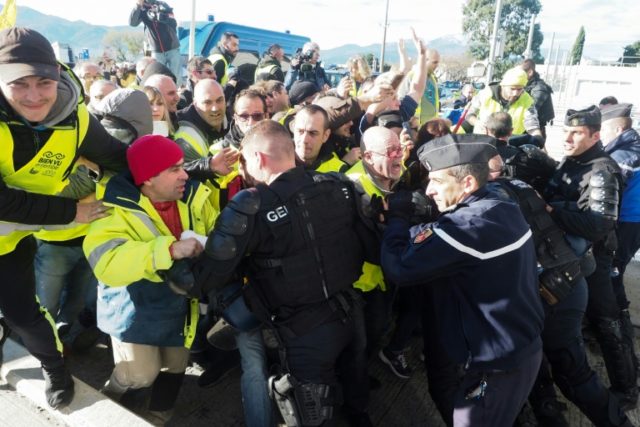
Police officers repel "yellow vest" protesters as they demonstrate against the rising cost of living at the A9 highway toll at Le Boulou, southern France

By AFP – 22 DEC. 2018

Paris (AFP) – Three days from Christmas, French “yellow vests” turned out in small numbers for a sixth Saturday of protests in cities and border points as a fatal road accident brought the death toll to 10 since the movement began last month.

Near the border between France and Spain hundreds of protesters disrupted traffic as they gathered around an autoroute toll booth.

Police fired tear gas to disperse the “yellow vests” who retreated to a bridge, throwing objects on the road, an AFP photographer at the scene said.

See the source image

“The autoroute is now being cleaned to allow traffic to resume normally,” local authorities said.

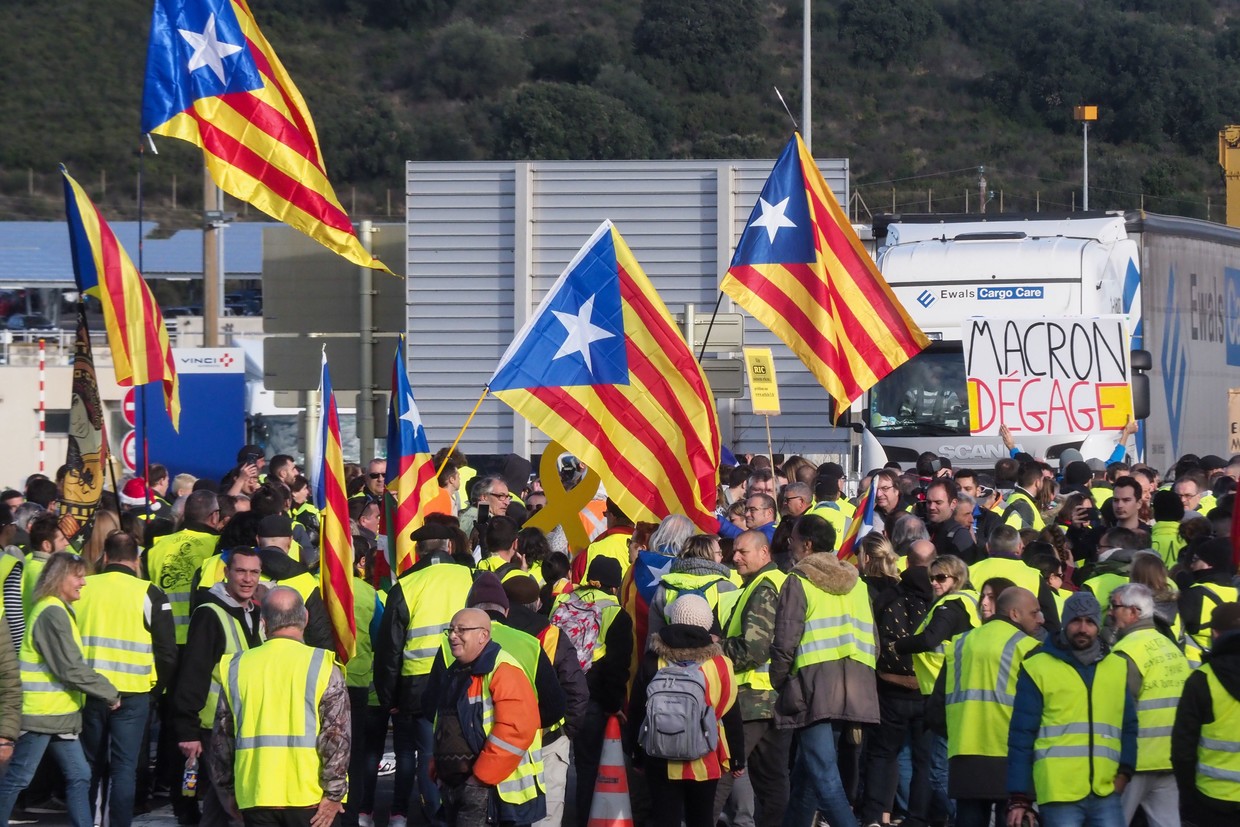
France borders the Catalan region of Spain, and the French protesters were joined by dozens of Catalan pro-independence activists, also wearing yellow vests.

The separatists often block highways to protest against Madrid’s rejection of Catalonia’s independence referendum in October 2017.

Even though their goals are different, “this demonstration at the Boulou (toll booth) is symbolic, it shows the solidarity between the Spanish Catalans and the French,” said Marcel, a 49-year-old winegrower.

Roadblocks by protesters were also reported on autoroutes near the border with Italy and at a bridge in Strasbourg near the German border.

A driver died overnight when his car slammed into the back of a truck stopped at a roadblock set up by “yellow vest” protesters at an autoroute entrance in Perpignan on the Mediterranean coast, prosecutor Jean-Jacques Fagni told AFP.

See the source image

There have now been 10 deaths related to the protests since they began on November 17.

– Macron effigy –

In Paris, the scene of violent clashes during previous demonstrations, around 800 protesters joined rallies scattered around the city, police said at mid-day.

But the French capital’s iconic Champs-Elysees avenue was calm, with most shops except for some luxury boutiques open for business in the busy weekend before Christmas.

David Delbruyere, 48, was one of about 20 protesters near the Arch of Triumph, the fifth time he has come to the French capital for a demonstration as he remains “disgusted” with conditions in France.

Paris police said 65 people had been arrested, including a “yellow vest” leader, Eric Drouet.

Authorities were also stationed at the Palace of Versailles outside Paris which has been closed to visitors over fears of unrest.

A Facebook event organised by Drouet had listed thousands of people “interested” in joining the Versailles demonstration but only around 60 have shown up.

Further demonstrations of several hundred “yellow vests” were reported in Lyon, Marseille, Rouen and Bordeaux.

And in Angouleme in southwest France, a puppet effigy of President Emmanuel Macron was decapitated Friday night during a “yellow vest” protest, regional authorities said Saturday.

Meanwhile, police stepped in with tear gas to disperse around 80 protesters who had gathered Saturday outside Macron’s home in the Channel coast town of Touquet.

The number of protesters has however fallen significantly since last week, when Macron, a pro-business centrist, gave in to some of their demands.

Since the peak on November 17 with 282,000 demonstrators, the turnout has fallen to 166,000 on November 24, 136,000 on the first and eighth of December and 66,000 on December 15.

The  movement characterised by the high-visibility yellow vests worn by the protesters originally started as a protest about planned fuel tax hikes, but has morphed into a widespread demonstration against Macron’s policies and top-down style of governing.

On Friday evening, the French Senate approved Macron’s measures to help the working poor and pensioners — just hours after they were adopted by the lower house of parliament — which aim to quell “yellow vest” anger and should come into force early in 2019.

burs-adm-sab-ito/boc/wai

Another Saturday in Paris: Smoke & scuffles, more than 100 Yellow Vests detained

The atmosphere at the Yellow Vest protests in the heart of the French capital has become more strained as demonstrators engage in scuffles with police officers.

Tensions rose hours into the rallies and police resorted to force against the rioters near the artistic Montmartre district in the north of the capital.

Scuffles also broke out near Madeleine Church, some 2km from Montmartre. Protesters were also seen near the iconic Louvre Museum and Sacre-Coeur Basilica. More than 100 people have been detained, according to the Paris Police Prefecture.

Some 2,000 people in fluorescent vests – clothing usually worn by drivers that has now become an emblem of the rallies – were marching in the capital Saturday, according to the city’s police prefecture. The number of participants in the streets has notably diminished, however.

WATCH LIVE:

Yellow Vest protesters changed their usual meeting place. Instead of the Champs-Elysees, where violent clashes have occurred, they rallied in Montmartre. Yet, the district wasn’t the intended venue for the rallies. Initially, they were called to march towards a French symbol of power and a major tourist site – the iconic Versailles Palace. Located some 20km west of Paris, the palace was once besieged during the French Revolution.

As in previous weeks, the protests have also spread beyond the capital. Across the whole country 23,800 protesters tuned out, BFMTV reported. Some 300 demonstrators gathered in front of the city hall in Marseille. People also marched near a local police station, demanding the release of two Yellow Vests who had been detained earlier in the day.

Protesters also gathered at the A9 highway toll of Le Boulou in southern France. Waving Catalan flags and carrying a banner saying “All united” the rally was apparently a nod to Friday’s protests in Barcelona.

Protesters wearing “Yellow Vests” wave Catalan flags at the A9 highway toll of Le Boulou

France has been hit by a sixth consecutive weekend of Yellow Vest rallies. Previous protests turned violent, with demonstrators hurling stones and fireworks at police, while law enforcement resorted to using tear gas and water cannon. The mayhem has left almost 3,000 people, both protesters and police officers, injured. Over 4,500 have been detained and placed into custody since mid-November.

Think your friends would be interested? Share this story!

(CENSORSHIP) -STATE NEWS CHANNEL IN FRANCE CENSORS ANTI-MACRON SIGN DURING LIVE BROADCAST

State News Channel in France Censors Anti-Macron Sign During Live Broadcast

Ludicrously claims doctoring was “human error”

 | Infowars.com – DECEMBER 18, 2018

A state-owned news channel in France censored an anti-Macron protest sign during a live broadcast, setting off a wave of complaints about censorship.

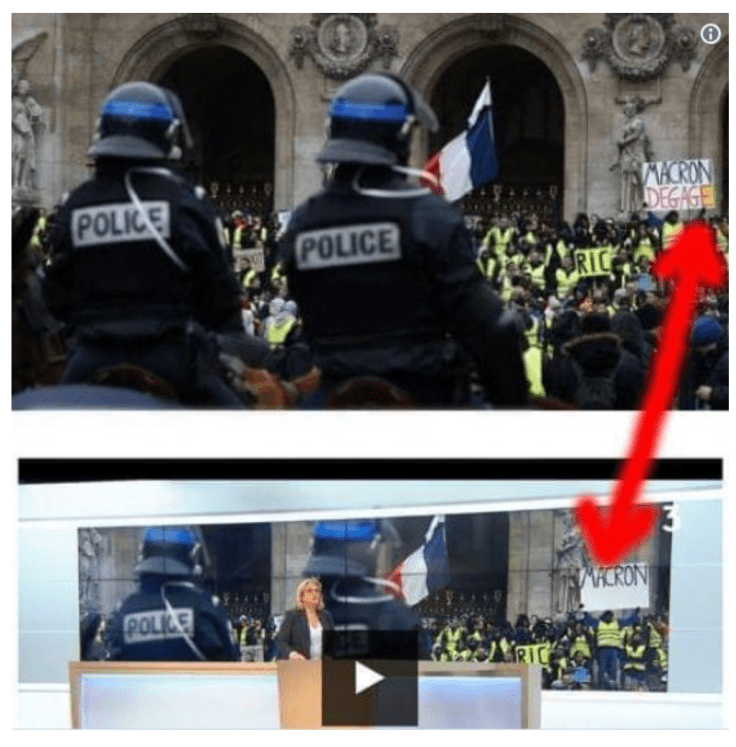
France 3, the second largest public television station in France doctored a placard held by a yellow vest protester during last weekend’s demonstrations in Paris.

The original sign said “Macron dégage,” meaning “Macron get lost,” but when it was broadcast on Saturday evening the sign had been amended to read simply “Macron”.

France 3 is owned by France Télévisions, which is in turn a state-owned company.

Screen Shot 2018-12-18 at 4.22.37 PM

Jean-Baptiste Reddé, a leading light in the yellow vest movement and the man holding the sign immediately complained to the CSA, the Conseil supérieur de l’audiovisuel, an institution tasked with regulating electronic media in France.

The channel was forced into an embarrassing apology but absurdly denied the doctoring was deliberate by pleading “human error”.

The SNJ France Télévisions union responded to the controversy by denouncing the doctoring as an act of “inexcusable professional misconduct” and demanded an inquiry.

“We demand to hear her explanations and the measures she plans to take to prevent these things from happening again,” the union said in a statement. “What about the responsibility of the chief editor?”

As we reported yesterday, French Prime Minister Edouard Philippe admitted that the French government made massive mistakes in responding to the demonstrations and that, “We did not listen enough to the French people.”

Blog at WordPress.com.

Up ↑