Did watching Conservatives on YouTube radicalize a Progressive into turning Right-Wing? Michael Knowles explains the absurdity of a New York Times article.

By Shane Trejo
The Daily Beast obtained financial records showing that the progressive propaganda site is expecting to post a $3 million gap between revenue and expenses in 2019. They noted that the website has never exactly been a moneymaker, but it is now more unprofitable than ever before.
The John Podesta-founded Center for American Progress, which has funded ThinkProgress as its propaganda organ despite the fact it has never been much of a revenue generator throughout the years, may have to re-think their investment as it hemorrhages money.
“Unfortunately, ThinkProgress has had a large and growing budget gap for going on two years now,” said Navin Nayak, who works as the executive director of the Center for American Progress Action Fund.
“Like most media organizations, ThinkProgress has relied on advertising revenue as a major source of funding, increasingly subject to the behavior of social-media platforms and their decisions on news distribution. As with many other digital media organizations, 2017 and 2018 were particularly challenging years in this regard, as ThinkProgress experienced a 40 percent drop in ad revenue over just one year, creating an inevitable budgetary strain,” Nayak added.
Advertising revenue is expected to fall $350,000 short of initial estimates for the year while online contributions are expected to undershoot predictions by approximately $180,000. They are expecting a mere $64,000 in grant revenue, which is $60,000 under original estimates and a shocking $540,000 short of their 2018 figures.
Staffers, such as managing editor Tara Culp-Ressler and four of her colleagues, have already left the organization as the writing is on the wall that ThinkProgress is a sinking ship.
The rest of the writers are not happy, as evidenced by a letter addressed to editor-in-chief Jodi Enda by the ThinkProgress writers’ union last month.
“[M]orale is low across the team as we wrestle with lost trust and an unclear vision,” the letter read. “After careful consideration over how best to address our shared concerns, we write to you today with the hope that we can reignite the passion that brought us all here and work together to build a promising new future for ThinkProgress.”
But as downsizing and other cost-cutting measures become inevitable due to ThinkProgress becoming so insignificant and unlucrative, morale is never likely to improve.
“As these challenges emerged, CAP Action Fund has been transparent with ThinkProgress staff, including implementing and explaining the need for a hiring freeze early in 2018 and providing managers and the union a full account of the financial pressures facing ThinkProgress in the fall of 2018,” Nayak said.
“Indeed, in fall of 2018, we shared with the ThinkProgress union that the situation was so concerning that actions of some kind would be needed. The budget situation has only grown worse since,” he added.
It looks to only be a better of time before ThinkProgress shuts its doors, as digital media outlets known for publishing liberal propaganda struggle to remain afloat in a competitive online marketplace.

By Jim Hoft
The New York Times posted a front page hit piece on Sunday warning readers of the threat of conservative YouTubers.
And on Monday Axios pressures Google-YouTube chairman, Sundar Pichai, on conservative content online. Pichal told Axios contributor Ina Fried that the company is looking to start banning “borderline” content.
“Borderline” content is code for conservative content.
Vile liberal attacks on President Trump and conservatives is completely acceptable to Google-YouTube.
Stephen Colbert’s homophobic Trump’s mouth is Putin’s cockholster is still live on YouTube.
But now it appears the American fake news media is pushing the tech giants to remove conservative content.
This can only get worse.
By Awr Hawkins
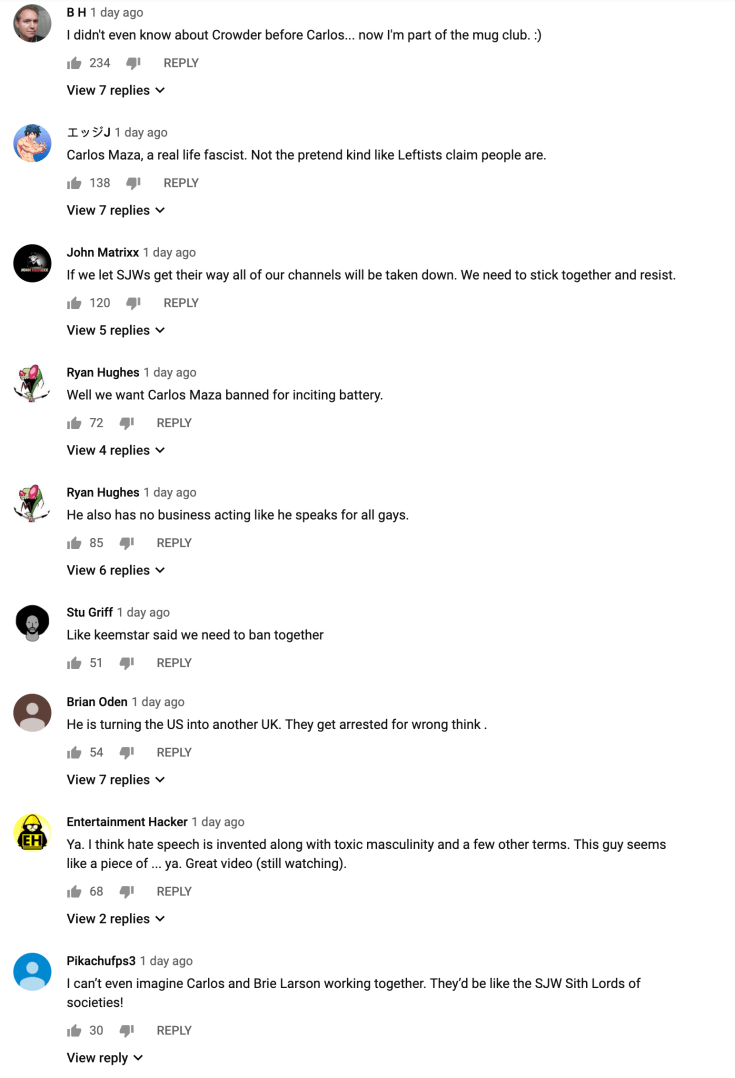
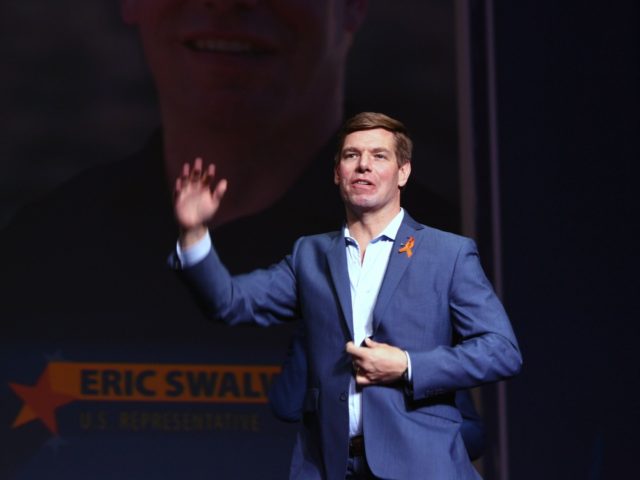
Cupp began the segment on Saturday with Swalwell by telling him she appreciates the fact that he is one of the few leftist candidates who admits he plans to take away an entire category of firearms.
Cupp said: “You are the only candidate who is calling for a confiscation of guns. You say you want to ban and buy back every single assault weapon in America. You’ve touted Australia as a model of how gun confiscation works.”
She added, “Gun control advocates often say no one is coming to take your guns away, [but] you say, ‘Yes I am.’ And that is refreshingly honest.”
Swalwell contrasted himself with the rest of the Democrat field, saying: “Other candidates have called for an “assault weapons” ban, but they only want to ban future manufacturing, and future sales. And I think if you recognize that an “assault weapon” shouldn’t be made any more in America, why don’t you just get to the point where you say ‘Those that are here, shouldn’t be here.’ That’s where I”m at.”
Cupp pointed out that “assault weapons” are involved in “less that five percent of gun murders” in America. She then asked Swalwell why he is “stopping at ‘assault weapons’ …and not confiscating handguns, which account for the vast majority of gun deaths.”
Swalwell made clear he also has a plan for handguns, but he is focused on getting rid of “assault weapons” first.
By Chris Menahan
From Tim Pool:
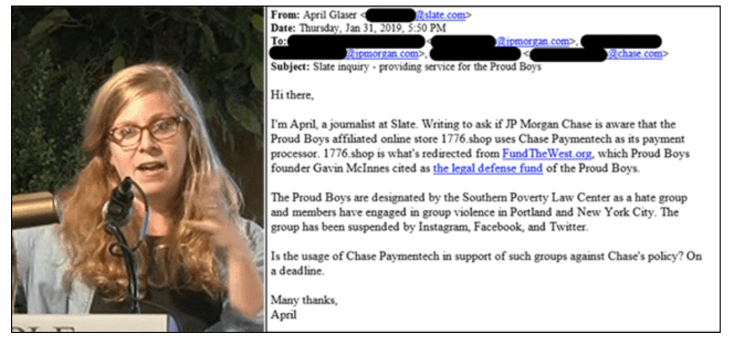
Following the Vox controversy with Steven Crowder, or #VoxAdpocalypse, and mass censorship hitting youtube I found it pertinent to show how these activists in media operate and how they use framing devices to target people like conservatives and other political groups.
The reporter in question has advocated for government regulation to restrict speech and I believe this shows her to be an activist acting to target and cause harm to political rivals.
The email was confirmed to me by Chase bank on two occasions and the contents of the email were referred to in my correspondence with Slate. While not directly confirming the email I believe this with Chase bank’s confirmation is sufficient to confirm the authenticity of the email.
UPDATE: Slate has provided an official comment
“In the course of her reporting about banks providing financial services for 1776.shop, an e-commerce site associated with the Proud Boys, April reached out to those banks for comment about their policies of providing services to a designated hate group. In both her email and in the subsequent reporting, April provided important context and we stand by her reporting on this newsworthy topic.”
Pool’s analysis was on the money. The key line is Glaser saying: “The Proud Boys are designated by the Southern Poverty Law Center as a hate group and members have engaged in group violence in Portland and New York City.”
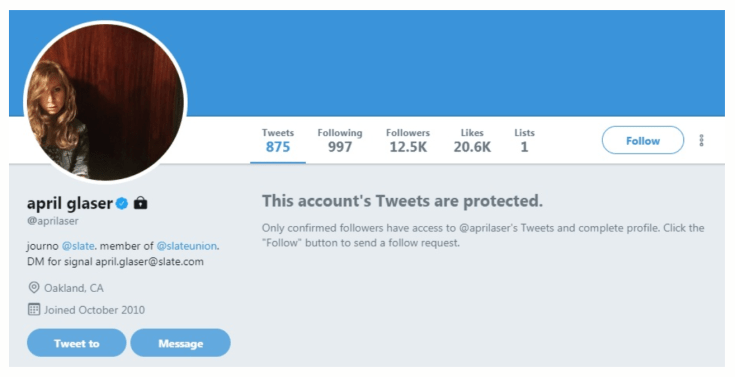
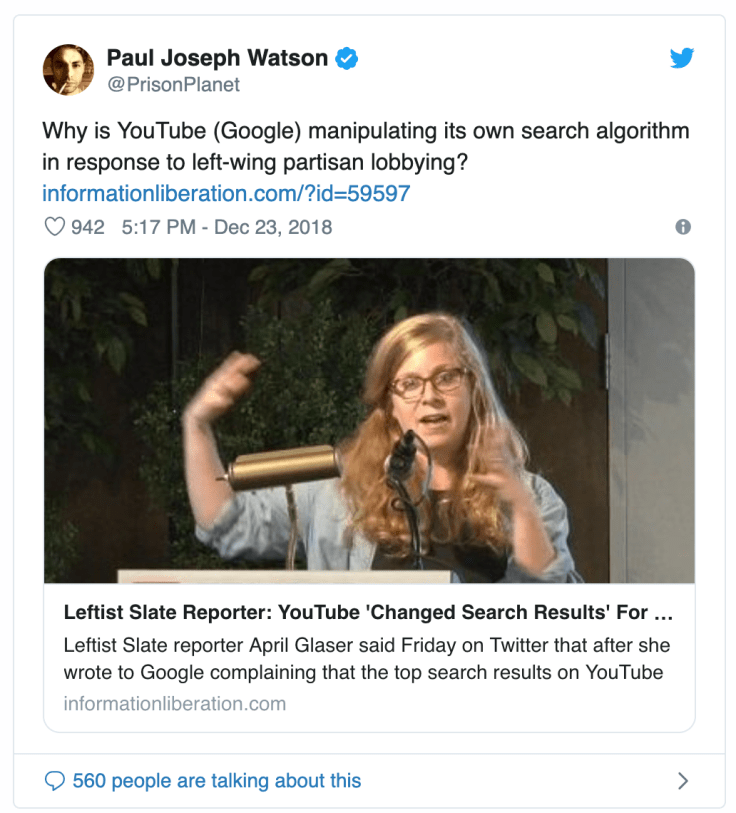
After Pool started digging into this story, Glaser locked down her Twitter account and allegedly started deleting tweets showing her bias:

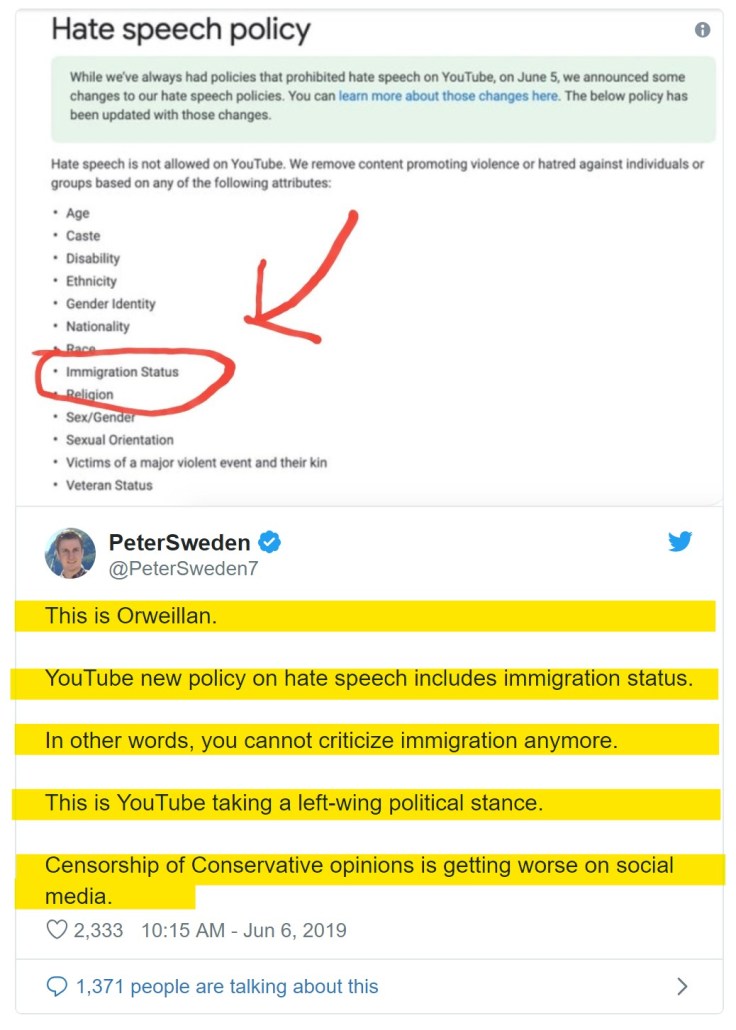
Even though the policy specifies YouTube will only remove content that promotes violence or hatred towards “individuals or groups” based on that attribute, conservatives are concerned the policy will be used to justify the removal of accurate criticism of immigration policies.
“YouTube’s new policy on hate speech includes immigration status,” said Swedish independent journalist Peter Imanuelsen. “In other words, you cannot criticize immigration anymore.”
“This is YouTube taking a left-wing political stance. Censorship of conservative opinions is getting worse on social media.”
Given Big Tech’s track record of left-leaning bias, simple criticism towards immigration being viewed as “hate” is likely.
Case in point, YouTube recently demonetized popular comedian/conservative YouTuber Steven Crowder after he was accused of targeted harassment for his gay jokes directed at a Vox editor.
Remember, last year, Alex Jones predicted that Steven Crowder was the next target of Big Tech’s biased censorship campaign.
Steven Crowder Is The Next Target Of Corporate Censorship
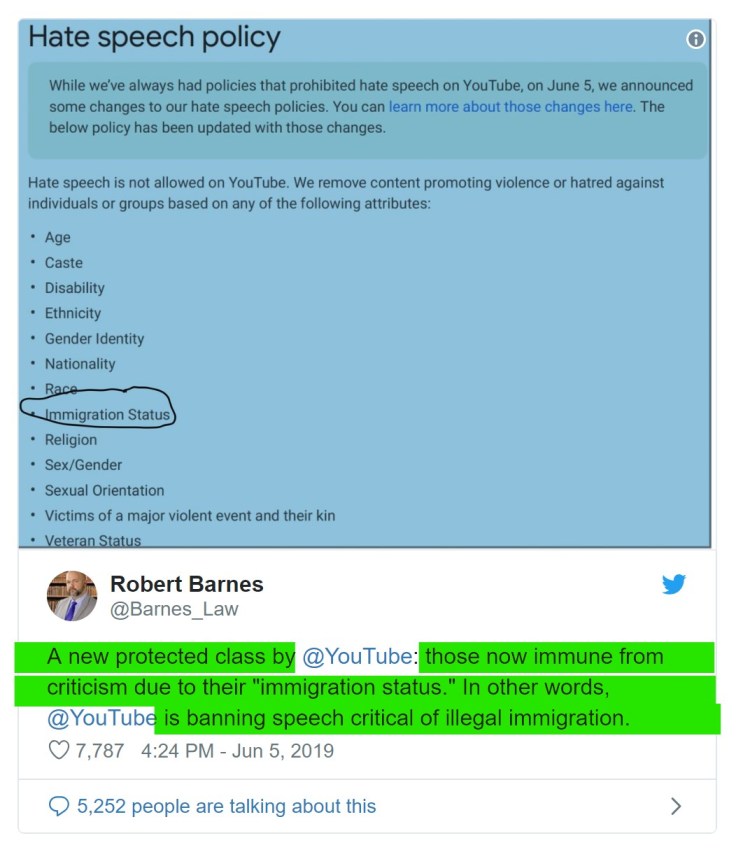
Moreover, the policy has effectively created a new “protected class” free of criticism, adds constitutional lawyer Robert Barnes.

Twitter has presented its users with a reformulated “easier to understand” set of rules, moving most of the text off the main page for a pleasing aesthetic experience and upping the chance users will never read the detailed policies. The byzantine and often self-contradictory conduct code is chock full of pitfalls, and users are quickly finding out the range of bannable offenses has swollen to rival YouTube’s and Facebook’s.
“Private Information,” “Sensitive Media” and “Terrorism & Violent Extremism” are the subsections advertised on the new rules page as having received a makeover, but reading through them is likely to leave the user even more confused than before. “We also prohibit the glorification of violence,” the tweet-sized takeaway under “violence and extremism” reads, but if you click through to the actual policy page, it turns out “violent acts by state actors” get a pass.
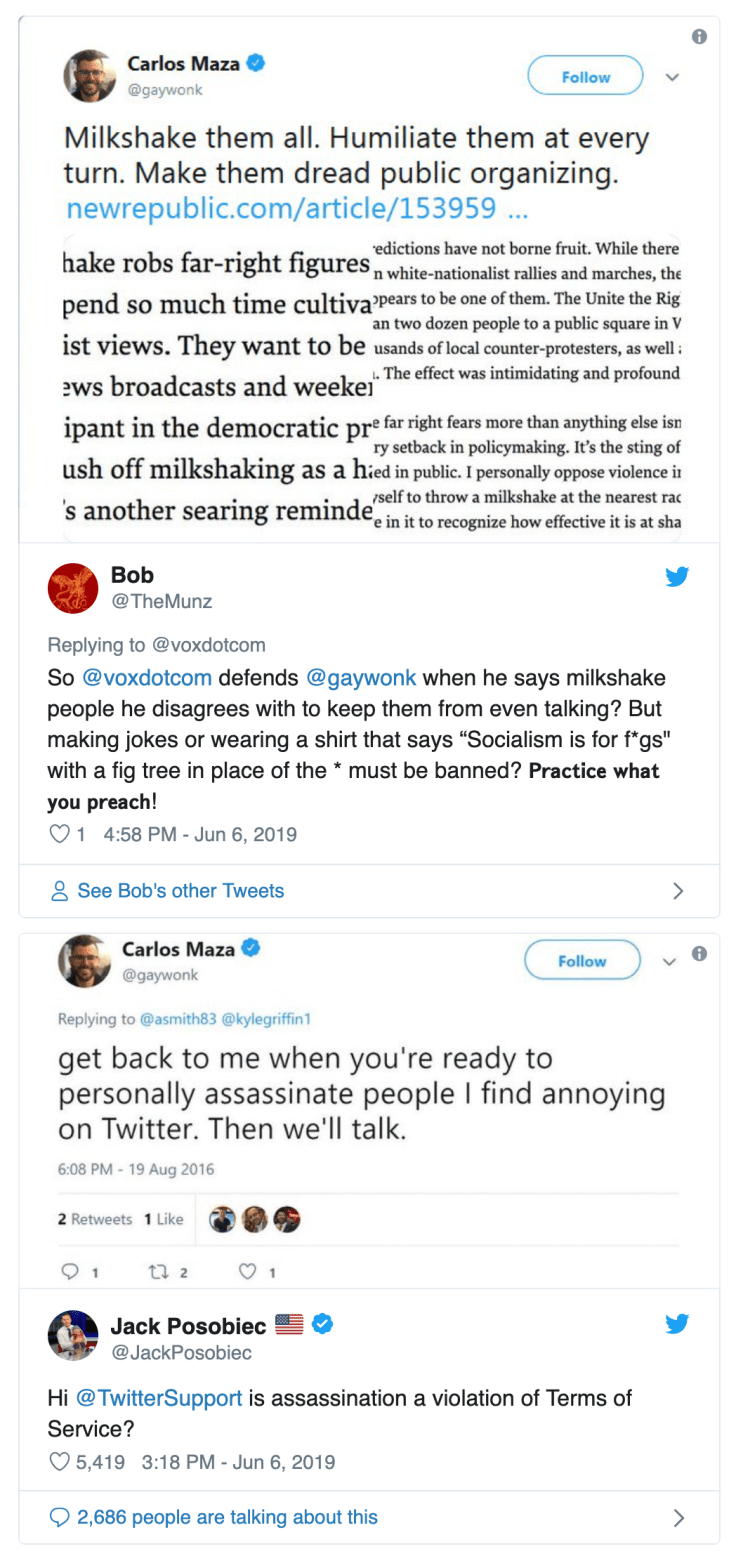
Non-state actors – including Vox blogger Carlos Maza, whose complaints have been blamed for triggering Wednesday’s mass deplatforming on YouTube – have also gotten away with what could fall under “glorification of violence,” as some were quick to point out, noting their accounts had not only survived but thrived during the latest “purge.”
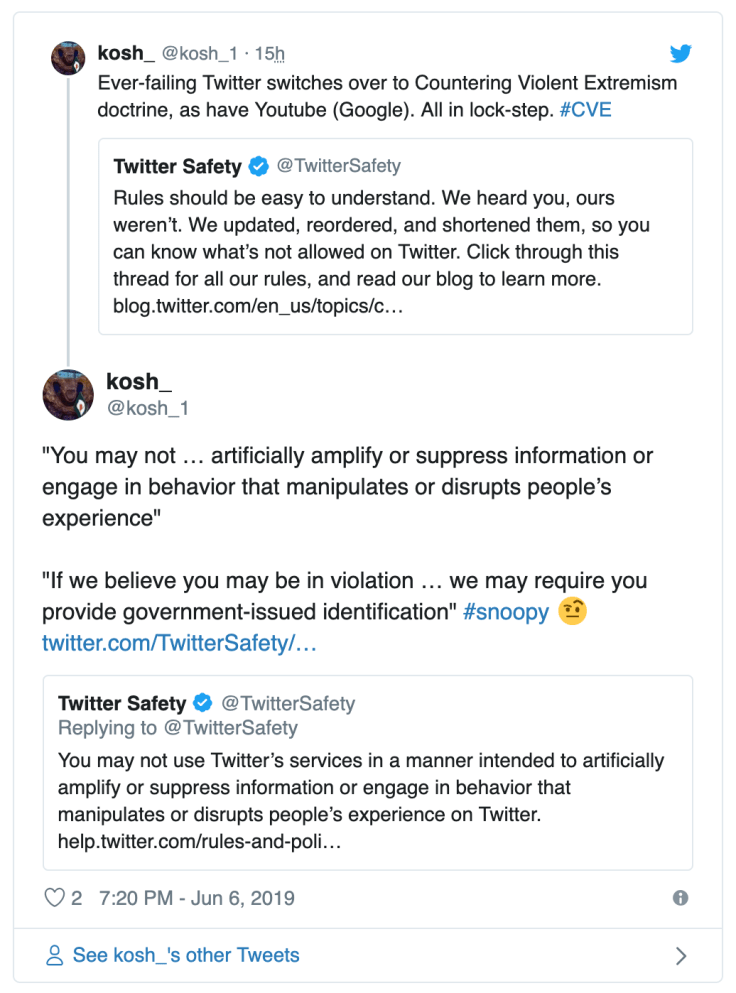
Another user raised the question of why Twitter would ask for government-issued identification in the course of a suspension appeal, and where that information might end up – considering how fellow tech giant Google hands over the personal data of tens of thousands of users yearly at the government’s request.
Twitter’s notoriously-vague hate speech rules have not been clarified – if anything, they’ve grown even more complex. There’s a “hateful conduct” policy and an “abuse/harassment” policy, the latter of which includes “hoping that someone experiences physical harm,” handing even more ammunition to the opponents of ‘thought police’.
Still want to get somebody banned but can’t find a rationale under the new and improved hate speech/harassment rules? Twitter has thoughtfully included a catch-all, menacingly vague prohibition against “platform manipulation” that echoes the “coordinated inauthentic behavior” reason Facebook gave for deplatforming hundreds of politically-active accounts before the 2018 US midterm elections.
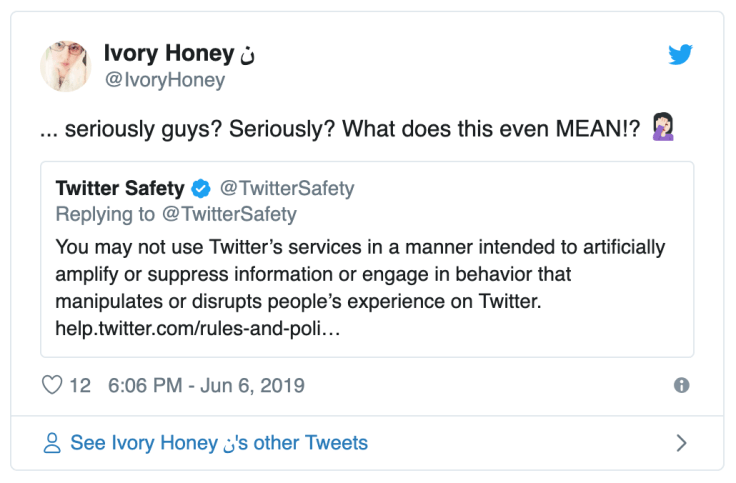
“You may not use Twitter’s services in a manner intended to artificially amplify or suppress information or engage in behavior that manipulates or disrupts people’s experience on Twitter.”
The page warns users against tweeting too much, following too many people, “aggressively adding users to lists,” trying to make accounts “appear more popular or active than they are,” and tweeting with “excessive, unrelated hashtags” – among dozens more no-nos. But “hobby/artistic bots” are apparently OK – a ready-made loophole for the likes of New Knowledge, the American Democrat-linked “experts” who ran an army of fake “Russian bots.”
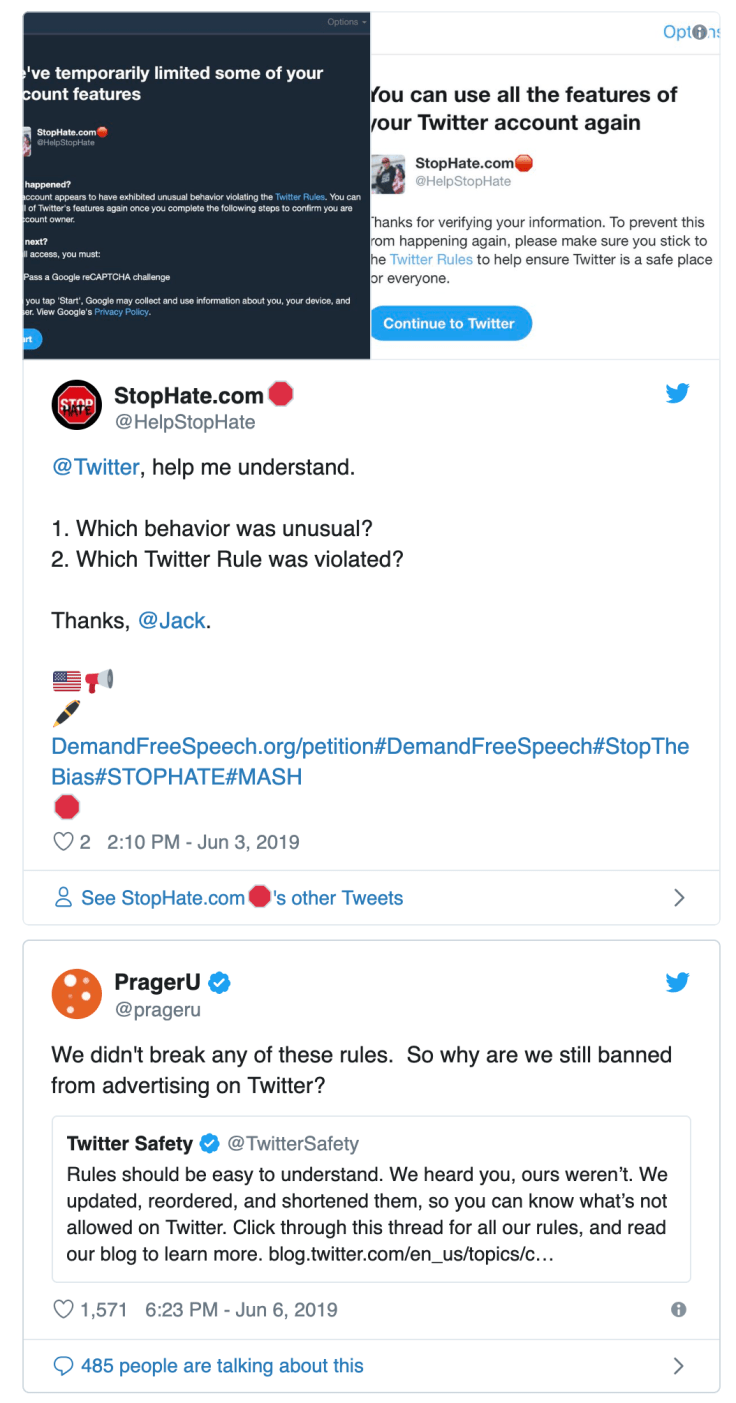
The new rules don’t explain the “unusual behavior” that has apparently become grounds for banning, and many users took the opportunity to lash out at the platform for its censorship.
Parody accounts are supposedly still allowed, though someone apparently forgot to tell whoever deplatformed the latest AOC parody account on Tuesday.

The new, improved Twitter rules dropped less than 24 hours after the #VoxAdpocalypse left hundreds of YouTubers demonetized or even deleted for so-called “supremacist content” – a vague term which in practice seems to have translated to “conservative political speech,” since most white supremacist content had already been removed from the platform in earlier purges and “supremacist” content of any other kind appears to have been largely left alone.
‘This will not go well’: YouTube cracks down on pundits & journalists after policy change


 Tom's Blog