2/7/2020
February 6, 2020
Senator Johnson wrote the Congressman a letter to provide his first-hand information and perspective on events relevant to the impeachment inquiry.
Johnson traveled to Ukraine with special envoy Kurt Volker, spoke to Ukrainian President Volodymyr Zelensky in person and spoke to President Trump about the hold on military aid — unlike all of the ‘witnesses’ Schiff has dragged in to testify using fourth-hand information.
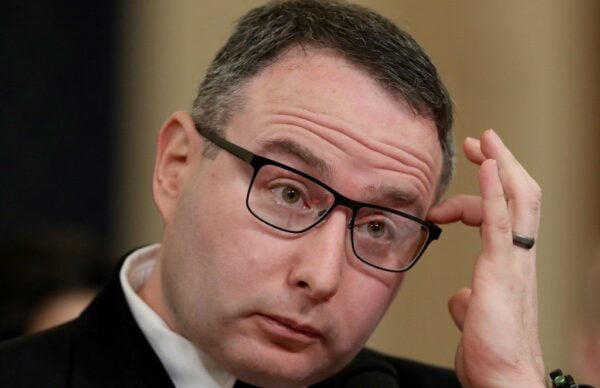
Johnson clearly suggested Vindman was behind the leaks ‘outside his chain of command.’
During his trip to Ukraine Vindman told Ukrainians to ignore President Trump — Vindman actually thinks he is superior to Trump even though he is an inferior official in the intel department.
Vindman, during his closed-door testimony also flatly denied he knew the identity of the whistleblower (Eric Ciaramella); however, it is believed he was the primary source for Eric Ciaramella.
On Thursday night news broke that Vindman will be removed from the National Security Council!
Good riddance!
Bloomberg reported:
The White House is weighing a plan to dismiss Alexander Vindman from the National Security Council after he testified in President Donald Trump’s impeachment inquiry, preparing to position the move as part of a broader effort to shrink the foreign policy bureaucracy, two people familiar with the matter said.
Any moves would come after the Senate on Wednesday acquitted Trump on a near party-line vote at the conclusion of the two-week impeachment trial. The White House intends to portray any house-cleaning as part of a downsizing of the NSC staff, not retaliation, according to the people.

FEBRUARY 7, 2020
With global markets once again in the red, Bloomberg reports that Beijing has silenced two of the citizen journalists responsible for much of the horrifying footage seeping onto western social media.
As BBG’s reporter explains, Chinese citizen journalists Chen Qiushi and Fang Bin have effectively been “the world’s eyes and ears” inside Wuhan (much of the film produced by American news organizations has consisted of drone footage).
In recent days, SCMP and other news organizations reporting on the ground and publishing in English have warned that Beijing has stepped up efforts to censor Chinese social media after allowing citizens to vent their frustrations and share news without the usual scrutiny.
On Wednesday, China said its censors would conduct “targeted supervision” on the largest social media platforms including Weibo, Tencent’s WeChat and ByteDance’s Douyin. All in an effort to mask the dystopian nightmare that life in cities like Wuhan has become.
But that brief period of informational amnesty is now over, apparently. Fang posted a dramatic video on Friday showing him being forcibly detained and dragged off to a ‘quarantine’. He was detained over a video showing corpses piled up in a Wuhan hospital. However, he has already been released.
Chen, meanwhile, seems to have vanished without a trace, and is believed to still be in government detention. We shared one of Chen’s more alarming videos documenting the severe medical supply shortages and outnumbered medical personnel fighting a ‘losing battle’ against the outbreak.
The crackdown on these journalists comes amid an outpouring of public anger over the death of a doctor who was wrongly victimized by police after attempting to warn the public about the outbreak. Beijing tried to cover up the death, denying it to the western press before the local hospital confirmed.
The videos supplied by the two citizen journos have circulated most freely on twitter, which is where most in-the-know Chinese go for their latest information about the outbreak. Many “hop” the “great firewall” via a VPN.
“There’s a lot more activity happening on Twitter compared with Weibo and WeChat,” said Maya Wang, senior China researcher at Human Rights Watch. There has been a Chinese community on Jack Dorsey’s short-message platform since before President Xi Jinping rose to power, she added, but the recent crackdown has weakened that social circle.
Chen has now been missing for more than 24 hours, according to several friends in contact with BBG News.
Chen has been out of contact for a prolonged period of time. His friends posted a message on his Twitter account saying he has been unreachable since 7 p.m. local time on Thursday. In a texted interview, Bloomberg News’s last question to Chen was whether he was concerned about his safety as he’s among the few people reporting the situation on the front lines.
It’s all part of the great crackdown that Beijing is enforcing, even as the WHO continues to praise the Communist Party for its ‘transparency’.
“After lifting the lid briefly to give the press and social media some freedom,” said Wang about China’s ruling Communist Party, the regime “is now reinstating its control over social media, fearing it could lead to a wider-spread panic.”
With a little luck, the world might soon learn Chen’s whereabouts. Then again, there’s always the chance that he’s never heard from again.

FEBRUARY 7, 2020
That raises concerns that the virus may be spreading undetected in those countries, potentially adding fuel to the epidemic that has so far killed over 600 people and sickened over 31,000.
“Indonesia has reported zero cases, and you would expect to have seen several already,” said epidemiologist Marc Lipsitch at the Harvard T.H. Chan School of Public Health, co-author of a new study posted on medRxiv.
Thailand has reported 25 cases, “but you would expect more,” he added.
Cambodia has reported just one case, which Lipsitch said is “not very likely,” but “not completely beyond what you would expect.”
The research is based on estimates of the average number of airline passengers flying from Wuhan to other cities around the world. More passengers would presumably mean more cases.
Going undetected?
Health systems in Indonesia and Thailand may not be catching cases, Lipsitch said, which could create problems for the rest of the world.
“Undetected cases in any country will potentially seed epidemics in those countries,” he added, which can spread beyond their borders.
Lipsitch’s group’s research is one of three recent studies to say that the virus was likely to reach Indonesia.
None of these studies has gone through the normal scientific process of review by outside experts, however. During this fast-moving outbreak, researchers have been posting findings online and on preprint servers to share what they hope will be helpful information. Experts caution that these publications should be taken with an extra grain of salt.
But researchers contacted by VOA said the findings were plausible and help address some lingering questions.
In China, the number of people infected has been climbing daily. But outside China, the outbreak has barely budged. That has puzzled health experts.
Where are they?
“This [study] does get at, I think, a significant question that a number of us have, which is: Where are these cases?” said virologist Christopher Mores at George Washington University’s Milken Institute School of Public Health, who was not involved with the research.
“It’s either that transmission is demonstrably different outside of the main outbreak zone for some reason that has not yet been described,” Mores said, “or we’re just not capturing it and counting it, and there’s a failure to detect.”
This study suggests the latter, he added.
Indonesia, Thailand and Cambodia are screening travelers from China at the border.
“Indonesia is doing what is possible to be prepared for and defend against the novel coronavirus,” the World Health Organization’s Indonesia representative, Dr. Navaratnasamy Paranietharan, told the Sydney Morning Herald.
However, he added, “there is still more work to do in the areas of surveillance and active case detection.”
‘Beef things up’
These countries are not the only places with shortcomings in their public health systems, said epidemiologist Art Reingold at the University of California-Berkeley’s School of Public Health.
“I wouldn’t want people to think everyone else is doing a great job. We need to beef things up in a lot of places,” he added, and not just in the developing world.
“We think we’re doing a good job,” he said. “People think they’re doing a good job in France or whatever, but I don’t think we can afford to make that assumption.”
While some countries start to cut connections with China in hopes of keeping out the disease, Mores said, those measures may not help if the virus is spreading under the radar in countries that don’t.
“There’s certainly plenty of places, especially in the developing world, that are not going to be able to shut down their economies because of this coronavirus outbreak,” he said. “And the danger there is that those countries are even more susceptible” because of weaker public health systems.
And that puts the world at risk, Mores added.
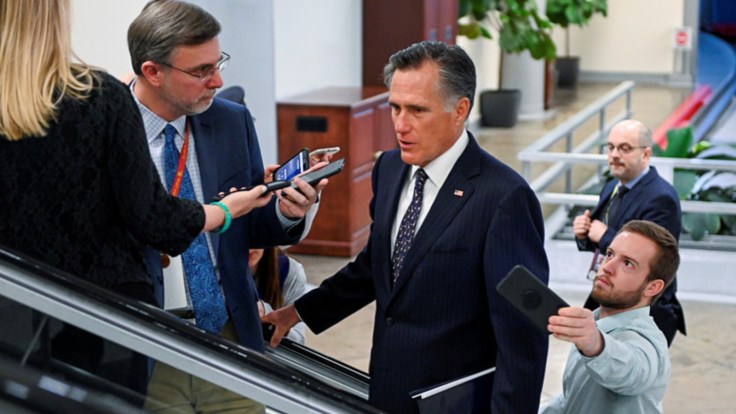
You would think the Utah senator single-handedly defeated Islamic State (IS, formerly ISIS) and then rescued a few kittens out of trees on his way home the way the media is writing about him.
The New Yorker declared that the former presidential candidate “seized” a chance to “rewrite his own place in history” with his impeachment vote.
An opinion piece in the Washington Post deemed the decision “courageous,” and Twitter was full of love for the man once eviscerated by liberal commentators for simply saying “binders full of women.”
The lionization of Romney is nothing new. The mainstream media always keeps a few token Republicans around, and they usually have one they deem worthy of their praises, so long as that person happens to fit with the current agenda, and the current agenda is opposing Trump, so Romney is temporarily safe from the usual scorn his party affiliation and faith receive.
Others have also found themselves walking down that path of praise, past mockery cast aside so they can be deemed heroes for daring to break from Republican ranks and oppose the president.
John McCain
Romney has been crowned the new McCain.
“Like McCain before him, Romney rebukes Trump,” Roll Call wrote after Romney’s impeachment vote.

Washington Post’s Jennifer Rubin applauded Romney’s impeachment vote speech by calling it “McCain-esque.”

McCain wasn’t always liked though. When he ran against Barack Obama in 2008, the late Arizona senator was painted as an over-the-hill Republican grouch with racist policies. The Pew Research Center found in the weeks leading up to the election, negative stories about McCain were three to one. Obama, meanwhile, had the opposite problem. Only about a third of stories written about him were negative.
Google McCain’s name today and you’d be hard-pressed to find a bad word about him. Why is that? Could it be his time spent as a prisoner of war in Vietnam? No, it’s because he was one of Trump’s most consistent Republican critics.
The New York Times, the same paper that ran an editorial in 2008 accusing McCain of possibly running racist ads, published piece after piece defendingMcCain from Trump attacks. Quite a flip.
Like Romney, McCain was a defeated political opponent later praised as an elder statesman and protector of all things good simply because he didn’t like Trump.
Anthony Scaramucci
He may have only served as the director of communications in the White House for eleven days, but that hasn’t stopped Scaramucci from turning himself into a self-appointed expert on the president.
Once one of Trump’s most loyal supporters, Scaramucci did a complete 180 degree turn in recent months and now appears to oppose everything he once promoted. What’s ironic about him now appearing on CNN and MSNBC or writing op-eds for Huffington Post and Washington Post about how he saw the wrong in his views is the same left-wing media he now frequents is the reason he was out of a job in the first place.
Scaramucci was fired after an interview with the New Yorker where he said some pretty vulgar things about White House officials, including Steve Bannon. Scaramucci thought the comments were off the record and was just as shocked as everyone else when he saw them in print.
George W. Bush
Before the possibility of Trump becoming president was ever a reality, George W. Bush was sold by the mainstream media as the worst Republicans had to offer. He was blasted as racist, incompetent, cowardly, on and on it went. The hysteria over Bush was so bad conservative columnist Charles Krauthammer coined the term “Bush Derangement Syndrome” — sound familiar? — to describe the extremeness that came with critiques of the man.
Leftists like Michael Moore blasted Bush and higher-ups in his administration as war criminals for starting the war in Iraq. Former Los Angeles prosecutor Vincent Bugliosi wrote an entire book about prosecuting Bush for murder, and he’s the same guy who wrote ‘Helter Skelter’, the book about cult leader Charles Manson!
A film was even released fantasizing about Bush’s assassination, ‘Death of a President’, and it premiered at the Toronto Film Festival. And before there was ever a push for Nancy Pelosi to impeach Trump, she was being pushed to impeach Bush. It was hard to imagine at the time that any politician could ever inspire the vitriolic hate that Bush did.
Then Trump came into the picture and knocked W.’s brother Jeb out of the running for president. George W. Bush in turn criticized Trump. He even defended the media as “essential to democracy” while Trump popularized terms like “fake news” in his war with the press.
Bush went from a threat to democracy to an “unlikely savior,” as the New York Times so subtly put it. He has been so redeemed in some eyes that more loyal leftists have become a tad uncomfortable with the man ranking on ‘most admired’ lists and hanging with celebs like Ellen DeGeneres. They have taken to trying to remind people of the good old days where people fantasized about everything from the man in prison to in the grave on a daily basis.
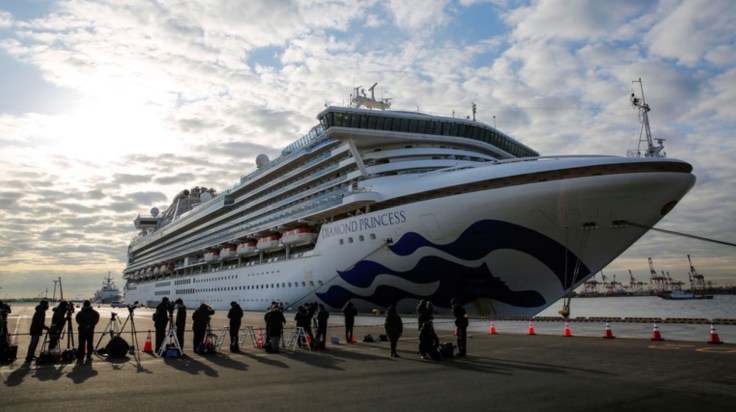
Stuck at the port of Yokohama since earlier this week, the ship’s 3,700 passengers and crew face weeks of quarantine as medical workers test for signs of the deadly contagion. The ship is now like a “floating prison,” one passenger said on social media, where haunting images have emerged showing its abandoned halls, once bustling with activity.
Of the thousands of passengers on board, 273 have shown symptoms of illness, such as cough and fever, or came in contact with those who have. All of those passengers have now been tested, Japan’s Health Ministry said, noting the 41 new patients will be transferred to medical facilities in Tokyo, Saitama, Chiba and Shizuoka prefectures, as well as Kanagawa.

It remains unclear whether additional cases could arise on the ship, as the novel coronavirus has been found to spread person-to-person, even among those not yet showing symptoms, with a long incubation period. Some passengers already expressed fear that they could eventually end up stuck on the vessel for much longer than 14 days if new infections occur.
With the number of infections on the ship tripling on Thursday as health screenings continue, Japan now counts at least 86 cases of the lethal coronavirus nationwide, which originated in the Chinese city of Wuhan in December. The illness has since spread to 25 other countries, infecting over 30,000 and claiming 635 lives in total, most of them in China.
Coronavirus kills 69 more people in China’s Hubei as total cases soar beyond 31,000
By DronetekPolitic

FEBRUARY 6, 2020
Residents have already wiped out supermarkets of rice, toilet paper and cleaning wipes in addition to surgical masks and sanitizers which were already running in short supply.
“If China stops exporting stuff here, where would we get our necessities from?” Asked an elderly lady in front of empty shelves, as reported by Voice of America.
The outlet also reported that there’s a “there is also panic buying on rice — a staple food for Hong Kongers — packet noodles and vitamins, leaving the shelves eerily empty, although there was no shortage of meat and vegetables in shops,” suggesting that residents are stocking up on food that won’t spoil.
“There has been a severe shortage of surgical masks and sanitizing agents such as alcohol hand rubs and wipes, with many pharmacies posting notes on their windows saying ‘No masks, alcohol sanitizing agents or wipes available,’” stated Voice of America. “Long queues quickly form outside any shops that announce they have a supply of masks.”
“Thousands braved chilly winds and camped overnight Tuesday outside an outlet at Kowloon Bay that said it had procured a supply of masks from Dubai.”
Additionally, 10 clinics have closed in Hong Kong due to the lack of surgical masks, and another 400 clinics may soon close if more mask shipments are not received.
China’s economic output has slowed down significantly due to the unprecedented quarantine of millions of mainland residents, which has also contributed to the stockpiling in Hong Kong.
 Tom's Blog