Companies people love to hate: World’s most despised corporations

Screen Shot 2019-07-30 at 10.07.14 AM

Issues of privacy, user manipulation, and tax avoidance have turned public sentiment against big tech firms, once the darlings in the otherwise hated corporate world. But how quickly things change, as RT Business finds out.
Facebook

Screen Shot 2019-07-30 at 10.09.15 AM

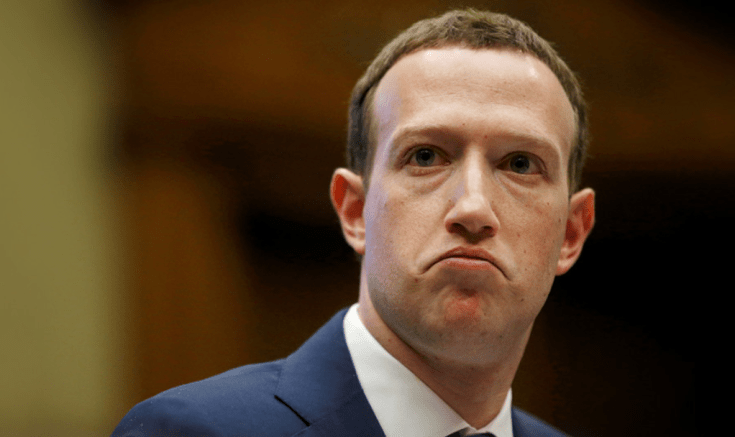
One of the big five tech companies, Facebook has been buried by numerous scandals, from hacking to misappropriating user data and spreading hate speech. The company has agreed to pay a record-breaking $5 billion fine over privacy violations after allowing as many as 87 million users’ data to fall into the possession of political consulting firm Cambridge Analytica. Facebook, along with other technology companies, has also been accused of unlawfully stifling competition in its rise to power.

Facebook agrees to pay record $5bn fine over privacy violations, critics call it a ‘parking ticket’

Bayer/Monsanto

Screen Shot 2019-07-30 at 10.10.46 AM

Dubbed ‘a marriage made in hell,’ the mega-merger between German drug company Bayer and US GMO seeds and pesticides maker Monsanto created one of the most powerful agribusinesses in the world. Following the multibillion-dollar takeover, Bayer is now the target of some 18,400 lawsuits over Monsanto’s Roundup weed killer and its active ingredient glyphosate. The herbicide has allegedly caused grave illnesses such as cancer.

US judge cuts Monsanto cancer victims’ award from $2 billion to $86 million

Google

Screen Shot 2019-07-30 at 10.11.37 AM

Another former Silicon Valley darling from the ‘Gang of Four’ (Google, Amazon, Facebook, Apple), Google has also been engulfed in massive scandals. These include accusations of tax avoidance, misuse and manipulation of search results, unauthorized use people’s intellectual property, and the compilation of data which could violate user privacy.

Big Tech ‘monopolies’ targeted in sweeping new antitrust probe by US Justice Department

The tech giant has also been accused of trying to cover up a sexual misconduct scandal in the company. As the global hunt for tax avoiding firms intensifies, Google and other Big Tech companies are being targeted by countries including Spain and France, seeking to force the digital companies to pay more taxes in the markets where they operate.

Johnson & Johnson
Screen Shot 2019-07-30 at 10.12.59 AM

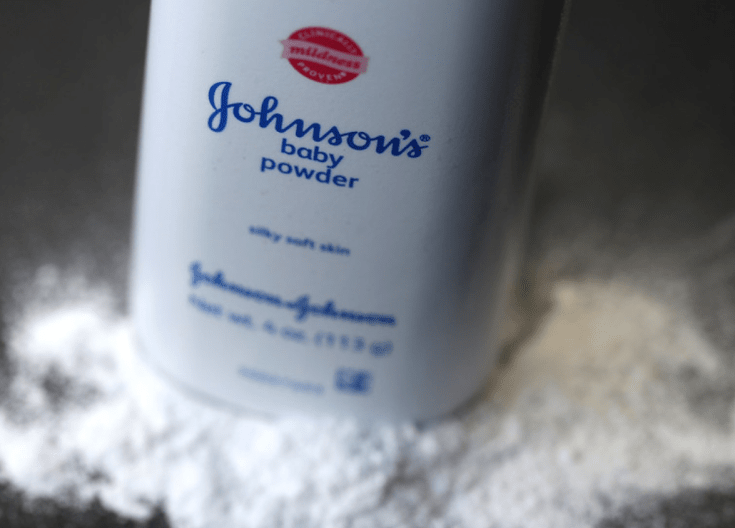
In the healthcare industry there are few brands better known than the US drug company Johnson & Johnson. The maker of consumer staples ranging from Band-Aid bandages to baby shampoo has faced a number of controversies in its 133-year history. J&J knew about asbestos in its baby products since the 1970s and worked to conceal it from federal regulators and the public, investigations show.

Hidden ‘for decades’: Johnson & Johnson may have known about ‘carcinogens’ in baby powder since 1971

The pharmaceutical giant is facing thousands of lawsuits alleging that its baby powder product caused cancer, but it has always denied the allegations and insisted that the product is safe. After the latest revelations, the firm is now contesting claims that it has contributed to the opioid epidemic in the US.

JP Morgan

Despite the relatively low standards of the banking industry and the unpopularity of banks in general, JP Morgan has managed to outdo the competition to become the most despised. The largest financial institution in the US, with operations worldwide, the Wall Street bank is facing an onslaught of endless investigations and scandals.

READ MORE: JP Morgan, Barclays, RBS among big banks facing UK class action over Forex rigging

It is among the major global banks being sued by investors for rigging the global forex exchange (Forex) market. Its chief executive Jamie Dimon was awarded with $31 million in total compensation for his work in 2018. The pay exceeded his record compensation of $30 million in 2007 before the financial crisis.

JP Morgan cargo ship released, minus the $1.3 billion worth of cocaine found onboard

But the climax to all of this was last month’s unprecedented drugs bust after US federal authorities seized a cargo ship at the Port of Philadelphia belonging to a fund run by JP Morgan. After confiscating nearly 20 tons of cocaine on board worth $1.3 billion, authorities later released the vessel.

Other notable mentions:

Amazon

Nestle

Big Tobacco

Big Oil

Big Pharma

WESTERN MIDDLE CLASSES ARE REVOLTING GLOBALLY AGAINST HYPOCRITICAL ELITES

Western Middle Classes Are Revolting Globally Against Hypocritical Elites

Hard-working taxpayers rejecting globalist agenda

By Victor Davis Hanson

What is going on with the unending Brexit drama, the aftershocks of Donald Trump’s election and the “yellow vests” protests in France?

What drives the growing estrangement of southern and eastern Europe from the European Union establishment? What fuels the anti-EU themes of recent European elections and the stunning recent Australian re-election of conservatives?

Screen Shot 2019-06-14 at 11.16.02 AM

Put simply, the middle classes are revolting against Western managerial elites. The latter group includes professional politicians, entrenched bureaucrats, condescending academics, corporate phonies and propagandistic journalists.

What are the popular gripes against them?

One, illegal immigration and open borders have led to chaos. Lax immigration policies have taxed social services and fueled multicultural identity politics, often to the benefit of boutique leftist political agendas.

Two, globalization enriched the cosmopolitan elites who found worldwide markets for their various services. New global markets and commerce meant Western nations outsourced, offshored and ignored their own industries and manufacturing (or anything dependent on muscular labor that could be replaced by cheaper workers abroad).

Three, unelected bureaucrats multiplied and vastly increased their power over private citizens. The targeted middle classes lacked the resources to fight back against the royal armies of tenured regulators, planners, auditors, inspectors and adjusters who could not be fired and were never accountable.

Enlarge ImageA Yellow Vest Pro-Brexit Protestor seen with an EU flag modified with a Swastika during a rally at Trafalgar Square.
A Yellow Vest Pro-Brexit Protestor seen with an EU flag modified with a Swastika during a rally at Trafalgar Square.Getty Images

Four, the new global media reached billions and indoctrinated rather than reported.

Five, academia, rather than focusing on education, became politicized as a shrill agent of cultural transformation — while charging more for less learning.

Six, utopian social planning increased housing, energy, and transportation costs.

One common gripe framed all these diverse issues: The wealthy had the means and influence not to be bothered by higher taxes and fees, or to avoid them altogether. Not so much the middle classes, who lacked the clout of the virtue-signaling rich and the romance of the distant poor.

In other words, elites never suffered the firsthand consequences of their own ideological fiats.

Green policies were aimed at raising fees on, and restricting the use of, carbon-based fuels. But proposed green belt-tightening among the hoi polloi was not matched by cutbacks in their second and third homes, overseas vacations, luxury cars, private jets and high-tech appurtenances.

In education, government directives and academic hectoring about admissions quotas and ideological indoctrination likewise targeted the middle classes but not the elite. The micromanagers of Western public schools and universities often preferred private academies and rigorous traditional training for their own children.

Elites relied on old-boy networks to get their own kids into colleges. Diversity administrators multiplied at universities while indebted students borrowed more money to pay for them.

In matters of immigration, the story was much the same. Western elites encouraged the migration of indigent, unskilled and often poorly educated foreign nationals who would ensure that government social programs — and the power of the elites themselves — grew.

The champions of open borders made sure that such influxes did not materially affect their own neighborhoods, schools and privileged way of life.

Elites masked their hypocrisy by virtue-signaling their disdain for the supposedly xenophobic, racist or nativist middle classes. Yet the non-elite have experienced firsthand the impact on social programs, schools and safety from sudden, massive and often illegal immigration from Latin America, the Middle East, Africa and Asia into their communities.

As for trade, few still believe in “free” trade when it remains so unfair. Why didn’t elites extend to China their same tough-love lectures about global warming or about breaking the rules of trade, copyrights and patents?

The middle classes became nauseated by elites’ constant trashing of their culture, history and traditions, including the tearing down of statues, the Trotskyizing of past heroes, the renaming of public buildings and streets and, for some, the tired and empty whining about “white privilege.”

If Western nations were really so bad, and so flawed at their founding, why were millions of non-Westerners risking their lives to reach Western soil?

How was it that elites themselves had made so much money, had gained so much influence and had enjoyed such material bounty and leisure from such a supposedly toxic system — benefits that they were unwilling to give up despite their tired moralizing about selfishness and privilege?

In the next few years, expect more grass-roots demands for the restoration of the value of citizenship. There will be fewer middle-class apologies for patriotism and nationalism. The non-elite will become angrier about illegal immigration, demanding a return to the idea of measured, meritocratic, diverse and legal immigration.

Because elites have no answers to popular furor, the anger directed at them will only increase until they give up — or finally succeed in their grand agenda of a nondemocratic, all-powerful Orwellian state.

Globalist Central Bankers Unite to Derail Trump’s ‘America First’ Trade Agenda

The International Monetary Fund and European Central Bank do not want Trump to make America great again.

by Shane Trejo

Two of the most powerful international bankers in the world are teaming up in a joint effort to halt President Donald Trump’s ‘America First’ trade policies.

Mario Draghi, president of the European Central Bank (ECB) and Christine Lagarde, managing director of the International Monetary Fund (IMF), are urging Trump to abandon his trade war and return to the status quo preferred by globalist financiers.

“We meet at a moment when support for global cooperation and multilateral solutions is waning,” Lagarde said at the 8th ECB conference for the central, eastern and south-eastern European (CESEE) nations on Wednesday.

“Global growth has been subdued for more than six years and the largest economies in the world are putting up, or threatening to put up, new trade barriers. And this might be the beginning of something else, which might affect us all in a more broad way,” she added.

Lagarde also warned: “These troubling developments will create headwinds for all, but certainly for the CESEE growth model, a model that has relied on openness and integration.”

Draghi also forecast doom unless Trump submitted to China, abandoned his nationalistic policies, and let he and his fellow bankster cronies go back to running the global economy.

“Global trade has faced headwinds in recent years as trade-restrictive measures have outpaced liberalising measures,” Draghi said.

“The central and eastern European business model has become vulnerable to shocks to international trade and financial conditions,” he added, warning of potential ill effects of Trump threatening to hike tariffs on European autos.

“The effect of tariffs could be amplified, as a large share of goods cross borders multiple times during the production process,” Draghi said.

“The main long-term challenge is moving towards a more balanced growth and financing model, which is more reliant on domestic innovation and on higher investment spending than it has been so far,” he added.

Regardless of the fear-mongering of the international bankers, President Trump remains undaunted in his resolve to cut China down to size and approve the standing of the U.S. in the world.

Trump is intent upon making America great again, whether the central banking elites approve of it or not.

Blog at WordPress.com.

Up ↑