By Peak Prosperity 3/23/2020
This level of corporate welfare is absolutely disgusting.
By Mike Carter

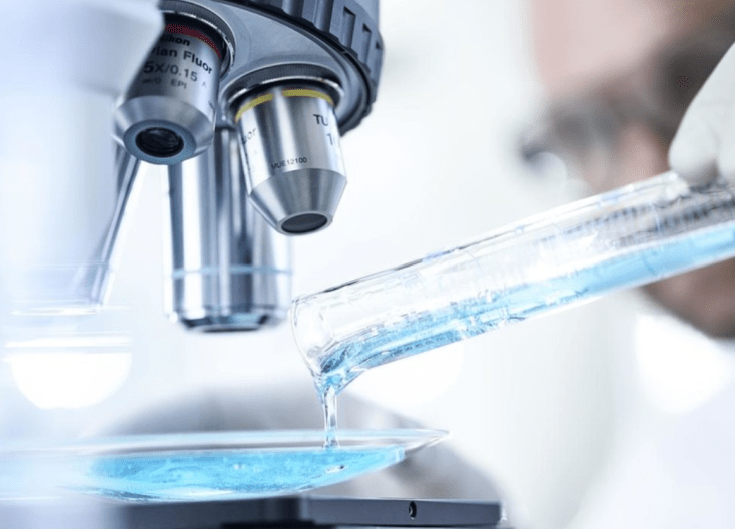
The disease caused by the virus, COVID-19, has proved particularly lethal to the elderly and those with underlying health conditions, and the scientists at the school’s Center for Innate Immunity and Immune Disease have been tasked with trying to understand why in these cases the new virus overwhelms the body’s natural defenses, while in most people it causes only moderate or even mild illness.
The new virus has some unusual characteristics that haven’t been seen in other SARS (Severe Acute Respiratory Syndrome) outbreaks, both in the way it attacks the lungs and how it can infect people quietly, where they will have few or no symptoms for days or weeks but still spread the disease, said Dr. Michael Gale, a professor of immunology at the UW and the center’s director.
“There’s a lot we don’t know,” Gale said. “We don’t know how it interacts with the cell. We don’t know how it invades it. We don’t know how it overcomes the cell’s innate immune system.”
These are all questions that Gale and his team of scientists, working with others around the world, hope to answer as they begin to understand the pathology of the novel coronavirus. That information, in turn, will inform both treatment and prevention of the disease, he said.
“What we do know is that this SARS is very successful in taking over the cell,” he said. So successful, in fact, that the body’s reaction to that takeover can be so violent and overwhelming that, in essence, it ends up killing itself.
Earlier this month, the King County Medical Examiner’s Office released a list of the first 22 people in King County to die from COVID-19 before announcing that it was no longer taking jurisdiction over SARS deaths. The list identified patients, their age and their gender, and listed the cause of death and contributing factors. Gale and another noted immunologist and pathologist, Dr. Julian Leibowitz at Texas A&M University College of Medicine, reviewed the list and remarked on how the information fits with what is known and being learned about COVID-19 and how it attacks the body.
Both were cautious to point out that the information was extremely limited and did not contain autopsy reports, tissue-sample slides or other detailed information they would need to provide anything more than general observations.
Leibowitz, however, said he has reviewed detailed results of a COVID-19 autopsy performed in China and published online. What he was able to glean from the medical examiner’s list led him to conclude the pathology was similar.
“This follows the pattern of SARS in general,” he said. “This virus clearly causes a viral pneumonia” similar to the SARS outbreak in 2003 that infected 8,089 people around the world. Like that outbreak, he said, the chance of serious illness or death is significantly higher in older populations, he said. The average age of the individuals on the medical examiner’s list was 66, with the oldest being 98 and the youngest 44.
But this new coronavirus is likely more infectious, certainly more insidious, and more lethal that the ‘03 SARS virus. That outbreak killed 774 people before being contained in about nine months. COVID-19 has infected more than 208,000 people worldwide and killed nearly 8,700 of them, and has spread into a pandemic.
Leibowitz said one thing really jumped out at him from the King County list: the number of cases of cardiomyopathy, a hardening of the heart muscle that can be caused by a drastic immune response. Four of the 22 King County fatalities had cardiomyopathy listed as the primary cause of death.
Similarly, an article published Thursday in the Journal of the American Medical Association detailing a review of the outcomes of 21 COVID-19 patients admitted to the Intensive Care Unit at Kirkland’s EvergreenHealth Medical Center made a similar observation, finding cardiomyopathy developed in seven of the 21 patients. At the time of publication, 14 of the 21 had died.
“It is unclear whether the high rate of cardiomyopathy in this case series reflects a direct cardiac complication of SARS-CoV-2 infection or resulted from overwhelming critical illness,” the article stated, calling for additional research.
Leibowitz believes it is likely a result of the body’s immune system trying desperately to stop the virus, causing massive inflammation throughout the heart and lungs and, in some cases, damaging other organs as well.
The workings of the immune system is what Gale’s UW scientists are focused on, specifically the “innate” portion of the body’s defenses — mechanisms genetically coded into every cell to protect it from infections and damage. They activate almost immediately when the body detects an invader.
Gale said his researchers are working to understand how SARS-CoV-2 manages to defeat these mechanisms to invade a cell and take it over, forcing it to replicate copies of the virus even as it is destroyed. Those virus copies then go on to infect other cells and the process repeats in a cascading infection.
“Right now, its replication strategy is unknown,” Gale said during a recent interview outside the Bio-Safety Level III laboratory in South Lake Union where his scientist opened the vial of SARS-CoV-2 this past week. Gale asked that the exact location of the laboratory be withheld for security reasons.
“What we know is that the virus physically destroys the lung tissue as it replicates in the cells,” he said. Gale said the tissue damage he’s seen bears similarities to the damaged lungs of victims of the 1918 influenza-A pandemic, which infected one of every three people and killed 50 million people — roughly 3% of the world’s population.
Gale has worked with and studied the 1918 H1N1 flu virus as well after a live specimen was recovered in 2007 from the remains of an Inuit woman who was buried in the Alaskan permafrost after dying during the pandemic.
“That virus physically destroyed the cells, as well,” he said.
A Morbidity and Mortality Report issued Wednesday by the Centers for Disease Control and Prevention states that preliminary data from the initial outbreak in Wuhan, China, shows the majority of COVID-19 deaths in those 60 and older.
Leibowitz said the vulnerability of older patients is likely explained at least in part because, as people age, their cells lose their ability to grow, divide and protect themselves through a process called “senescence,” a word derived from the Latin “senex,” which means “old.”
“The immune system becomes sluggish, sleepy,” he said.
Add to that another health issue — diabetes or kidney problems — and the tired immune system can be even further taxed.
“When a person has an underlying health issue, it engages an immune response at some level,” Gale explained. This can result in inflammation as the body attempts to grapple with the issue. “Your body is distracted, and it can’t deal with other insults.”
“It becomes a race,” said Leibowitz, who has studied coronavirus. “The virus tries to spread and make more virus in order for it to be successful in nature.
“In the meantime, your immune system tries to kill the cells that are infected,” he explained. If you are young and healthy with a robust immune system, then not as many cells will be affected.
“But if your innate immune system isn’t strong, then the virus is more successful and your body’s response will be prolonged. That means more cells will be damaged by the immune system as it tries to keep up with the virus.
“And that,” he said, “is not good for your lungs.”
The other “striking” issue with SARS-CoV-2 has been its apparently easy transmission and contagion, Leibowitz said.
“What is scary to me about this SARS compared to the outbreak in 2003 is that back then, asymptomatic patients did not transmit the disease. You had to have a fever to be contagious,” he said. “This disease can be transmitted silently by people who don’t know they are sick and show few or no symptoms of being infected.”
(EDITORS: STORY CAN END HERE)
That surreptitious transmission strikes Gale, as well, who noted that of the first 22 people who died in King County from COVID-19 — the individuals listed on the medical examiner’s document — most had been patients at Life Care Center of Kirkland, a long-term nursing facility that became ground zero for the pandemic in the U.S. At last count, Dr. Jeffrey Duchin, the chief public health officer for Public Health — Seattle & King County, said 23 care facilities had reported patients or staff with confirmed COVID-19 infections.
“The 2003 SARS outbreak was more acute,” Gale said. “Here, we have up to two weeks with people asymptomatic and, in some cases, kids don’t get sick at all. They’re little vectors.
“You have to ask yourself, ‘Why do you think all the nursing homes and care centers get hit?’ ” he asked. “I can tell you: It’s because grandparents got visits from grandkids.”

By Peter Andrews
Economics is the study of choices, and never more so than now. It’s now clear that, with the coronavirus pandemic causing widespread chaos that economists believe will cause a prolonged economic depression, the choices that each person makes have the power to affect their country’s and the world’s economy over the coming weeks and months. With the caveat that much depends on those individual choices and the actions of governments, here is our current assessment of which places are likely to be worst-hit economically, as well as a few that might come out rosier than most.
Singapore might be the perfect recipe for coronavirus containment. A rich city-state with a world class universal healthcare system, a pandemic response plan in place ever since they were badly hit by the SARS virus in 2003, and healthy lashings of state-enforced social control mean they quickly knew exactly how and where 100 of their first 112 confirmed cases became infected. Astonishingly, their non-oil exports grew in February, owing mostly to an increase in shipments of pharmaceuticals and various manufactured goods to America, Japan and the EU. Their regional trade with China and the rest of Southeast Asia will suffer, though, and their economy is a trade-based one. Therefore, they are likely to enter a recession this year, along with the rest of the world. But the early signs suggest they may be better off than a lot of places, though.
Sometimes, it pays to be a totalitarian state. And to go first. China’s stifling of the contagion that started the trail of devastation has been miraculous, albeit achieved through the sort of state enforcement other countries would find difficult to enact. For the most populous country on Earth to go into a state of universal lockdown, with meetings or gatherings of any kind forbidden and essentially no individual movement outside of one’s own home permitted, requires a strong level of police enforcement, and the end of all but the most rudimentary personal freedoms. But it sure is working. China has been seeing the number of new cases decline, with none being home-grown — all their new infections — it reported 39 today — are from people returning home from abroad.
In the early days of the pandemic, economists were predicting a sharp decline in China’s economy followed by a sharp bounce back, a so-called V-shaped curve. But as the crisis has worsened experts are now forecasting a longer, deeper downturn, one that will take longer to escape from. But, having been the first to suffer, they will be the first to emerge from it. After the Communist Party has held the entire population of the country in its grip for the duration of this lockdown, without any major public unrest, they will come out the other side poorer, but arguably with even more political control than before. Which Beijing will use to help make a swift economic recovery, using its technological and manufacturing muscle.
Donald Trump has spent much of his presidency tweeting and boasting about how strong the US economy has been… and he’s been right. The economy has been steadily growing ever since the last global crisis in 2009, and in 2019 the period became the longest global expansion on record. But that expansion will become yet another victim of coronavirus before the summer is out. And there appears not to really be a reference for how bad things could get. Bill Ackman, the CEO of Pershing Square Capital Management, has begged President Trump on CNBC to beg to shut down the American economy for 30 days and put the country in a nationwide lockdown. “America will end as we know it unless we take this option”, he said. When hedge fund managers are praying for the economy to be SHUT DOWN in order to protect it, you know things are bad.
Comparisons to the Great Depression of the 1930s are common, with the majority consensus leaning towards the Covid-19 Depression of the 2020s being worse. JP Morgan is predicting a 14% slash in the US economy this quarter (alongside an eye-watering 22% in the Eurozone) while another forecast yesterday warned US unemployment could rise to 30% and overall GDP could decline by a staggering 50% in the second quarter. Depending on how quickly the Federal Reserve can pump money out to businesses at the same time as stemming the contagion as much as they can, then this could be anything between a gigantic global recession for at least six months, to the worst economic crisis in history, with depths as yet unplumbed. America, as the centre of the Western world’s economy, is going to feel the pain most.
No prizes for predicting that Italy will have suffered more than most when the dust settles on this crisis. A middle-sized country with a small economy, they find themselves overtaking patient zero China in numbers of active cases and dead. Italy has everything working against it. An elderly population more susceptible to the disease. An economy heavily reliant on tourism which will be decimated. And huge debts.
They were already a heavily indebted country that had suffered possibly more than any other European country through their membership of the Eurozone. And they were hardly a united cohesive society either, with the poorer south harboring ancient resentments against the richer north, which has experienced the centre of the outbreak. Footage of Italians singing from their balconies has been inspiring, and perhaps this crisis will bring them closer together as a country, as only tragedy can. But any other silver linings are hard to see for The Boot of Europe.
The Korean Republic is exerting a similarly strong defensive action to Singapore against the virus. They also have huge Big Data capabilities for mass testing and contact tracing, utilising citizens’ mobile phone and credit card data to decide who to test in the first place. They are no strangers to outbreaks either, as the 2015 MERS outbreak taught them lessons about how to minimize the impact on the health services. As for their economy, though, it was not in great shape leading up to this, and the damage to trade links within Asia will hurt them badly. The epicenter of their coronavirus outbreak is in the manufacturing region, and a Hyundai factory has already closed its doors there. But if it spreads to Seoul they will be in even bigger trouble, as that could shut down the business and finance sectors.
Australia is another country highly dependent on trade with China, and is predicted to be the hardest hit economy in the world outside of China itself and Hong Kong. China is also Australia’s biggest source of tourism revenue, and that twin-pronged attack on their economy is sure to do major lasting damage. This could not have come at a worse time for them either, straight off the back of a summer of rampant bushfires that did huge economic and reputational damage. Already, the Australian dollar is trading at very low values. Worrying times for Aussie people and politicians alike.
OK, Africa is obviously not a country, but there’s no point in trying to predict which of the already-fragile economies in that vast and troubled continent will be worst affected by coronavirus, when it does spread widely there. Africa has more than enough problems without yet another killer virus, but it has been largely ignored in discussions about global impacts of Covid-19 thus far. Frighteningly, most African countries are acutely vulnerable: many have fewer than 10 hospital beds per 10,000 people; they have many crowded, impoverished townships where there’s a lack of water to wash hands and little space to self-isolate; and few have any contingency plans or resources to cope with such an outbreak. According to NKC African Economics, Angola, Gabon, Ethiopia, Ghana, Tunisia, Zambia and Kenya are the African countries most at risk of debt distress in the likely event of a global recession. Slowdowns in the rest of the world pose a grave threat to African countries’ already precarious trade links to Europe and Asia.
Damage to a country’s economy is a direct product of steps taken to hinder the spread of the virus itself. If absolutely no measures were taken by a country, and companies remained open and everything was business as usual, their economy would be unaffected. With the exception, that is, of the untenable pressure that would soon be brought on the health services in that scenario. With a high peak in Covid-19 cases, the health services would quickly be overwhelmed, and people would start dying on the streets or at home without the slightest hope of even the most basic medical intervention. Clearly, this is not an acceptable state of affairs, which is why such drastic, possibly recession-triggering measures are being taken, all in an effort to save as many lives as possible.
Governments are doing what they can, which is essentially throwing huge, unprecedented sums of money to try to avert a prolonged crash and to keep their economies running. Most commentators cite wartime measures as the only comparable action. And the world is at war, against an enemy that, if left to run amok, will cripple the economy, ruin livelihoods and perhaps kill hundreds of thousands, perhaps millions, of people. How well we combat it will determine all of our futures.


 Tom's Blog