Chinese coronavirus quarantine now just 100 miles from Shanghai, 4 more cities with 21mn people added

CAP

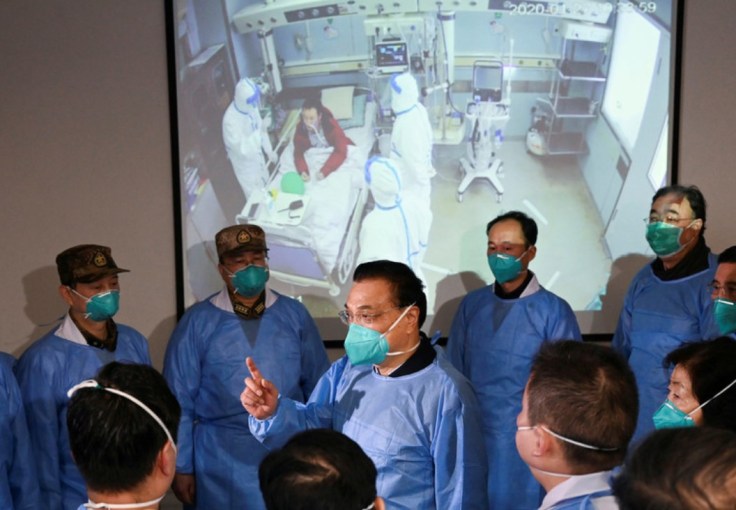
Chinese authorities have extended the country’s internal quarantine to include four additional cities comprising roughly 21 million people in a bid to stop the spread of the novel coronavirus.

Travel restrictions have been placed on residents in Taizhou, Hangzhou, Ningbo and Wenzhou; allowing only one person per household to leave every two days to go and pick up supplies. In addition, residents in Taizhou must present ID every time they leave their homes.

City authorities also have placed rent controls on landlords, expressly forbidding them from renting their properties to people from “severely affected areas such as Hubei,” if they have traveled home in the past few months.

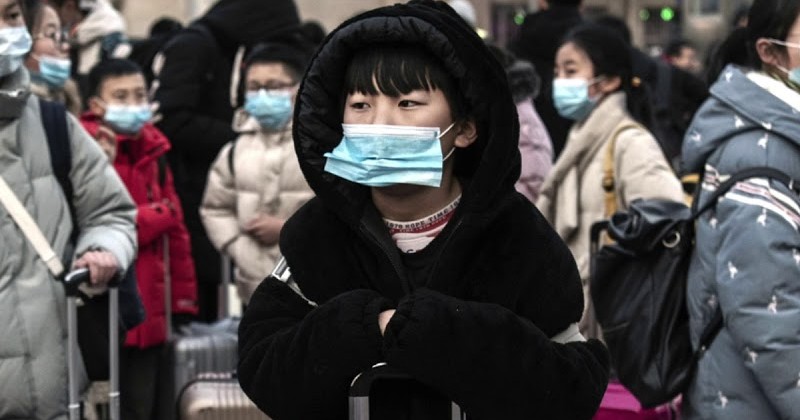
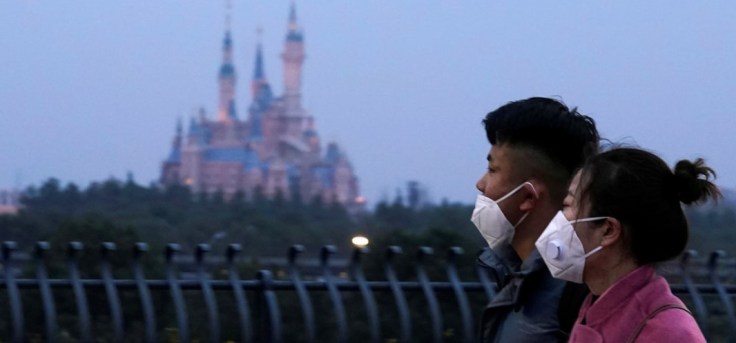
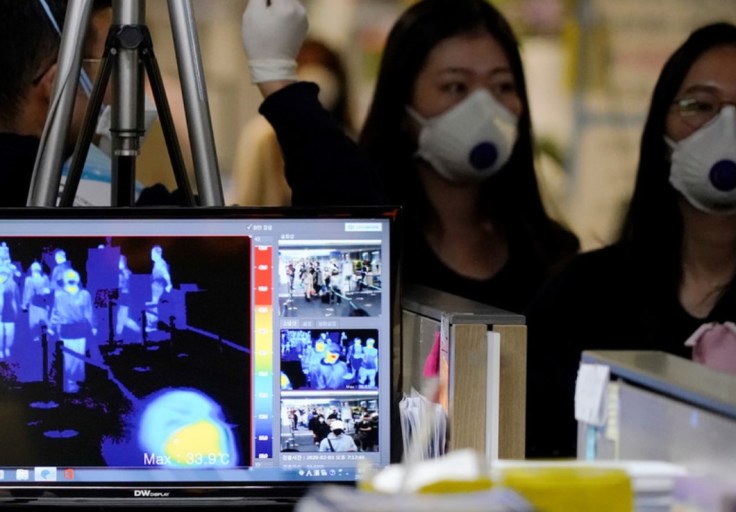
The city of Hangzhou, just 110 miles (177km) from major population center and business hub Shanghai, which boasts over 24 million people, already has 200 confirmed cases of coronavirus. The wearing of face masks in public is mandatory and temperature checks are commonplace for those who venture outside.

Similar measures were announced on Sunday for the city of Wenzhou, which severely restricted movement for its nine million residents in an attempt to curb the spread of the virus.

‘Cycle of panic & neglect’? US prepares for ‘pandemic’ as China coronavirus death toll reaches 427 with 20,000+ cases

CAP

In China alone, at least 427 deaths and over 20,000 cases of coronavirus infection have been confirmed. The majority of the deaths have been concentrated in Wuhan in Hubei Province, where the outbreak began in December 2019. The city has been on lockdown for almost two weeks.

China’s leadership acknowledged “shortcomings and difficulties exposed in the response to the epidemic” in a statement on Monday.

“It is necessary to strengthen market supervision, resolutely ban and severely crack down on illegal wildlife markets and trade,” the Politburo Standing Committee said, according to the official Xinhua news agency.

H5N8: Saudi Arabia reports outbreak of HIGHLY pathogenic bird flu virus

CAP

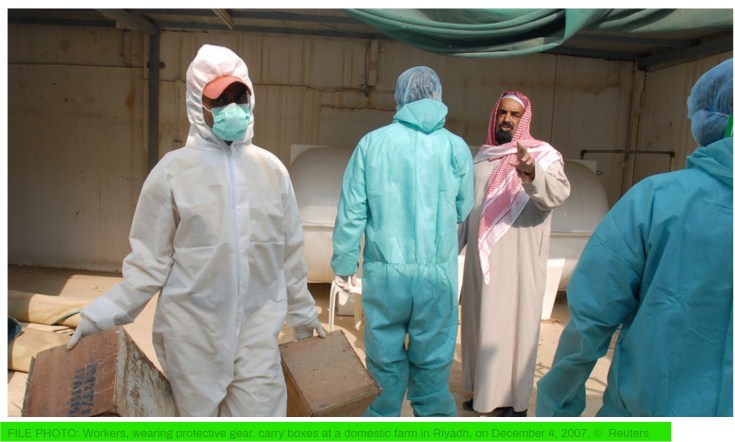
An outbreak of a particularly contagious bird flu virus has been reported in Saudi Arabia, the World Organization for Animal Health (OIE) warns, as the world struggles to contain the spread of a deadly China coronavirus.

The outbreak took place in the central Sudair region, located some 150 kilometers north of the nation’s capital of Riyadh. The disease already killed more than 22,000 birds, the OIE said, citing the Saudi Agriculture Ministry. More than 385,000 birds were also slaughtered out of precaution. This is the first such outbreak since July 2018.

The H5N8 strain of the bird flu, which was detected in Saudi Arabia, was previously considered not particularly contagious for humans. Yet, it has been recently declared to have become increasingly more pathogenic.

Earlier on Tuesday, a similar alarming report about a bird flu outbreak came from Vietnam, where another highly pathogenic virus strain — H5N6 — led to the deaths of 2,200 birds in a village in the country’s north.

On February 1, China, which has already been gripped with a novel coronavirus originated from the city of Wuhan, reported that an outbreak of the deadly H5N1 bird flu virus was detected in its central Hunan province.

While it hasn’t occupied the news spotlight lately, H5N1 is said to be an even deadlier virus to those who contract it. Nearly 60 percent of H5N1 patients die after contracting the sickness, compared to two percent of Wuhan coronavirus (2019 nCoV) patients thus far.

First two cases of coronavirus confirmed in Russia, both Chinese citizens

CAP

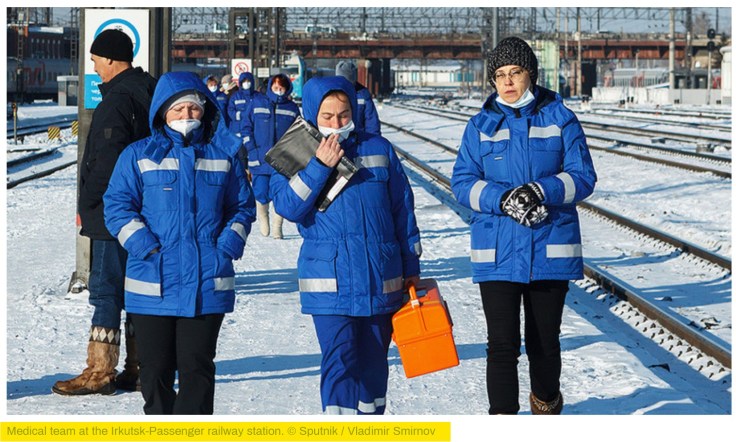
Russia has registered its first patients diagnosed with the new Chinese coronavirus, Deputy Prime Minister Tatiana Golikova has confirmed. The alarming news comes just a day after Moscow closed its Far Eastern border with China.

Golikova told reporters that the two sufferers are Chinese citizens, one in the Far Eastern Zabaikalsky Region, and the other in the Tyumen Region in western Siberia – which are separated by a distance of about 4,000km.

The patients in question have been subjected to “strict monitoring.” They have been put into quarantine and are receiving medical care. The head of Rospotrebnadzor (a state watchdog), Anna Popova, believes there is no immediate risk of the further spread of the coronavirus in Russia.

As a precautionary measure, Moscow will commence the evacuation of around 300 of its citizens from the virus-hit city of Wuhan, and another 341 from the surrounding area. Some 2,600 Russians holidaying on the island of Hainan will also be brought back home, the deputy prime minister announced.

Russia’s Ministry of Health names three drugs that can treat new Chinese coronavirus

CAP

To prevent the spread of the virus, Moscow is suspending most flights to and from China. The exceptions are Aeroflot routes to Beijing, Shanghai, Guangzhou and Hong Kong, as well as Chinese airlines arriving at Moscow’s Sheremetyevo airport. They will be restricted to Terminal F.

In a further move, Russian citizens will be prohibited from crossing the border with Mongolia.

So far, there have been 213 recorded deaths from the new coronavirus, and more than 9,800 reported infections. The vast majority took place in China but about a hundred cases have been registered in another 20 countries. Now, Russia has become the 21st. On Thursday, the World Health Organization declared the outbreak a global health emergency.

CORONAVIRUS MODEL PREDICTS 183 MILLION INFECTIONS BEFORE THE END OF FEBRUARY

Coronavirus Model Predicts 183 Million Infections Before the End of February

If infection rate follows current trend and virus isn’t contained.

 | Infowars.com – JANUARY 30, 2020

A model that predicts the number of coronavirus infections that will occur if the outbreak isn’t contained shows that based on current projections, there will be over 183 million infections before the end of February.

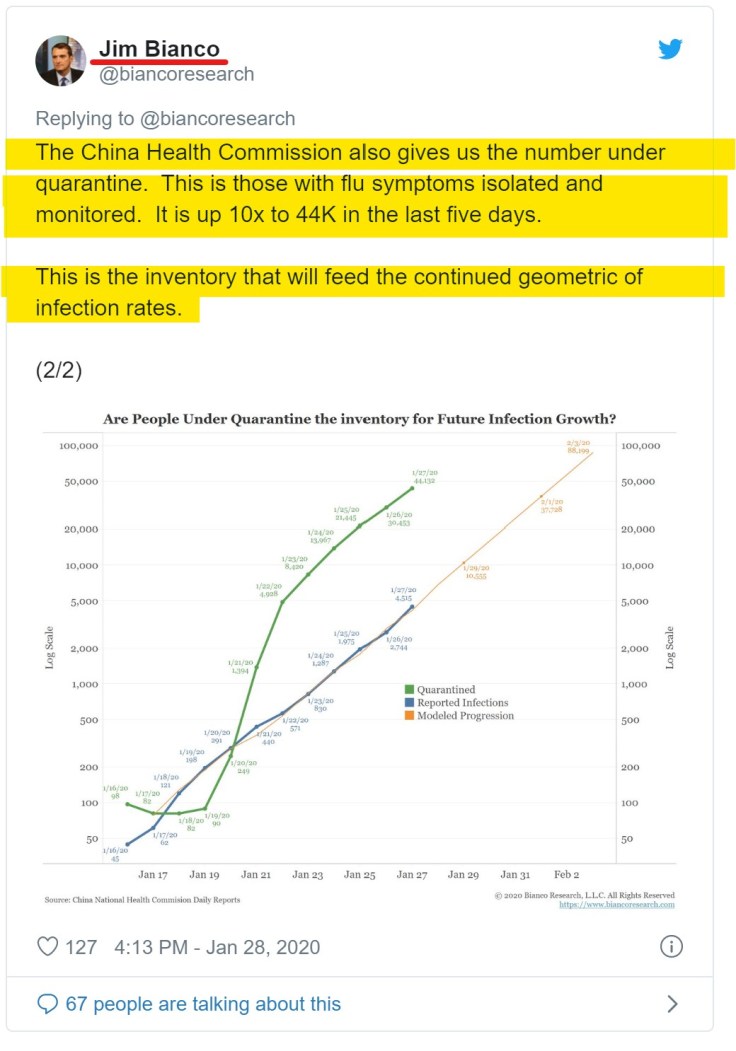
The chart, produced by data firm Bianco Research, shows that if the current rate of infections remains consistent, 183,943,221 people will have been infected by the virus within the next three weeks.

Given that the virus has already infected a minimum of 7,711 people and killed 170 (a fatality percentage of just over 2per cent), if 183 million people were infected, statistically upwards of 3.6 million would die.

CAP

Given how horrific these numbers are, one can only hope that health authorities can get the outbreak under control before it gets anywhere near that level.

“To be absolutely clear, this is NOT a prediction that 100 million people will be infected by Feb 20,” explains Bianco Research. “Rather, this has been its growth rate for the last 12 days. A vaccine, mutation or successful quarantine/isolation could help reduce this growth rate.”

The firm also warns that if the outbreak turns into a global pandemic, it could have huge economic consequences and that “the global supply chain will grind to a halt.”

A further 44,000 are under quarantine and are suspected but not confirmed of having the virus, so the numbers could be even higher.

CAP

“The China Health Commission also gives us the number under quarantine” commented Jim Bianco. “This is those with flu symptoms isolated and monitored. It is up 10x to 44K in the last five days. This is the inventory that will feed the continued geometric of infection rates.”

As we reported earlier, Senator Tom Cotton is calling for an immediate shut down of all flights from China to the U.S. after Israel banned flights and Russia closed the entirety of its 2,600-mile border with China.

First US person-to-person case of coronavirus reported in Chicago. ‘We believe people in Illinois are at low risk.’

CAP

By 

The first U.S. case of the coronavirus spreading from one person to another was reported in Chicago on Thursday, the husband of a woman who caught the disease while in China.

It’s the second case that’s been confirmed in Illinois, and the sixth case in the U.S., since the respiratory virus first started to spread in Wuhan, China.

A Chicago woman who returned from caring for her sick father in China earlier this month was the first local person diagnosed with the illness, health officials reported Friday. The woman, who is in her 60s, traveled to Wuhan, China, in late December and returned to Chicago on Jan. 13. Her spouse, who had not traveled to China, is the second Illinois case and first instance of person-to-person spread in the U.S., the Illinois Department of Public Health said.

Health officials said the man has not attended any mass gatherings or taken the “L” train recently, and is currently sharing details of his activities from the last several weeks. Officials declined to say how many people they’re monitoring for illness who’ve been in contact with the couple but said they are “actively monitoring all close contacts.” The CDC considers close contact to consist of 10 minutes or more of face-to-face contact with a person.

In all, health officials are investigating 21 possible cases of the virus in Illinois.

Shortly after the announcement of the second Chicago case, the World Health Organization declared the outbreak a public health emergency.

Despite the news Thursday, the director of the Illinois Department of Public Health Dr. Ngozi Ezike said, “We believe people in Illinois are at low risk.”

“This person to person spread was between two very close contacts, a husband and wife,” Ezike said at a news conference. “The virus is not spreading across the community at this time.”

Coronaviruses are often spread through close personal contact, said Dr. Allison Arwady, commissioner of the Chicago Department of Public Health.

“We know this new patient had close contact with his wife after she began to develop symptoms so it’s not unexpected,” Arwandy said.

DuPage County public health officials said Tuesday they are tracking multiple county residents who may have come in contact with the woman, but none had reported symptoms. The couple lives in Chicago but may have come into contact with people in DuPage County, said Don Bolger, a spokesman for the DuPage County Health Department.


There have been 7,818 cases reported worldwide, mostly in China, and 170 deaths from the illness in China, according to the World Health Organization.

On Wednesday, the U.S. government evacuated 195 Americans from Wuhan. The Centers for Disease Control and Prevention has also advised Americans to avoid all nonessential travel to China.


Symptoms of the virus can include fever, cough and shortness of breath. It’s believed symptoms appear anywhere from two to 14 days after exposure. The CDC has said it’s still unclear how easily the virus spreads from person to person.

Local health officials say it’s not necessary for Chicagoans to stay home or cancel activities amid the news.

More to come.


CHINA CURBS TRAVEL TO HONG KONG AS PROJECTIONS SHOW 300,000 MIGHT ALREADY BE INFECTED

China Curbs Travel To Hong Kong As Projections Show 300,000 Might Already Be Infected

Top health officials share grim statistics

Zero Hedge – JANUARY 28, 2020

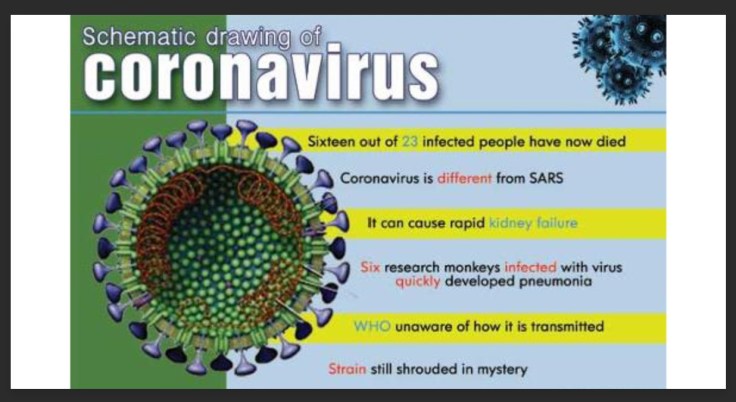
On Tuesday morning, China’s top health officials shared some grim statistics essentially confirming that the novel coronavirus believed to have emerged from a shady food market in Wuhan is on track to confirm some of the more dire projections shared by epidemiologists.

As we reported late yesterday, the death toll in China has soared past 100 while the number of confirmed cases doubled overnight. Health officials around the world have confirmed more than 4,500 cases, more than triple the number from Friday. All but a few of the deaths recorded so far have been in Wuhan or the surrounding Hubei province, per the SCMP.

Panic has swept across the region as border closures appear to be the overarching theme of Tuesday’s sessions. Even North Korea, which relies on China for 90% of its foreign trade, has closed the border with its patron. More than 50 million remain on lockdown in Hubei, and transit restrictions have been imposed by cities and regions around the country.
CORONA

An ‘extension’ of the Lunar New Year holiday is threatening GDP growth, as economists try to size up the knock-on potential impact on the global economy. The virus has now spread across China and another 17 countries/autonomous territories globally, according to BBG.

But the most important announcement made overnight – at least as far as global markets are concerned – was Hong Kong Chief Executive Carrie Lam’s decision to suspend high-speed rail and ferry service, while halving the number of flights between HK and the mainland.

This news helped send US stock futures higher in early trade, after health experts yesterday urged Lam to use ‘draconian’ measures to curb the spread, for fear of a repeat of the SARS epidemic, which killed some 300 people, according to the BBC.

“The flow of people between the two places needs to be drastically reduced” amid the outbreak, Ms Lam told the South China Morning Post.

China, meanwhile, said it would stop individuals from traveling to Hong Kong to try and curb the virus.

Jiao Yahui, deputy head of the NHC’s medical administration bureau, said during a press conference Tuesday that shortages of medical supplies in Wuhan were still a serious problem.

CDC has issued new travel recommendations urging people to avoid all non-essential trips. But officials remained reluctant to declare a global emergency, instead insisting that this is merely an emergency “in China”. Of course, after yesterday’s brutal pullback, that’s to be expected.

The big piece of evidence that the WHO is purportedly looking for is human-to-human transmission outside China. Zhong Nanshan, a leading expert on SARS and other communicable diseases in China, confirmed human-to-human transmission in at least one case in Wuhan and two cases in Guangdong Province.

CAP

Meanwhile, as we noted yesterday, one case of possible human-to-human transmission is being investigated in Canada, while Vietnam and Japan have now each confirmed one cases.

Japan revealed on Tuesday that a bus driver in his 60s, who recently carried passengers from Wuhan, has been found to have the virus.

During a meeting in Beijing, President Xi told World Health Organization Director-General Tedros Adhanom Ghebreyesus that the safety of the people is his government’s first priority, and that he recognizes the situation is “very serious.”

“This was supposed to be a time for rest, but because of the pneumonia outbreak caused by the novel coronavirus, the Chinese people right now are faced with a very serious battle,” Xi said. “This is something we take very seriously because in our view nothing matters more than people’s safety and health. That is why I myself have been personally deploying, planning, and guiding all the efforts related to containment and mitigation of the outbreak.”

That’s ironic, considering Beijing’s sluggish response after the first cases were discovered in December. After all, Wuhan Mayor Zhou Xianwang on Tuesday spoke out against the deluge of criticism he has faced to accuse Beijing of tying his hands. This comes after President Xi and the party tried to scapegoat him and other local party officials for the crisis.

This was supposed to be a time for rest, but because of the pneumonia outbreak caused by the novel coronavirus, the Chinese people right now are faced with a very serious battle,” Chinese President Xi Jinping tells in Beijing.

Speaking at a press briefing in Beijing on Tuesday, Jiao Yahui, deputy head of the NHC’s medical administration bureau, said shortage of medical supplies was a major constraint in China’s efforts to contain the outbreak and treat infected people.

Tens of thousands of patients are under observation in China after displaying one or more symptoms of the virus. In the US, roughly 100 people are in isolation. But former FDA Commissioner Scott Gottlieb told CNBC that China is obscuring the true number of cases – a suspicion that’s widely held among American infectous-disease experts.

CAP

According to some projections, there might be up to 300,000 cases in China, and there are likely dozens of people who have died of pneumonia who in reality died from nCoV – but those deaths will never be recorded. Although China is “behaving better” than it did during the SARS outbreak, they’re still concealing information from the international community.

“They’re still not behaving well. They’re concealing information, including the spread to health care workers, which we didn’t know until last week” Gottlieb said.

China is already in a “full-blown epidemic.” The US will likely face some limited outbreaks, but Gottlieb said we have the tools to suppress the virus and prevent the same thing from happening in the US.

Jiao said China was sending about 6,000 medical personnel to Hubei from around the country – with more than 4,000 already there and 1,800 more due to arrive by Tuesday evening – to work in Wuhan and seven other cities in the province.

In Wuhan, more than 10,000 hospital beds have been made available for patients, he said, while another 100,000 are being prepared.

In Beijing, CNBC’s Eunice Yoon reported that the local government is strongly encouraging the wearing of facemasks in public.

Police guarding Beijing’s public transit are wearing full hazmat suits, and anybody hoping to board a train must be wearing a mask, and must submit to a temperature check via infrared thermometer. If an individual is found to have a fever, they’re sent to a hospital to be quarantined.

As Beijing tries to telegraph to the world that it has the situation under control, health experts have raised new questions about the government’s response. One infectious disease specialist told the NYT that they were skeptical about the Wuhan quarantine’s ability contain the virus (unsurprising considering that 5 million left the city before the lockdown began).

Beijing and Guangzhou, a port city northwest of Hong Kong, have broken ground on new hospitals, mimicking the speedy construction of not one but two new hospitals in Wuhan to treat patients infected with the virus.

Beijing is also reopening a hospital used to fight the SARS outbreak in 2003, while 6,000 medical staff have been sent to Hubei.

“At this stage of the outbreak, the things that make the most difference are finding people, diagnosing people, and getting them isolated,” said Dr. Tom Inglesby, an infectious diseases specialist and director of the Johns Hopkins Center for Health Security.

“If you isolate the city, then my question and my concern is that you’re making it harder in a number of ways to do those things you need to do,” including ferrying critical supplies and ensuring that infected victims receive adequate treatment.
 

‘Wuhan, you can do it!’: Quarantined residents sing from their balconies in stirring VIDEOS

CAP

1/28/2020

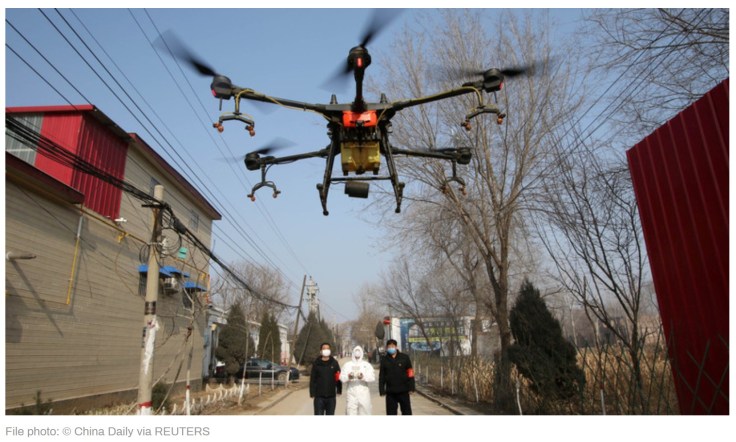
As China fights the worsening coronavirus outbreak, residents under quarantine in Wuhan have shared videos online of their battle against cabin fever, showing how they are lifting each other’s – and the nation’s – spirits.

The city, home to roughly 11 million people, was the epicenter for the coronavirus outbreak which has now spread across the globe. Residents have been told to remain in their homes as authorities fight to bring the outbreak under control, but many have grown understandably restless waiting for the crisis to end.

The best medicine? Song, apparently, with rousing eyewitness video posted on Twitter showing people singing the national anthem and chanting “Wuhan, you can do it!” from their apartment balconies.

The total number of confirmed  ‘2019-nCoV’ coronavirus cases in China had surged to 4,515 as of January 27, while the death toll jumped to 106 as the number of new infections in one day almost doubled.

China’s PM calls for ‘resolute fight’ against coronavirus outbreak as death toll climbs to 106 with over 1,700 new cases

CAP

China has taken extraordinary measures to curb the outbreak, including the aforementioned quarantine of the entire city of Wuhan, as well as the construction of an entirely new hospital to house the infected, which is expected to be completed by February 3.

The government has also urged citizens to refrain from travelling abroad, while extending national holidays with the aim of keeping people at home to reduce the likelihood of further contamination “in order to protect the health and safety of Chinese and foreign people.”

“Reducing people’s cross-border movement helps to prevent and control outbreaks,” the National Immigration Administration said in a statement.

For now, at least, the city of Wuhan remains a ghost town, with only the haunting song of its quarantined residents left to lift the city’s spirits.

Oil prices plummet over fears of coronavirus outbreak spreading

CAP

The price of crude continued to plunge on Monday, dragged down by fears of the deadly coronavirus outbreak, raising concerns about the global economic growth.

International benchmark Brent crude was down 2.95 percent to $58.90 a barrel, after hitting $58.68 earlier, the lowest level since late October. US West Texas Intermediate crude nosedived more than three percent to $55.52, after falling to a four-month low of $52.1 a barrel.

The coronavirus could cut into demand by around 260,000 bpd and reduce oil prices by about $3 per barrel, according to a report from Goldman Sachs.

Why the coronavirus is a real threat to China’s economy

CAP

Saudi Arabia’s minister of energy Prince Abdulaziz bin Salman said OPEC will be closely monitoring developments in global oil markets amid “gloomy expectations” of the outbreak’s impact on the Chinese and global economy.

“Such extreme pessimism occurred back in 2003 during the Sars outbreak, though it did not cause a significant reduction in oil demand,” he said.

The coronavirus, was identified in December and was linked primarily to stallholders who worked at Wuhan’s Hunan Seafood Market in China, has already killed 80 people and infected nearly 2,800 worldwide. The virus has spread to South Korea, Japan, Thailand, Vietnam, and the United States, among other places. On Friday, the CDC confirmed the second case in the US.

Chinese coronavirus spreads with no visible symptoms as death toll grows to 81, over 2,800 infected worldwide

CAP

Oil prices are also down due to flight disruptions during one of China’s busiest travel seasons — the Lunar New Year holiday. Chinese authorites have put on lockdown cities in Hubei province, including Wuhan, believed to be the epicenter of the outbreak, affecting millions of travelers.

China has announced an extension of its Lunar New Year holiday through February 2 and suspended sales of package tours to help battle the spread of the disease.

Chinese Researcher Removed from Infectious Disease Lab for Alleged “Administrative Matters”

By Jose Nino – 1/27/2020

According to a story published on CBC news on July 14, 2019, a researcher connected to China was escorted out of the National Microbiology Lab (NML) in Winnipeg during an RCMP investigation into what was described as a possible “policy breach.”

Dr. Xiangguo Qiu, her husband Keding Cheng, and an undisclosed number of her students from China were removed from Canada’s only level-4 lab on July 5, according to a CBC News report.

A Level 4 virology facility is a lab with the equipment to work with the most threatening human and animal diseases. This made the Arlington Street lab one of the very few labs in North America that is able to handle pathogens demanding the highest level of containment, such as Ebola.

According to sources who worked at the lab and did not want to be identified, the couple and the Chinese students had their security access revoked.

Sources claim that this came several months after NML IT specialists entered Qiu’s office after-hours and replaced her computer. Qiu’s frequent trips to China were also being denied.

During meetings on July 8, NML staff were informed that the researchers were on leave for an indefinite period of time. They were instructed not to communicate with them.

Qiu is a renowned virologist who helped out in developing ZMapp, an ebola virus treatment.

Qiu is a medical doctor hailing from Tianjin, China. She migrated Canada for graduate studies in 1996. She was still connected to the university there and has brought in many students over the years to help with her work.

She was leading the Vaccine Development and Antiviral Therapies section in the Special Pathogens Program at the lab. Qiu’s main research field is immunology and she mostly focused on vaccine development, post-exposure therapeutics, and quick diagnostics of viruses like Ebola.

On May 24, 2019, the RCMP received a referral from the Public Health Agency of Canada (PHAC).

“Based on information received to date, the RCMP has assessed that there is no threat to public safety at this time,” Robert Cyrenne informed CBC News in an email.

PHAC described it as a policy breach and “administrative matter” and said the department took steps to “resolve it expeditiously,” Eric Morrissette, the health agency’s chief of media relations, said.

“We can assure Canadians that there is absolutely no risk to the Canadian public and that the work of the NML continues in support of the health and safety of all Canadians,” communications director Mathieu Filion communication in an email.

No one from the Chinese Embassy commented on the situation

Many experts speculated that this could have been a case of intellectual property theft or technology leakage to China.

“The National Microbiology Laboratory would have some pretty sensitive biological research material that … could be shared either with or without authorization with foreign countries,” claimed Gordon Houlden, director of the University of Alberta’s China Institute.

“All of this is unproven, but even microbiology, sometimes especially microbiology, can have issues that involve national security.”

No matter the country, China uses its geopolitical leverage to advance its own interests.

Not just America, but the rest of the West should reconsider how it handles diplomatic and economic relations with China.

Blog at WordPress.com.

Up ↑