
Published on Apr 11, 2019

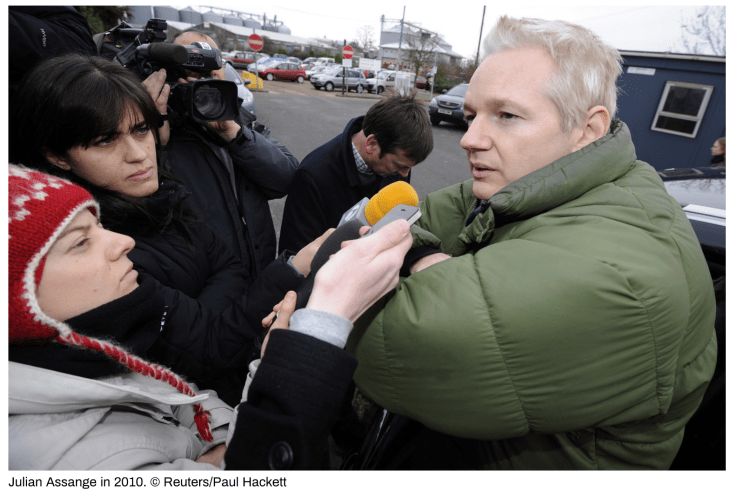
By setting up the international non-profit organization WikiLeaks in Iceland in 2006, Assange irrevocably shifted the balance of power in the online era.
From humble beginnings as a master coder and hacker, caught by Australian authorities in 1995 but escaping a prison term, to the foremost publisher of sensitive, embarrassing and potentially dangerous material for the world to see, Assange’s storied career as a publisher and whistleblower has captured headlines, and the global public’s attention for years.
RT takes a look back at the key moments in Assange’s career that remind us why the world owes him such a debt of gratitude.
ALSO ON RT.COMJulian Assange arrested after Ecuador tears up asylum deal
The early years
In 2007, WikiLeaks published emails exposing the manuals for Camp Delta, a controversial US detention center in Guantanamo Bay, Cuba which was the focal point for the US war on terror and the final destination for those captured as part of its extraordinary rendition campaign.
The following year the whistleblowing site posted emails from vice presidential candidate Sarah Palin’s private Yahoo email account, again exposing the newfound weakness of the political class in the digital age.
‘Collateral murder’
In a move that would reverberate online and across the world for years, in April 2010 WikiLeaks published footage of US forces summarily executing 18 civilians from an Apache attack helicopter in Iraq. It was an almost unheard of revelation of the brutality of war and the low price of human life in modern conflict.
Diplomatic cables
2010 was a very busy year for Assange as in July WikiLeaks published more than 90,000 classified documents and diplomatic cables relating to the Afghanistan war.
Later, in October 2010, the organization published a raft of classified documents from the Iraq War. The logs were referred to as “the largest leak of classified documents in its history” by the US Department of Defense, according to the BBC. WikiLeaks followed that up in November by publishing diplomatic cables from US embassies around the world.
The Guantánamo Files and Spy Files
In April 2011, WikiLeaks published classified US military documents detailing the behavior and treatment of detainees held at Guantanamo Bay. This leak would be followed, once again, by a vast trove (250 million) of US diplomatic cables.
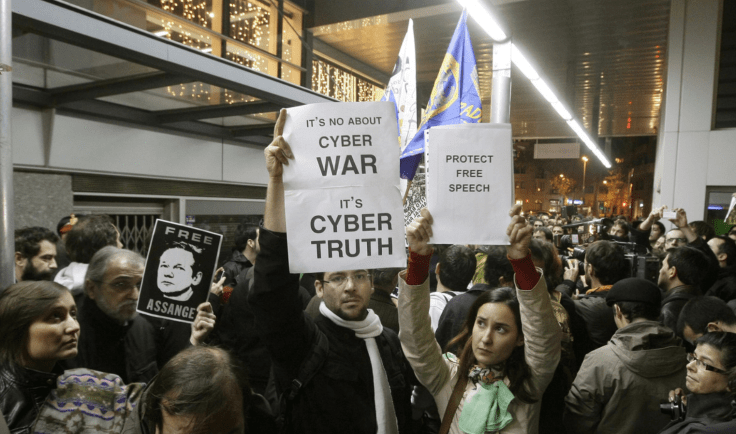
Throughout this sequence of widely-praised leaks, Assange invited a global audience behind the curtain of international diplomacy and warfare to expose the hidden truths of global power dynamics in a way which would forever change the power structure and landscape, affording a platform to analysts like Chelsea Manning to expose potential war crimes and misdeeds by the US military at large.
Assange and WikiLeaks would also help fellow whistleblowers like Edward Snowden to seek refuge from predatory US authorities, providing aid and comfort to those who risked everything in the pursuit of truth, exposing some of the most egregious mass surveillance programs the world has ever known.
DNC leak
As the 2016 US presidential election loomed, WikiLeaks published nearly 20,000 emails from the Democratic National Committee, which exposed the preferential treatment shown to then-candidate for president Hillary Clinton over her competitor Bernie Sanders in the Democratic primary. Assange boldly informed CNN’s Anderson Cooper that the release was indeed timed to coincide with the Democratic National Convention.
ALSO ON RT.COMAssange is a scapegoat, distraction for scandal-ridden Ecuadorian government
In October that same year, WikiLeaks began publishing emails from Clinton’s campaign manager John Podesta, which shed light on the inner workings of the Democratic nominee’s political machine.
These included excerpts from Clinton’s speeches to Wall Street, politically-motivated payments made to the Clinton Foundation, her consideration of choosing Microsoft co-founder Bill Gates or his wife as a potential running mate, her desire to covertly intervene in Syria, her intention to ring-fence China with missile defense batteries if it did not curtail North Korea’s nuclear ambitions.
Legacy
Following his arrest on the morning of April 11, 2019, Assange’s future remains unclear. He likely faces extradition to the US where it was inadvertently revealed that he has been charged under seal in a US federal court. Former Assange collaborator Chelsea Manning has been imprisoned for refusing to cooperate with the court in relation to the case.

Assange’s legal battle is only just beginning, it seems, but the international following he has forged will undoubtedly grant him a place in the pantheon of history’s champions of truth.
He remains a true digital pioneer, paving the way for so many to follow in his footsteps and expose the untold misdeeds of the powerful, be they political figures or entire militaries. Assange has defiantly shown what a powerful tool digital technology can be and how easily the dynamics of power can be shifted in the 21st century by those brave enough. Unfortunately, he also showed the consequences of wielding such power in the face of such overwhelming international and political opposition.
Like this story? Share it with a friend!

Published on Apr 9, 2019
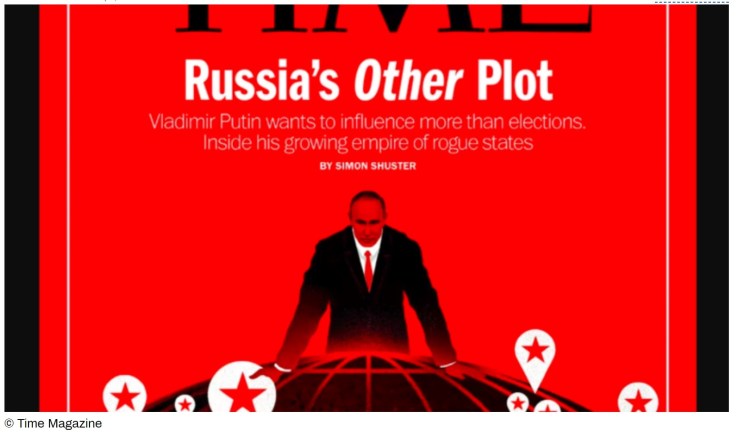
TIME magazine has gotten a head start with its latest cover story, authored by journalist Simon Shuster, literally titled “Russia’s other plot” and illustrated with the usual clichéd, Soviet-inspired scary red and black artwork.
The story, ostensibly, is about Russia’s construction of an “empire of rogue states” around the world – but in reality the circular screed is actually just bold propaganda for US foreign policy and regime change wars.
The Kremlin, we are told, has been “scouring the world in search of influence” in an attempt to fill “the void left by an inward-looking West.”This is the point at which alarm bells start ringing for those with even a cursory grasp of US and Western foreign policy, who will be asking themselves, since when has the US – with its constant destructive and unwanted interference in the affairs of other nations – ever been “inward-looking”?
When, soon after, Shuster quotes former NATO Secretary-General Anders Fogh Rasmussen framing international relations as a fight between the noble West and the Russian “bad guys,” we move beyond parody.
On and on the story goes, detailing the activities of Russian mercenaries in Sudan (pro-tip: military mercenaries are only bad if they are Russian) and lamenting the Trump administration’s “new Africa strategy” which cuts aid to African nations that are “tempted into deals with Russia or China.” The great fear is that Russia is offering its allies in Africa “soft-power assistance with state building” that is “typically provided by NGOs and development agencies.”
Former USAID contractor Paul Stronski warns Shuster that the Russians are “learning from us” (the Americans, that is) – but the “key difference” is that, unlike those offered by the well-intentioned US government, the reforms Russia offers to its allies are “mostly cosmetic” and “don’t really address the corruption in the system.” If you didn’t laugh while reading that, you probably don’t know much about US foreign policy.
The claim of “cosmetic” reforms on offer by Russia did spark a memory, though. Readers might recall a 2015 BuzzFeed investigation which revealed that, despite touting education reform as one of its major successes in war-torn Afghanistan, $1 billion allocated to build and staff schools actually enriched warlords and corrupt officials. The schools? Well, many of them were left empty and unused – but it wasn’t a “cosmetic” reform; surely it was just an unfortunate oversight.
Historian Paul Robinson has detailed the “staggering scale” of “waste and incompetence” that has characterized US aid and reform efforts in Afghanistan in particular (highlights include spending half a billion dollars on planes for the Afghan air force which were too dangerous to fly – and $150 million constructing luxury villas for staff at its economic development office).
John Sopko, the man responsible for auditing the billions of dollars the US spends on aid and reform in Afghanistan, worried in 2015 that the US “can’t honestly point to some actual, measurable accomplishments”from its trillion dollar efforts – but okay, let’s pretend it’s Russia that’s the biggest offender when it comes to cosmetic reforms in developing nations.
Next up, we learn that Russia wasn’t always this disobedient. It “did not always advocate” for an end to the “order” defined by the West. In fact, quoting Vladimir Yakunin, “an old friend and colleague” of Putin’s from their KGB days, Shuster tells us that Russia tried hard to fit in with the “globalized world” after the fall of the Soviet Union in 1991. Russia “was naive” however, “to assume that the family of civilized nations would really integrate us.”
Integration was not to be. Russians were to conveniently remain forever in the Western mind as a horde of uncivilized barbarians, so that journalists could keep getting paid to write scare stories and the Pentagon could continue filling its coffers with obscene amounts of cash using the hyped-up Russia “threat” as the perfect excuse.
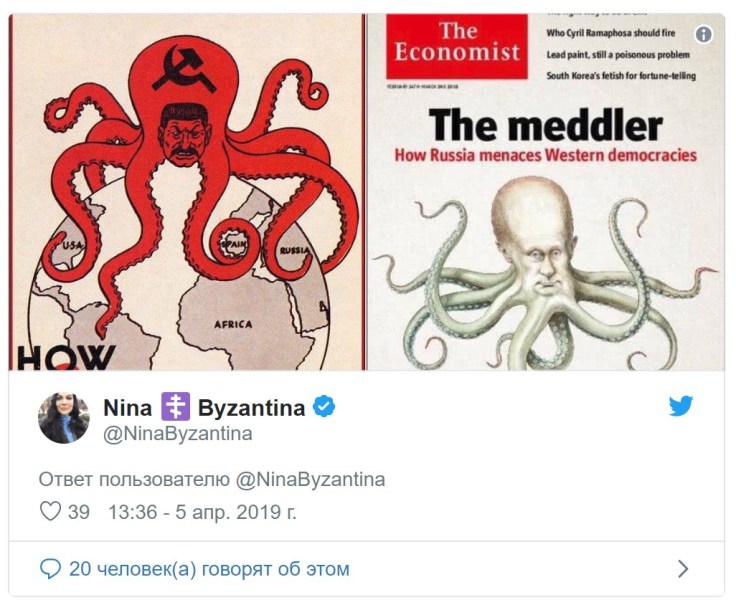
In its quest for global domination, the Kremlin has focused on wooing “elites” and “warlords” around the world, Shuster claims, with a stunning lack of self-awareness, given US proclivities for supporting questionable regimes run by tyrants to serve its geopolitical interests; US support for the brutal Saudi regime being one of the most infamous in the present day.
The value Russia prizes above all others, we learn, is sovereignty, and the principle that “each regime has the right to rule its territory without fear of foreign interference.” Casting the very concept of national sovereignty as some dirty Russian idea is just another way of telling the reader: US wars for regime change, no matter how disastrous and bloody, are good and for good causes.
To see Russia’s evil in action, we are told to look to how it uses its veto power at the UN to help its friends and allies – another laughable and utterly hollow argument, when you consider how the US repeatedly uses its own UN veto power to shield Israel from responsibility for its treatment of Palestinians and civilian casualties in Gaza and the West Bank.
Ultimately, Shuster claims Russia has created “a ragtag empire of pariah autocracies and half-failed states” – but for those of us who inhabit the real world, when it comes to propping up dictators and creating failed or half-failed states (Iraq, Libya, Syria), there is no country more wildly successful than the US.
Unfortunately, however, Shuster appears to have come down with an acute case of projectionitis. While he thinks his argument is ‘how dare Russia lend its support to dubious players around the world?’ — it is actually ‘how dare Russia do anything we do – and think they can get away with it?’
Shuster even has the audacity to quote Elliott Abrams, the Trump administration’s current special envoy to Venezuela – the latest country to find itself in the US’s regime change crosshairs. Russia, he says, is “completely unconcerned by the degree of repression” in Venezuela.
ALSO ON RT.COMThe long history of US-Russian ‘meddling’ (by Stephen Cohen)
Abrams, let us not forget, is the man who was convicted of lying to the US Congress, having used fake humanitarian aid shipments to smuggle weapons to the infamously brutal, US-backed Contras in Nicaragua in the 1980s – but sure, let’s treat him like a respectable source and authority when it comes to moralizing about human rights and democracy.
If Washington was setting an example of admirable behavior around the world; supporting human rights and democracy, refraining from violating the territory and sovereignty of other nations and using diplomacy as its primary weapon, perhaps then we could take Shuster’s piece seriously and trust that Russia’s various real or alleged infractions around the world are the true source of Washington’s irritation with Moscow.
Sergey Radchenko, a Professor of International Relations at Cardiff University put it best when he criticized the “seriously over-the-top” and “alarmist” article on Twitter, taking issue with the framing of Russia’s foreign policy as akin to “empire”building.
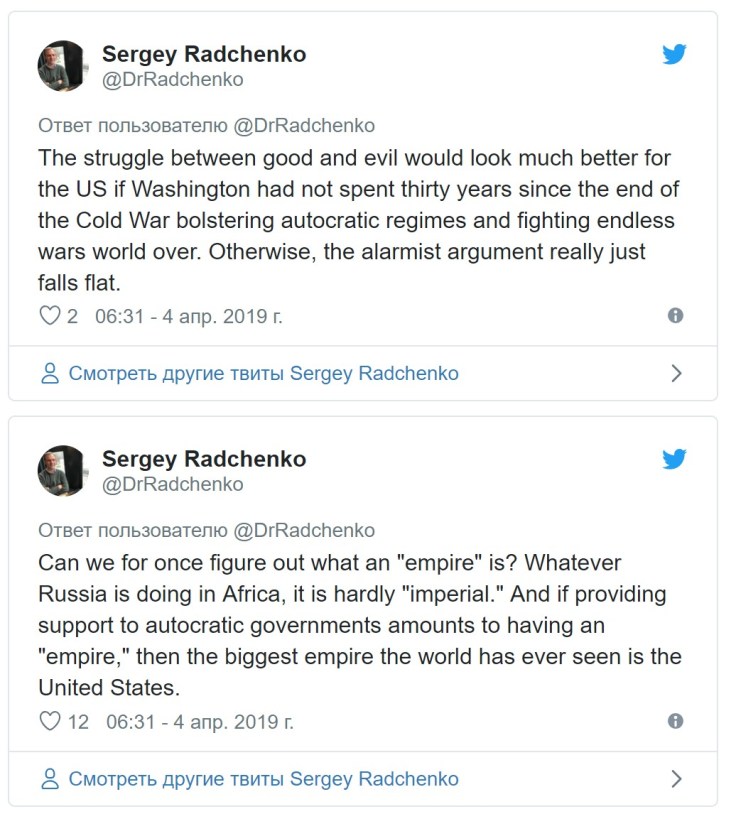
“…If providing support to autocratic governments amounts to having an “empire,” then the biggest empire the world has ever seen is the United States,” he wrote.

 Tom's Blog