Published on Aug 23, 2019
(JUST IN TIME FOR THE 2020 ELECTIONS) – Facebook hiring editors to pick stories for ‘News Tab’, that didn’t work out well last time
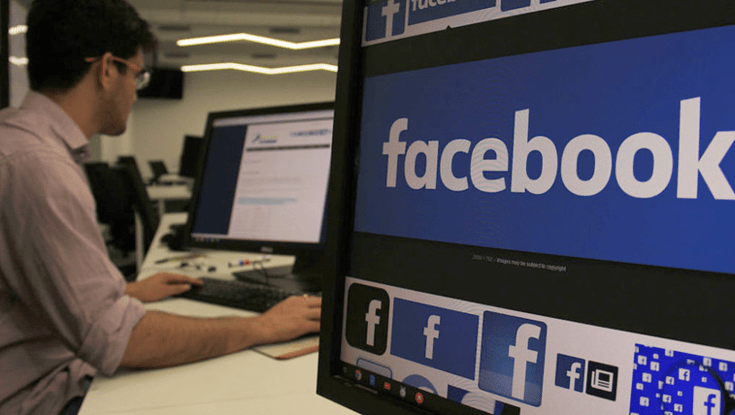
Facebook will hire a “small team” of journalists to select featured content for its much-hyped ‘News Tab’ section, which the platform will begin testing across its US user base later this year.
What could go awry with human editors in charge? Facebook should know, since the company was forced to fire its last team of human content-pickers over revelations of bias against conservative viewpoints.
The platform said Tuesday that the new team — which will likely be fewer than 10 employees at the beginning — will choose the content for the ‘Top News’ section of the News Tab. Stories found in the other sections will be chosen by algorithms and determined by specific user interests, the New York Times reported.

‘Trending’ no more: Facebook removing controversial news feature
Facebook said it made the decision to go after human curators after discussions with publishers convinced them that algorithms would not be capable of “news judgement” the way real journalists would and that it would take too long to train an algorithm to that level.
But there are pitfalls to consider with human editors, too. Facebook ditched its ‘Trending Topics’ section last year after being plagued by accusations that it was politically biased and amplified “fake news.”

An explosive Gizmodo story put the spotlight on Trending Topics in 2016, revealing that human editors, independently contracted by Facebook, were asked to suppress conservative news and even stories about Facebook itself.
The contractors were also told to artificially “inject” preferred stories into the trending module, even if they were not trending organically. Rather than relying on algorithms (as it claimed), Facebook was acting like a traditional news organization and reflecting the personal biases of its employees.
The Wall Street Journal reported earlier this month that Facebook is planning to pay publishers “millions of dollars” to include their content in its News Tab.
A source told Digiday that the new batch of curators will be given the option to include that content in the Top News section, but they will not be obliged to. The new hires will be full-time employees, unlike the contractors used for the doomed Trending Topics section.
As Facebook rolls out the News Tab, users will no doubt be waiting to see if it has learned its lesson after the last debacle.
READ MORE: Google is censoring political content? *Gasp!* Who knew?
Facebook had human contractors ‘reviewing’ users’ Messenger voice chats
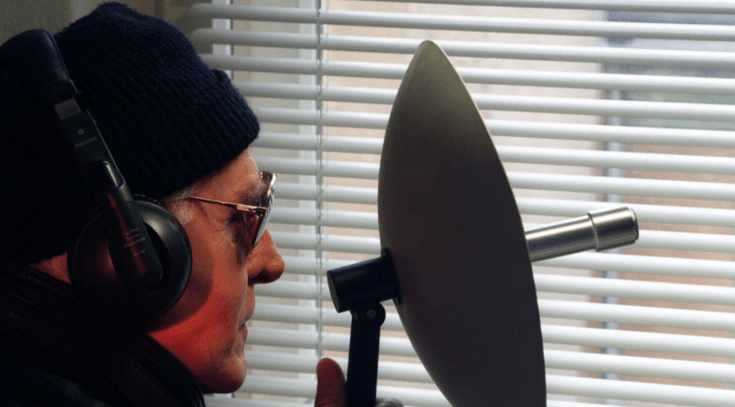
Facebook says it has stopped feeding users’ audio chats to human reviewers for transcription, similar to what other Big Tech were recently caught doing. Facebook’s contractors were reportedly kept in the dark about their job.
The company “paused human review more than a week ago,” Facebook said in a statement on Tuesday, adding that the audio being reviewed was from Messenger users who opted in to having their voice chats transcribed to text by AI. The human transcribers were merely checking whether the AI transcriptions were correct, the company said.

Monopoly? What monopoly? Facebook to consolidate empire by branding Instagram, WhatsApp
Contractors often caught snippets of intimate or “vulgar” chats, though the messages were anonymized, and they were not told why they were transcribing the audio, where it came from or how it was obtained, contractors told Bloomberg. Some said the uncertainty and apparent duplicity – Facebook doesn’t tell users third parties may review their audio – troubled them.
While the company admits it collects “content, communications and other information you provide [when you] message or communicate with others,” there is no mention in its data use policy of humans processing the information. Instead, it’s Facebook’s “systems” that are supposed to “automatically process content and communications you and others provide to analyze context and what’s in them.” Even the list of third parties who might potentially receive users’ information doesn’t explicitly include human transcription teams, only “vendors and service providers who support our business” by “analyzing how our products are used.”
Further adding to contractors’ concerns about eavesdropping on users’ private messages is the fact that Facebook forbids at least one outsourcing firm from referring to them by name. Santa Monica, California-based TaskUs instead refers to one of its largest and most important clients only by the code-name “Prism” – which is, ironically, also the name of the NSA initiative exposed by Edward Snowden that installed backdoors in popular online platforms like Google, Skype, Twitter, and…Facebook.
TaskUs contractors also moderate content for policy violations, screen political ads, and work on “election preparation,” an ominous term Bloomberg opts not to define but which has previously coincided with mass deplatforming of political accounts in the months preceding elections. Facebook’s content-moderation contracting practices were exposed earlier this year after ex-contractors from outsourcing firm Cognizant complained that the work was giving them PTSD, leading them to drown their traumas in drug use and casual sex, and shaking their beliefs in the “official” versions of historical events like 9/11 and the Holocaust. Those employees, too, were forbidden from referring to Facebook by its given name.
Facebook added the AI transcription function to Messenger in 2015 and claims it is switched off by default. Its documentation, however, reveals that only one participant in a chat needs to opt in for the audio to be transcribed.
After similar practices were exposed by Google Assistant, Amazon Alexa, and Apple Siri, all three have promised to end the human eavesdropping – or at least give users the option of avoiding it. Apple has reportedly ended human “grading” of Siri recordings until a future software update gives users the option of participating, while Amazon has added an opt-out setting and Google has promised to suspend human review…in Europe, for at least three months.
Facebook ‘News’: A bold step toward total control of reality?
By Helen Buyniski
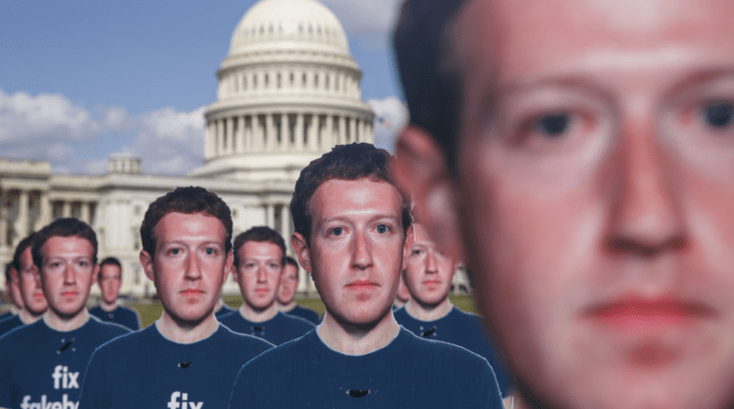
Facebook‘s plan to hook ad-cash-deprived mainstream outlets on licensing payouts seems to be an attempt to hijack narrative control en route to total domination of the infosphere – the ultimate safe space, Zuckerberg-style.
More than two thirds of American adults get their news from social media at the same time that more than half expectthat news to be “largely inaccurate.” Perhaps sensing a business opportunity, Facebook has moved in to manage that news consumption, reportedly offering mainstream outlets millions of dollars per year to license their content in order to present it to users authoritatively, as “Facebook News” – having long since ceased trusting users to share news among themselves.
But trusting Facebook to deliver the news is like trusting a cheetah to babysit your gazelles – all that’s left at the end is likely to be a pile of bones. Facebook CEO Mark Zuckerberg warned legacy media last year that if they did not work with his plan to “revitalize journalism,” they would be left dying “like in a hospice.”
An offer they can’t refuse? Facebook offers mainstream news millions in licensing fees
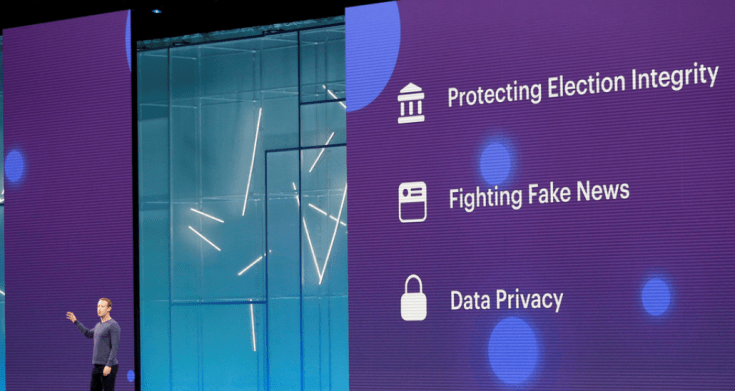
Dangling a few million in front of news outlets after depriving them of the advertising cash on which they once subsisted is merely the final step in the process of consolidation and control that began when Facebook removed actual news from its newsfeed in an effort to manage the narrative in the run-up to the 2016 election. A move ostensibly designed to “favor friends and family over publishers,” it instead plunged mainstream and especially alternative media into financial oblivion, setting them scrambling to recoup lost traffic as their place in subscribers’ feeds was taken by cat videos and family snapshots.
Alternative media were further marginalized after Zuckerberg inked a deal with the Atlantic Council – NATO‘s narrative-managers whose board is populated by some of the most notorious warmongers of recent history – who arrived to set the platform straight after it failed to deliver the 2016 election to Hillary Clinton. The group would ensure Facebook played a “positive role” in democracy in the future, a press release promised. Six months later, hundreds of popular political pages had been purged for getting in the way of the Atlantic Council’s version of “democracy.” Several more purges followed, many pages getting the axe for nothing more than espousing views “favorable to Iran’s national interests” or posting content with “anti-Saudi, anti-Israeli, and pro-Palestinian themes.”
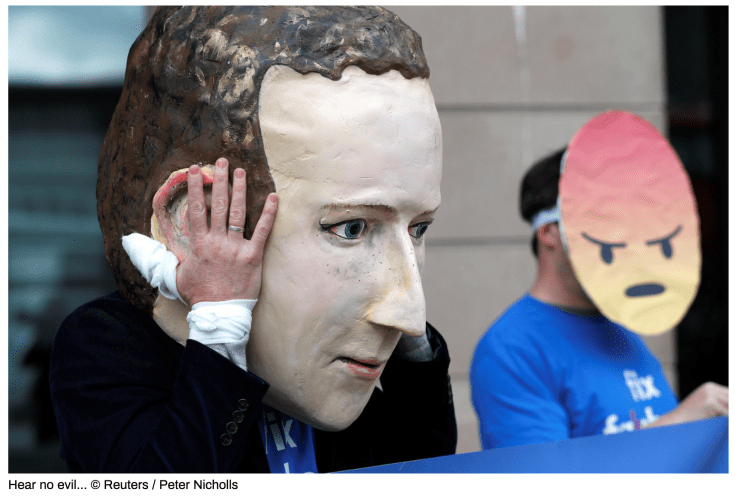
Zuckerberg has never hidden his desire to see Facebook become an internet driver’s license, and he has no doubt watched gleefully as French President Emmanuel Macron‘s government weighs requiring citizens to turn over actual identity documents in order to sign up to use Facebook. The platform was the first to adopt an intelligence-agency-friendly “real name policy,” irritating political activists, performers, and others who prefer not to have their social media activity follow them around in real life.
Privacy advocates are currently up in arms over the FBI’s recently-revealed plans to monitor social media platforms in real time. Combined with the recently leaked FBI decision to label all “conspiracy theorists” as potentially-dangerous domestic extremists, this looks an awful lot like a manufactured rationale to spy on the majority of the US population. Yet Facebook has been feeding users’ data to the government for over a decade. It joined the NSA’s PRISM program in 2009, providing the agency with its own convenient backdoor for slurping up the data others have had to hack themselves. Not that that’s been very hard – Facebook admitted last year that data on “most” of its users has been compromised at some point by “malicious actors.”
Facebook’s decision to hire one of the co-authors of the notorious PATRIOT Act as General Counsel earlier this year was touted as a move that would help the company “fulfill its mission.” Which would be what, exactly?
Despite its egregious privacy record, the areas of reality outside Zuckerberg’s control are dwindling rapidly. With the rollout of Facebook’s Libra coin, commerce, too, is falling under the shadow of this menacingly bland figure.
When Zuckerberg was photographed traveling through Middle America several years ago, many pointed out it looked like he was running for president. His announcement around the same time that he had found religion – a vague, made-for-TV, feel-good faith guaranteed not to antagonize anyone – also had the feel of a campaign move. If Facebook – and Zuckerberg’s – history is any guide, he has bigger things in mind for Facebook News than a new tab on the user interface. Every campaign needs a press office, after all…

Companies people love to hate: World’s most despised corporations
Issues of privacy, user manipulation, and tax avoidance have turned public sentiment against big tech firms, once the darlings in the otherwise hated corporate world. But how quickly things change, as RT Business finds out.
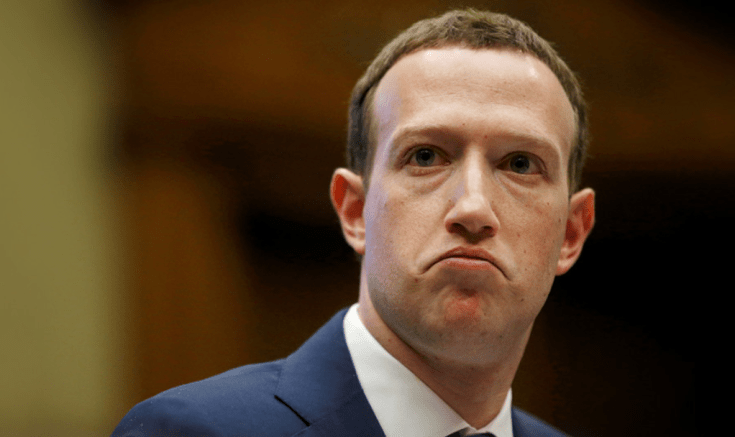
One of the big five tech companies, Facebook has been buried by numerous scandals, from hacking to misappropriating user data and spreading hate speech. The company has agreed to pay a record-breaking $5 billion fine over privacy violations after allowing as many as 87 million users’ data to fall into the possession of political consulting firm Cambridge Analytica. Facebook, along with other technology companies, has also been accused of unlawfully stifling competition in its rise to power.
Facebook agrees to pay record $5bn fine over privacy violations, critics call it a ‘parking ticket’
Bayer/Monsanto

Dubbed ‘a marriage made in hell,’ the mega-merger between German drug company Bayer and US GMO seeds and pesticides maker Monsanto created one of the most powerful agribusinesses in the world. Following the multibillion-dollar takeover, Bayer is now the target of some 18,400 lawsuits over Monsanto’s Roundup weed killer and its active ingredient glyphosate. The herbicide has allegedly caused grave illnesses such as cancer.
US judge cuts Monsanto cancer victims’ award from $2 billion to $86 million

Another former Silicon Valley darling from the ‘Gang of Four’ (Google, Amazon, Facebook, Apple), Google has also been engulfed in massive scandals. These include accusations of tax avoidance, misuse and manipulation of search results, unauthorized use people’s intellectual property, and the compilation of data which could violate user privacy.
Big Tech ‘monopolies’ targeted in sweeping new antitrust probe by US Justice Department
The tech giant has also been accused of trying to cover up a sexual misconduct scandal in the company. As the global hunt for tax avoiding firms intensifies, Google and other Big Tech companies are being targeted by countries including Spain and France, seeking to force the digital companies to pay more taxes in the markets where they operate.
Johnson & Johnson
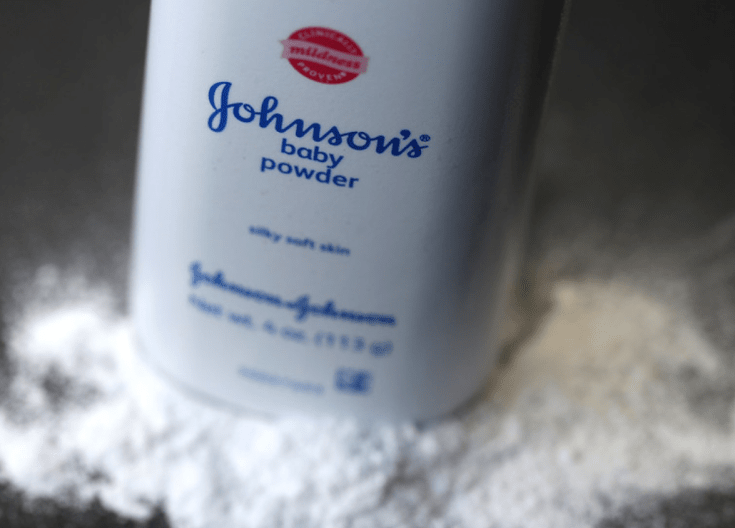
In the healthcare industry there are few brands better known than the US drug company Johnson & Johnson. The maker of consumer staples ranging from Band-Aid bandages to baby shampoo has faced a number of controversies in its 133-year history. J&J knew about asbestos in its baby products since the 1970s and worked to conceal it from federal regulators and the public, investigations show.
Hidden ‘for decades’: Johnson & Johnson may have known about ‘carcinogens’ in baby powder since 1971
The pharmaceutical giant is facing thousands of lawsuits alleging that its baby powder product caused cancer, but it has always denied the allegations and insisted that the product is safe. After the latest revelations, the firm is now contesting claims that it has contributed to the opioid epidemic in the US.
JP Morgan

Despite the relatively low standards of the banking industry and the unpopularity of banks in general, JP Morgan has managed to outdo the competition to become the most despised. The largest financial institution in the US, with operations worldwide, the Wall Street bank is facing an onslaught of endless investigations and scandals.
READ MORE: JP Morgan, Barclays, RBS among big banks facing UK class action over Forex rigging
It is among the major global banks being sued by investors for rigging the global forex exchange (Forex) market. Its chief executive Jamie Dimon was awarded with $31 million in total compensation for his work in 2018. The pay exceeded his record compensation of $30 million in 2007 before the financial crisis.
JP Morgan cargo ship released, minus the $1.3 billion worth of cocaine found onboard
But the climax to all of this was last month’s unprecedented drugs bust after US federal authorities seized a cargo ship at the Port of Philadelphia belonging to a fund run by JP Morgan. After confiscating nearly 20 tons of cocaine on board worth $1.3 billion, authorities later released the vessel.
Other notable mentions:
Amazon
Nestle
Big Tobacco
Big Oil
Big Pharma
It’s Starting – I Told You It Would!

Published on Jul 17, 2019

282

395


253

95

109

74

72

62

36

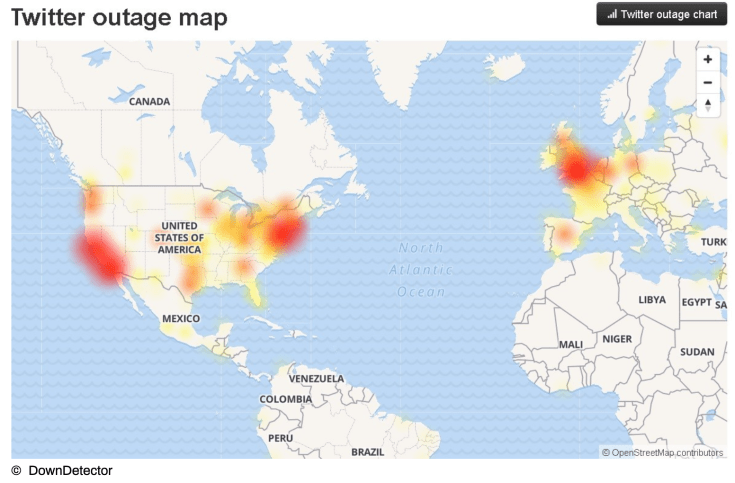
Twitter goes down amid Trump’s social media summit

US President Donald Trump’s favorite social media platform has stopped working even as he was hosting a White House meeting about deplatforming and other forms of online censorship. The cause of the outage is unknown.
“Sorry, something went wrong” was the message that greeted Twitter users starting at 1:30 pm Eastern time in the US, according to the monitoring website DownDetector.
The outage appears to be global, with reports coming from all corners of the world and not just the US. Downdetector.com showed that there are nearly 50,000 incidents of people reporting issues.
As the breakdown occurred, President Trump was hosting a number of social media creators – rather than company officials, to the consternation of mainstream media outlets – to “engage directly with these digital leaders in a discussion on the power of social media,” according to White House spokesman Judd Deere.
Trump has been a prolific Twitter user, opting to keep posting from his personal account rather than the official @POTUS handle created under his predecessor Barack Obama. This has led to lawsuits from activists that Trump blocked from access to his tweets, and federal judges ruling that the platform is a designated public forum. The platform has also rewritten some of its rules with Trump in mind.
Twitter is usually where most social media users go to react when outages strike other platforms – such as the May incident that left over 2 billion Facebook users in the dark for 14 hours. Its last major breakdown was in April 2018, when the platform stopped operating for several hours on a Friday afternoon.
Think your friends would be interested? Share this story!
Dems Call For Silencing, Confronting, Prosecuting Opponents Then Facebook Allows Deaththreats

Published on Jul 10, 2019
Collection of clips of Dems calling for the confronting, silencing, prosecuting, political opponents which led activists inside facebook to allow death threats against people they deem dangerous which include Alex Jones and Paul Joseph Watson.
Judge, jury & executioner: Facebook policy permits death threats against ‘dangerous individuals’

Facebook has issued an ominous new policy permitting death threats and calls for violence – so long as they’re directed against “dangerous” individuals or organizations, or someone accused (but not convicted) of a crime.
Facebook has updated its “community standards” to carve out a few exceptions to its “no death threats” policy. Calls for “high-severity violence” are now permitted, as long as they’re directed at individuals “covered in the Dangerous Individuals and Organizations policy” or individuals “described as having carried out violent crimes or sexual offenses” by media reports. After all, are people banned from Facebook really people at all?
‘No future for dissidents’ on social media: Paul Joseph Watson reflects on Facebook ban

The change was spotted on Tuesday by commentator Paul Joseph Watson, who along with his former Infowars boss Alex Jones was one of a handful of mostly-conservative personalities banned from Facebook in May under its “Dangerous Individuals” policy. Back then, even mentioning one of the banned names could get a user banned – unless the mention was derogatory.
Facebook has apparently taken that “hate the haters” tactic and run with it. While the “Dangerous Individuals” policy supposedly only covers “terrorist activity, organized hate, mass or serial murder, human trafficking, and organized violence or criminal activity,” none of the commentators banned – including Watson, Jones, conservative political performance artist Milo Yiannopoulos, and Nation of Islam leader Louis Farrakhan – were involved in any of those activities. But, Watson discovered, a person wearing an Infowars t-shirt is enough to get a photo removed from Instagram, and photos that include banned individuals – even if their faces are blurred out – have been deleted as well.
Equally ominous is Facebook’s decision to dispense with the concept of “innocent until proven guilty” that forms the core of the US legal system (Facebook is based in Menlo Park, California, and at least theoretically subject to US laws). Individuals need only be accused in the media of violent crimes and sexual offenses to become fair game for death threats – not convicted in court. For a company that claims to take the threat of “fake news” very seriously, Facebook is surprisingly cavalier about the potential for media misinformation to lead to violence.
But then, Facebook never even tried to prove Watson, Jones or any of the other banned users were “Dangerous Individuals,” either – its policy has always been that banned users are guilty until proven innocent, as any user who’s ever been forced to jump through its tech support hoops to restore a banned account can attest.
“The largest social media company in the world with over 2 billion users literally says it’s fine to incite violence against me, despite this being illegal,” Watson wrote at Summit.news, pointing out that sending death threats or threats of violence is, in fact, a crime under UK law (as it is under US law and the laws of most developed countries with substantial Facebook-using populations).

Facebook even tracks off-platform behavior to determine whether users should be blacklisted as “hate agents,” according to internal documents seen by Breitbart, meaning merely showing up at the same event as a “dangerous individual” can potentially earn a user the designation. The site’s list of “hate agents” is reportedly quite exhaustive and includes British politicians Carl Benjamin and Anne Marie Waters as well as conservative commentators like Yiannopoulos and Candace Owens. Because all this classification goes on in secret, users have no chance to appeal their un-personing, and may never even know they are being judged, until they start receiving Facebook-approved death threats of their own.
 Tom's Blog
431