Big Tech & Big Brother meet at Facebook HQ to discuss how to ‘secure’ US elections

Screen Shot 2019-09-05 at 11.14.15 AM

Security teams for Facebook, Google, Twitter and Microsoft met with the FBI, the Department of Homeland Security and the Director of National Intelligence’s office to coordinate a strategy to secure the 2020 elections.

The tech platforms met with government officials at Facebook’s Menlo Park headquarters on Wednesday, the company has confirmed, boasting that Big Tech and Big Brother have developed a “comprehensive strategy” to get control of previous election-related “vulnerabilities” while “analyzing and getting ahead of new threats.”

Facebook has scrambled to get in front of the 2020 election after being blamed for Trump’s 2016 electoral victory over merely allowing the “Russian trolls” to buy a bunch of ads, most of which appeared after the vote and had nothing to do with the election. But the company insisted last week it had tightened its rules for verifying purchasers of “political” ads, for real this time, after the 2018 contest showed they could still be duped into running obviously-fake ads “paid for by” the Islamic State terror group and Cambridge Analytica.

Big election business: Democratic candidates, even critical of Facebook, pour millions into platform

Screen Shot 2019-09-05 at 11.19.53 AM

Aside from the occasional purge of accounts accused of being linked to countries like Russia, Iran, and China on the US’ ever-lengthening enemies’ list, however, it’s hard to tell what exactly any platform has done to make itself immune to ‘manipulation’. Twitter banned state-owned media from buying ads on its platform last month, holding the move up as a victory against the dreaded “foreign meddling,” but its own founder’s account was hacked last week, suggesting it has bigger security issues than a few wrongthink-prone advertisers.

And Google’s potential to sway elections has been the subject of Senate hearings – yet the company has remained silent on addressing the problem, suggesting it doesn’t see it as a bug at all, but a feature. Subsidiary YouTube, meanwhile, conducted another round of deplatforming last month even while declaring it was an open platform for controversial ideas.

The electoral meeting of the minds came less than a week after the Pentagon’s Defense Advanced Projects Research Agency (DARPA) declared war on deepfakes and other potentially discord-sowing information, promising to neutralize all “malicious” content within four years – if not for this election, then certainly for the next.

Until then, there’s Microsoft’s ElectionGuard software, which the company announced in July it would provide to all the nation’s voting machines, free of charge, out of the goodness of its (and the Pentagon-owned contractor that helped develop the program’s) heart. And if Microsoft’s act of selfless charity doesn’t convince a district their democracy is worth protecting, there’s always Cyberdome, the election security nonprofit advised by half a dozen former intel agency heads who want what’s best for your vote (when they’re not authorizing torture or warrantless wiretapping).

Getting the DHS involved was a nice touch, too, after that agency was accused of attempting to hack electoral systems in multiple states thousands of times during the period surrounding the 2016 election. Unlike the “Russian hacking” allegations that remain unproven, multiple officials from Idaho, Georgia, Indiana, West Virginia, and Kentucky claim the agency attempted to access their systems after they opposed its efforts to “secure” those systems. After initially denying any involvement, the DHS claimed the attempted breach alarms were set off accidentally, during routine “legitimate work.”


Constant surveillance: How big tech’s household devices are SPYING on you

Screen Shot 2019-07-31 at 10.33.26 AM

The expansion of home tech products to make life increasingly convenient requires consumer privacy sacrifices, the full extent of which won’t be revealed for years to come, but have been hinted at through a slew of missteps.

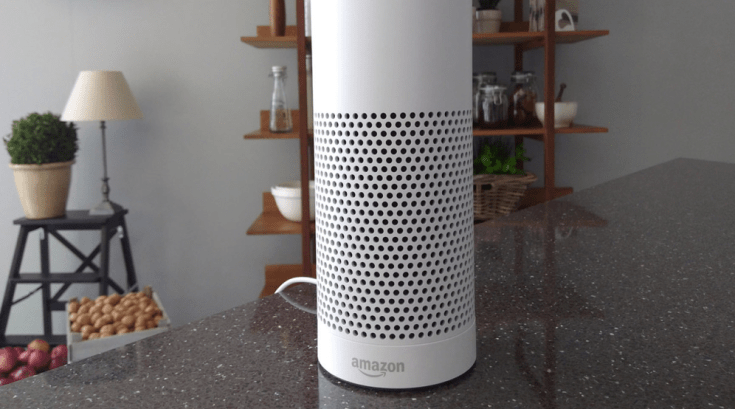
This past week Amazon hit headlines after its virtual assistant Alexa was caught passively recording couples arguing, having intimate family discussions and even having sex (apparently sex noises can trigger Alexa-activated Echo speakers).

Data is the new dominant commodity of the 21st century and the trade-off of convenience for privacy and security has been highlighted in a plethora of cases involving consumer ‘smart products’ in recent years.

Amazon Echo as murder witness?

Take the November 2015 case of James Bates, who was suspected of the murder of his friend Victor Collins at a house party in his home. Police issued multiple search warrants to Amazon in the landmark case, in an attempt to gain access to the records of Bates’ Echo device.

“I have a problem that a Christmas gift that is supposed to better your life can be used against you,” Bates’s attorney, Kimberly Weber, said at the time. Eventually, Bates himself decided to turn over the data, foregoing his right to privacy in the interest of proving his innocence and clearing his name.

Screen Shot 2019-07-31 at 10.37.20 AM

Amazon admits it keeps some Alexa recordings even when users delete them

Siri’s sensitive recordings

Much like Amazon, Apple has been found surreptitiously recording users’ sexual encounters, drug deals and medical appointments, though more worryingly, these audio recordings were sent to human ‘graders’ for evaluation, according to recent, explosive revelations from a whistleblower.

Screen Shot 2019-07-31 at 10.39.16 AM

Siri ‘regularly’ records sex encounters, sends ‘countless’ private moments to Apple contractors

Apple’s virtual assistant Siri stores users’ identifiable utterances for up to six months, before removing the unique user ID information and storing the clips elsewhere for up to two years – in the interest of improved customer experience, of course.

Google Mini & passive spying

Google’s domestic virtual assistant Google Mini has also been caught passively spying on consumers in their own homes. Worryingly, however, Google employs hundreds of so-called “language experts” to parse snippets of audio, some of which contain embarrassing or sensitive information, to better understand the nuances of human language.

In 2017, writer Artem Russakovskii went to the product’s unveiling at the SFJazz Center in San Francisco. After a couple of days he checked his voice activity log to find thousands of inadvertent entries that should never have been logged; the device had been spying on him 24/7 due to an apparent ‘hardware flaw’, as the company claimed at the time.

Hacking tech teddies

The idea for a teddy bear that allowed parents and children to share affection when long distances apart was good in theory, but ultimately proved terrifying in practice.

Screen Shot 2019-07-31 at 10.41.20 AM

‘Smart’ Teddy bears hacked, 2mn private recordings leaked, children at risk

Through Cloudpets (and various other interpretations of the idea), children could record short messages for loved ones far away that would be transmitted via bluetooth to a nearby smartphone and beamed across the country or, indeed, the world.

Alas, it didn’t take long before data belonging to some 800,000 customers, totalling roughly two million messages between children and adults, which were stored in an online database, was hacked and held for ransom.

There was no encryption or authentication between the bluetooth devices in the stuffed animals and the smartphone app, meaning unscrupulous actors could invade people’s most heartfelt moments with their children.

Backdoor Barbie

Screen Shot 2019-07-31 at 10.42.37 AM

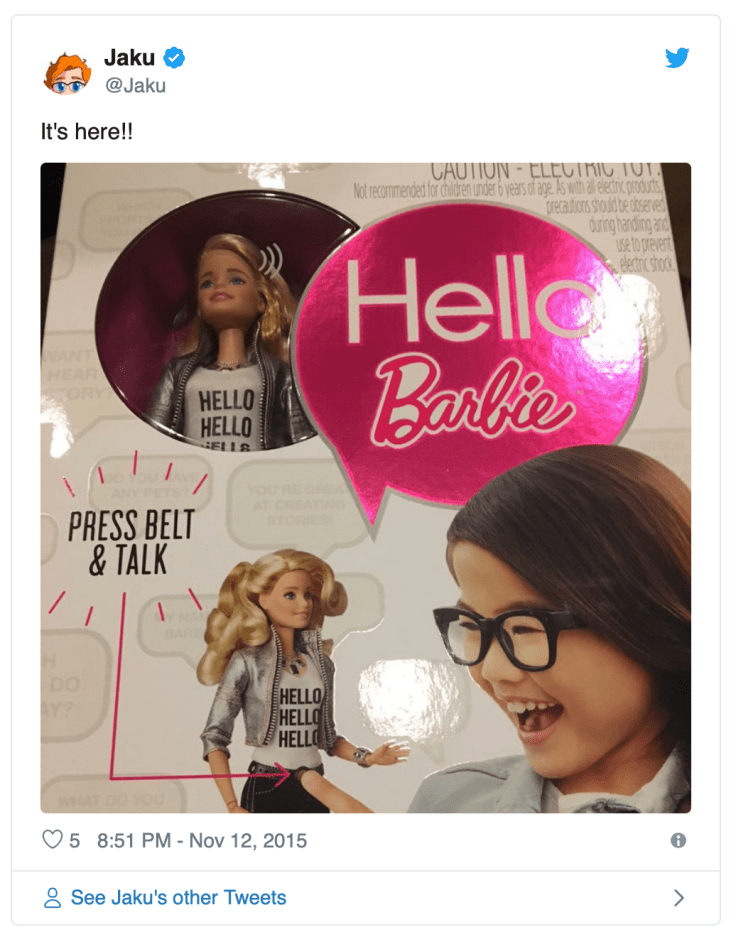
Mattel’s ‘Hello Barbie’ was billed as the world’s first “interactive doll” complete with a microphone that records children and sends the messages to third parties for processing before a response is generated.

However, security researchers quickly discovered that the wifi-connected doll was vulnerable to hacking, and those with the relevant knowhow could access the doll’s system information, account information, stored data including audio files, and the doll’s built-in microphone.

Researcher Matt Jakubowski claimed that it was just a matter of time until we are able to replace their servers with ours and have her say anything we want.”

But the ghoulish details didn’t stop there; hackers could theoretically take over a home’s wifi network via the doll and gain access to other connected devices such as laptops and phones, allowing them to pilfer a wealth of personal and financial information.

High-tech takeover

White hat hacking work by a team of researchers at China’s Zhejiang University showed how inaudible “commands” could be used to remotely trigger a potential victim’s smart device. The team used various clever strategies, including playing frequencies above 20kHz as the victim was recording, rendering the inaudible frequency as a trigger to access the device.

The researchers managed to hack the voice interfaces of Amazon, Apple, Google, Microsoft and Samsung devices and command them to, for example, visit specific malicious websites or even send emails and text messages all while dimming the screen and lowering the device volume to conceal the attack, leaving the victim completely unaware.

The team even managed to remotely place phone and video calls to listen in and observe the victim’s surroundings. They infamously also managed to hack the navigation system of an Audi SUV.

Poll: One-Third of Americans Say The Media Is ‘The Enemy of The People’

Screen Shot 2019-07-05 at 10.33.28 AM

By Chris Menahan

From The Hill:

One-third of Americans say the news media is “the enemy of the people,” according to a new Hill-Harris X poll survey. 

The poll, released Monday, found that the sentiment is strongest among Republican voters. According to the survey, 51 percent of Republicans polled said they thought of the press as “the enemy of the people” compared with 14 percent of Democrats and 35 percent of independents who said the same.

A majority of all respondents overall signaled support for the press, with 67 percent saying that the “news media is an important part of a democracy.”

Truly hilarious wording for that last line. Most people “support” the press because they think that the “news media is an important part of a democracy.”

I believe the news media is an important part of democracy but am aware as a matter of record that the controlled media is literally the enemy of the people. They view themselves as our enemy and act as an occupying force working to subdue any plebs who dare to fall out of line.

Screen Shot 2019-07-05 at 10.36.24 AM

Recognizing the reality of the situation doesn’t mean you’re against “the press” in its entirety, it means you’re informed.

Among those surveyed, respondents were most closely divided on the issue in rural areas. Forty-six percent of rural Americans said they believed the news media to be the “enemy of the people,” compared with 54 percent of those who said the news media is a crucial part of democracy.

Our media is now mostly dedicated to lobbying for alternative media to be deplatformed, doxing dissidents and ruining random people’s lives for crimes against liberal orthodoxy.

Screen Shot 2019-07-05 at 10.38.19 AM

They’re at the point now where they’re demanding everyone who make fun of Democrats be doxed, fired from their jobs and even criminally prosecuted.

Screen Shot 2019-07-05 at 10.39.48 AM

If anyone doesn’t realize this is a hostile enemy force then they’re not paying attention.

ADL: Google Search ‘Redirect’ Program Built to Fight ISIS Will Now Be Used On Americans

By Chris Menahan

Google-funded Moonshot CVE is working together with the Anti-Defamation League and the Google Jigsaw-partnered Gen Next Foundation to “redirect” Google searches related to “extremist narratives” — such as the idea that there is a “‘European’ identity” that is “under threat” — the president of the ADL announced Monday. 

ADL head Jonathan Greenblatt wrote in a statement:

[T]he Anti-Defamation League is partnering with Moonshot CVE and the Gen Next Foundation to counter white supremacist and jihadist activity online. The program, dubbed the Redirect Method, will use advertising to provide individuals who search Google for violent extremist material with content that exposes the falsehoods of extremist narratives, providing searchers the choice of an off-ramp to radicalization.

Targeting content potential extremists search for — rather than focusing, for example, on what they post to social media — can directly address their harmful online behavior and desires. By providing them with credible sources, we hope to decrease the impact of extremist content and increase the spread of the truth, such as, there is no one “European” identity that is under threat. In this way, we speak directly to those who may be at risk of radicalization, and we incentivize re-thinking those ideologies with accurate information.

Greenblatt went on to explain how Moonshot/Google’s program built to fight ISIS is now going to be used on Americans.

Moonshot and Google previously launched a Redirect Method program for ISIS-related searches, which found that those who searched for ISIS content were highly likely to engage with the more constructive, non-violent content that was offered. This led to several thousand views of constructive materials in place of searches related to Islamist extremism. Our new project builds on this success while pulling from ADL’s subject matter expertise in extremist codewords and unique insights to lead the project.

Greenblatt finished his piece by saying the program built to fight ISIS is not about “inhibit[ing] free speech” but “actually improves the online marketplace of ideas.”

Some people might hear about this and raise concerns that it could inhibit free speech. In fact, the opposite is the case. Internet content skews toward the virality of controversy, polluting the marketplace of ideas with vitriolic speech. The Redirect Method actually improves the online marketplace of ideas, not by limiting any speech, but by ensuring that hateful propaganda and intellectually honest information are presented side-by-side.

Last month, Greenblatt praised Google-owned YouTube after they purged thousands of videos and channels for advocating “bigoted ideologies” but insisted that “more needs to be done” to keep “hate” off their platform.

Screen Shot 2019-07-03 at 10.36.16 AM

Greenblatt said in the past the ADL is working with Google and Facebook to “tweak their algorithms” and “redirect” searches through AI to protect people’s right to “not be harassed or hated.”

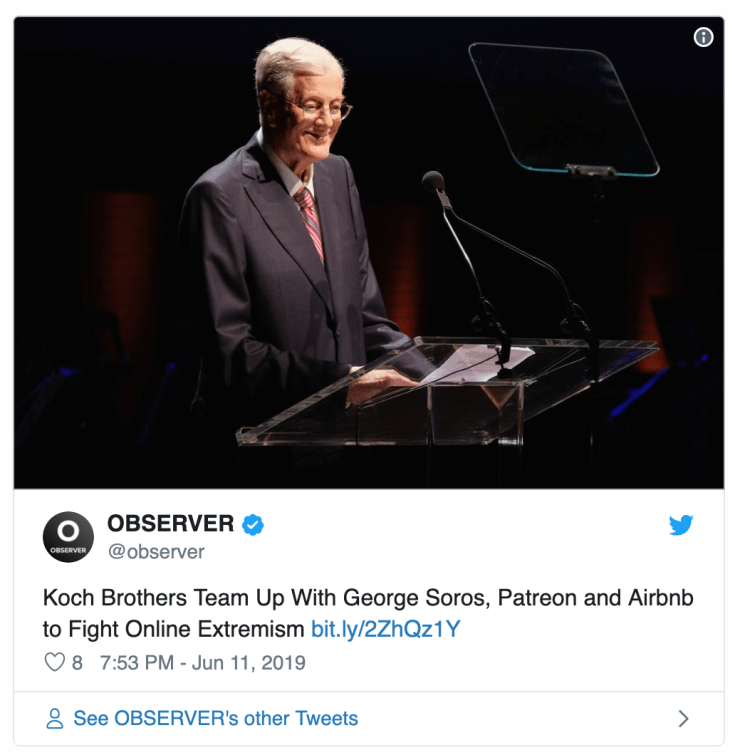
Two weeks ago, Tucker Carlson reported on how the Koch brothers are teaming up with the ADL, George Soros and other Big Tech companies to “fight online extremism.”

“The Charles Koch Institute will be holding a summit with the Anti-Defamation League and executives from major tech companies, including Pinterest, AirBNB, Patreon, and Mozilla,” Tucker Carlson said. “The stated purpose of the meeting is to formulate, quote: ‘best practices on the fight against hate and extremism online.’ You know exactly what that really means: censorship of your views. For the left, fighting ‘extremism’ always entails crushing normal conservatives.”

Screen Shot 2019-07-03 at 10.40.38 AM

Last year, Greenblatt presented Apple CEO Tim Cook with an award after he banned Alex Jones and cracked down on free speech.

Screen Shot 2019-07-03 at 10.41.27 AM

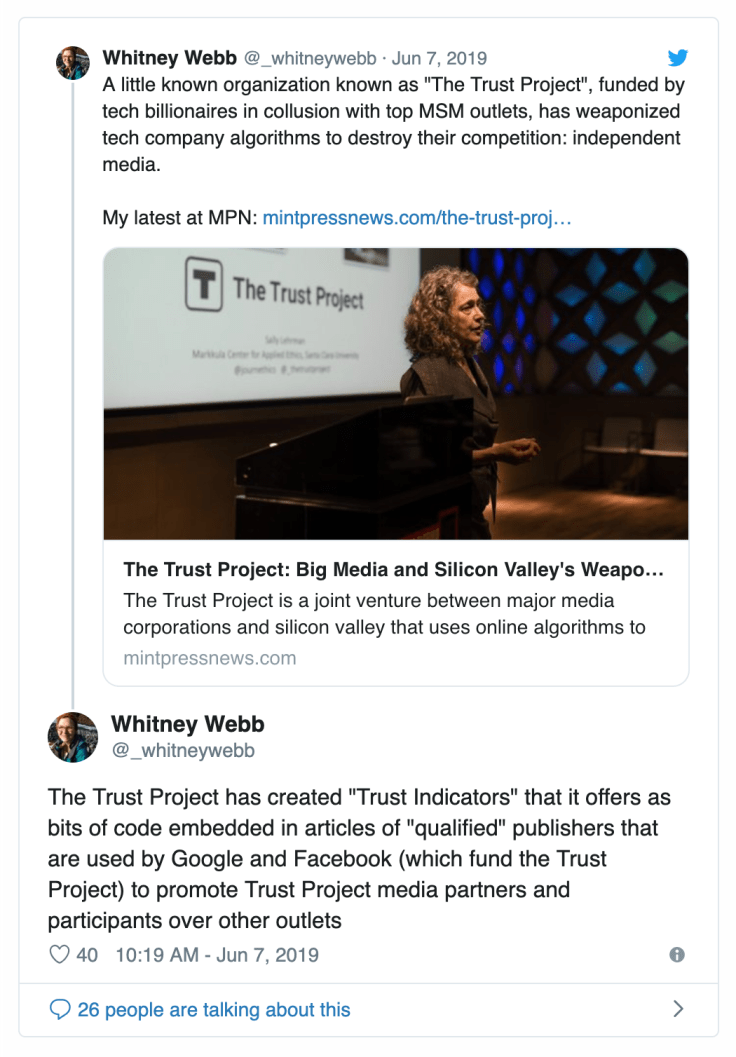
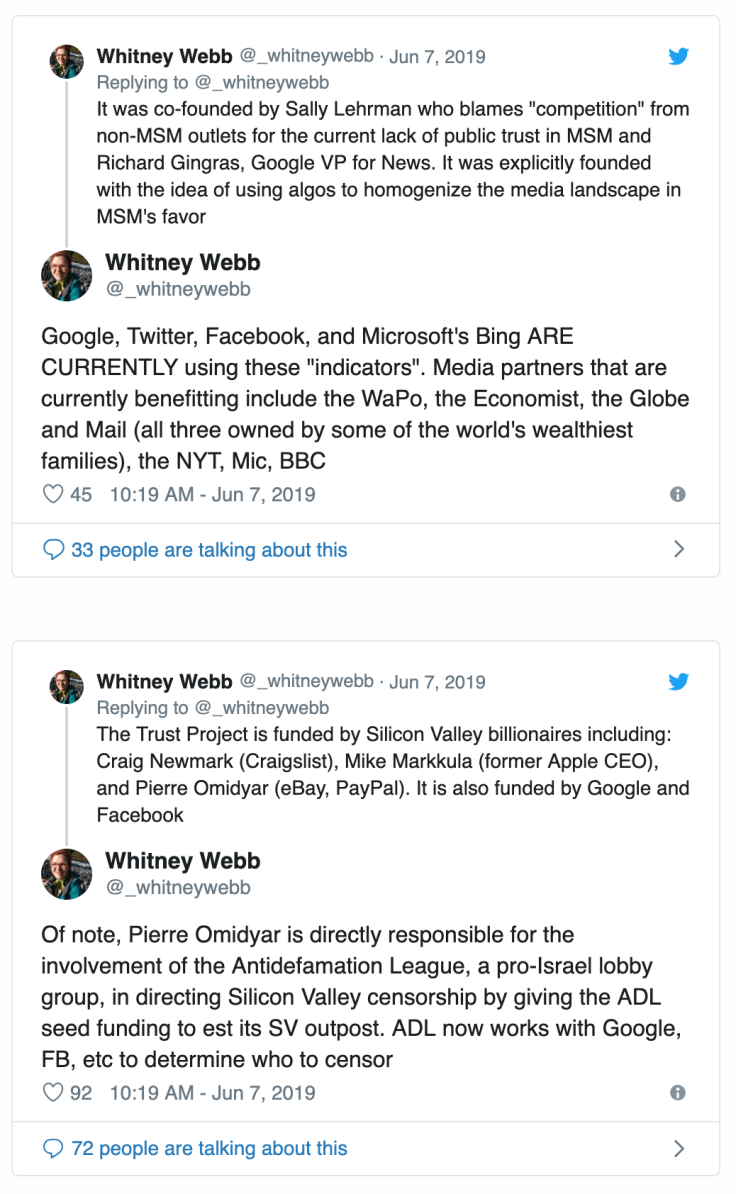
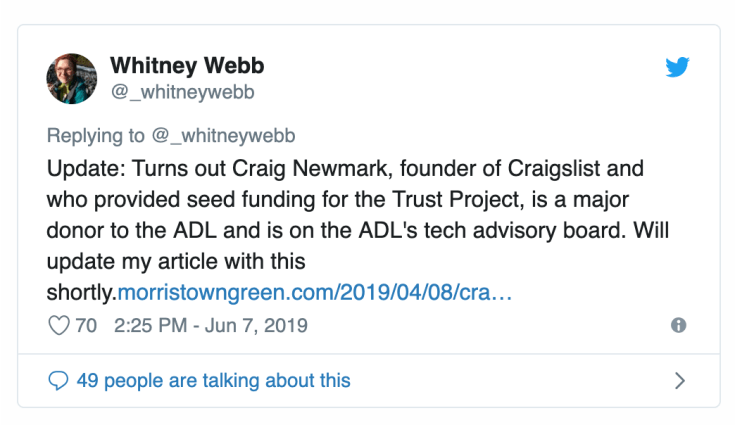
As MintPressNews’ Whitney Webb reported last month, the ADL is also working together with Google on an algorithmic censorship program called “The Trust Project,” which aims to effectively whitelist mainstream media propaganda outlets and blacklist all websites which don’t satisfy the desires of their censors.

Screen Shot 2019-07-03 at 10.43.04 AM

Screen Shot 2019-07-03 at 10.43.38 AM

Screen Shot 2019-07-03 at 10.44.11 AM

There’s no better way to “improve the online marketplace of ideas” than by blacklisting dissident websites and censoring every voice which runs counter narrative!

Media Threatens to Dox Microsoft Employee Who Said Execs Are ‘Awarded’ For Discriminating Against White & Asian Men

By Chris Menahan

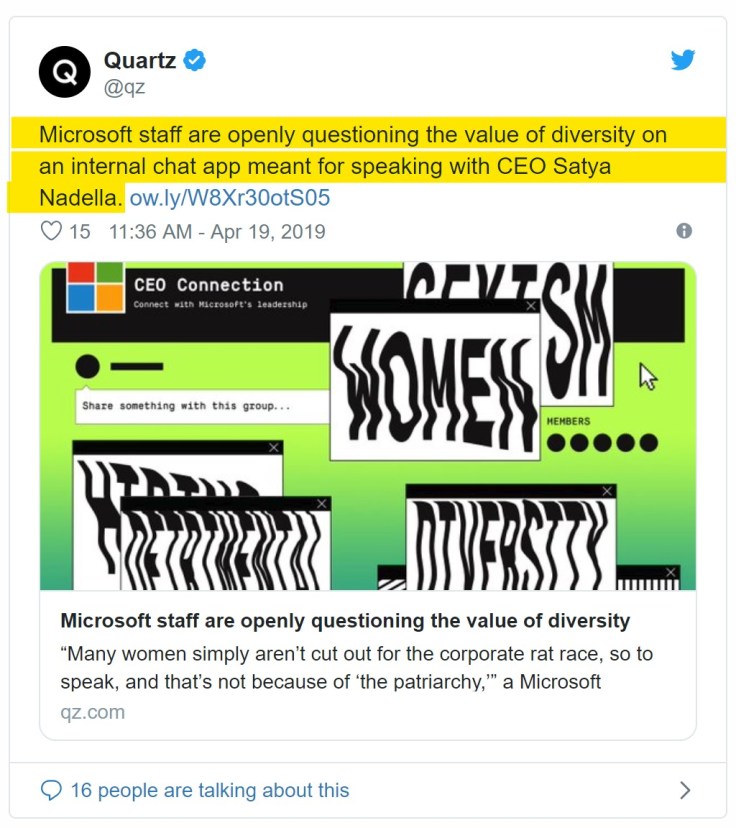
The media is threatening to dox a female Microsoft employee after she revealed in an internal message board that “senior leadership is awarded more money if they discriminate against Asians and white men.”

The leftist rag Quartz said the comments amounted to an attack on “diversity” and threatened to dox her in response.

CAP

From Quartz, author Dave Gershgorn, “Microsoft staff are openly questioning the value of diversity“:

Some Microsoft employees are openly questioning whether diversity is important, in a lengthy discussion on an internal online messaging board meant for communicating with CEO Satya Nadella.

Two posts on the board criticizing Microsoft diversity initiatives as “discriminatory hiring” and suggesting that women are less suited for engineering roles have elicited more than 800 comments, both affirming and criticizing the viewpoints, multiple Microsoft employees have told Quartz. The posts were written by a female Microsoft program manager. Quartz reached out to her directly for comment, and isn’t making her name public at this point, pending her response.

“Does Microsoft have any plans to end the current policy that financially incentivizes discriminatory hiring practices? To be clear, I am referring to the fact that senior leadership is awarded more money if they discriminate against Asians and white men,” read the original post by the Microsoft program manager on Yammer, a corporate messaging platform owned by Microsoft. The employee commented consistently throughout the thread, making similar arguments. Quartz reviewed lengthy sections of the internal discussion provided by Microsoft employees.

“I have an ever-increasing file of white male Microsoft employees who have faced outright and overt discrimination because they had the misfortune of being born both white and male. This is unacceptable,” the program manager wrote in a comment later. The Microsoft employees who spoke to Quartz said they weren’t aware of any action by the company in response, despite the comments being reported to Microsoft’s human resources department.

When contacted by Quartz, Microsoft pointed to comments by three company officials in the message-board threads. A member of Microsoft’s employee investigations team responded to the initial post in January, writing that the company does not tolerate discrimination of any kind. Another Microsoft staff member, who leads the team that helps the board of directors determine executive pay, explained the diversity-based compensation initiative. “Our board and executive leadership team believe diverse and inclusive teams are good for business and consistent with our mission and inspire-to culture,” she wrote. “Linking compensation to these aspirations is an important demonstration of executive commitment to something we believe strongly in.”

Here’s her actual post:

“Because women used to be actively prohibited from full-time employment many decades ago, there is now the misguided belief that women SHOULD work, and if women AREN’T working, there’s something wrong…. Many women simply aren’t cut out for the corporate rat race, so to speak, and that’s not because of ‘the patriarchy,’ it’s because men and women aren’t identical, and women are much more inclined to gain fulfillment elsewhere.”

“We still lack any empirical evidence that the demographic distribution in tech is rationally and logically detrimental to the success of the business in this industry….We have a plethora of data available that demonstrate women are less likely to be interested in engineering AT ALL than men, and it’s not because of any *ism or *phobia or ‘unconscious bias’- it’s because men and women think very differently from each other, and the specific types of thought process and problem solving required for engineering of all kinds (software or otherwise) are simply less prevalent among women. This is an established fact. However, this established fact makes people very uncomfortable, because it suggests that the gender distribution in engineering might not actually be a problem (and thus women can no longer bleat about being victims of sexism in the workplace), these facts are ignored in favor of meaningless platitudes our SLT [senior leadership team] continues to shove down our throats — e.g. ‘We’re not doing enough’ and ‘we clearly have a long way to go.'”

“We MUST immediately cease the practice of attaching financial incentives and performance metrics to ‘diversity hiring’ — as long as we give more money and higher annual reviews explicitly for NOT hiring/promoting white men and Asians, this will continue to be a serious problem at the company.”

Pointing out discrimination against white men amounts to heresy in the New America™.

“Pending her response,” Gershgorn and Quartz are going to dox her so the lynch mob can burn her at the stake for “questioning the value of diversity.”

Protecting “diversity” requires total uniformity. 

‘Fake news’ filter NewsGuard grilled for having links to PR firm that peddled Saudi propaganda

screen shot 2019-01-29 at 9.08.03 am

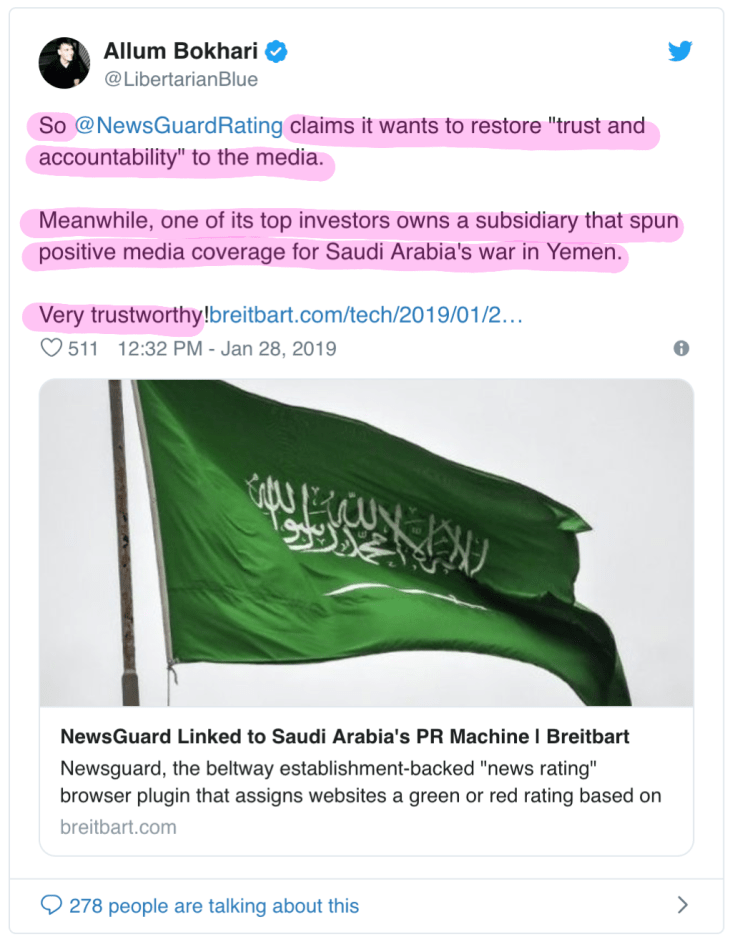
A new app claiming to serve as a bulwark against “disinformation” by adding “trust rankings” to news websites has links to a PR firm that received nearly $15 million to push pro-Saudi spin in US media, Breitbart reports.

NewsGuard and its shady advisory board – consisting of truth-lovers such as Tom Ridge, the first-ever homeland security chief, and former CIA director Michael Hayden – came under scrutiny after Microsoft announced that the app would be built into its mobile browsers. A closer examination of the company’s publicly listed investors, however, has revealed new reasons to be suspicious of this self-declared crusader against propaganda. As Breitbart discovered, NewsGuard’s third-largest investor, Publicis Groupe, owns a PR firm that has repeatedly airbrushed Saudi Arabia.

screen shot 2019-01-29 at 9.11.03 am

Following the September 11, 2001 terrorist attacks, Riyadh enlisted Qorvis Group, a Publicis subsidiary, in the hope of countering accusations that the kingdom turned a blind eye to – or even promoted – terrorism. Between March and September 2002, the Royal Embassy of Saudi Arabia reportedly paid Qorvis $14.7 million to run a PR blitz targeting American media consumers. As part of the campaign, Qorvis employed a litany of dubious tactics, including running pro-Saudi ads under the name of an activist group, Alliance for Peace and Justice. Tellingly, the FBI raided the company’s offices in 2004, after Qorvis was suspected of running afoul of foreign lobbying laws.

Between 2010 and 2015, Qorvis is believed to have received millions of dollars to continue to whitewash the kingdom’s image in the United States. The accelerated airbrushing came just as the Saudis launched its devastating war against Yemen. In fact, Qorvis created an entire website – operationrenewalofhope.com – to promote the Saudi-led war in Yemen, according to the Intercept.

The firm has also successfully planted Riyadh-friendly stories in major US publications, including a 2016 op-ed by Saudi Foreign Minister Adel al-Jubeir, which was published by Newsweek. The headline bravely bellowed: “The Saudis are fighting terrorism, don’t believe otherwise.”

All of this is rather extraordinary, considering that NewsGuard bills itself as an app that helps news consumers determine “if a website is trying to get it right or instead has a hidden agenda or knowingly publishes falsehoods or propaganda.”

Social media users quickly seized on the story, pointing out the multiple levels of irony and humor.

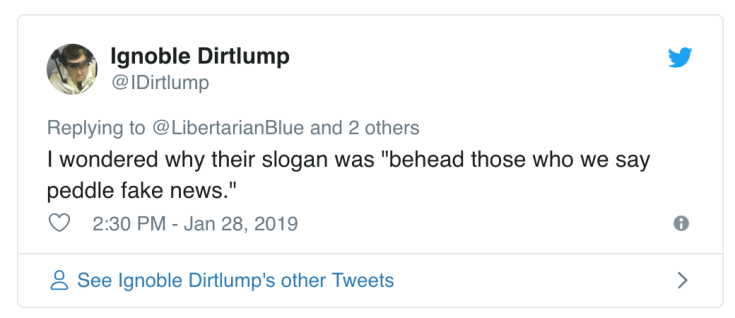
“I wondered why their slogan was ‘behead those who we say peddle fake news,'” one Twitter user joked.

screen shot 2019-01-29 at 9.12.41 am

screen shot 2019-01-29 at 9.13.48 am

Still, NewsGuard’s co-founder Steven Brill has insisted that Qorvis and its parent company have no control over the app.

“Publicis has nothing to do with the content or operations of NewsGuard and has a small stake in the company,” Brill told Breitbart.

If guiding the app is a responsibility reserved solely for the advisory board, NewsGuard likely won’t fare much better: One of its board members, Richard Stengel, is a former managing editor of Time magazine and an ex-State Department official who was dubbed the “chief propagandist” of the US government.

True to form, Stengel openly admitted during a panel discussion last year that “I’m not against propaganda,” and “Every country does it and they have to do it to their own population and I don’t necessarily think it’s that awful.”

No need to install: Microsoft has controversial fake news filter NewsGuard built into mobile browser

cap

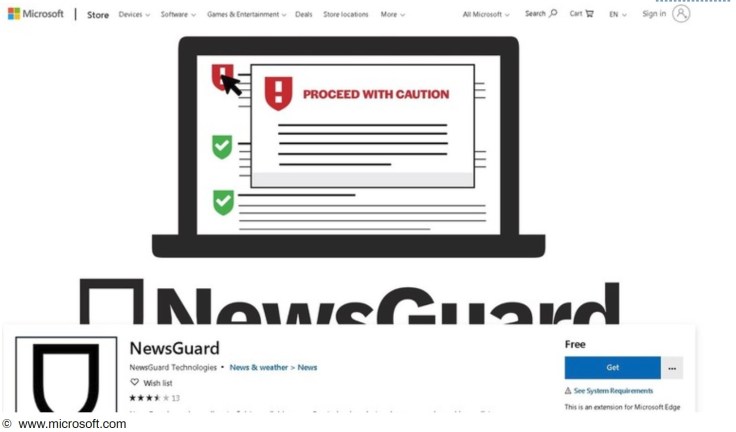
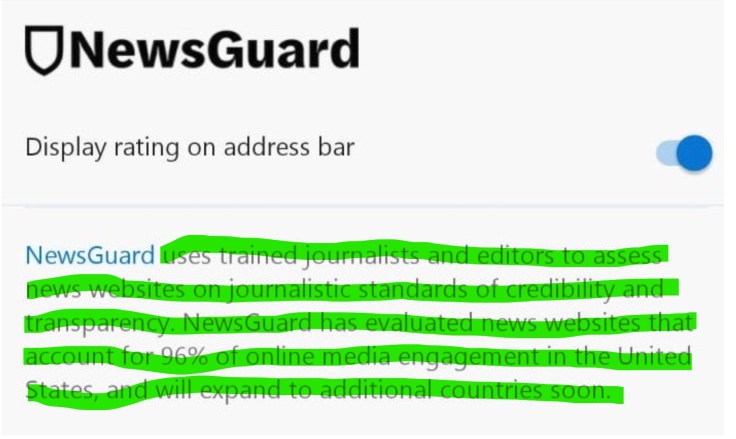
Corporate and neocon-backed startup NewsGuard is one step closer to its vision of bringing its “unreliable” news rater to every screen after Microsoft makes it an integral part of its Edge mobile browser.

Rather than having to download an app as before, Edge users on Android and Apple devices can now just click one button to enable its “green-red rating signal if a website is trying to get it right or instead has a hidden agenda or knowingly publishes falsehoods or propaganda.”

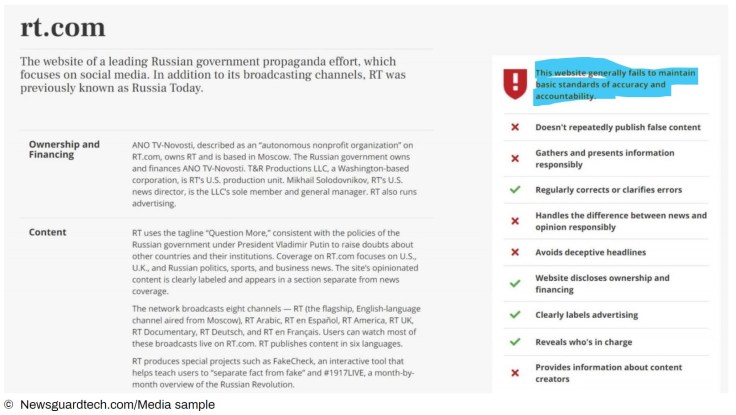
Among the green-rated websites: Voice of America, CNN, Buzzfeed, the Guardian, New York Times and the Washington Post, as well as left-leaning upstarts such as Vice News and Refinery 29. Ones that are given the red warning label of “failing to maintain basic standards of accuracy and accountability”: RT and Sputnik (obviously enough) and the right-wing Daily Mail, Breitbart and the Drudge Report, in addition to hundreds of other non-mainstream news websites such as Wikileaks.

cap

Not only does the integration ensure that NewsGuard is present on every browser, and is easier to use than to ignore, but by making it a fundamental Microsoft-provided feature, the company gives it inherent level of trustworthiness, something akin to a bundled anti-virus feature, only this time the virus targets your brain, not your computer or iPod.

‘Totally transparent’

None of this is the slightest bit alarming if you believe that NewsGuard is an absolutely fair arbiter of what constitutes real news or propaganda.

Its pride of place is its “Nutrition Labels” which ape the precision of a list of calories, carbs, and saturated fats to give a supposedly scientific assessment of media reliability on nine different criteria. Among them: doesn’t repeatedly publish false content, avoids deceptive headlines, gathers and presents information responsibly, handles the difference between news and opinion responsibly.

cap

The green-listed media outlets above apparently do not ever engage in these practices, or at least not knowingly. So CNN never misleads with its headlines, the Guardian never dresses up its agendas as news, and Buzzfeed stories are always accurate. One literally doesn’t have to go back three days to find dozens of examples to the contrary, but this would be too mind-numbingly pedantic a task.

Even regular readers of the green-tick media must be able to see these are judgment calls. What is even “presenting information responsibly”?

Perhaps realizing that their pseudo-scientific fancy diagram is insufficient, NewsGuard has stressed that they are not using shadowy methods like tech companies and are open to two-way communication.

“We want people to game our system. We are totally transparent. We are not an algorithm,” company co-founder Steve Brill told the Guardian.

This is how he explained the Daily Mail red warning.

“We spell out fairly clearly in the label exactly how many times we have attempted to contact them. The analyst that wrote this writeup got someone on the phone who, as soon he heard who she was and where she was calling from, hung up. As of now, we would love to hear if they have a complaint or if they change anything.”

On the other hand, RT did answer NewsGuard’s queries in detail. You can guess how much difference that made.

From anthrax scares to Russia fears

But who are these people that the Daily Mail or RT have to impress and why?

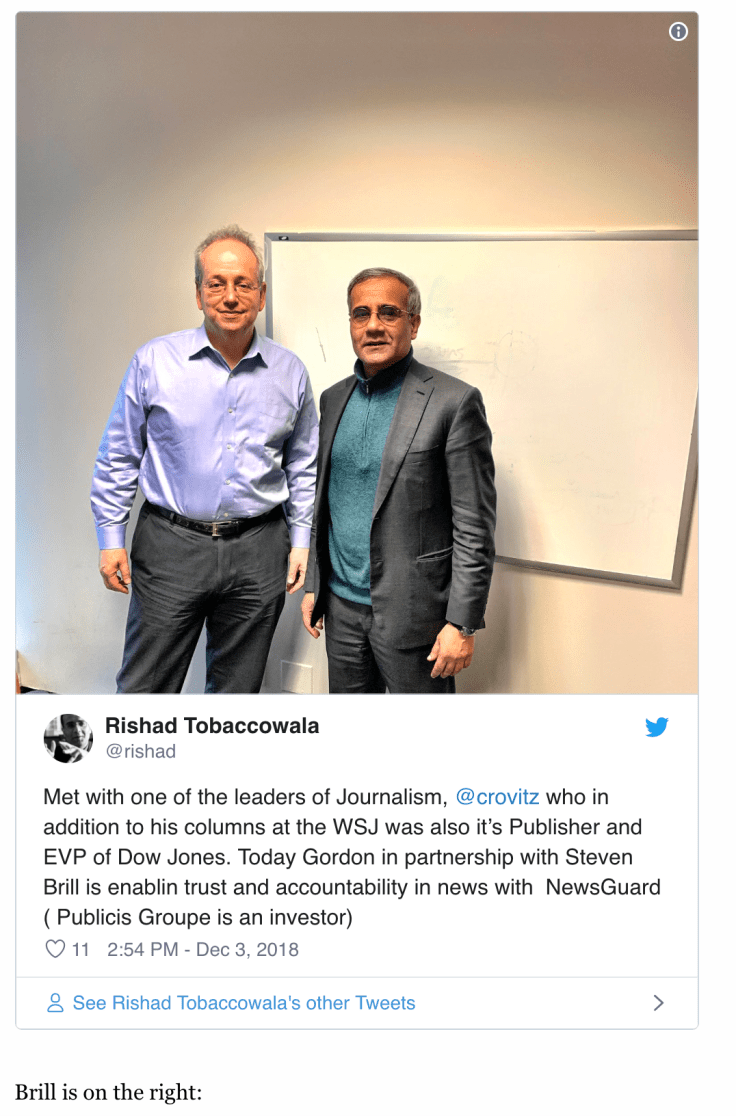
Brill himself is a veteran centrist journalist and author, his co-CEO Gordon Crovitz is a former Wall Street Journal columnist. After Brill, its second-biggest investor, along with his father, is Nick Penniman, the liberal publisher, and the third-biggest is Publicis Group, a multinational advertising agency.

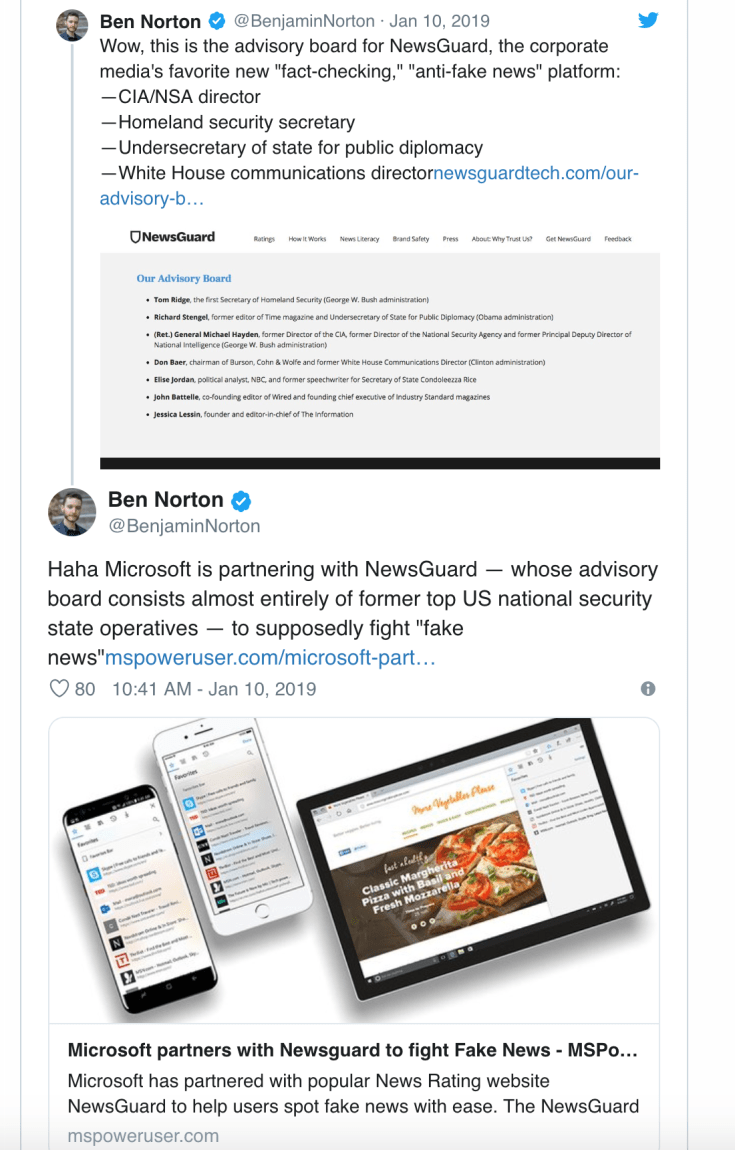
Meanwhile, its advisory board includes Tom Ridge, the first-ever Homeland Security chief, and developer of another famous color-coded system, the terror alert, and Michael Hayden, the CIA director, also under George W. Bush. There are also several Obama and Clinton-era figures.

cap

The overall picture emerges of a mix of establishment journalists, hawkish old-school Washington insiders, and so-called ethical businessmen.

They may all be experts in their fields, but if you believe that these are selfless neutral adjudicators you are probably beyond being helped by color charts. And this is not some one-off initiative either: NewsGuard is part of Microsoft’s Defending Democracy program, which combats purported election meddling, presumably primarily from Russia. The frontline of the information war is not customarily the place for impartial news judgment.

But I wasn’t an Edge user…

However much respectability NewsGuard enjoys through Microsoft, Edge has a laughably small – a fraction of a percent – market share on mobiles. In practical terms, even an increase of popularity of several thousand percent will only mean several thousand new users, and other browsers are available.

This would be that, if not for newsGuard’s self-proclaimed ambition “to expand to serve the billions of people globally who get news online.” This is just a beginning: there is an overarching plan where all public computers, from the school to the university to the library, are automatically equipped with the same “safe browsing” system.

And rather than as an individual warning, NewsGuard plans to make its designations work as an effective financial tool. The company, which has received $6 million in backing, also plans to soon work with advertisers, “keeping ads off unreliable news websites” to ensure “brand safety.” Fall foul of the green ticks, no money for you. Advertising managers are already demonetizing programs with alternative or controversial viewpoints elsewhere, and soon the process can be automated, and Brill is boasting that he is “happy to be blamed – doing the dirty work for the platforms. No wonder alternative outlets in the US are openly opposed.

So, just like the use of NewsGuard in all public libraries in the faraway state of Hawaii (no money charged), it is best to look at the Edge integration is more of a test, a pilot project, a dry run. Latching NewsGuard onto a popular browser like Chrome, or a social network like Facebook, would stir tremors of public debate, as it has done in the past when similar initiatives have been tried. Instead, first they came for the Edge users.

Microsoft Partners With Neocon-Backed ‘Fact Checker’ Seeking To ‘Wage War On Independent Media’

by Chris Menahan

Microsoft has partnered with a shoddy Neocon-backed “fact checker” called NewsGuard which rates websites’ “credibility” in-browser and NewsGuard’s CEO says their goal is to have their software on all smartphones and computers by default. 

From MintPressNews:

How a NeoCon-Backed “Fact Checker” Plans to Wage War on Independent Media

As Newsguard’s project advances, it will soon become almost impossible to avoid this neocon-approved news site’s ranking systems on any technological device sold in the United States.
by Whitney Webb
January 09th, 2019

Soon after the social media “purge” of independent media sites and pages this past October, a top neoconservative insider — Jamie Fly — was caught stating that the mass deletion of anti-establishment and anti-war pages on Facebook and Twitter was “just the beginning” of a concerted effort by the U.S. government and powerful corporations to silence online dissent within the United States and beyond.

While a few, relatively uneventful months in the online news sphere have come and gone since Fly made this ominous warning, it appears that the neoconservatives and other standard bearers of the military-industrial complex and the U.S. oligarchy are now poised to let loose their latest digital offensive against independent media outlets that seek to expose wrongdoing in both the private and public sectors.

As MintPress News Editor-in-Chief Mnar Muhawesh recently wrote, MintPress was informed that it was under review by an organization called Newsguard Technologies, which described itself to MintPress as simply a “news rating agency” and asked Muhawesh to comment on a series of allegations, several of which were blatantly untrue. However, further examination of this organization reveals that it is funded by and deeply connected to the U.S. government, neo-conservatives, and powerful monied interests, all of whom have been working overtime since the 2016 election to silence dissent to American forever-wars and corporate-led oligarchy.

More troubling still, Newsguard — by virtue of its deep connections to government and Silicon Valley — is lobbying to have its rankings of news sites installed by default on computers in U.S. public libraries, schools, and universities as well as on all smartphones and computers sold in the United States.

In other words, as Newsguard’s project advances, it will soon become almost impossible to avoid this neocon-approved news site’s ranking systems on any technological device sold in the United States. Worse still, if its efforts to quash dissenting voices in the U.S. are successful, Newsguard promises that its next move will be to take its system global.

Red light, green light . . .

Newsguard has received considerable attention in the mainstream media of late, having been the subject of a slew of articles in the Washington Post, the Hill, the Boston Globe, Politico, Bloomberg, Wired, and many others just over the past few months. Those articles portray Newsguard as using “old-school journalism” to fight “fake news” through its reliance on nine criteria allegedly intended to separate the wheat from the chaff when it comes to online news.

Newsguard separates sites it deems worthy and sites it considers unreliable by using a color-coded rating — green, yellow, or red — and more detailed “nutrition labels” regarding a site’s credibility or lack thereof. Rankings are created by Newsguard’s team of “trained analysts.” The color-coding system may remind some readers of the color-coded terror threat-level warning system that was created after 9/11, making it worth noting that Tom Ridge, the former secretary of Homeland Security who oversaw the implementation of that system under George W. Bush, is on Newsguard’s advisory board.

As Newsguard releases a new rating of a site, that rating automatically spreads to all computers that have installed its news ranking browser plug-in. That plug-in is currently available for free for the most commonly used internet browsers. NewsGuard directly markets the browser plug-in to libraries, schools and internet users in general.

According to its website, Newsguard has rated more than 2,000 news and information sites. However, it plans to take its ranking efforts much farther by eventually reviewing “the 7,500 most-read news and information websites in the U.S.—about 98 percent of news and information people read and share online” in the United States in English.

[…]

According to local media, Newsguard “now works with library systems representing public libraries across the country, and is also partnering with middle schools, high schools, universities, and educational organizations to support their news literacy efforts,” suggesting that these Newsguard services targeting libraries and schools are soon to become a compulsory component of the American library and education system, despite Newsguard’s glaring conflicts of interest with massive multinational corporations and powerful government power-brokers.

Notably, Newsguard has a powerful partner that has allowed it to start finding its way into public library and school computers throughout the country. As part of its new “Defending Democracy” initiative, Microsoft announced last August that it would be partnering with Newsguard to actively market the company’s ranking app and other services to libraries and schools throughout the country. Microsoft’s press release regarding the partnership states that Newsguard “will empower voters by providing them with high-quality information about the integrity and transparency of online news sites.”

Since then, Microsoft has now added the Newsguard app as a built-in feature of Microsoft Edge, its browser for iOS and Android mobile devices, and is unlikely to stop there. Indeed, as a recent report in favor of Microsoft’s partnership with Newsguard noted, “we could hope that this new partnership will allow Microsoft to add NewsGuard to Edge on Windows 10 [operating system for computers] as well.”

Newsguard, for its part, seems confident that its app will soon be added by default to all mobile devices. On its website, the organization notes that “NewsGuard will be available on mobile devices when the digital platforms such as social media sites and search engines or mobile operating systems add our ratings and Nutrition Labels directly.” This shows that Newsguard isn’t expecting its rating systems to be offered as a downloadable application for mobile devices but something that social media sites like Facebook, search engines like Google, and mobile device operating systems that are dominated by Apple and Google will “directly” integrate into nearly every smartphone and tablet sold in the United States.

A Boston Globe article on Newsguard from this past October makes this plan even more clear. The Globe wrote at the time:
Microsoft has already agreed to make NewsGuard a built-in feature in future products, and [Newsguard co-CEO] Brill said he’s in talks with other online titans. The goal is to have NewsGuard running by default on our computers and phones whenever we scan the Web for news.”
This eventuality is made all the more likely given the fact that, in addition to Microsoft, Newsguard is also closely connected to Google, as Google has been a partner of the Publicis Groupe since 2014, when the two massive companies joined Condé Nast to create a new marketing service called La Maison that is “focused on producing engaging content for marketers in the luxury space.” Given Google’s power in the digital sphere as the dominant search engine, the creator of the Android mobile operating system, and the owner of YouTube, its partnership with Publicis means that Newsguard’s rating system will soon see itself being promoted by yet another of Silicon Valley’s most powerful companies.

Furthermore, there is an effort underway to integrate Newsguard into social media sites like Facebook and Twitter. Indeed, as Newsguard was launched, co-CEO Brill stated that he planned to sell the company’s ratings of news sites to Facebook and Twitter. Last March, Brill told CNN that “We’re asking them [Facebook, Twitter, Microsoft and Google] to pay a fraction of what they pay their P.R. people and their lobbyists to talk about the problem.”

[…]

Notably, Newsguard has a powerful partner that has allowed it to start finding its way into public library and school computers throughout the country. As part of its new “Defending Democracy” initiative, Microsoft announced last August that it would be partnering with Newsguard to actively market the company’s ranking app and other services to libraries and schools throughout the country. Microsoft’s press release regarding the partnership states that Newsguard “will empower voters by providing them with high-quality information about the integrity and transparency of online news sites.”

Since then, Microsoft has now added the Newsguard app as a built-in feature of Microsoft Edge, its browser for iOS and Android mobile devices, and is unlikely to stop there. Indeed, as a recent report in favor of Microsoft’s partnership with Newsguard noted, “we could hope that this new partnership will allow Microsoft to add NewsGuard to Edge on Windows 10 [operating system for computers] as well.”

Newsguard, for its part, seems confident that its app will soon be added by default to all mobile devices. On its website, the organization notes that “NewsGuard will be available on mobile devices when the digital platforms such as social media sites and search engines or mobile operating systems add our ratings and Nutrition Labels directly.” This shows that Newsguard isn’t expecting its rating systems to be offered as a downloadable application for mobile devices but something that social media sites like Facebook, search engines like Google, and mobile device operating systems that are dominated by Apple and Google will “directly” integrate into nearly every smartphone and tablet sold in the United States.

A Boston Globe article on Newsguard from this past October makes this plan even more clear. The Globe wrote at the time:
Microsoft has already agreed to make NewsGuard a built-in feature in future products, and [Newsguard co-CEO] Brill said he’s in talks with other online titans. The goal is to have NewsGuard running by default on our computers and phones whenever we scan the Web for news.”
This eventuality is made all the more likely given the fact that, in addition to Microsoft, Newsguard is also closely connected to Google, as Google has been a partner of the Publicis Groupe since 2014, when the two massive companies joined Conde Nast to create a new marketing service called La Maison that is “focused on producing engaging content for marketers in the luxury space.” Given Google’s power in the digital sphere as the dominant search engine, the creator of the Android mobile operating system, and the owner of YouTube, its partnership with Publicis means that Newsguard’s rating system will soon see itself being promoted by yet another of Silicon Valley’s most powerful companies.

Furthermore, there is an effort underway to integrate Newsguard into social media sites like Facebook and Twitter. Indeed, as Newsguard was launched, co-CEO Brill stated that he planned to sell the company’s ratings of news sites to Facebook and Twitter. Last March, Brill told CNN that “We’re asking them [Facebook, Twitter, Microsoft and Google] to pay a fraction of what they pay their P.R. people and their lobbyists to talk about the problem.”

[…]

Financial censorship

Another Newsguard service shows that this organization is also seeking to harm independent media financially by targeting online revenue. Through a service called “Brandguard,” which it describes as a “brand safety tool aimed at helping advertisers keep their brands off of unreliable news and information sites while giving them the assurance they need to support thousands of Green-rated [i.e., Newsguard-approved] news and information sites, big and small.”

At the time the service was announced last November, Newsguard co-CEO Brill stated that the company was “in discussions with the ad tech firms, leading agencies, and major advertisers” eager to adopt a blacklist of news sites deemed “unreliable” by Newsguard. This is unsurprising given the leading role of the Publicis Groupe, one of the world’s largest advertising and PR firms, has in funding Newsguard. As a consequence, it seems likely that many, if not all, of Publicis’ client companies will choose to adopt this blacklist to help crush many of the news sites that are unafraid to hold them accountable.

It is also important to note here that Google’s connection to Publicis and thus Newsguard could spell trouble for independent news pages that rely on Google Adsense for some or all of their ad-based revenue. Google Adsense has long been targeting sites like MintPress by demonetizing articles for information or photographs it deemed controversial, including demonetizing one article for including a photo showing U.S. soldiers involved in torturing Iraqi detainees at the infamous Abu Ghraib prison.

Since then, Google — a U.S. military contractor — has repeatedly tried to shutter ad access to MintPress articles that involve reporting that is critical of U.S. empire and military expansion. One article that has been repeatedly flagged by Google details how many African-Americans have questioned whether the Women’s March has aided or harmed the advancement of African-Americans in the United States. Google has repeatedly claimed that the article, which was written by African-American author and former Washington Post bureau chief Jon Jeter, contains “dangerous content.”

Given Google’s already established practice of targeting factual reporting it deemed controversial through Adsense, Brandguard will likely offer the tech giant just the excuse it needs to cut off sites like MintPress, and other pages equally critical of empire, altogether.
Read their full report.
screen shot 2019-01-14 at 3.08.56 pm

screen shot 2019-01-14 at 3.10.02 pm

screen shot 2019-01-14 at 3.10.49 pm

This has been a dream of the establishment for over a decade.

One of these NewsGuard “journalists” contacted yours truly with a review of Information Liberation that was so shoddy I didn’t even bother to respond as almost everything he said was wrong and his reading comprehension was terrible.

I figured it’s a waste of time to respond as I would be doing the reporter’s job for him by correcting him and I would only be improving his shoddy work.

It’s blatantly obvious their goal is not to create an honest assessment of any of our websites but instead to compile whatever slander they can throw together to suit their pre-ordained narrative.

JihadWatch’s Robert Spencer has also written an excellent article exposing NewsGuard titled, “Steven Brill’s NewsGuard and the ‘fact-checking’ scam.”

Just look at the guys behind this:
screen shot 2019-01-14 at 3.12.47 pm

screen shot 2019-01-14 at 3.13.53 pm

Would you trust those men to walk your dog?

The reason no one ever bothered implementing any scheme like this is because it’s so obviously a fraud and an affront to people’s intelligence that it is more likely to have the opposite effect — negative rated sites are going to be viewed as more credible as evidenced by the fact they’re being slandered by these establishment hacks.
Blog at WordPress.com.

Up ↑