1/27/2020
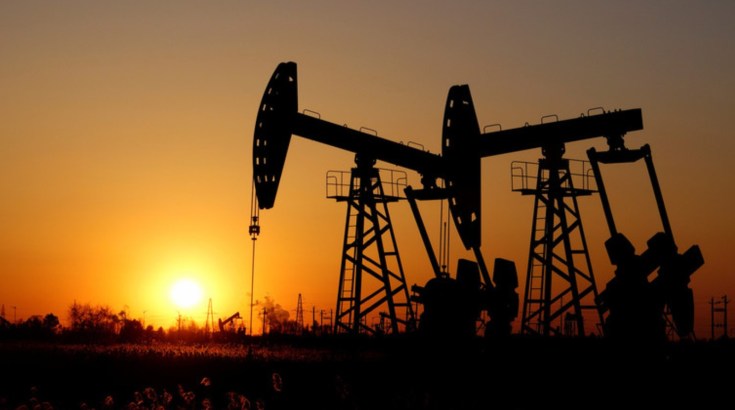
International benchmark Brent crude was down 2.95 percent to $58.90 a barrel, after hitting $58.68 earlier, the lowest level since late October. US West Texas Intermediate crude nosedived more than three percent to $55.52, after falling to a four-month low of $52.1 a barrel.
The coronavirus could cut into demand by around 260,000 bpd and reduce oil prices by about $3 per barrel, according to a report from Goldman Sachs.
Why the coronavirus is a real threat to China’s economy
Saudi Arabia’s minister of energy Prince Abdulaziz bin Salman said OPEC will be closely monitoring developments in global oil markets amid “gloomy expectations” of the outbreak’s impact on the Chinese and global economy.
“Such extreme pessimism occurred back in 2003 during the Sars outbreak, though it did not cause a significant reduction in oil demand,” he said.
The coronavirus, was identified in December and was linked primarily to stallholders who worked at Wuhan’s Hunan Seafood Market in China, has already killed 80 people and infected nearly 2,800 worldwide. The virus has spread to South Korea, Japan, Thailand, Vietnam, and the United States, among other places. On Friday, the CDC confirmed the second case in the US.

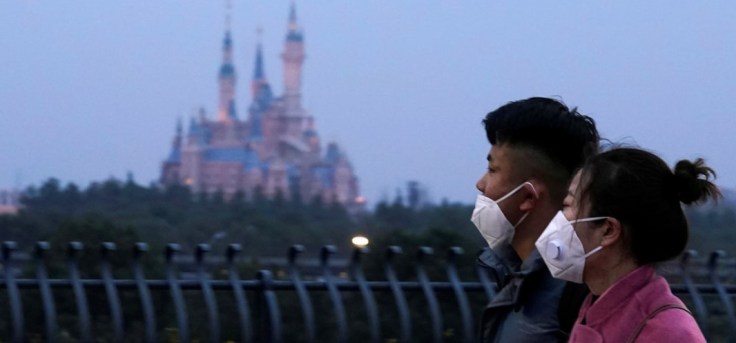
Oil prices are also down due to flight disruptions during one of China’s busiest travel seasons — the Lunar New Year holiday. Chinese authorites have put on lockdown cities in Hubei province, including Wuhan, believed to be the epicenter of the outbreak, affecting millions of travelers.
China has announced an extension of its Lunar New Year holiday through February 2 and suspended sales of package tours to help battle the spread of the disease.

JANUARY 26, 2020
They determined that he had no links to a shady seafood market selling live snakes and bats for human consumption.
The development comes despite practically all of the western media reports from the city of Wuhan having claimed that the city’s hospitals have been completely overwhelmed by cases of pneumonia as more cases of the Wuhan coronavirus are confirmed.
Amazingly, SCMP caveated its report by claiming that other patients among the earliest cases had “continuous exposure to the market,” which was shut down on Jan. 1 by Wuhan authorities over fears that its trade in wild animals was linked to the viral outbreak. Authorities have since banned the selling of live animals at markets.
The researchers, seven of whom work at Wuhan’s Jinyintan hospital, designated for patients with the illness, revealed on Friday in The Lancet medical journal that symptoms of the new disease were first reported on December 1 – much earlier than the Wuhan government’s initial announcement on December 31 of 27 cases of the pneumonia-like infection.
According to the report, the first patient had no exposure to the Huanan seafood market which was shut down on January 1 over fears – later confirmed – that the new virus was linked to its trade in wild animals. The researchers added that none of the patient’s family had developed fever or any respiratory symptoms. There was also no epidemiological link between the first patient and the later cases, they found.
The researchers analysed data from 41 patients with confirmed infections who had showed an onset of symptoms up to January 2. Six of those patients died, putting the fatality rate of the group at 15 per cent. The researchers noted that clinical presentations of the patients greatly resembled severe acute respiratory syndrome.
The first patient to die from the new coronavirus had continuous exposure to the market before he was admitted to hospital with a seven-day history of fever, cough and breathing difficulties, according to their report.
Doctors also identified 13 other patients who had no contact with the market, which helps build the case for human to human transmission.
The absence of a link to the seafood market is one of the indicators for human-to-human transmission of the virus and the researchers identified another 13 patients who also had no direct exposure to the market.
“Taken together, evidence so far indicates human transmission for 2019-nCoV,” the report said. “We are concerned that 2019-nCoV could have acquired the ability for efficient human transmission,” the researchers added, along with a strong recommendation for precautions such as fit-tested N95 respirators and other personal protective equipment.
Much to Beijing’s chagrin, a team of Chinese scientists on Friday revealed that symptoms of the virus first emerged as early as Dec. 1, much earlier than the Wuhan government’s initial announcement of the first 27 cases on Dec. 31. The notion that the virus may have been transmitted to humans via consuming bats, rats, badgers or snakes was widely reported in the Western press, even by CNN.
Though the possibility of zoonotic transmission hasn’t been entirely ruled out, these researchers apparently believed that there’s reason to doubt that the fish market was the source of the virus. However, the situation is still very much in flux, and it remains true that some of the other patients did have contact with the market.
Either way, do the researchers findings lend more credence to the other conspiracy theory about the virus’s origin? Wuhan reportedly has two labs that participate in China’s bio-warfare program, as Radio Free Asia first reported, and a handful of US outlets, including the Washington Times, have picked up the story.

“The virus’ transmission ability has become stronger,” National Health Commission Minister Ma Xiaowei said at a press briefing on Sunday.
Ma said that the previously-unknown coronavirus, which has already killed 56 people in China, is spreading faster, while the outbreak is entering a “more serious and complicated phase.”
The official noted that the government’s knowledge of the new virus remains limited and they remain puzzled about the risks posed by its mutations. Beijing will dispatch additional teams of medics to assist patients and study the virus, he added.
Chinese Center for Disease Control and Prevention head Fu Gao said that there were no signs of clear mutation of the virus so far, but further surveillance is needed.
Local media has reported about the shortage of basic protective gear, like goggles and masks, in Wuhan, the capital of the central Hubei Province, which has been hit hardest by the outbreak. Vice Minister of Industry and Information Technology Wang Jiangping said that Hubei needs about 100,000 protective medical suits per day but the factories across the country are making only 30,000 of them daily.
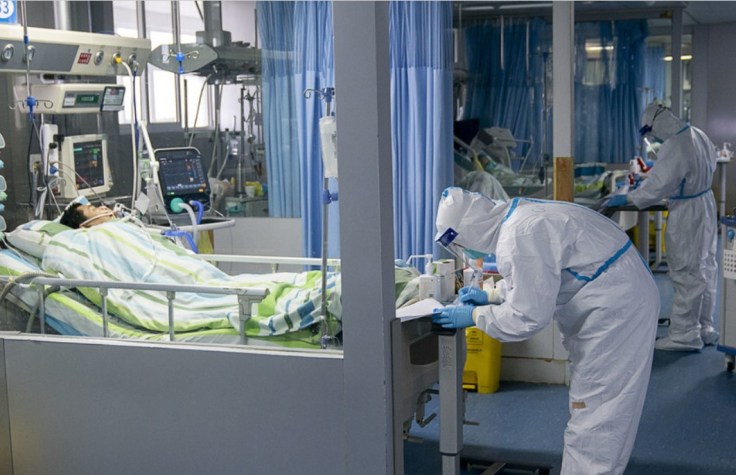
The authorities have ordered an increase in production and have diverted millions of masks, along with scores of hazmat suits, gloves and goggles, to Wuhan. The local office of the Red Cross has set up a 24-hour hotline for accepting donations of equipment. E-commerce giant Alibaba, laptop-maker Lenovo, and the world’s largest gaming company Tencent have all pledged to donate large sums of money to purchase medical supplies.
Wuhan and nine other major cities in Hubei were partially quarantined in an effort to contain the outbreak. Ma said that the week-long Lunar New Year vacation provides the best window for the “isolation and disinfection” of the area.
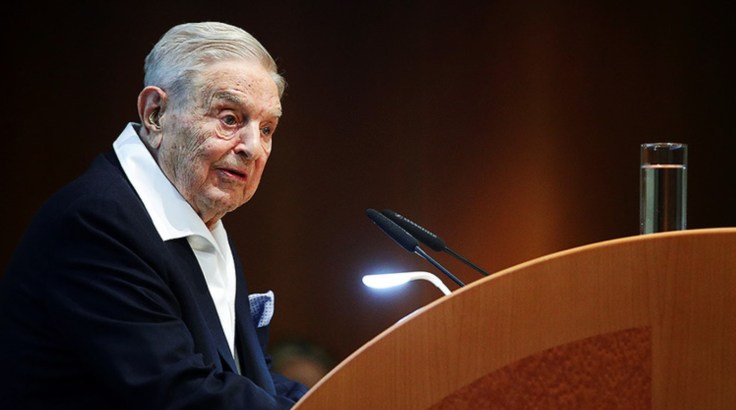
The 89-year-old grey eminence of liberal globalism announced “the most important project of my life” on Thursday at the World Economic Forum in Davos, Switzerland. Describing the current state of the world as dire, with the strongest powers “in the hands of would-be or actual dictators,” Soros said he would put forth $1 billion towards the creation of the Open Society University Network, revolving around his own Central European University (CEU).

Soros revealed that the CEU has already partnered up with Bard College in the US and a network of European social science schools called CIVICA, which includes the London School of Economics and the Paris Institute of Political Studies, also known as Sciences Po. He is seeking to expand the network into something “truly global” in the coming years.
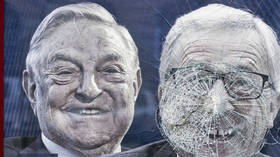
The announcement came as part of Soros’ meandering speech to the gathering of global elites, which painted a dire picture of the world in the hands of “would-be or actual dictators” – he singled out Trump, Chinese President Xi Jinping and India’s Narendra Modi by name – and paragons of “open society” such as the European Union being defeated by the UK decision to vote in a pro-Brexit government.
Soros described Trump as a “con man and the ultimate narcissist who wants the world to revolve around him,” accusing the US leader of wanting to “impose his alternative reality not only on his followers but on reality itself.” Just moments later, however, he praised Trump’s hard-line China policy and lamented that it does not go far enough.
The Hungarian-born billionaire held up climate change as a possible rallying cry of the “open society” adherents. He also praised the student-led protests in Hong Kong, holding them up as an example of what young people around the world can do when properly motivated.
This was the lead-in to his university project reveal, through which Soros hopes to unite all “academically excellent but politically endangered scholars” across the globe, whatever that means.
Continuing his crusade against social media, which he also launched in Davos two years ago, Soros slammed Facebook as having “a kind of informal mutual assistance operation” with Trump.
“Facebook will work together to re-elect Trump, and Trump will work to protect Facebook so that this situation cannot be changed and it makes me very concerned about the outcome for 2020,” he said, according to Bloomberg.
“This is just plain wrong,” Facebook spokesman Andy Stone said when asked about Soros’ comments, for which the ‘Open Society’ magnate did not offer any evidence. Soros has previously funded Facebook’s third-party “fact checker” programs officially designed to “defend democracy.”
While claiming to champion democracy and “open society,” Soros has used massive amounts of money to influence national and local politics in the US, giving $5 million so far to the Democrats’ 2020 efforts to unseat Trump but also bankrolling local prosecutors with radical agendas.
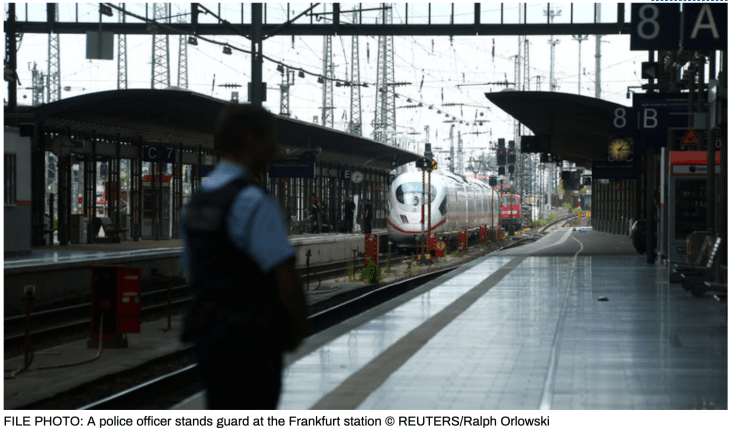
“I will do everything in order to put intelligent controls in place on the border,” Horst Seehofer told Spiegel magazine in a follow-up to the harrowing incident at Frankfurt station, in which a 40-year-old Eritrean man assaulted an eight-year-old boy and his mother.
The immigrant, believed to have lived in Switzerland since 2006, pushed the pair onto the tracks seconds before a high-speed train, the Intercity Express, arrived.
The mother managed to roll out of harm’s way but her child was killed. The attacker then attempted to flee the station but was pursued by a group of passengers and was eventually apprehended by police outside the Frankfurt terminal.
READ MORE: Foreigner pushes 8yo boy in front of train in Germany, reigniting migration debate
Now, Seehofer wants to introduce “occasional, temporary checks at the border with Switzerland” to screen foreigners. Both Germany and Switzerland are in the visa-free Schengen area, but travelers crossing their border aren’t subjected to any controls.
The issue needs to be dealt with immediately, Seehofer warned, mentioning that a total of 43,000 unauthorized arrivals had been registered in Germany last year. The conservative politician was once at odds with Angela Merkel over imposing limits on incoming immigrants, but this time the Chancellor “is fully on my side on the issues of security.”
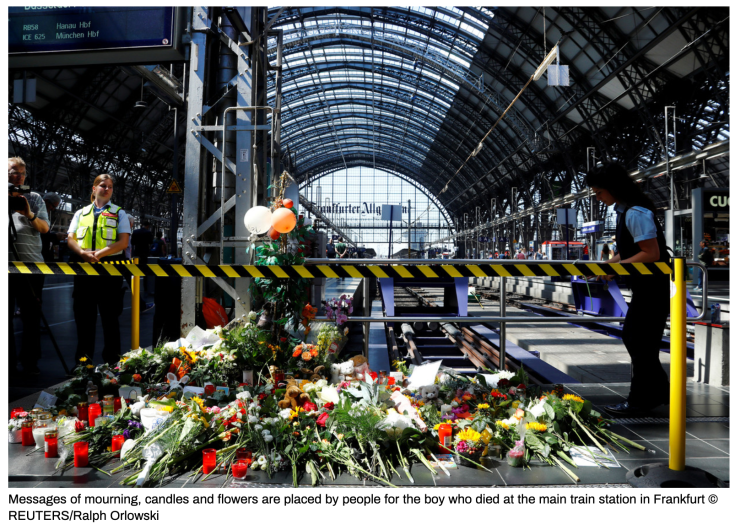
Border checks aside, Seehofer also urges ramping up security at railway stations. He didn’t expand on that but said it could involve installing safety barriers or locks on the platforms – similar to those already in use in London and Paris. Such countermeasures could potentially cost billions of Euros, the minister acknowledged
The Frankfurt tragedy re-ignited a heated migration debate that reached its climax back in 2015 and 2016, when Germany opened its borders to hundreds of thousands of asylum seekers – mostly from the Middle East and Africa. The heavy influx of migrants saw the crime rate going up and also led to the resurgence of the far-right extremists ready to use violence against foreigners and “pro-refugee” politicians.

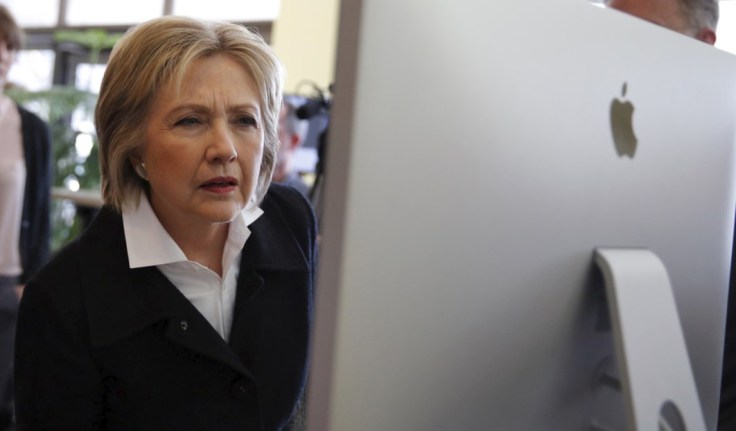
She might make grandma jokes about “wiping” her server with a cloth, but as RT’s Igor Zhdanov notes, there are few people in the world so adept at deleting information, that is potentially of state importance, off a server that even the FBI had no clue about.
And she would have managed to keep multi-million-dollar-earning Wall Street speeches a secret from the world, if it were not for the dastardly Wikileaks. So, there is a cautionary tale she can tell there.
And for the encore Clinton could explain how she cracked the Kremlin’s plan to meddle in the 2016 election and swing the result to Donald Trump, and then infiltrated the media to present her as a somewhat sore loser.
https://www.rt.com/usa/460978-clinton-cyber-security-email/
 Tom's Blog