Dr. John Campbell should be the chief public educator at the WHO. What good are a thousand doctorates if you can’t explain these concepts to the layman like John can?
By Dr. John Campbell – 3/5/2020

By Peter Andrews – 3/4/2020
Initial reports of a possible canine case of coronavirus began to emerge from Hong Kong last week, and at that point it was announced that the dog in question would be quarantined for a fortnight. Swab tests from the pet’s oral and nasal cavities were tested and turned up a “weak positive” for coronavirus. Thankfully, almost a week after first testing positive, the dog is reported as not yet having any symptoms.
Why the pooch was tested in the first place was not clear, although it was doubtful part of a routine medical check-up. It could be that some clinics are making sure to test all household pets of infected people so as to ensure the virus has as little mechanism to move about as possible. Alternatively, it could be that this dog is the first pet to be tested, and were others to be subjected to the same scrutiny it could transpire that more pets of infected people are also carriers of the disease.
Much of the early reportage on the outbreak focused on the seafood and wildlife market in Wuhan, which Chinese officials had declared was the likeliest source of the outbreak. That seemed to imply that the virus had an animal origin, as live poultry, fish and other critters were reportedly present at the market.
As such, the initial panicked response to the outbreak was to obsess over the potential source of the virus. Exactly what kind of animals were at this market, and were they alive and kicking, or dead to be sold as meat?
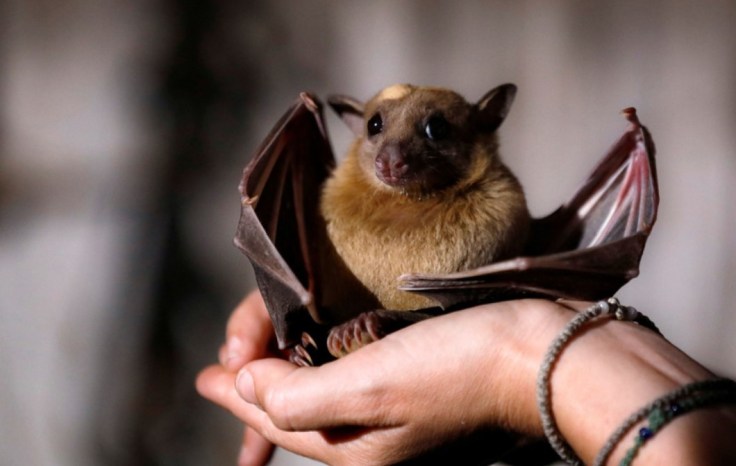
Animals as a source seemed, and still seems, a plausible view. Sars is one other virus, and closely related to 2019-nCoV, to have previously resided in beasts before making the leap to humans, and it was eventually traced back to a horseshoe bat colony in China.
And bats, of course, became the most inculpated source for the new disease. Who could forget those now-viral images and videos from Wuhan of people tucking into soup that looked like something from an HP Lovecraft novel? While it later emerged that the images were a few years old, it set people’s minds to feverishly imagining what lethal zoological combo could have spawned the plague that has now infected tens of thousands of people worldwide.
Quite early on, Chinese scientists published a genetic study claiming that snakes were the most likely animal ‘reservoir’ for Covid-19. Pangolins were also mentioned, although traditional Chinese medicine’s unique relationship with wildlife meant that, for some, practically everything was on the table.
It is important to remember that the dog in the case mentioned received the virus from its owner, and not the other way around. Commenting on the case, Hong Kong’s Agriculture, Fisheries and Conservation Department (AFCD) pointed out that it does not currently have conclusive evidence that pets can be infected “or can be a source of infection to people.”
Therefore, animal health experts say that there is absolutely no reason to hide from your pet, or to keep it indoors. You’re probably much more likely to contract the virus from another person – no matter where in the world you are.
While the dog remains under investigation, and it is not definite whether or not it has the coronavirus, it – like its owner – has been quarantined. Hopefully the dog, and its owner, make a full recovery, and the virus does not spread to more animals. But the prospect of the virus crossing the species barrier does not bode well for anyone.
By Peak Prosperity – 3/4/2020
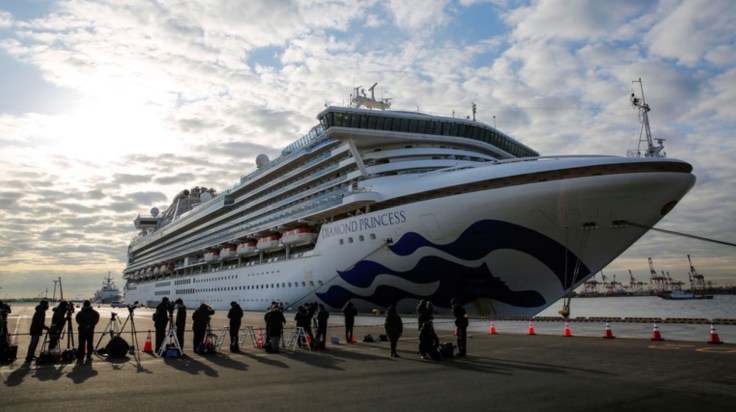
Stuck at the port of Yokohama since earlier this week, the ship’s 3,700 passengers and crew face weeks of quarantine as medical workers test for signs of the deadly contagion. The ship is now like a “floating prison,” one passenger said on social media, where haunting images have emerged showing its abandoned halls, once bustling with activity.
Of the thousands of passengers on board, 273 have shown symptoms of illness, such as cough and fever, or came in contact with those who have. All of those passengers have now been tested, Japan’s Health Ministry said, noting the 41 new patients will be transferred to medical facilities in Tokyo, Saitama, Chiba and Shizuoka prefectures, as well as Kanagawa.

It remains unclear whether additional cases could arise on the ship, as the novel coronavirus has been found to spread person-to-person, even among those not yet showing symptoms, with a long incubation period. Some passengers already expressed fear that they could eventually end up stuck on the vessel for much longer than 14 days if new infections occur.
With the number of infections on the ship tripling on Thursday as health screenings continue, Japan now counts at least 86 cases of the lethal coronavirus nationwide, which originated in the Chinese city of Wuhan in December. The illness has since spread to 25 other countries, infecting over 30,000 and claiming 635 lives in total, most of them in China.
Coronavirus kills 69 more people in China’s Hubei as total cases soar beyond 31,000
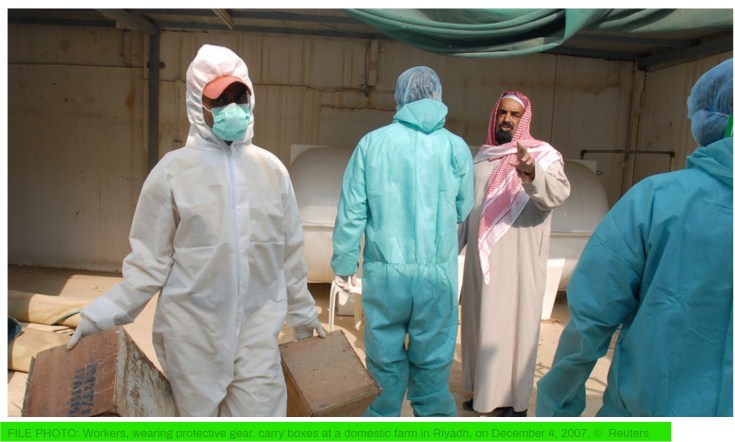
The outbreak took place in the central Sudair region, located some 150 kilometers north of the nation’s capital of Riyadh. The disease already killed more than 22,000 birds, the OIE said, citing the Saudi Agriculture Ministry. More than 385,000 birds were also slaughtered out of precaution. This is the first such outbreak since July 2018.
The H5N8 strain of the bird flu, which was detected in Saudi Arabia, was previously considered not particularly contagious for humans. Yet, it has been recently declared to have become increasingly more pathogenic.
Earlier on Tuesday, a similar alarming report about a bird flu outbreak came from Vietnam, where another highly pathogenic virus strain — H5N6 — led to the deaths of 2,200 birds in a village in the country’s north.
On February 1, China, which has already been gripped with a novel coronavirus originated from the city of Wuhan, reported that an outbreak of the deadly H5N1 bird flu virus was detected in its central Hunan province.
While it hasn’t occupied the news spotlight lately, H5N1 is said to be an even deadlier virus to those who contract it. Nearly 60 percent of H5N1 patients die after contracting the sickness, compared to two percent of Wuhan coronavirus (2019 nCoV) patients thus far.

The death toll from the previously-unknown coronavirus in China has grown to 361 on Sunday, the country’s National Health Commission said. This number exceeds the 349 fatalities from the severe acute respiratory syndrome (SARS) epidemic in mainland China in 2003.
Out of 57 newly reported deaths, 56 were in central Hubei Province, whose capital Wuhan remains the epicenter of the outbreak, and one in the city of Chongqing in China’s southwest. So far, the only death from the virus outside mainland China was registered in the Philippines.
Overall, 17,205 cases of the virus have now been registered in China since the outbreak started in late December.
During a press briefing in Beijing on Monday, Deputy Director of the National Development and Reform Commission (NDRC) Lian Weiliang announced that China will step up measures to supply Wuhan with basic goods as it remains quarantined along with several other major cities.
China’s first ‘instant’ coronavirus hospital accepting patients, second facility days from opening

Army troops stationed in Wuhan have taken over the delivery of food and basic necessities, using military trucks to stock local supermarkets. The authorities also ordered to boost the production of face masks and test kits after the Lunar New Year holidays in response to shortages in Wuhan and some other areas in Hubei.
Zhang Zhoubin, deputy head of a disease prevention center in the southeastern city of Guangzhou, said coronavirus was “found” on the door handle at a patient’s home. “This reminds me that we have to do well in keeping hygiene at home, and it is important to frequently wash our hands,” he said. Zhang warned that other areas prone to contamination include mobile phones, keyboards, and faucet handles.
Meanwhile, biotech companies in Wuhan have been conducting experiments on rats and monkeys, in hope of developing vaccines. The scientists identified three drugs “effective” in slowing down the spread of the virus in the cell structure, however, they have not been tested on humans yet, Wang Wei, director of Hubei’s Science and Technology Department, said.
China’s first ‘instant’ coronavirus hospital accepting patients, second facility days from opening

The small consolation is that its ratings have plummeted in direct proportion to its fake news agenda. Unless trapped in a hotel room in Ulan Bator and having already read the Gideon’s Bible, nobody in their right mind goes looking for CNN.
However, other media do, of course, amplify their prevailing narrative. This is that the Democratic Party didn’t lose because they chose the only person in America who could possibly lose to Donald Trump, but because a bearded man with snow on his boots smelling of vodka and speaking with a thick Russian accent fooled everyone into voting for the GOP. And where no such man can be identified, then a Western cipher can be demonized as his proxy.

So unhinged has CNN – the last hold-out of the Russiagaters – become that they have now piled new levels of ordure on the political prisoner Julian Assange in a much touted “Special,” heaping speculation upon speculation on what they hope is the coffin of a man they once lionized.
Because, dear readers, in a now-forgotten coincidence, it was CNN that in a way brought Julian Assange into the public limelight. They interviewed him a number of times, including once in 2010, when they sent their team to showcase the then-pale-blonde ascetic wonderkid of the whistleblowing business. That was way before RT had aired Assange’s show ‘The World Tomorrow’ – because that suited CNN’s agenda then, in the way that burying him does now.
Full disclosure: Julian Assange is a friend of mine and so opportunists seeking his crucifixion to serve an anti-Trump agenda cut no ice with me. Furthermore, I work for RT, and know personally the fine broadcasting professionals traduced in a disgraceful way by the CNN “Special.”
Julian Assange was hiding in plain sight by having his own show on RT. That’s how espionage works nowadays in the fevered minds of CNN. And he appeared on news shows throughout the world – any one of which could have “passed him a USB drive” when they went into the Ecuador Embassy to film him. He even appeared on my show on TalkRadio, whose proprietor could of course be a (deep) undercover Russian agent.
The fatal flaw in all of this, of course, is that the DNC computers were never hacked in the first place, not by a “master-hacker” or even a schoolboy in his bedroom. That’s why their servers were never examined by the FBI, Mueller or anybody else wearing any kind of official badge.

The scandalous behavior – including CNN’s own (now Fox) contributor Donna Brazile – through which the Democratic Party rigged their own Primary process to defeat Bernie Sanders and procure the coronation of the aforementioned Mrs Clinton was not hacked but leaked. Not by Russians but by Americans. Not by RT but by Democratic Party insiders, disgusted as they should have been at the shameless Tammany Hall shenanigans going on in their party.
The real target of fading, failing, flailing CNN was not Julian Assange but Donald Trump. His administration is currently trying to incarcerate Assange in the gulags of the US injustice system for the crime of publishing the truth. That’s the real scandal.
 Tom's Blog