CHINA CURBS TRAVEL TO HONG KONG AS PROJECTIONS SHOW 300,000 MIGHT ALREADY BE INFECTED

China Curbs Travel To Hong Kong As Projections Show 300,000 Might Already Be Infected

Top health officials share grim statistics

Zero Hedge – JANUARY 28, 2020

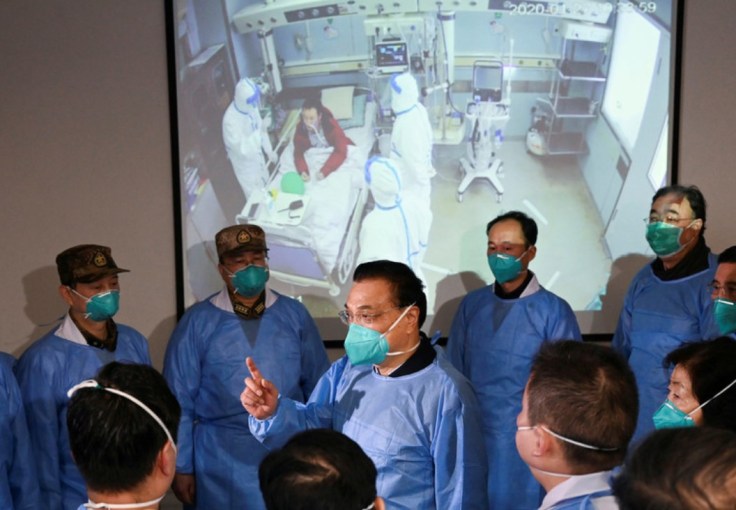
On Tuesday morning, China’s top health officials shared some grim statistics essentially confirming that the novel coronavirus believed to have emerged from a shady food market in Wuhan is on track to confirm some of the more dire projections shared by epidemiologists.

As we reported late yesterday, the death toll in China has soared past 100 while the number of confirmed cases doubled overnight. Health officials around the world have confirmed more than 4,500 cases, more than triple the number from Friday. All but a few of the deaths recorded so far have been in Wuhan or the surrounding Hubei province, per the SCMP.

Panic has swept across the region as border closures appear to be the overarching theme of Tuesday’s sessions. Even North Korea, which relies on China for 90% of its foreign trade, has closed the border with its patron. More than 50 million remain on lockdown in Hubei, and transit restrictions have been imposed by cities and regions around the country.
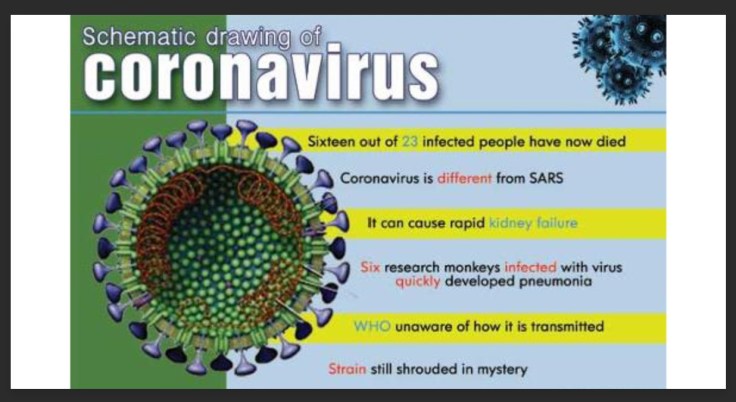
CORONA

An ‘extension’ of the Lunar New Year holiday is threatening GDP growth, as economists try to size up the knock-on potential impact on the global economy. The virus has now spread across China and another 17 countries/autonomous territories globally, according to BBG.

But the most important announcement made overnight – at least as far as global markets are concerned – was Hong Kong Chief Executive Carrie Lam’s decision to suspend high-speed rail and ferry service, while halving the number of flights between HK and the mainland.

This news helped send US stock futures higher in early trade, after health experts yesterday urged Lam to use ‘draconian’ measures to curb the spread, for fear of a repeat of the SARS epidemic, which killed some 300 people, according to the BBC.

“The flow of people between the two places needs to be drastically reduced” amid the outbreak, Ms Lam told the South China Morning Post.

China, meanwhile, said it would stop individuals from traveling to Hong Kong to try and curb the virus.

Jiao Yahui, deputy head of the NHC’s medical administration bureau, said during a press conference Tuesday that shortages of medical supplies in Wuhan were still a serious problem.

CDC has issued new travel recommendations urging people to avoid all non-essential trips. But officials remained reluctant to declare a global emergency, instead insisting that this is merely an emergency “in China”. Of course, after yesterday’s brutal pullback, that’s to be expected.

The big piece of evidence that the WHO is purportedly looking for is human-to-human transmission outside China. Zhong Nanshan, a leading expert on SARS and other communicable diseases in China, confirmed human-to-human transmission in at least one case in Wuhan and two cases in Guangdong Province.

CAP

Meanwhile, as we noted yesterday, one case of possible human-to-human transmission is being investigated in Canada, while Vietnam and Japan have now each confirmed one cases.

Japan revealed on Tuesday that a bus driver in his 60s, who recently carried passengers from Wuhan, has been found to have the virus.

During a meeting in Beijing, President Xi told World Health Organization Director-General Tedros Adhanom Ghebreyesus that the safety of the people is his government’s first priority, and that he recognizes the situation is “very serious.”

“This was supposed to be a time for rest, but because of the pneumonia outbreak caused by the novel coronavirus, the Chinese people right now are faced with a very serious battle,” Xi said. “This is something we take very seriously because in our view nothing matters more than people’s safety and health. That is why I myself have been personally deploying, planning, and guiding all the efforts related to containment and mitigation of the outbreak.”

That’s ironic, considering Beijing’s sluggish response after the first cases were discovered in December. After all, Wuhan Mayor Zhou Xianwang on Tuesday spoke out against the deluge of criticism he has faced to accuse Beijing of tying his hands. This comes after President Xi and the party tried to scapegoat him and other local party officials for the crisis.

This was supposed to be a time for rest, but because of the pneumonia outbreak caused by the novel coronavirus, the Chinese people right now are faced with a very serious battle,” Chinese President Xi Jinping tells in Beijing.

Speaking at a press briefing in Beijing on Tuesday, Jiao Yahui, deputy head of the NHC’s medical administration bureau, said shortage of medical supplies was a major constraint in China’s efforts to contain the outbreak and treat infected people.

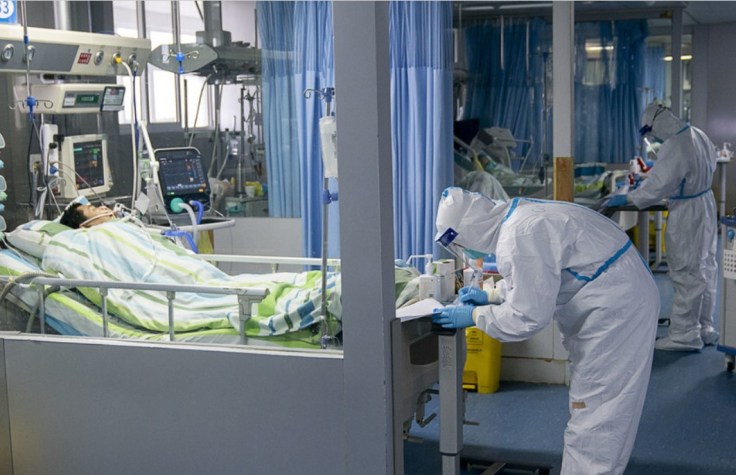
Tens of thousands of patients are under observation in China after displaying one or more symptoms of the virus. In the US, roughly 100 people are in isolation. But former FDA Commissioner Scott Gottlieb told CNBC that China is obscuring the true number of cases – a suspicion that’s widely held among American infectous-disease experts.

CAP

According to some projections, there might be up to 300,000 cases in China, and there are likely dozens of people who have died of pneumonia who in reality died from nCoV – but those deaths will never be recorded. Although China is “behaving better” than it did during the SARS outbreak, they’re still concealing information from the international community.

“They’re still not behaving well. They’re concealing information, including the spread to health care workers, which we didn’t know until last week” Gottlieb said.

China is already in a “full-blown epidemic.” The US will likely face some limited outbreaks, but Gottlieb said we have the tools to suppress the virus and prevent the same thing from happening in the US.

Jiao said China was sending about 6,000 medical personnel to Hubei from around the country – with more than 4,000 already there and 1,800 more due to arrive by Tuesday evening – to work in Wuhan and seven other cities in the province.

In Wuhan, more than 10,000 hospital beds have been made available for patients, he said, while another 100,000 are being prepared.

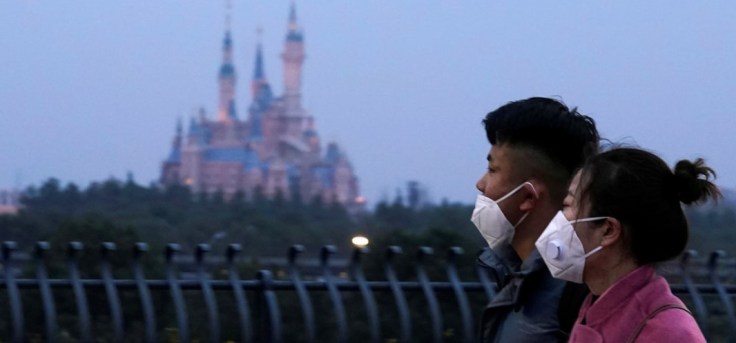
In Beijing, CNBC’s Eunice Yoon reported that the local government is strongly encouraging the wearing of facemasks in public.

Police guarding Beijing’s public transit are wearing full hazmat suits, and anybody hoping to board a train must be wearing a mask, and must submit to a temperature check via infrared thermometer. If an individual is found to have a fever, they’re sent to a hospital to be quarantined.

As Beijing tries to telegraph to the world that it has the situation under control, health experts have raised new questions about the government’s response. One infectious disease specialist told the NYT that they were skeptical about the Wuhan quarantine’s ability contain the virus (unsurprising considering that 5 million left the city before the lockdown began).

Beijing and Guangzhou, a port city northwest of Hong Kong, have broken ground on new hospitals, mimicking the speedy construction of not one but two new hospitals in Wuhan to treat patients infected with the virus.

Beijing is also reopening a hospital used to fight the SARS outbreak in 2003, while 6,000 medical staff have been sent to Hubei.

“At this stage of the outbreak, the things that make the most difference are finding people, diagnosing people, and getting them isolated,” said Dr. Tom Inglesby, an infectious diseases specialist and director of the Johns Hopkins Center for Health Security.

“If you isolate the city, then my question and my concern is that you’re making it harder in a number of ways to do those things you need to do,” including ferrying critical supplies and ensuring that infected victims receive adequate treatment.


 

PHOTO OF ‘CORONAVIRUS HOSPITAL’ POSTED BY CHINESE STATE NEWSPAPER IS ACTUALLY ALIBABA STOCK PHOTO

CAP

The images have been available on the internet months prior to the tweet by Global Times celebrating a new “hospital.”

National File – JANUARY 28, 2020

Chinese state-run newspaper the Global Times posted an image of a purported “novel coronavirus hospital” called Huoshenshan Hospital on Twitter Monday.

1st building of #Wuhan‘s special novel #Coronavirus hospital, Huoshenshan Hospital, completed construction on Monday, in 16 hours,” the tweet read. “It is expected to be transferred to the military for management on February 2. Another Leishenshan Hospital is also under construction.”

The tweet was quickly scrutinized by people who noticed that the image of Huoshenshan Hospital provided by Global Times is actually an Alibaba stock photo for a portable “container school building.”

The images have been available on the internet months prior to the tweet by Global Times celebrating a new “hospital.”

CAP

The Container School Building is a product produced by K-Home, a company based in Hongqi District, Xinxiang, China.

The description for the Container School Building reads as follows:

KHOME have focus on design and manufacture Portable Container School,Classroom,School Student Accommodation, Student Canteen,Library,Teacher administration building,Meeting room building, teacher office building etc. for more than 15 years.

Portable Container Structure can make all material in flat pack and install the school builing very fast on site. The whole project can finish without any other material again. We are supplling the one stop solution. From school design, windows, doors,ceiling, furnitures, toilet, floor. lights, everything have been included at the begining . You can control your budget very well at the begining .

Short time delivery and installation not only save money, most important save time for you. In many developing country in Africa. This kind of house is most prefered one to solve the demand for fast build schools. Some time we can not wait one second if we want to make the school now, right?

Global Times, the newspaper that posted the image, is a daily tabloid newspaper run by the Chinese Communist Party’s People’s Daily newspaper, providing a Chinese nationalist perspective on international issues.

As National File reported earlier today, the emergency coronavirus hospitals actually being built in China more closely resemble trailer units, with barred steel windows and doors with locks on the outside:

A video posted to Twitter by a Chinese government official shows the construction of metal trailers with bars on the windows and locks on the outside of the doors.
The video was posted by Lijian Zhao, Deputy Director General of the Information Department, Chinese Ministry of Foreign Affairs.

“We are racing against time,” Zhao said. “The 1st building of #Wuhan‘s #Coronavirus hospital, Huoshenshan hospital, was completed in 16 hours.”

Zhao continued, “China Construction which built the hospital is the same company which built the Multan-Sukkor Motorway and the Centaurus. Let’s pray for Wuhan & China!”

The “hospital” shown in the video appears to be a type of corrugated metal units with metal bars on the windows.

‘Wuhan, you can do it!’: Quarantined residents sing from their balconies in stirring VIDEOS

CAP

1/28/2020

As China fights the worsening coronavirus outbreak, residents under quarantine in Wuhan have shared videos online of their battle against cabin fever, showing how they are lifting each other’s – and the nation’s – spirits.

The city, home to roughly 11 million people, was the epicenter for the coronavirus outbreak which has now spread across the globe. Residents have been told to remain in their homes as authorities fight to bring the outbreak under control, but many have grown understandably restless waiting for the crisis to end.

The best medicine? Song, apparently, with rousing eyewitness video posted on Twitter showing people singing the national anthem and chanting “Wuhan, you can do it!” from their apartment balconies.

The total number of confirmed  ‘2019-nCoV’ coronavirus cases in China had surged to 4,515 as of January 27, while the death toll jumped to 106 as the number of new infections in one day almost doubled.

China’s PM calls for ‘resolute fight’ against coronavirus outbreak as death toll climbs to 106 with over 1,700 new cases

CAP

China has taken extraordinary measures to curb the outbreak, including the aforementioned quarantine of the entire city of Wuhan, as well as the construction of an entirely new hospital to house the infected, which is expected to be completed by February 3.

The government has also urged citizens to refrain from travelling abroad, while extending national holidays with the aim of keeping people at home to reduce the likelihood of further contamination “in order to protect the health and safety of Chinese and foreign people.”

“Reducing people’s cross-border movement helps to prevent and control outbreaks,” the National Immigration Administration said in a statement.

For now, at least, the city of Wuhan remains a ghost town, with only the haunting song of its quarantined residents left to lift the city’s spirits.

Oil prices plummet over fears of coronavirus outbreak spreading

CAP

The price of crude continued to plunge on Monday, dragged down by fears of the deadly coronavirus outbreak, raising concerns about the global economic growth.

International benchmark Brent crude was down 2.95 percent to $58.90 a barrel, after hitting $58.68 earlier, the lowest level since late October. US West Texas Intermediate crude nosedived more than three percent to $55.52, after falling to a four-month low of $52.1 a barrel.

The coronavirus could cut into demand by around 260,000 bpd and reduce oil prices by about $3 per barrel, according to a report from Goldman Sachs.

Why the coronavirus is a real threat to China’s economy

CAP

Saudi Arabia’s minister of energy Prince Abdulaziz bin Salman said OPEC will be closely monitoring developments in global oil markets amid “gloomy expectations” of the outbreak’s impact on the Chinese and global economy.

“Such extreme pessimism occurred back in 2003 during the Sars outbreak, though it did not cause a significant reduction in oil demand,” he said.

The coronavirus, was identified in December and was linked primarily to stallholders who worked at Wuhan’s Hunan Seafood Market in China, has already killed 80 people and infected nearly 2,800 worldwide. The virus has spread to South Korea, Japan, Thailand, Vietnam, and the United States, among other places. On Friday, the CDC confirmed the second case in the US.

Chinese coronavirus spreads with no visible symptoms as death toll grows to 81, over 2,800 infected worldwide

CAP

Oil prices are also down due to flight disruptions during one of China’s busiest travel seasons — the Lunar New Year holiday. Chinese authorites have put on lockdown cities in Hubei province, including Wuhan, believed to be the epicenter of the outbreak, affecting millions of travelers.

China has announced an extension of its Lunar New Year holiday through February 2 and suspended sales of package tours to help battle the spread of the disease.

NEW RESEARCH CASTS DOUBT CORONAVIRUS EPIDEMIC STARTED AT WUHAN FOOD MARKET

New Research Casts Doubt Coronavirus Epidemic Started At Wuhan Food Market

They determined the first patient had no links to a shady seafood market selling live snakes and bats for human consumption

Zero Hedge – JANUARY 26, 2020

The South China Morning Post reports that a team of researchers at Wuhan’s Jinyintan hospital have retraced the movements of the first individual who was diagnosed with the virus.

They determined that he had no links to a shady seafood market selling live snakes and bats for human consumption.

The development comes despite practically all of the western media reports from the city of Wuhan having claimed that the city’s hospitals have been completely overwhelmed by cases of pneumonia as more cases of the Wuhan coronavirus are confirmed.

Amazingly, SCMP caveated its report by claiming that other patients among the earliest cases had “continuous exposure to the market,” which was shut down on Jan. 1 by Wuhan authorities over fears that its trade in wild animals was linked to the viral outbreak. Authorities have since banned the selling of live animals at markets.

The researchers, seven of whom work at Wuhan’s Jinyintan hospital, designated for patients with the illness, revealed on Friday in The Lancet medical journal that symptoms of the new disease were first reported on December 1 – much earlier than the Wuhan government’s initial announcement on December 31 of 27 cases of the pneumonia-like infection.

According to the report, the first patient had no exposure to the Huanan seafood market which was shut down on January 1 over fears – later confirmed – that the new virus was linked to its trade in wild animals. The researchers added that none of the patient’s family had developed fever or any respiratory symptoms. There was also no epidemiological link between the first patient and the later cases, they found.

The researchers analysed data from 41 patients with confirmed infections who had showed an onset of symptoms up to January 2. Six of those patients died, putting the fatality rate of the group at 15 per cent. The researchers noted that clinical presentations of the patients greatly resembled severe acute respiratory syndrome.

The first patient to die from the new coronavirus had continuous exposure to the market before he was admitted to hospital with a seven-day history of fever, cough and breathing difficulties, according to their report.

Doctors also identified 13 other patients who had no contact with the market, which helps build the case for human to human transmission.

The absence of a link to the seafood market is one of the indicators for human-to-human transmission of the virus and the researchers identified another 13 patients who also had no direct exposure to the market.

“Taken together, evidence so far indicates human transmission for 2019-nCoV,” the report said. “We are concerned that 2019-nCoV could have acquired the ability for efficient human transmission,” the researchers added, along with a strong recommendation for precautions such as fit-tested N95 respirators and other personal protective equipment.

Much to Beijing’s chagrin, a team of Chinese scientists on Friday revealed that symptoms of the virus first emerged as early as Dec. 1, much earlier than the Wuhan government’s initial announcement of the first 27 cases on Dec. 31. The notion that the virus may have been transmitted to humans via consuming bats, rats, badgers or snakes was widely reported in the Western press, even by CNN.

Though the possibility of zoonotic transmission hasn’t been entirely ruled out, these researchers apparently believed that there’s reason to doubt that the fish market was the source of the virus. However, the situation is still very much in flux, and it remains true that some of the other patients did have contact with the market.

Either way, do the researchers findings lend more credence to the other conspiracy theory about the virus’s origin? Wuhan reportedly has two labs that participate in China’s bio-warfare program, as Radio Free Asia first reported, and a handful of US outlets, including the Washington Times, have picked up the story.

Chinese health chiefs warn coronavirus is growing ‘stronger’, MUTATION closely monitored by scientists

CAP

The mysterious coronavirus is now spreading more rapidly and little is still known about it, China‘s senior health officials said, as Beijing grapples with shortages of hazmat suits and protective masks.

“The virus’ transmission ability has become stronger,” National Health Commission Minister Ma Xiaowei said at a press briefing on Sunday.

Ma said that the previously-unknown coronavirus, which has already killed 56 people in China, is spreading faster, while the outbreak is entering a “more serious and complicated phase.”

The official noted that the government’s knowledge of the new virus remains limited and they remain puzzled about the risks posed by its mutations. Beijing will dispatch additional teams of medics to assist patients and study the virus, he added.

Chinese Center for Disease Control and Prevention head Fu Gao said that there were no signs of clear mutation of the virus so far, but further surveillance is needed.

Local media has reported about the shortage of basic protective gear, like goggles and masks, in Wuhan, the capital of the central Hubei Province, which has been hit hardest by the outbreak. Vice Minister of Industry and Information Technology Wang Jiangping said that Hubei needs about 100,000 protective medical suits per day but the factories across the country are making only 30,000 of them daily.

Chinese virus death toll rises to 56, with nearly 2,000 infected nationwide & more cases confirmed abroad

CAP

The authorities have ordered an increase in production and have diverted millions of masks, along with scores of hazmat suits, gloves and goggles, to Wuhan. The local office of the Red Cross has set up a 24-hour hotline for accepting donations of equipment. E-commerce giant Alibaba, laptop-maker Lenovo, and the world’s largest gaming company Tencent have all pledged to donate large sums of money to purchase medical supplies.

Wuhan and nine other major cities in Hubei were partially quarantined in an effort to contain the outbreak. Ma said that the week-long Lunar New Year vacation provides the best window for the “isolation and disinfection” of the area.

Did patient zero really catch new Chinese virus by eating infected bat soup? It’s actually perfectly possible

CAP

By Peter Andrews

A group of Chinese scientists today reported that the likely source of the deadly 2019‐nCoV virus is snakes, based on genetic analysis. However, grisly images from a Chinese restaurant suggest bats may also be on the menu.

Their findings were fast-tracked to publication yesterday in the Journal of Medical Virology, and report that infected people were exposed to various wildlife species at the market, where live poultry, seafood, bats and snakes among others, were present.

A detailed genetic analysis of 2019‐nCoV revealed that it is a new strain which seems to be a mixture of two other coronaviruses; one of which is from bats and another unknown strain. The group presented evidence that the last place the virus resided before hitting humans was a snake species, based on certain biological markers in the virus’s surface proteins. These proteins are what allow viruses to invade host cells, and the mutated form is allowing 2019‐nCoV to easily attack human cells.

Beijing city cancels major public events including Chinese New Year temple fairs due to coronavirus outbreak

CAP

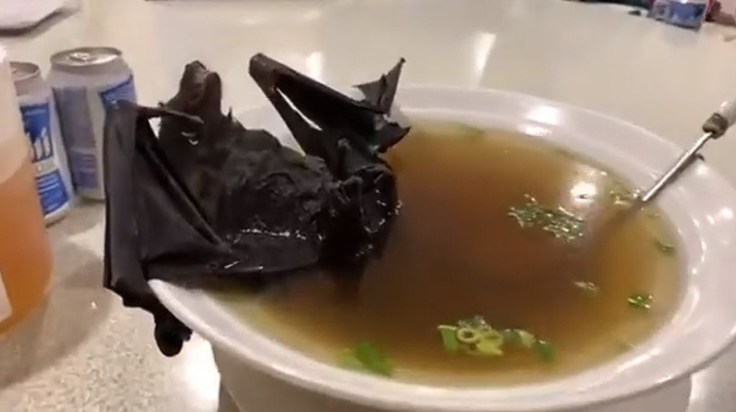
So according to the scientists, at some point a bat virus jumped into snakes, and adapted to its immune system. Later, people at the Wuhan market either handling or eating snake meat became infected. But images surfacing from Wuhan, and released by the Daily Star Online, offer another, even grosser explanation. Could the virus have leapt directly to humans from bats?

Soup du jour

Different cultures eat exotic foods, and Chinese people are well known for having a taste for some meats that might raise eyebrows or even churn stomachs. But bat soup?! Amazingly, it is apparently very popular in China, and considered a delicacy there.

The images have to be seen to be believed — they appear to show the full body of a small black bat, leathery wings and all, perched in a dish of brown liquid and leering like a vampire in disguise. One video shows a girl putting the creature whole into her mouth as she dines with friends. But it looks like the bats may have had the last laugh.

Second city shuts down all public transport amid deadly virus outbreak in China

CAP

The Chinese outbreak of the SARS virus in the early 2000s was eventually traced back to a colony of horseshoe bats in Yunnan province. Since we know that 2019‐nCoV is genetically closer to SARS than it is to any other virus, it seems probable that bats could be the carriers for this one too. These bats do not appear to have the tell-tale large ears of horseshoe bats, but they could be a closely-related species.

Offal-ly bad news

Most suggestively, in some of the images the bats’ guts are visible floating in the soup. If undercooked offal was consumed by humans this a likely source of the virus reaching humans, as some organs are breeding grounds for viruses.

Just last year there were reports of a plague that killed a husband and wife in western Mongolia — unrelated to the present outbreak. The couple ate the raw stomach, kidney and gall bladder of a marmot, and died soon after from a severe case of pneumonic plague. This plague, while having symptoms similar to the current outbreak, is caused by the bacteria Yersinia pestis. They used the offal as a traditional remedy. This prompted officials to quarantine the couple’s township, but happily there was no further spread of the plague.

Of course, cooking meat properly and thoroughly is one way of killing any bugs it may have been carrying. But viruses are more resistant to heat than many bacteria, and in any case, do you really trust the chefs serving up whole bats in murky broth to have passed their food safety inspection with flying colors?

But whether it is from snakes, bats or a combination of the two, as the virus rages on, researchers at least have a lead, if not a cure.


SANDERS SAYS HE WILL CONSIDER TEARING DOWN EXISTING BORDER WALL


Sanders Says He Will Consider Tearing Down EXISTING Border Wall

“Should you do that, tear it down? I don’t know, maybe the answer is yes”

Steve Watson | Infowars.com – JANUARY 22, 2020

As President Trump continues efforts to divert funding to build a new border wall, Democratic Presidential candidate Bernie Sanders said Monday that he would consider ‘tearing down’ the existing border barriers if he is elected.

Sanders reasoned that the current barrier on the US-Mexico border is ‘symbolic’.

He claimed that tearing the wall down “may be” the correct thing to do, adding “but you know it’s how much is it going to cost to tear it down?”

“Should you do that, tear it down? I don’t know, maybe the answer is yes.” Sanders said.

“That’s something you’re willing to consider? You’re willing to consider tearing down existing fencing between the U.S. and Mexico?” David Noriega further asked Sanders.

“Yeah, I’ll always look,” Sanders replied, adding “but again if it’s going to cost me billions of dollars to tear it down, I’d rather invest that maybe in the needs for child care in this country.”

“But it’s, you know, we can look at it.” he concluded.

David Knight details the new Hulu series painting a favorable picture of Hillary Clinton and exposes the vitriolic hate she has for Bernie Sanders and any other Democrat Party dissidents that would dare defy the establishment and interfere with her ambition.

Sanders’ comments came during a Vice News sponsored event (hence the whacked out questions).

Sanders also promised to put a stop to “99% of deportations”, even including for violent criminals.

At the same event, Joe Biden, the ‘moderate’ Democratic candidate, vowed to end all illegal immigration detention “across the board”:

Is it any wonder that the consensus among migrants is that Democrats are going to allow them to illegally flood into the US if they win the election?

Bernie and Biden’s comments came on the same day that thousands of migrants stormed a bridge over the Suchiate River from Guatemala to Mexico, attempting to move further north with a view to entering the US.

Blog at WordPress.com.

Up ↑