Former UK PM Gordon Brown: Time for ‘Global Government’ to Tackle Coronavirus

Peter Macdiarmid/Getty Images

By Simon Kent – 26 Mar 2020

Now is the time for global leaders to create one world government to tackle the twin medical and economic crises caused by the Chinese coronavirus pandemic, former UK Prime Minister Gordon Brown urged on Thursday.

The left-wing former Labour leader said there was a need for a taskforce involving world leaders, health experts and the heads of international organisations that would have supreme and unfettered executive powers to coordinate the response.

He gave no indication of who would appoint the “leaders,” how long they would serve for or just what their powers would involve, the Guardian reports.

Brown simply wants a new layer of global supra-government to force a solution to a crisis that began in Wuhan, China.

“This is not something that can be dealt with in one country,” he said. “There has to be a coordinated global response.”

Brown said the current crisis was different to the one he was involved in 2008 during the global financial crash. “That was an economic problem that had economic causes and had an economic solution.

“This is first and foremost a medical emergency and there has to be joint action to deal with that. But the more you intervene to deal with the medical emergency, the more you put economies at risk.”

Brown said his proposed global taskforce would fight the crisis on two fronts. There would need to be a coordinated effort to find a vaccine, and to organise production, purchasing and prevent profiteering.

“We need some sort of working executive,” Brown said. “If I were doing it again, I would make the G20 a broader organisation because in the current circumstances you need to listen to the countries that are most affected, the countries that are making a difference and countries where there is the potential for a massive number of people to be affected – such as those in Africa.”

The World Bank and the International Monetary Fund needed an increase in their financial firepower to cope with the impact of the crisis on low- and middle-income countries, he said.

LA Mayor Warns of Mass Deaths, Condemns Trump’s “False Hope” and Says His City Will be on Lockdown For 2 MONTHS – Maybe Even Longer

By Cristina Laila – March 26, 2020

Los Angeles Mayor Eric Garcetti already announced that the city will be shutting off water and power to any non-essential businesses that defied orders and stayed open during the Coronavirus crisis.

During his Tuesday press briefing Garcetti announced that the Department of Water and Power will be shutting off services for the businesses that don’t comply with the “safer at home” ordinance.

The Los Angeles Mayor also warned of mass deaths, condemned Trump’s “false hope” of the country reopening soon and said his city will be on lockdown until at least May, maybe even longer.

Garcetti made these remarks to Business Insider after 12 deaths were confirmed in Los Angeles due to Coronavirus. TWELVE.

Via Business Insider:

Los Angeles residents will be confined to their homes until May at the earliest, Mayor Eric Garcetti told Insider on Wednesday.

“I think this is at least two months,” he said. “And be prepared for longer.”

In an interview with Insider, Garcetti pushed back against “premature optimism” in the face of the COVID-19 pandemic, saying leaders who suggest we are on the verge of business as usual are putting lives at risk.

“I can’t say that strongly enough,” the mayor said. Optimism, he said, has to be grounded in data. And right now the data is not good.

“Giving people false hope will crush their spirits and will kill more people,” Garcetti said, adding it would change their actions by instilling a sense of normality at the most abnormal time in a generation.

“This will not kill most of us,” he said. “It will kill a lot more people than we’re used to dying around us.”

President Trump said during a Fox News town hall that he would like to have the country back open for business by Easter.

“I would love to have [the country] open by Easter,” Trump said on Tuesday. “It’s such an important day for other reasons.”


ENVIRONMENTALIST GROUP: “CORONA IS THE CURE – HUMANS ARE THE DISEASE”

Environmentalist Group: "Corona is the Cure - Humans are the Disease"

The mask slips.

By Paul Joseph Watson- March 25, 2020

A climate change group that aligns itself with Extinction Rebellion posted stickers claiming that coronavirus is a “cure” for the “disease” that is humanity.

“Earth is healing. The air and water is clearing,” tweeted Extinction Rebellion East Midlands. “Corona is the cure. Humans are the disease!”

The post shows stickers with the same message and the Extinction Rebellion logo plastered on lamp posts.

Screen Shot 2020-03-25 at 2.31.04 PM

When another branch of Extinction Rebellion challenged that this “does not follows XR’s principles,” the East Midlands chapter doubled down.

“We are pointing out that from the perspective of the Earth, humans behave like a disease. The idea is not to be,” they responded.

While Extinction Rebellion East Midlands may represent little more than the ravings of one idiot, the notion that humanity somehow deserved coronavirus and that it’s good for the planet has been widely shared by environmentalists and celebrities.

After actor Idris Elba tested positive for coronavirus, he claimed that COVID-19 was the planet “reacting to the human race” as revenge for climate change.

Despite numerous claims that nature is ‘flourishing’ and animals are thriving thanks to coronavirus, it turns out that most of those stories are fake news.

Homeland Security warns terrorists may exploit COVID-19 pandemic

By Alexander Mallin and Josh Margolin – 3/25/2020

A Department of Homeland Security memo sent to law enforcement officials around the country warns that violent extremists could seek to take advantage of the COVID-19 pandemic by carrying out attacks against the U.S.

“Violent extremists probably are seeking to exploit public fears associated with the spread of COVID-19 to incite violence, intimidate targets and promote their ideologies, and we assess these efforts will intensify in the coming months,” according to the intelligence bulletin, compiled by the agency’s Counterterrorism Mission Center and Countering Weapons of Mass Destruction Office.

At this time, DHS said it has “no information indicating any active plotting is underway,” but that it has observed certain extremist groups, both foreign and domestic, looking to spread misinformation about the coronavirus.

The memo, which was circulated on Monday, comes after assurances from FBI Director Chris Wray in a video message that agents would be even more vigilant in monitoring threats to the U.S. as the virus spreads.

“With all the worry and uncertainty out there, we want the public to know that there are still things they can count on: We’re here, and we’re going to stay here, to protect them, no matter what,” Wray said. “Because our criminal and national security adversaries sure aren’t going to take a day off — whether that’s for the coronavirus or, for that matter, anything else.”

Among the activities by extremist organizations cited in the DHS bulletin is a clipping from a weekly ISIS newsletter, which called for supporters to carry out attacks against overburdened health care systems in various Western countries.

Another portion of the bulletin singles out activity by white supremacists online who the DHS says have “advocated for violence against a range of targets, including critical infrastructure and faith-based and minority communities — including Asian Americans in response to the COVID outbreak.”

ABC News reported on Monday on an alert from the FBI’s New York field office that showed intelligence gathered on racist extremist groups, including neo-Nazis, that were encouraging followers who contract COVID-19 to spread the disease to Jewish people and police officers.

“I Don’t Care! I Don’t Care! I Don’t Care!” Pelosi Snaps at CNN’s Dana Bash For Asking About Trump’s Plans to Put America Back to Work (VIDEO)

By Cristina Laila – March 24, 2020

House Speaker Nancy Pelosi snapped at CNN’s Dana Bash Tuesday afternoon when the host brought up Trump’s recent remarks suggesting bringing Americans out of quarantine and back to work.

“I don’t have time to follow people’s twits…tweets, Twitters, whatever, tweets — so don’t expect me to comment on that,” Pelosi said.

“Well, even beyond Twitter, the President of the United States is signaling that he could open it up,” Bash said.

“What is your opinion on that?” Bash said pressing Pelosi.

“I don’t care! I don’t care! I don’t care!” Pelosi said as CNN’s Dana Bash brought up Trump’s plans to open America back up for business soon.

“It is not scientific based — he’s notion mongering,” Pelosi slurred.

Of course Pelosi doesn’t care about Americans going back to work. She wants America shut down while she holds the country hostage and tries to shove her Socialist wish list through Congress.

President Trump on Tuesday appeared on Fox News for a town hall to discuss his administration’s ongoing efforts to combat the Coronavirus.

Trump said he would likely open the country back up by Easter (April 12).

“I would love to have [the country] open by Easter,” Trump said. “It’s such an important day for other reasons.”

21 Million Chinese Cellphone Users Disappear in Three Months of Pandemic

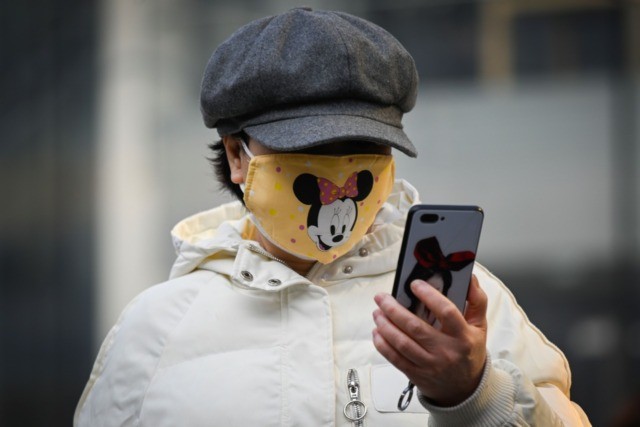
A woman wearing a Minnie Mouse face mask looks at her mobile phone in Beijing on February 11, 2020. - The death toll from a new coronavirus outbreak surged past 1,000 on February 11 as the World Health Organization warned infected people who have not travelled to China could be …

By John Hayward – 3/24/2020

The opacity of the Chinese Communist government obliges responsible outside observers to look for clues to the truth of the coronavirus epidemic, instead of merely repeating official information without question.

The official count from China is 3,277 fatalities from 81,171 infections as of Tuesday, but the Epoch Times noted the troubling disappearance of some 21 million cell phone accounts in China over the past three months – an unprecedented decline that hints at more fatalities than Beijing is prepared to admit.

It should be stated at the outset that we should not be forced to read tea leaves to figure out what really happened in China, especially in the virus epicenter of Hubei province and the city of Wuhan, where Chinese officials are currently making claims of zero new infections that no one seriously believes. While more responsible governments issue troubling warnings of a second wave of infections, severe enough to prompt the re-imposition of quarantine procedures that were only recently lifted, China claims it has no second wave and all of its new coronavirus cases are imported.

With that in mind, the Epoch Times thought it was a bit odd for 21 million Chinese cell phones to abruptly disappear, given that cell phone usage has been increasing constantly in China for years, and phones have been touted as an important tool for containing the coronavirus epidemic:

China’s Ministry of Industry and Information Technology (MIIT) announced on March 19 the number of phone users in each province in February. Compared with the previous announcement, which was released on Dec. 18, 2019, for November 2019 data, both cellphone and landline users dropped dramatically. In the same period the year before, the number of users increased.

The number of cellphone users decreased from 1.600957 billion to 1.579927 billion, a drop of 21.03 million. The number of landline users decreased from 190.83 million to 189.99 million, a drop of 840,000.

In the previous February, the number increased. According to MIIT, the number of cellphone users increased in February 2019 from 1.5591 billion to 1.5835 billion, which is 24.37 million more. The number of landline users increased from 183.477 million to 190.118 million, which is 6.641 million more.

According to China’s National Bureau of Statistics, the country’s population at the end of 2019 was 4.67 million larger than in 2018, reaching 1.40005 billion.

The article went on to postulate that some of the landlines might have been shut down as a consequence of the coronavirus quarantines, particularly lines used by shuttered business operations, but the sheer magnitude of the cell phone user decline makes it more difficult to explain. China Mobile, the nation’s largest carrier, reported gaining 3.7 million new accounts in December but then losing over 8 million in January and February, months in which it posted gains of 3.5 million users the previous year.

The Epoch Times considered several explanations for the loss of users, such as migrant workers who kept different cell phones for their home and work cities – necessary due to some of China’s regulations on phone service – abandoning the work phone because it was not needed during the quarantine period, or people generally canceling their phone service because they wanted to save money during the hard months.

On the other hand, the government is currently requiring citizens to use their cell phones to generate “health codes” so their movements can be tracked and permission to travel can be restricted to healthy individuals, so as U.S.-based commentator Tang Jiangyuan put it, it is effectively “impossible for a person to cancel his cellphone.”

“Dealing with the government for pensions and social security, buying train tickets, shopping … no matter what people want to do, they are required to use cell phones,” Tang noted.

The New York Times explained just how heavily Chinese authorities are leaning on those cell phones to monitor their population, and not just for coronavirus infections:

The Times’s analysis found that as soon as a user grants the software access to personal data, a piece of the program labeled “reportInfoAndLocationToPolice” sends the person’s location, city name and an identifying code number to a server. The software does not make clear to users its connection to the police. But according to China’s state-run Xinhua news agency and an official police social media account, law enforcement authorities were a crucial partner in the system’s development.

While Chinese internet companies often share data with the government, the process is rarely so direct. In the United States, it would be akin to the Centers for Disease Control and Prevention using apps from Amazon and Facebook to track the coronavirus, then quietly sharing user information with the local sheriff’s office.

The system, which relies on a unit of the immense Chinese e-commerce company Alibaba, assigns users a green, yellow, or red “health code” in the style of a traffic light. Predictably, Chinese citizens find the opaque system cryptic and frightening, since the government has not explained exactly how it works.

“In some cities, residents now have to register their phone numbers with an app to take public transportation,” the Times added.

At the beginning of March, the so-called Alipay Health Code system had been launched in the city of Hangzhou, expanded to 200 other cities, and was on its way to a complete nationwide rollout. The rollout ran into some hitches over the following weeks, from technical glitches to confusion caused by local governments adding their own health codes to the already intimidating system.

A correspondent writing for Bloomberg News on March 18 reported using the system and said it was in the process of being “rolled out nationwide at railway stations, restaurants, pharmacies, and more.” Other reports in China have noted how cell phones are ubiquitous there and are employed for everything from accessing public and commercial resources to telecommuting to school during the coronavirus lockdown.

With this in mind, it might not be completely impossible to get by in Chinese cities without a cell phone at the moment, but it seems unlikely that a huge number of citizens would choose this moment to get rid of their phones.

“Lacking data, the real death toll in China is a mystery. The cancellation of 21 million cellphones provides a data point that suggests the real number may be far higher than the official number,” the Epoch Times concluded.


What Happens When All the Doctors Get Sick?

“We’re on the Italian track,” of mass infection among healthcare providers, one expert said.

By Olivia Messer – 3/24/2020

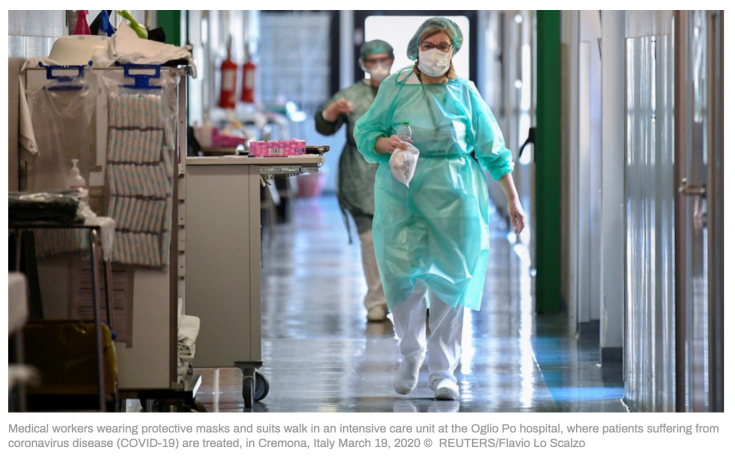
Thousands of doctors and nurses in Italy have contracted the 2019 novel coronavirus, and American health workers have said they’re terrified of getting the illness, especially in the face of startling and systemic equipment shortages.

Some emergency room doctors in the U.S. have already tested positive for the virus, and other medical providers have personally prepared for the possibility of infection—creating wills, isolating off parts of their houses from the rest of their families, recording bedtime stories for their children on their phones. But what happens to an already-cascading national health crisis when, even if equipment shortages are resolved, medical personnel are falling out of rotation?

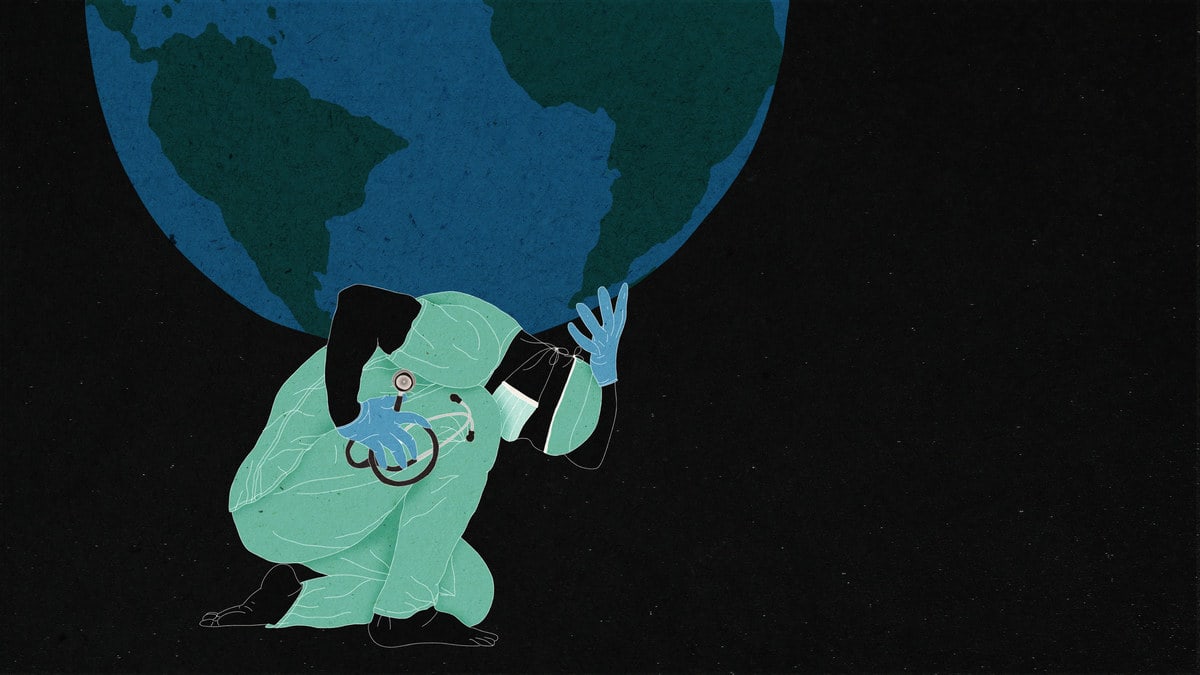
Without concerted action to protect healthcare workers, experts said, America could be facing a shortage when its citizens need them most.

Irwin Redlener, director of the National Center for Disaster Preparedness at Columbia University and an expert on U.S. readiness for pandemics, said there were three main ways to staff hospitals if a large number of providers get sick.

The first scenario is already playing out in New York City, where retired health officials—doctors, nurses, administrators, dietitians, and more—were recently asked to join the Big Apple’s medical reserves. More than 1,000 retired healthcare professionals and private practice physicians answered the call in just one day last week.
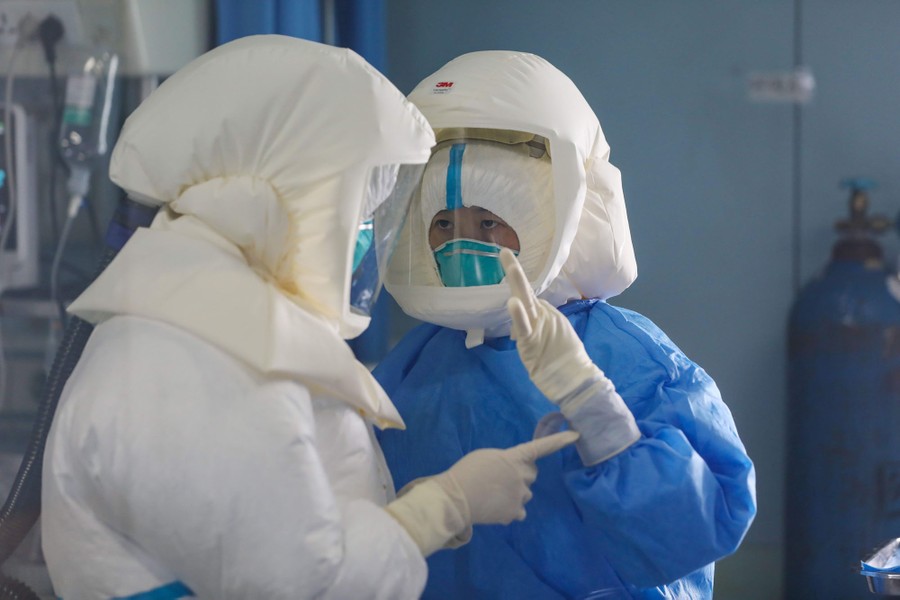
“Many of us in the business are worried about this, about the back-up plan for if they’re ill or have to stay home or—God forbid—don’t survive,” said Redlener. “The only problem with bringing in retired people is that they’re older, and many will have preexisting conditions.”

Then there’s the federal National Disaster Medical System, which exists to supplement health and medical systems during times of crisis. The system has sent reserve doctors from all over the country to respond to emergencies, including the aftermath of natural disasters like Hurricane Sandy. The pool of doctors and nurses from the system can be requested by federal, state, local, tribal, or territorial authorities.

But those resources are finite, and travel is no simple matter in the face of a creeping trend toward nationwide lockdown.

“If we’re dealing with a single major disaster someplace, then we have enough for that, but if we have clusters all over the country pop up, it becomes a problem because there’s so much demand across the board,” Redlener said. “For every health professional we call up, we take them away from their regular jobs, which are also critical.” 

A physician might not, for example, be able to take off to help treat the outbreaks in Washington state or New York if their own hospital is having trouble with staffing because of the spread of infection there.

A third option Redlener cited would invoke the use of international medical graduates who have been educated, trained, and employed as physicians or nurses in other countries, some of whom already live in the U.S. and are waiting to be placed in an American gig.

“If you’re moving to the U.S. and want to practice medicine here, you usually have to take a residency all over again in the U.S., and it’s very difficult to secure places in those programs,” he explained. “For those people, it’s time to think about waiving the requirements to repeat a full-blown residency.”
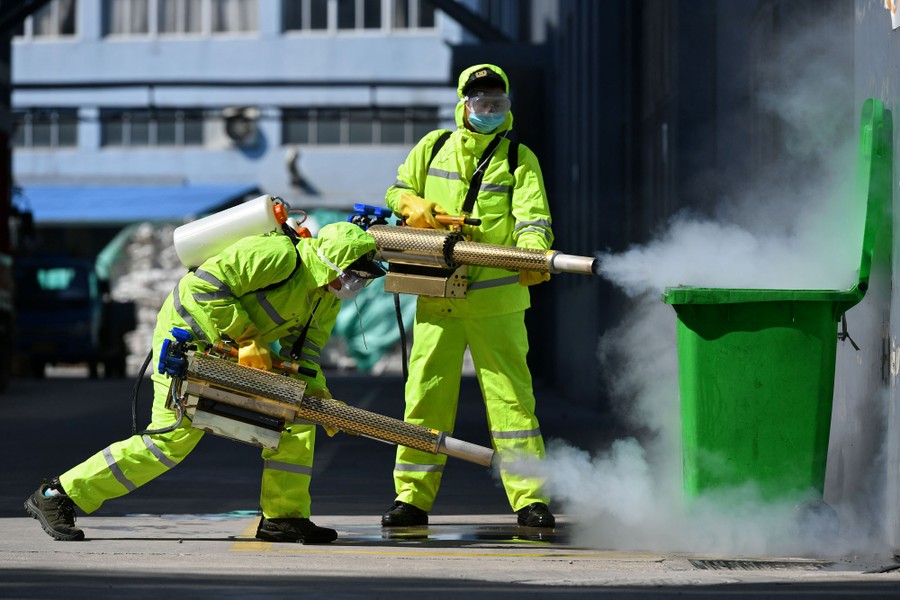
Of course, none of this would feel as precarious if it weren’t for the dire shortage of personal protective equipment, including masks, for medical professionals, which federal officials have promised to shore up.

Many hospitals have lowered standards of care, delayed elective surgeries, and begun utilizing telemedicine in unprecedented volumes to accommodate the potential surge of critically ill patients, as Slate reported.

For better or for worse, the options in the U.S. mirror what’s been done in Italy to handle the dramatic caseload of more roughly 60,000 patients. As of last week, more than 2,629 health care workers in Italy had reportedly contracted COVID-19. Throughout the country, medical students and nurses have graduated early to work in the field, technicians and medical assistants in training were fast-tracked to the front lines, the country’s health ministry has asked retired doctors to return to work, and health workers have put in double shifts with few breaks.

Health providers also succumbed to the coronavirus in China—including a whistleblower in Wuhan who tried to call attention to the deadly disease. But safety measures largely implemented in Hubei province to protect healthcare workers were meticulous, according to William Haseltine, president of the global health think tank ACCESS Health International, who recently chaired the U.S.-China Health Summit in Wuhan, where the virus is believed to have originated.

“All of their healthcare workers were outfitted with high-quality hazmat outfits—not makeshift,” said Haseltine. “If you were in what’s called ‘controlled quarantine’ in a hotel room, the person who delivered your food was in a hazmat outfit. The people who came in to clean your room were in full hazmat outfits and cleaned your room with Lysol every day.” 

Meanwhile, in the U.S., in addition to nationwide supply shortages for protective gear, precautions and preparations vary from state to state.

“We have contingency plans, a command center, cross-site privileges for staffing, so we can move bodies around if needs arise and staff gets sick,” said Rob Davidson, an emergency physician at Spectrum Health Gerber Memorial in Fremont, Michigan. Davidson also serves as executive director of the Committee to Protect Medicare, a self-described public advocacy and grassroots lobbying group that works “to persuade elected officials to support health care for all Americans.” 

“We’re preparing for this, but don’t know when it’s going to hit and how bad,” he told The Daily Beast on Friday. As of Monday morning, the total number of cases in Michigan had more than doubled, surpassing 1,000. At least nine people had died.

Davidson said he knew of at least one physician at risk of severe infection who transferred his practice to telemedicine, and Davidson said that his family decided he should isolate himself in the basement of their home if he comes into contact with a positive patient that requires intubation or other intense exposure.

“Our dedication is to doing the right thing for our patient, and what if we can’t do good enough medicine, or end up choosing who lives and who dies just because there were too many patients?” asked Davidson. “The nightmare scenarios that you hear playing out in Italy, that’s where none of us want to be.”

Do you know something we should about 2019 novel coronavirus, or how your medical providers are responding to it? Email Olivia.Messer@TheDailyBeast.com or securely at olivia.messer@protonmail.com from a non-work device.

He was far from alone in wondering how the system might respond.

“The entire hospitalist team at my hospital is terrified,” said an internal medicine doctor in Ohio who asked to remain anonymous over fear of retaliation from her employer. “Our worst fear is contracting the virus and spreading it to our spouses and children. We are worried about our patients, of course, but none of us want our personal decision of becoming a doctor—and serving on the front lines—to adversely affect the ones we love.”

She said that older doctors in her practice—primarily those with grown children and no loans—have mentioned that they’ve considered quitting.

“Fear of harming your family will lead to those thoughts in even the most virtuous physician,” she said.

A pharmacy executive who works at a rehabilitation hospital in Austin, Texas—and who also requested anonymity over fear of professional retaliation—described a similar calculus.

“My wife is a surgical physician’s assistant, and I work with elderly people, on average in their seventies, who are mostly recovering from strokes and hip surgeries,” he said, adding that his 71-year-old mother lives in his home and helps care for his one-year-old baby with a congenital condition who is vulnerable to severe infections—and his kindergarten-aged daughter.

After reading what he called “horror stories” about “not enough gowns, not enough masks,” the pharmacist said he and his wife began discussing contingency plans for the possibility that they could end up in the intensive care unit after contracting the disease.

“Worst case scenario, my kids lose both parents,” the pharmacist said, adding that he was processing his fear the way many other Americans were: “wine and denial.”

Dr. Bernard Ashby, a vascular cardiologist based in Miami Beach, Florida, told The Daily Beast that high numbers of sick—or dead—medical providers is “a plausible scenario given that we’re not protecting them.”

“That would spell out disaster for our patients and our healthcare system,” Ashby said, adding that, like most doctors, he’s more worried about becoming a vector than about getting sick himself. “I have a newborn child and a mother with chronic illness. I’m very concerned about spreading it to my family, so I’m currently self-isolating from them. It’s tough.”

“There’s been a failure of leadership at multiple levels, and because of that, the healthcare system will get overwhelmed, and a lot of people will suffer unnecessarily,” said Ashby. “We will suffer unnecessary casualties as a result of a lack of proactive measures to mitigate this pandemic.”

Ashby said that hospitals all over the country should be screening the temperature of providers as they come into work and testing hospital staff more readily, which has not yet been possible because of the nationwide shortage of diagnostic kits.

But based on the federal response to the crisis and the lack of supplies in the U.S., said Haseltine, “We’re on the Italian track.”

Losing doctors and nurses to the coronavirus “is going to be devastating,” he continued, noting that the overwhelming fear “is already psychologically extremely damaging to our healthcare workers.”

And as a country, he said, “It puts us in even higher jeopardy.”

Up to 640,000 people could be infected with coronavirus in Italy – civil protection chief

Screen Shot 2020-03-24 at 11.14.11 AM

The number of Covid-19 cases in Italy is probably ten times higher than official numbers, according to Italy’s civil protection chief Angelo Borrelli, who said that as many as 640,000 people could be infected in the country.

“It is credible to estimate that there are 10 positive cases for every one officially reported,” Borrelli told La Repubblica newspaper on Monday.

The latest figures show almost 64,000 people have been infected and 6,077 have died from the infection in barely a month, making Italy the worst-affected country in the world, with close to double the number of fatalities in China, where the virus emerged last year.

Medical experts confirm that Italy has focused its testing only on people showing severe symptoms in areas with high epidemic intensity like Lombardy, Emilia-Romagna and Veneto in the north of the country, thus it is difficult to say the real numbers.

“This causes an increase in the fatality rate because it is based on the most severe cases and not on the totality of those infected,” says Massimo Galli, head of the infectious disease unit at Sacco Hospital in Milan.

ALSO ON RT.COMUS shows ‘very large acceleration’ in Covid-19 cases, has potential to become new epicenter of pandemic – WHO

Screen Shot 2020-03-24 at 11.17.08 AM

Italy reported 602 new deaths from the coronavirus on Monday. The number of fatalities dropped for a second day in a row, after reaching an all-time high of 793 on Saturday.

‘There’s a lot we don’t know’: UW researchers look at how coronavirus turns body against itself and kills

By Mike Carter

CAP

SEATTLE — Last Tuesday, a scientist working in a secure upper-floor laboratory in the University of Washington Medical Center’s South Lake Union campus cracked open a vial containing one of the first samples of live SARS-CoV-2 virus, with a goal of better understanding how and why it kills.

The disease caused by the virus, COVID-19, has proved particularly lethal to the elderly and those with underlying health conditions, and the scientists at the school’s Center for Innate Immunity and Immune Disease have been tasked with trying to understand why in these cases the new virus overwhelms the body’s natural defenses, while in most people it causes only moderate or even mild illness.

The new virus has some unusual characteristics that haven’t been seen in other SARS (Severe Acute Respiratory Syndrome) outbreaks, both in the way it attacks the lungs and how it can infect people quietly, where they will have few or no symptoms for days or weeks but still spread the disease, said Dr. Michael Gale, a professor of immunology at the UW and the center’s director.

Beijing Airport During Coronavirus Outbreak : Stock Photo

“There’s a lot we don’t know,” Gale said. “We don’t know how it interacts with the cell. We don’t know how it invades it. We don’t know how it overcomes the cell’s innate immune system.”

These are all questions that Gale and his team of scientists, working with others around the world, hope to answer as they begin to understand the pathology of the novel coronavirus. That information, in turn, will inform both treatment and prevention of the disease, he said.

“What we do know is that this SARS is very successful in taking over the cell,” he said. So successful, in fact, that the body’s reaction to that takeover can be so violent and overwhelming that, in essence, it ends up killing itself.

Earlier this month, the King County Medical Examiner’s Office released a list of the first 22 people in King County to die from COVID-19 before announcing that it was no longer taking jurisdiction over SARS deaths. The list identified patients, their age and their gender, and listed the cause of death and contributing factors. Gale and another noted immunologist and pathologist, Dr. Julian Leibowitz at Texas A&M University College of Medicine, reviewed the list and remarked on how the information fits with what is known and being learned about COVID-19 and how it attacks the body.

Both were cautious to point out that the information was extremely limited and did not contain autopsy reports, tissue-sample slides or other detailed information they would need to provide anything more than general observations.

Leibowitz, however, said he has reviewed detailed results of a COVID-19 autopsy performed in China and published online. What he was able to glean from the medical examiner’s list led him to conclude the pathology was similar.

“This follows the pattern of SARS in general,” he said. “This virus clearly causes a viral pneumonia” similar to the SARS outbreak in 2003 that infected 8,089 people around the world. Like that outbreak, he said, the chance of serious illness or death is significantly higher in older populations, he said. The average age of the individuals on the medical examiner’s list was 66, with the oldest being 98 and the youngest 44.

But this new coronavirus is likely more infectious, certainly more insidious, and more lethal that the ‘03 SARS virus. That outbreak killed 774 people before being contained in about nine months. COVID-19 has infected more than 208,000 people worldwide and killed nearly 8,700 of them, and has spread into a pandemic.

Leibowitz said one thing really jumped out at him from the King County list: the number of cases of cardiomyopathy, a hardening of the heart muscle that can be caused by a drastic immune response. Four of the 22 King County fatalities had cardiomyopathy listed as the primary cause of death.

Similarly, an article published Thursday in the Journal of the American Medical Association detailing a review of the outcomes of 21 COVID-19 patients admitted to the Intensive Care Unit at Kirkland’s EvergreenHealth Medical Center made a similar observation, finding cardiomyopathy developed in seven of the 21 patients. At the time of publication, 14 of the 21 had died.

“It is unclear whether the high rate of cardiomyopathy in this case series reflects a direct cardiac complication of SARS-CoV-2 infection or resulted from overwhelming critical illness,” the article stated, calling for additional research.

Leibowitz believes it is likely a result of the body’s immune system trying desperately to stop the virus, causing massive inflammation throughout the heart and lungs and, in some cases, damaging other organs as well.

The workings of the immune system is what Gale’s UW scientists are focused on, specifically the “innate” portion of the body’s defenses — mechanisms genetically coded into every cell to protect it from infections and damage. They activate almost immediately when the body detects an invader.

Gale said his researchers are working to understand how SARS-CoV-2 manages to defeat these mechanisms to invade a cell and take it over, forcing it to replicate copies of the virus even as it is destroyed. Those virus copies then go on to infect other cells and the process repeats in a cascading infection.

“Right now, its replication strategy is unknown,” Gale said during a recent interview outside the Bio-Safety Level III laboratory in South Lake Union where his scientist opened the vial of SARS-CoV-2 this past week. Gale asked that the exact location of the laboratory be withheld for security reasons.

“What we know is that the virus physically destroys the lung tissue as it replicates in the cells,” he said. Gale said the tissue damage he’s seen bears similarities to the damaged lungs of victims of the 1918 influenza-A pandemic, which infected one of every three people and killed 50 million people — roughly 3% of the world’s population.

Gale has worked with and studied the 1918 H1N1 flu virus as well after a live specimen was recovered in 2007 from the remains of an Inuit woman who was buried in the Alaskan permafrost after dying during the pandemic.

“That virus physically destroyed the cells, as well,” he said.

30 Provinces Launch The First Level Response To Major Public Health Emergencies In China : News Photo

A Morbidity and Mortality Report issued Wednesday by the Centers for Disease Control and Prevention states that preliminary data from the initial outbreak in Wuhan, China, shows the majority of COVID-19 deaths in those 60 and older.

Leibowitz said the vulnerability of older patients is likely explained at least in part because, as people age, their cells lose their ability to grow, divide and protect themselves through a process called “senescence,” a word derived from the Latin “senex,” which means “old.”

“The immune system becomes sluggish, sleepy,” he said.

Add to that another health issue — diabetes or kidney problems — and the tired immune system can be even further taxed.

“When a person has an underlying health issue, it engages an immune response at some level,” Gale explained. This can result in inflammation as the body attempts to grapple with the issue. “Your body is distracted, and it can’t deal with other insults.”

“It becomes a race,” said Leibowitz, who has studied coronavirus. “The virus tries to spread and make more virus in order for it to be successful in nature.

“In the meantime, your immune system tries to kill the cells that are infected,” he explained. If you are young and healthy with a robust immune system, then not as many cells will be affected.

“But if your innate immune system isn’t strong, then the virus is more successful and your body’s response will be prolonged. That means more cells will be damaged by the immune system as it tries to keep up with the virus.

“And that,” he said, “is not good for your lungs.”

The other “striking” issue with SARS-CoV-2 has been its apparently easy transmission and contagion, Leibowitz said.

“What is scary to me about this SARS compared to the outbreak in 2003 is that back then, asymptomatic patients did not transmit the disease. You had to have a fever to be contagious,” he said. “This disease can be transmitted silently by people who don’t know they are sick and show few or no symptoms of being infected.”

(EDITORS: STORY CAN END HERE)

That surreptitious transmission strikes Gale, as well, who noted that of the first 22 people who died in King County from COVID-19 — the individuals listed on the medical examiner’s document — most had been patients at Life Care Center of Kirkland, a long-term nursing facility that became ground zero for the pandemic in the U.S. At last count, Dr. Jeffrey Duchin, the chief public health officer for Public Health — Seattle & King County, said 23 care facilities had reported patients or staff with confirmed COVID-19 infections.

“The 2003 SARS outbreak was more acute,” Gale said. “Here, we have up to two weeks with people asymptomatic and, in some cases, kids don’t get sick at all. They’re little vectors.

“You have to ask yourself, ‘Why do you think all the nursing homes and care centers get hit?’ ” he asked. “I can tell you: It’s because grandparents got visits from grandkids.”

Blog at WordPress.com.

Up ↑